Nobody is born with an intuitive knowledge of cooking. Over the years, we pick up skills and techniques by watching others or — once we’re old enough — by experimenting in our own kitchens and following our favorite chefs and influencers online.

That’s a good thing; it means no one is innately a “good” or “bad” cook. But it also means we sometimes absorb bad habits along with the good, and it takes time (or coaching) to unlearn them. I was an avid home cook for years before I trained as a chef and began teaching my own cooking classes. Here are a few of the most common cooking mistakes I see, along with tips to help you move past them.

1. Not Warming the Pan

If you read through reviews of skillets online, you’ll notice a curious trend. For the exact same pan, one reviewer will write, “It’s great — nothing sticks!” while another might claim, “It’s terrible — everything sticks!” How can that be? The difference often comes down to one basic cooking technique.

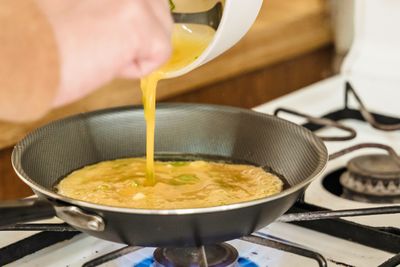
Whether you’re working with cast iron, nonstick, carbon steel, or stainless, it’s rarely a good idea to put food into a cold pan. Metals expand as they heat, compressing the microscopic pores in the pan’s surface. If food is already in the pan when that happens, fibers and juices get caught in those pores, causing whatever you’re cooking to stick. If you’ve ever had to soak a skillet lined with stuck-on scrambled eggs, you know the feeling.

It’s best to gently warm the pan over medium heat until the air above it feels warm to your hand, then add your cooking fat. If it’s butter, wait for it to foam and then subside. For oil, swirl it around and watch for a light, rippling shimmer. By the time you add your food, the pan’s pores will be closed and the fat will be hot enough to sear ingredients on contact. This results in food that doesn’t stick and a much easier cleanup after the meal.

Kitchen Tip: Always use gentle heat to warm your pan. High heat can warp an empty skillet and damage the coating on nonstick cookware.

Credit: © Sasha Kim/Pexels

2. Adding Garlic Too Soon

Everyone has a different level of affection for garlic. Personally, I’m in the “recipes calling for one clove are just not serious” camp — I even grow my own garlic for home use. No matter your preference, though, there’s one mistake people consistently make: adding it to the pan too early.

Aromatic ingredients such as celery and onions can withstand a relatively long time in the pan before they scorch. That’s not the case with garlic. Because of its sticky juices and high levels of natural sugar, garlic browns quickly and can easily burn unless you add some liquid to the pan. Once garlic scorches, there’s no saving it — it becomes bitter and can ruin an entire dish.

Instead, wait until your onions, celery, bell peppers, or fresh ginger are translucent and tender. Then add your garlic and stir diligently for about a minute until it becomes fragrant. At that point, you can safely add your liquids or any other remaining ingredients.

Kitchen Tip: The finer you chop garlic, the stronger its flavor will be. For best results, let chopped garlic sit for 10 to 15 minutes before cooking. This allows the natural enzymes to react with the air, giving it a fuller, richer flavor.

Credit: © Liudmila Chernetska/iStock
Advertisement

3. Using Too Much Heat

In an action movie, “coming in hot” usually means something exciting is about to happen. In the kitchen, it’s a different story — knowing how and when to apply heat is a fundamental skill. Many people tend to crank their burners too high, which I totally understand. I’m as impatient as the next person, and some days I just want dinner on the table ASAP. But dialing up the heat is seldom the shortcut it seems.

High heat is occasionally necessary, like when searing meat or fish, but usually, it works against you. It causes protein molecules to contract and toughen, often leaving food overdone on the outside and underdone in the middle. It can also burn the natural juices from your food, which would otherwise caramelize and add flavor.

If you watch cooking shows, this might seem confusing. Professional chefs often work with screaming-hot pans and billows of flame because it makes for great TV. Those dishes, however, are designed to be cooked hot and fast. While you can crank out food that way, it requires constant hands-on attention. For home cooking, you’ll see better results by sticking to medium heat.

Credit: © Bohdan Bevz/iStock
Related: 10 Foods You Should Never Microwave

4. Relying on Rules of Thumb for Doneness

I know many people who pride themselves on cooking their steak or chops “just so.” A few can even do it consistently — a skill that comes with a lot of practice. However, that intuition rarely translates to extra-thick steaks, roasts, poultry, or fish.

If you look online or ask your friends, you’ll hear all kinds of advice on how to nail the perfect degree of doneness. Some people rely on precise timing, while others wait “until the juices run clear.” There’s even a complicated system that compares the firmness of the meat to different parts of your hand. Realistically, though, the only reliable guide to doneness is a good thermometer.

I keep three types on hand. The first is an old-school meat thermometer that stays in a roast or a bird while it cooks. The second uses a wired probe that remains in the meat and sends a readout to an external LCD screen. I also have a couple of inexpensive instant-read thermometers. These don’t stay in the food; instead, you use them to test a steak, roast, or burger for doneness in just a few seconds. It might not have the panache of prodding a steak and announcing, “That’s medium-rare,” but it’s a lot more reliable.

Kitchen Tip: Don’t cook food all the way to your target temperature. Because of “carryover cooking,” internal temperatures continue to rise after you remove the meat from the heat. A steak might rise 5 degrees or more, while a roast can jump 10 to 15 degrees. Pull your meat a few degrees short of your target, and it will get there on its own.

Credit: © v_l/stock.adobe.com
Advertisement

5. Overfilling Your Pan

This is a cardinal sin of cookery, yet I see it all the time. It’s a fundamental mistake that can take the luster from almost any dish. Whether you’re browning beef for a stew, searing scallops for a special meal, or preparing a simple vegetable stir-fry, crowding the pan sets you up for failure.

When you overload a pan, two things happen: First, the sheer volume of food saps the heat from the pan — even heavy cast iron can’t hold out for long. Second, your ingredients inevitably release juices. In an uncrowded, hot pan, those juices evaporate with a quick sizzle, caramelizing and adding flavor. In a crowded pan, they pool and simmer. Instead of searing, your scallops or mushrooms poach in their own liquid, leaving them rubbery, pale, and devoid of the browning they deserve. Even a simple pan of stir-fried vegetables won’t have the tender-crisp texture you’re looking for.

There are a few cooking tips that can help you avoid this common mistake. Start by using the largest pan that fits your burner to ensure you have heat from edge to edge. Preheat the pan as described above, add your oil, and then begin cooking. Work in small batches; you should always hear a distinct sizzle with each addition to the pan. If you don’t hear a sizzle, or if moisture begins to pool around the food, the pan is too crowded. Remove a portion, blot up the excess moisture, and add less next time.

Credit: © staticnak1983/iStock
Related: How To Store Spices Like a Chef

6. Not Tasting as You Go

Culinary school is an intense experience because there’s so much to learn, but this is one lesson the chef-instructors emphasize constantly: If you wait until a meal is nearly finished before asking, “What does this need?” you won’t get the best results.

Instead, budding chefs are taught to build flavor at every step and to frequently check how those flavors are developing. If you’re making a stew, for example, you might start by softening some onions and garlic in a Dutch oven, then scooping them out while you brown and season the beef. At this point, you should taste a small bite of the beef to ensure it’s seasoned enough and has developed some of those browned-on flavors.

After that is when you add water, broth, or stock to the pot as your main cooking liquid. If you use anything other than water, taste it as it goes into the pot. This helps you determine if the dish needs more salt or how the broth’s distinct flavors will influence the final product. These flavors will mellow and evolve as the stew cooks, so taste it periodically. You can also consider additional flavorings: Spices, bay leaves, and sturdy dried herbs should go in early, while umami-rich ingredients like soy sauce can be added at any time. Save fresh herbs and acidic ingredients like Worcestershire sauce for the end. By tasting after each addition, you’ll barely need to tweak the seasoning before serving.

Kitchen Tip: If you’re unsure how best to bring out the flavors in your dish, avoid experimenting on the entire pot or pan of food. Instead, test your seasoning inspirations on a single mouthful.

If you’re worried about hygiene, use the two-spoon technique. Keep one spoon for the food and one for your mouth. Scoop a taste with the first, drop it onto the second, and keep them scrupulously separate. I put one on my left and one on my right to avoid any mix-ups.

Credit: © Cavan for Adobe/stock.adobe.com
Advertisement