1. Your Phone — and Its Charger
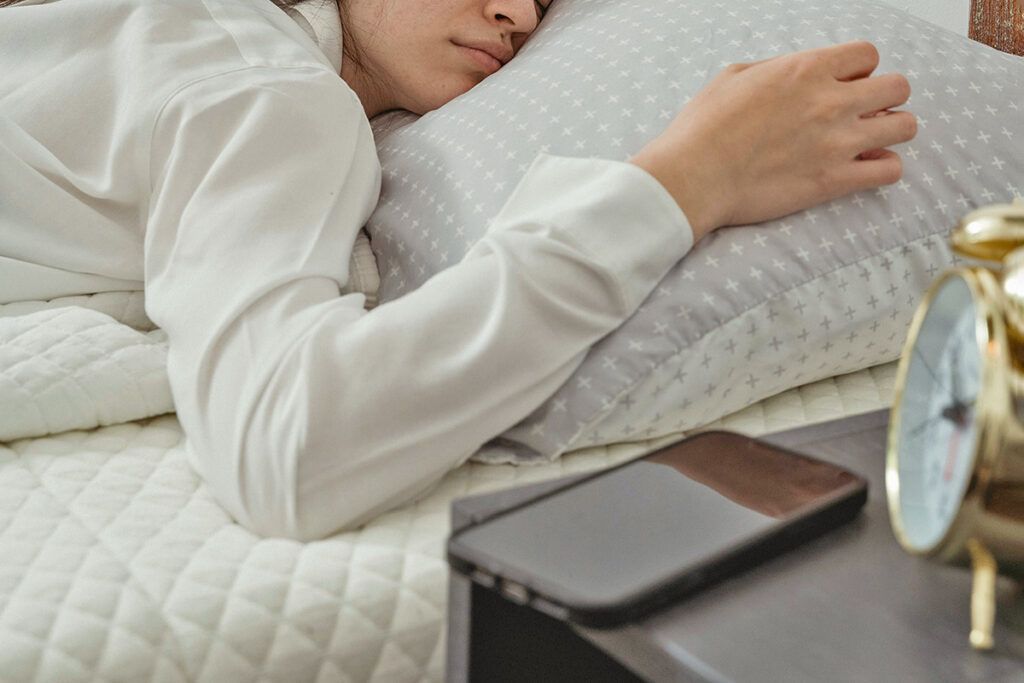
No surprise here: Your phone is the biggest sleep thief there is. Blue light suppresses melatonin, notifications jolt your nervous system, and the temptation to scroll (and scroll and scroll) eats up much-needed rest time. Charge your phone in another room and buy a dedicated alarm clock. It’s the smallest yet highest-impact change you can make for your sleep.
Decor swap: The Loftie alarm clock is a beautifully designed bedside alternative that also plays sleep sounds and features a two-phase alarm to wake you gently.
2. Visual Clutter
Visual clutter is a silent sleep killer. Whether it’s a pile of unfolded laundry, a towering stack of half-read books, or a collection of water glasses, your brain registers clutter as an unfinished to-do list. This is the last thing you want running in the background at 11 p.m. For better rest, clear your surfaces of everything but the absolute essentials.
3. Thin or Sheer Curtains
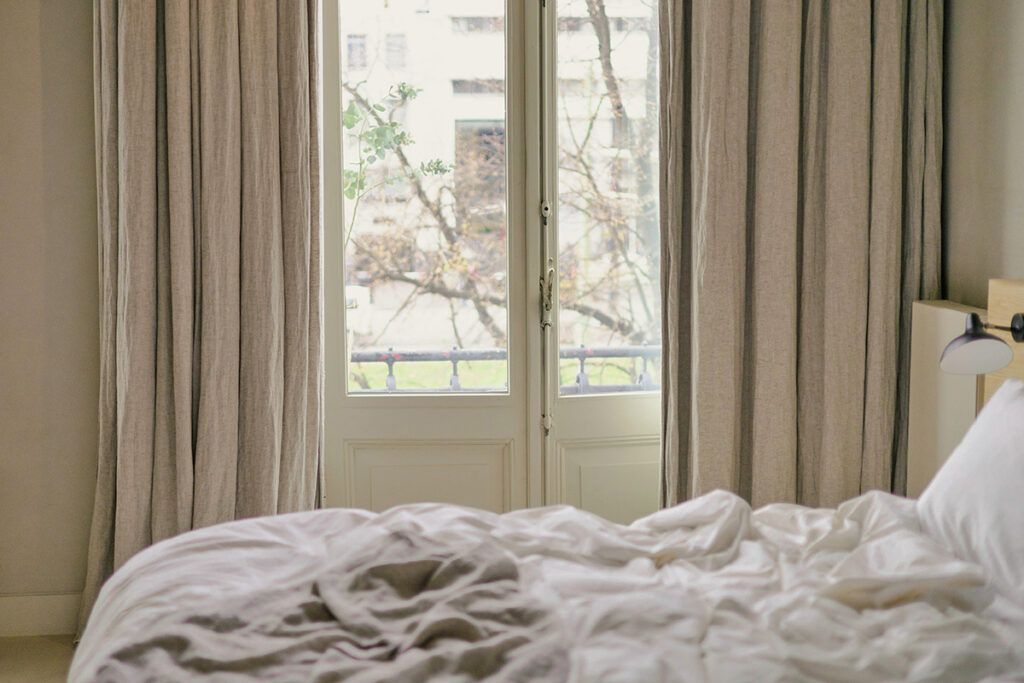
Light is one of the most powerful disruptors of your circadian rhythm. Streetlights, passing headlights, or even a beautiful early sunrise can pull you out of deep sleep before you’re ready.
More from our network
House Outlook is part of Inbox Studio, which publishes content that uplifts, informs, and inspires.



Decor swap: Replace sheer panels with proper blackout curtains. These top-rated curtains on Amazon come in various colors, so you don’t have to sacrifice style for sweet dreams.
4. A Television
Watching a comfort show before bed can feel relaxing, but the light, sound, and mental engagement — plus the temptation to stay up for “just one more episode” — all work against a good night’s sleep. Like your phone, a TV emits blue light that disrupts your sleep cycle. If removing it entirely isn’t realistic, set a firm turn-off time.
5. Food
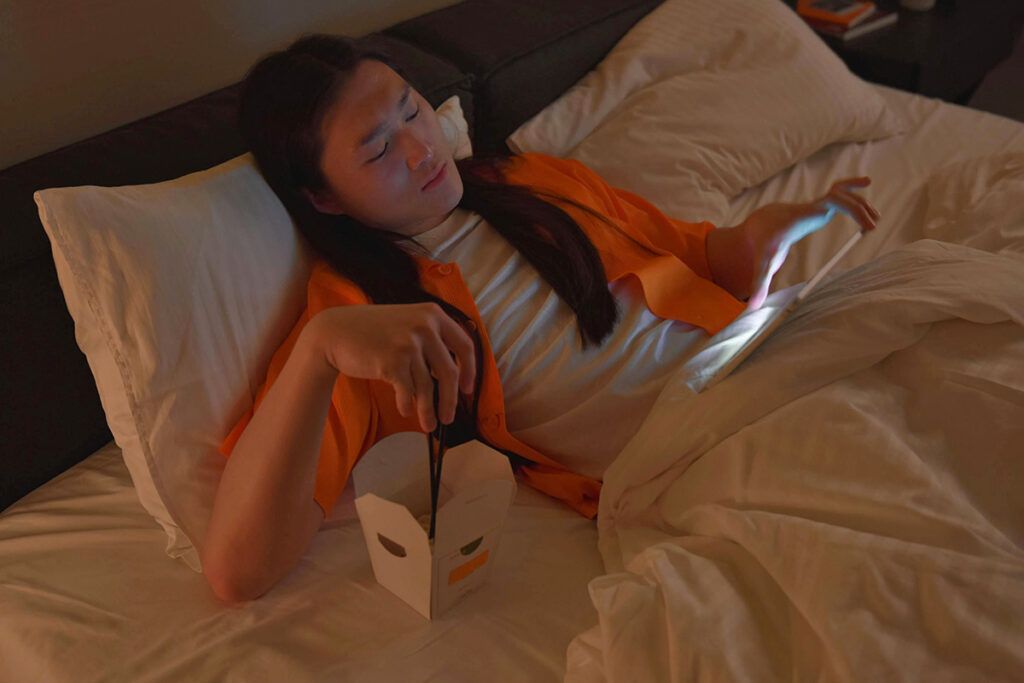
A nighttime snack might be tempting, but if you do indulge, keep it out of the bedroom. Eating in bed trains your brain to associate the space with stimulation rather than rest. Plus, crumbs and spills attract pests, and a nightstand full of dirty dishes doesn’t exactly signal “time to wind down.”
6. Bright, Cool-Toned Light Bulbs
Bulbs with a high color temperature (anything above 3000 Kelvin) mimic daylight, tricking your brain into staying alert. Swap cool bulbs for warm-toned smart bulbs, such as Philips Hue, that dim on a schedule to help you automatically ease into evening mode. Once the sun sets, stick to ambient light via lamps, which is more calming than overhead lighting.
7. A Desk or Laptop
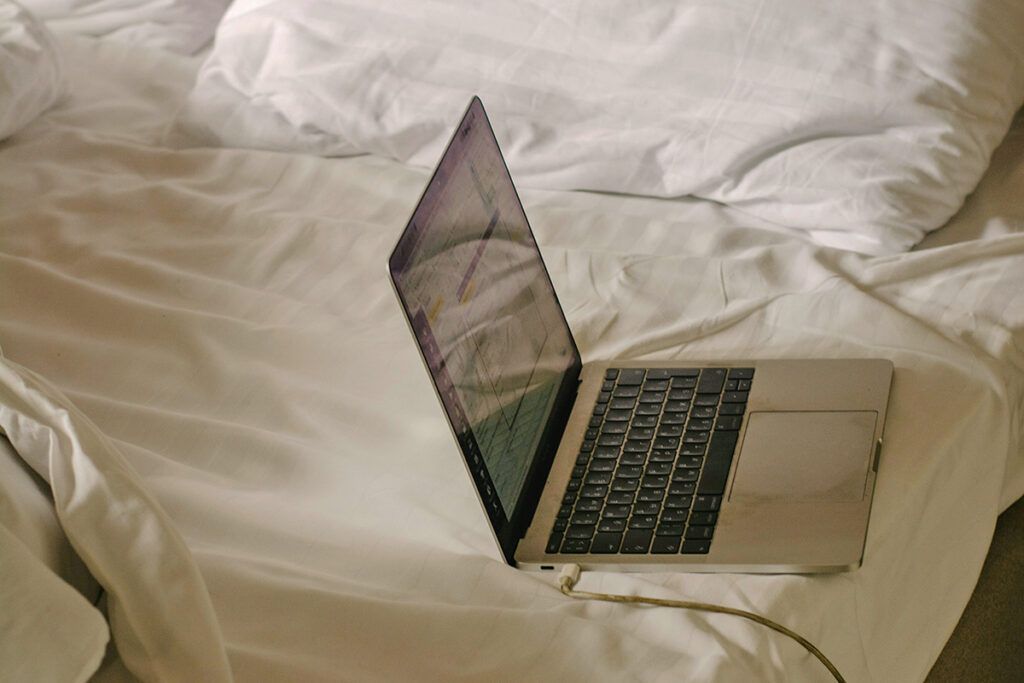
Think of your bedroom as a sacred place for sleep, not for checking emails or planning next week’s all-staff meeting. Even a laptop bag in the corner can trigger low-level anxiety. If you work from home, create a firm boundary: Work items stay outside the bedroom door.
8. Synthetic Sheets
If you’re tossing and turning all night or waking up sweaty, your sheets may be the culprit. Synthetic fabrics trap heat and moisture, keeping your body temperature higher than is ideal for quality sleep. Natural fibers such as cotton and linen regulate temperature far more effectively.
Decor swap: The Quince European Linen Sheet Set is a top-rated option that is both pretty and practical. It gets softer with every wash and is priced much lower than comparable linen sets.
9. Poor Air Quality
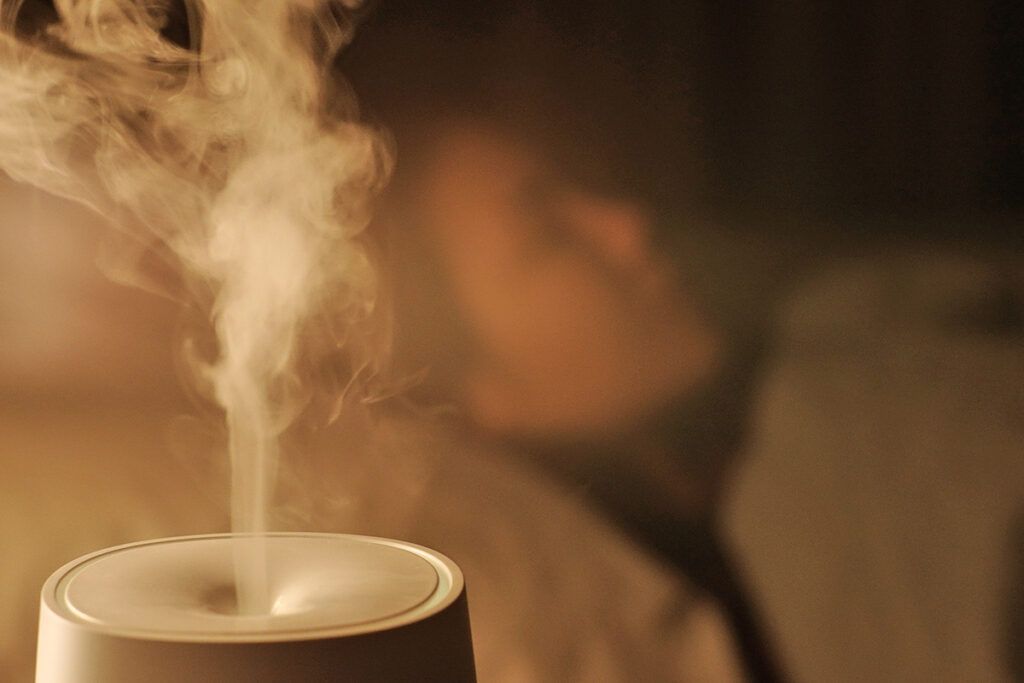
You may not be able to see it, but poor air quality is a major — and often overlooked — sleep disruptor. Pollen, dust, mold, and smoke can cause inflammation and reduce oxygen intake. Dry air is its own issue: Parched nasal passages can lead to snoring, which disrupts both your sleep and your partner’s. An air purifier handles the former; a humidifier is the best solution for the latter.
10. Old, Unsupportive Pillows
Pillows have a lifespan of about 18 months to two years, so chances are it’s time for your floppy, seen-better-days pillow to go. A flat or lumpy pillow throws your neck and spine out of alignment, leading to disrupted sleep and morning aches.
Decor swap: Shop for a pillow that matches your preferred sleep position. Side sleepers need a firmer, taller loft, while back sleepers tend to be most comfortable with medium support.