An Exhausting Solution
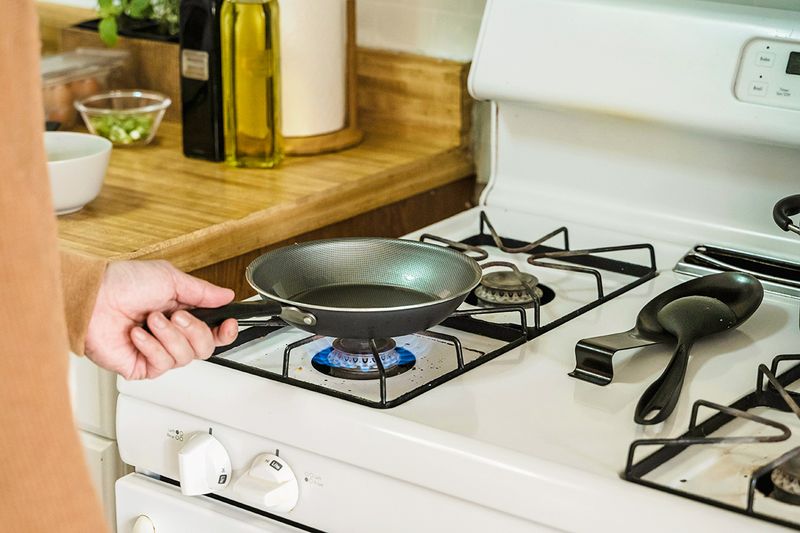
Many chefs prefer gas stovetops because they allow for precise temperature control. But despite their reputation, gas stoves pose their fair share of risks; they emit noxious gases including carbon monoxide, carbon dioxide, and nitrogen dioxide. Each can lead to serious physical ailments. Carbon monoxide acts as a silent killer, carbon dioxide buildup can cause headaches and nausea, and nitrogen dioxide exposure is linked to childhood asthma and respiratory issues.
The good news is there’s an easy way to prevent gases from reaching perilous levels: Simply turn on the exhaust fan above the stove. These fans pull in gas and vent it outdoors, maintaining safe, breathable air inside the home. All you need to do is turn on the fan each time you fire up a burner — no matter how long you’ll be cooking for — to keep gas levels from becoming dangerously high.
It is true that some fans are limited to recirculating air within the kitchen rather than venting it outside, but using a recirculating fan is still better than leaving it off. It will filter the air before blowing it back into the room — provided you regularly maintain and replace the filtration system. To maximize the fan’s effectiveness, use the burners positioned directly under the widest part of your exhaust fan. On many stoves, the back burners are more centered under the fan’s intake, making it easier to capture gases before they escape into the rest of the house. If you use the burners near the edge of the range, you increase the risk of fumes spilling out into the room.
Capture What Fans Miss
Even if your kitchen already has an exhaust or recirculating fan, adding a portable air purifier can help remove harmful gases and cooking odors. Choose a unit that’s equipped with a heavy activated charcoal filter, as these are designed to trap gases that standard HEPA filters miss. The BLUEAIR Blue Pure 511i Max smart air purifier is a solid option when paired with the SmokeBlock specialty filter. Place the air purifier in the kitchen — away from direct heat — and run it on its highest setting while you cook and for 30 minutes to two hours afterward.
More from our network
House Outlook is part of Inbox Studio, which publishes content that uplifts, informs, and inspires.