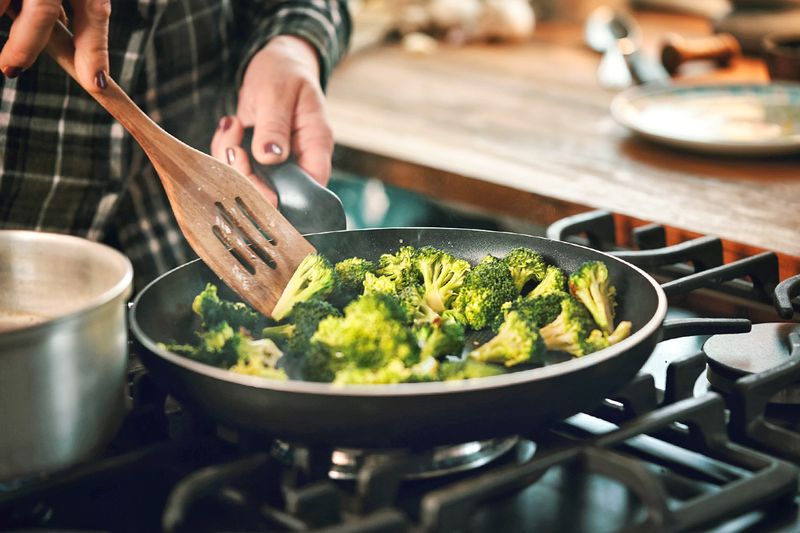
One component contributing to these health benefits is a compound called sulforaphane, which shows promise in protecting against certain kinds of cancer, diabetes, and obesity. The catch is that cooking broccoli, or other vegetables in this family, deactivates myrosinase, the enzyme needed to create sulforaphane. Fortunately, if you’ve already cooked your broccoli, you can still add this enzyme back in — here’s how.
Reach for the Mustard
Cruciferous vegetables go by many names: You may know them as brassicas or the “cabbage family,” but it’s just as accurate to refer to them as the “mustard family.” Mustards are one of the largest groups within the brassicas, whether they’re grown for the seeds used in condiments or for pungent leafy greens such as mizuna and tatsoi.
Because they’re close kin to broccoli, mustard plants produce a significant amount of myrosinase. This makes mustard a quick way to bring the enzyme back to your plate once the vegetables are cooked. A light sprinkling of mustard powder (be careful, it’s potent) or a homemade, mustard-based dressing or sauce will do the trick.
Most packaged mustard products from the grocery store do not contain myrosinase. These are pasteurized for shelf stability, a process that destroys the heat-sensitive enzyme. A better option is to choose a stone-ground mustard from the refrigerated section or whisk together a sauce at home using dry mustard powder. When used raw — meaning it hasn’t been heat-treated — the spice retains active myrosinase.
A Culinary Match
The close relationship between broccoli and mustard is more than just a nutritional coincidence; it’s a perfect culinary partnership. Mustard-based sauces and vinaigrettes work well with broccoli and other brassicas such as cauliflower, Brussels sprouts, and cabbage. As a bonus, mustard acts as an emulsifier to thicken your vinaigrette. You can even serve a good-quality sweet or grainy mustard as a dipping condiment for your broccoli — the flavors go together better than you might expect.
More from our network
House Outlook is part of Inbox Studio, which publishes content that uplifts, informs, and inspires.



No matter how you combine them, a dab of mustard helps bring out the full health potential of your broccoli. It’s proof that eating well doesn’t have to mean eating food that tastes bad.