This is especially true for silverware, which often has grime in tough-to-reach places and can be rather sharp. Don’t make the same mistakes as everyone else — here’s how to properly load dirty silverware in the dishwasher.
How To Handle Silverware
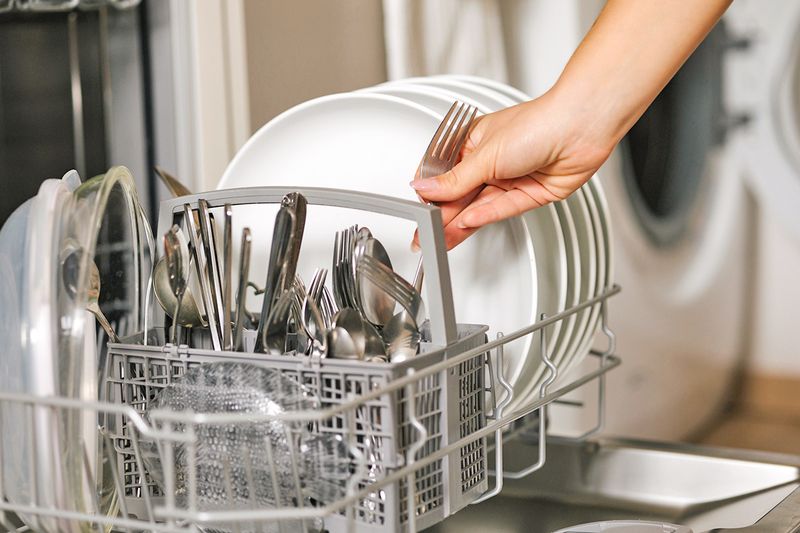
Picture it: You’ve just run a full cycle, only to find bits of gunk still stuck to your forks and spoons. To make matters worse, you go to reach for a knife and accidentally cut yourself. As you wrap your finger in a bandage, you might wonder if there’s a better method for loading dirty silverware. There is — and it all comes down to proper orientation.
For forks and spoons, always place the handles into the basket first. This leaves the “business end” — the tines or the bowl — exposed. Because these areas are more likely to come into contact with food, they need to face upward. This ensures water and detergent can clean those dirty surfaces, leaving your utensils spotless.
As for knives, some argue the handle should go in first for the same reason as forks and spoons. However, many experts advise the opposite, saying you should place the blade of the knife into the basket first. This is a matter of safety; if the handle remains exposed, the knife is easier to remove afterward. If the blade faces up, you risk cutting yourself when unloading.
More from our network
House Outlook is part of Inbox Studio, which publishes content that uplifts, informs, and inspires.



Ultimately, how you load your dishwasher is up to you. But our recommendation is clear: handles down for spoons and forks, and blades down for knives. This approach strikes the best balance between cleanliness and safety.