Advertisement
Food & Drink 3m read
512

The Secret to Keeping Sparkling Wine Bubbly for Days

There’s nothing more satisfying than popping open a bottle of sparkling wine for a special occasion — or just because. Whether it’s Champagne (from France’s Champagne region), cava (from Spain), prosecco (from Italy), or another variety, many would agree that sparkling wine is one of the most delicious ways to celebrate.

All featured products and deals are selected independently and objectively by the author. House Outlook may receive a share of sales via affiliate links in content.

There’s nothing more satisfying than popping open a bottle of sparkling wine for a special occasion — or just because. Whether it’s Champagne (from France’s Champagne region), cava (from Spain), prosecco (from Italy), or another variety, many would agree that sparkling wine is one of the most delicious ways to celebrate.

Indeed, sparkling wines have long been synonymous with celebration. In their early days, these wines were accessible only to the upper classes, and they still carry an air of sophistication today. Fortunately, contemporary production methods have made sparkling wine more affordable and widely available. Thanks to marketing efforts over the years, many people now buy sparkling wine to mark a special occasion (or even christen a boat).

There’s an old joke that there’s no need to worry about storing sparkling wine because it’s always consumed in one sitting. And while it’s certainly tempting to polish off the bottle, that isn’t always feasible. If you don’t have a Champagne stopper on hand, how can you keep the fizz from falling flat?

Related: How To Keep Leftover Wine Fresh for Days

That’s a Wrap

There’s a little-known solution for this problem, and it involves two items you probably already have in your kitchen drawer: plastic wrap and a rubber band. Here’s what to do: Cut a piece of plastic wrap, place it over the bottle’s opening, pull it taut, and secure it tightly with a rubber band. It may sound simple, but it works surprisingly well to keep the carbonation trapped inside.

Advertisement

Tips and Tricks

For the best results, use a large sheet of plastic wrap folded into three or four layers. Once you place it over the opening, use a spoon to push the plastic wrap down into the neck of the bottle, then secure it tightly with a rubber band. This creates an airtight seal and reduces the amount of empty space inside the bottle, which slows the loss of carbonation.

Whether you use this method or a traditional Champagne stopper, aim to consume the sparkling wine within two to three days. Once the bottle is uncorked, there’s no way to completely stop the gradual loss of carbonation, so enjoy those bubbles as soon as you’re able.

Advertisement
Advertisement
Home Improvement 2m read
11,234

Closing Your Bedroom Door at Night Could Be a Lifesaver

Some people close their bedroom door at night to muffle sound, while others shut it to prevent the bogeyman from entering. But whether you’re a light sleeper or superstitious, there are additional safety benefits to closing the door while you snooze. It all has to do with halting the spread of fire and toxic gases, which can strike in the middle of the night when you’re at your most vulnerable. Here’s how a closed bedroom door saves lives.

Some people close their bedroom door at night to muffle sound, while others shut it to prevent the bogeyman from entering. But whether you’re a light sleeper or superstitious, there are additional safety benefits to closing the door while you snooze. It all has to do with halting the spread of fire and toxic gases,…

An Open-and-Shut Solution

According to FEMA, 51% of fatal fires occur between 10 p.m. and 6 a.m. This high rate is largely because many people are asleep during these hours and may not notice a fire until it is already out of control. Even if a smoke detector jolts you awake, it won’t help to stop the spread of fire or smoke. A closed door, however, can.

Related: 10 Lifesaving Home Safety Tips You’ve Probably Never Heard

The Fire Safety Research Institute (FSRI) found that a closed door can create a 900-degree Fahrenheit temperature difference between the inside of a room and a fire blazing outside. For example, if hallway flames reach 1,000 degrees Fahrenheit, a closed door can keep your bedroom at  100 degrees Fahrenheit. While still hot, it’s a survivable temperature that allows you to get out of bed and escape through the window.

Advertisement

A closed door also reduces your risk of smoke inhalation, which can cause serious harm and disorient you before the flames even reach your room. The FSRI notes that during a fire, carbon monoxide levels can be 100 times higher in areas with open doors compared to those that are closed.

While every second counts during a fire, a closed door creates a literal stopgap that buys you the time needed to get your wits about you and plan an escape. And when there isn’t an emergency, it provides you with quiet and privacy.

Advertisement
Featured Image Credit:  © whitebalance.space/iStock | Updated  Mar 17, 2026 |
Bennett Kleinman
Staff Writer
Bennett Kleinman is a New York City-based staff writer for Inbox Studio, covering topics for several brands including House Outlook and Better Report. He previously contributed to television programs such as "Late Show With David Letterman" and "Impractical Jokers," and digital publications like The Onion. Bennett is also a devoted New York Yankees and New Jersey Devils fan, and thinks plain seltzer is the best drink ever invented.
This article is for general informational purposes only.
Featured Image Credit:  © whitebalance.space/iStock | Updated  Mar 17, 2026 |
Advertisement
Food & Drink 3m read
658

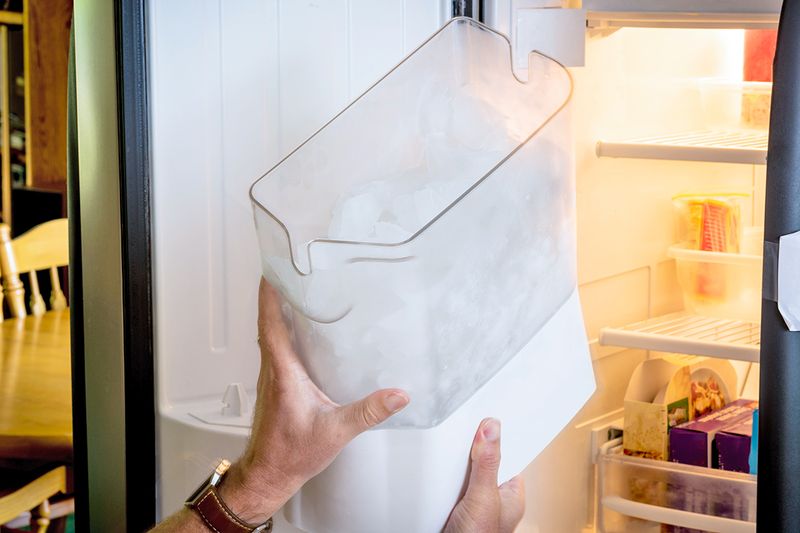
Forget Baking Soda — Eliminate Fridge Odors With This Instead

When rifling through the fridge in search of a quick snack, nothing kills the mood quite like catching a whiff of something rancid. Often, the smell lingers even after you’ve gotten rid of the source. To mitigate those unpleasant odors, many people place an open box of baking soda on a back shelf.

All featured products and deals are selected independently and objectively by the author. House Outlook may receive a share of sales via affiliate links in content.

When rifling through the fridge in search of a quick snack, nothing kills the mood quite like catching a whiff of something rancid. Often, the smell lingers even after you’ve gotten rid of the source. To mitigate those unpleasant odors, many people place an open box of baking soda on a back shelf.

But what if you’re fresh out of that baking ingredient and dealing with a stomach-churning stench creeping into your kitchen? There’s an unexpected pantry staple that can help you get a handle on fridge funk — and it’s a brilliant way to give a second life to an item you might otherwise toss out.

The Best Thing Since Sliced Bread

White bread can act as a quick, temporary fix for lingering scents. Its porous texture physically absorbs odor molecules, although it doesn’t chemically neutralize them like baking soda does. The best part? You don’t have to waste a perfectly good slice of bread you’d use in a tasty sandwich. Instead, just repurpose those crusty ends that so often get thrown away.

Related: Why You Should Freeze Bread Before You Eat It

You may be asking: Why white bread? While other varieties, such as rye or sourdough, are also porous, they often have a pungent aroma of their own that can make matters worse. White bread also tends to be fluffy rather than dense, meaning it’s full of tiny air pockets that act as a trap for wandering odor molecules. It’s best to use a fresh loaf for this hack — stale, dried-out slices aren’t as absorbent.

Advertisement

How To Freshen Your Fridge

For this hack, you’ll need two bread heels, distilled white vinegar, and a shallow, wide-mouthed container. Place the two slices side-by-side in the same container; if the odor is coming from multiple areas, use separate containers for each. Next, pour a tablespoon of vinegar over the bread and leave the open container in the fridge for 12 to 24 hours. It’s important to remove the bread within 24 hours to prevent mold growth and potential contamination.

During this time, the bread will trap any fetid stenches, whether from wilting vegetables, week-old leftovers, or other stinky foodstuffs. When you wake up in the morning, open the fridge — the offending smells should be gone, or at the very least, significantly improved. Should any lingering odors remain, replace the bread and vinegar, and repeat the process as needed until those nasty odors vanish altogether.

Advertisement
Featured Image Credit:  © AndreyPopov/iStock | Updated  Mar 17, 2026 |
Bennett Kleinman
Staff Writer
Bennett Kleinman is a New York City-based staff writer for Inbox Studio, covering topics for several brands including House Outlook and Better Report. He previously contributed to television programs such as "Late Show With David Letterman" and "Impractical Jokers," and digital publications like The Onion. Bennett is also a devoted New York Yankees and New Jersey Devils fan, and thinks plain seltzer is the best drink ever invented.
This article is for general informational purposes only.
Featured Image Credit:  © AndreyPopov/iStock | Updated  Mar 17, 2026 |
Advertisement
Food & Drink 2m read
309

Why You Should Use a Tea Steeper for Baking

Dessert decorating doesn’t need to be fancy, and it certainly doesn’t have to be complicated. One of the best ways to finish cookies, cakes, brownies, scones, and other baked goods is by dusting them with powdered sugar. However, attempting to shake it from a spoon usually results in uneven coverage and a big mess.

All featured products and deals are selected independently and objectively by the author. House Outlook may receive a share of sales via affiliate links in content.

Dessert decorating doesn’t need to be fancy, and it certainly doesn’t have to be complicated. One of the best ways to finish cookies, cakes, brownies, scones, and other baked goods is by dusting them with powdered sugar. However, attempting to shake it from a spoon usually results in uneven coverage and a big mess.

Home bakers and professionals often rely on flour sifters for uniform coverage when sprinkling powdered sugar. But we think another tool works even better: a snap-ball tea infuser.

Get Better Control With a Tea Steeper

Tea steepers (also called infusers or strainers) feature uniformly spaced holes that dispense powdered sugar evenly. Because they’re much smaller than flour sifters, they also offer more control over application.

Related: The Baking Trick for Perfectly Flat Cake Layers

All you have to do is fill one half of a snap-ball infuser (or any similar tool made of mesh or perforated metal) with a spoonful of powdered sugar, close it, and gently dust your baked goods. This trick also works well for lightly flouring surfaces, coating proteins in cornstarch, or dusting sourdough loaves with rice flour before scoring.

Advertisement

Your Next-Best Sifter? An Empty Spice Jar

If you don’t have a tea steeper, you can use an empty spice jar to sift sugar, flour, cornstarch, rice flour, and other powdery ingredients. This works best with spice jars featuring small, evenly spaced holes rather than the larger openings used for chili flakes and other whole spices. Start by cleaning the jar thoroughly with hot water and dish soap — or run it through the dishwasher for fuss-free cleaning. Let it dry completely before adding your desired ingredient. Once it’s filled, snap the lid into place and give it a gentle shake to dust your baked good.

If you’re in a real bind, a fine-mesh strainer also works to top desserts with powdered sugar. It isn’t as precise, but it beats using a spoon or your fingers.

Advertisement
Featured Image Credit:  © boonsom/iStock | Updated  Mar 17, 2026 |
Jessie Quinn
Writer
Jessie Quinn is a Los Angeles-based lifestyle journalist with words published in PEOPLE, StyleCaster, Apartment Therapy, The Spruce, Byrdie, and more. She has a Bachelor's Degree in fashion journalism from Academy of Art University and her work spans across many categories, including style, beauty, home, health, crafts, and more.
This article is for general informational purposes only.
Featured Image Credit:  © boonsom/iStock | Updated  Mar 17, 2026 |
Advertisement
Organizing 3m read
602

This Is How Professionals Hide Clutter in Plain Sight

Everyday clutter is often the most overwhelming thing to organize. Because these items are used frequently, stashing them away is impractical, yet leaving them in plain sight creates an eyesore. Maintaining order while ensuring accessibility is actually easier than you might think, though — you just need to trick your eyes.

All featured products and deals are selected independently and objectively by the author. House Outlook may receive a share of sales via affiliate links in content.

Everyday clutter is often the most overwhelming thing to organize. Because these items are used frequently, stashing them away is impractical, yet leaving them in plain sight creates an eyesore. Maintaining order while ensuring accessibility is actually easier than you might think, though — you just need to trick your eyes.

Color-Block Your Clutter

Try a monochrome or color-blocking approach to tame your daily clutter. This creates a uniform look that hides clutter while keeping it within reach. Since the eye is naturally drawn to cohesion, using containers that are all the same color or part of the same color family — such as sage green and evergreen — effectively camouflages clutter. Beyond color, consider the texture: Opt for linen-wrapped or seagrass containers for an organic feel, or metal or hardwood bins for a more utilitarian aesthetic. When your storage solutions are cohesive, your eye sweeps past them, ignoring the clutter contained within.

Related: 15 Things To Declutter From Your Kitchen Right Now

Curate and Cluster

You can apply this same color-matching method to your kitchen. Instead of using boxes and bins, however, focus on coordinating your everyday items, such as bowls, plates, mugs, and small appliances. For example, if you have light blue plates, pair them with kitchen gadgets — like a stand mixer or an electric tea kettle — in the same shade or a complementary color to establish visual continuity.

Advertisement

If you have open kitchen shelving, grouping items together — while leaving adequate space between clusters — is the secret to an intentional, decorative look. This negative space allows each arrangement to stand on its own, preventing your shelves from looking messy. Try stacking a couple of serving bowls, then finish the look with a set of decorative spoons. You can also cluster daily essentials, such as your salt and pepper shakers, utensil crock, and kitchen timer. Grouping items in odd numbers, like threes or fives, is a classic design trick that creates a well-balanced composition.

Whether you’re styling office built-ins or open kitchen shelving, these strategies help your storage fade into the background. The result is a stylish, functional display that feels curated and intentional, not overwhelming.

Advertisement
Featured Image Credit:  © towfiqu ahamed/iStock | Updated  Mar 9, 2026 |
Jessie Quinn
Writer
Jessie Quinn is a Los Angeles-based lifestyle journalist with words published in PEOPLE, StyleCaster, Apartment Therapy, The Spruce, Byrdie, and more. She has a Bachelor's Degree in fashion journalism from Academy of Art University and her work spans across many categories, including style, beauty, home, health, crafts, and more.
This article is for general informational purposes only.
Featured Image Credit:  © towfiqu ahamed/iStock | Updated  Mar 9, 2026 |
Advertisement
Food & Drink 3m read
8,866

You’ve Been Throwing Away This Versatile Ingredient

Chickpeas, or garbanzo beans, are one of the most popular and versatile legumes around. They’re a staple in everything from healthy salads to hearty stews, and, of course, the main ingredient in hummus. Because of their versatility, canned chickpeas are an essential pantry item and an excellent emergency food to keep on hand.

Chickpeas, or garbanzo beans, are one of the most popular and versatile legumes around. They’re a staple in everything from healthy salads to hearty stews, and, of course, the main ingredient in hummus. Because of their versatility, canned chickpeas are an essential pantry item and an excellent emergency food to keep on hand.

However, you might not be using them to their full potential. The next time you open a can of chickpeas, pause before pouring off the liquid and rinsing the beans. That thick, starchy brine, known as aquafaba, is a useful ingredient in its own right. While vegans have long used aquafaba as a reliable egg substitute for baking, you don’t need to follow a plant-based diet to benefit from it. It comes “free” with your can of chickpeas, after all, and can help you offset the cost of eggs. So, why not use it in your next baking project?

Related: What To Do With Leftover Tomato Paste

A Quick Aquafaba Primer

Why is this liquid so useful? Its thick consistency comes from the starches and soluble fibers released by the chickpeas during the cooking and canning process. Those dissolved starches make aquafaba a useful binder in dishes such as meatloaf or hamburgers, where you would otherwise use an egg. However, aquafaba has a couple of key advantages over other egg substitutes like ground flaxseed: It has a neutral flavor, and it can be whipped into a light, fluffy foam, just like egg whites.

Advertisement

Here are a few ideas on how to use aquafaba at home, whether you’re dabbling in veganism or just a frugal and adventurous cook:

• Make eggless meringue, either for meringue cookies or to top a pie, without having to discard a bunch of yolks.

• Bake light and fluffy cakes without eggs.

• Use aquafaba as a light thickener in soups.

• Swap aquafaba for beaten egg whites in foamy cocktails and other beverages (and avoid the potential salmonella risk).

• Fold whipped aquafaba into anything from muffins to pancakes and waffles to make them lighter and fluffier.

If you aren’t careful, you’ll find yourself needing new recipes to use up the chickpeas left over from your aquafaba. It’s a good problem to have, though; chickpeas are a healthy, filling way to add protein and fiber to your diet.

Advertisement
Featured Image Credit:  © Kristina Ratobilska/iStock | Updated  Mar 9, 2026 |
Fred Decker
Writer
Fred Decker is a trained chef and former restaurateur. Since closing his restaurants over a decade ago he has been a prolific freelance writer, publishing several thousand articles on dozens of high-volume websites including Taste Of Home, Hunker, Tasting Table, Week&, eHow, and GOBankingRates. He lives on a rural acreage shared with a big garden, chickens, rabbits, and grandkids.
This article is for general informational purposes only.
Featured Image Credit:  © Kristina Ratobilska/iStock | Updated  Mar 9, 2026 |
Advertisement
Cleaning 3m read
373

Is Your Dusting Routine Making Your House Dirtier?

A dusty home is no match for a microfiber cloth, which picks up most debris in a single wipe without leaving streaks or lint behind. These cloths work best for dry dusting, but sometimes they struggle to grab everything — particularly pet hair and other allergens. Fortunately, you can improve their performance without spending a dime.

All featured products and deals are selected independently and objectively by the author. House Outlook may receive a share of sales via affiliate links in content.

A dusty home is no match for a microfiber cloth, which picks up most debris in a single wipe without leaving streaks or lint behind. These cloths work best for dry dusting, but sometimes they struggle to grab everything — particularly pet hair and other allergens. Fortunately, you can improve their performance without spending a…

Ditch Dust With a Damp Cloth

Microfiber cloths are great for dusting because they generate a slight electrostatic charge as you wipe. As the name suggests, the material is made up of millions of tiny synthetic polyester or nylon fibers. These fibers are split to be thinner than a human hair, increasing their surface area so they can trap and hold dust. The friction caused by wiping also creates a static charge that helps pull dust into the cloth.

Sometimes, however, dry dusting seems to only push debris around, especially if it’s been a while since you last cleaned or if there’s heavy buildup of pet hair and grime. In these cases, dampen your cloth with clean water, wring it out well, and wipe whatever surfaces need cleaning. This ensures that dust and allergens are picked up by the fibers rather than kicked up into the air to resettle elsewhere.

Related: Keep Your Ceiling Fan Dust-Free With This Easy Trick

Microfiber cloths are renowned for their ability to capture dust through static, but they are equally impressive when damp. They can hold over five times their weight in water, making them the perfect tool for tackling tough messes, such as sticky food spills, stubborn soap scum, and grease-laden cabinets.

Advertisement

Keeping Your Cloths Clean

Want to extend the lifespan of your microfiber cloths? Whether you prefer using them damp or dry, you can guarantee years of use from them with proper washing. Avoid using bleach or fabric softener, as these chemicals can damage the superfine fibers that make these cloths so effective. Bleach degrades the structural integrity of the fibers, while softeners leave behind a waxy residue that reduces their ability to trap dust or absorb liquid.

Instead, clean your cloths in a solution of warm water and your choice of either 3% hydrogen peroxide, distilled white vinegar, or an oxygen-based bleach alternative, such as OxiClean Odor Blasters. (Warning: Never mix hydrogen peroxide and vinegar together in the same container, as this causes a chemical reaction that can irritate the eyes, skin, and respiratory system.) Soak the microfiber cloths in the solution for 15 to 30 minutes, then rinse them thoroughly with clean water. It’s best to air dry them whenever possible, but if you must use a dryer, opt for a low-heat setting and skip the dryer sheets.

Advertisement
Advertisement
Home Improvement 3m read
370

How a Single Quarter Can Save You From a Highway Disaster

Anyone who’s been around the block knows that a quarter doesn’t have the same buying power it used to. Purchasing a slice of pizza or a movie ticket for 25 cents is a thing of the past, but the coin remains an unlikely yet incredibly useful tool for staying safe on the road. Many drivers don’t realize their car is at risk until it’s too late — especially when it comes to tire tread. Here’s how one measly quarter can prevent disaster.

Anyone who’s been around the block knows that a quarter doesn’t have the same buying power it used to. Purchasing a slice of pizza or a movie ticket for 25 cents is a thing of the past, but the coin remains an unlikely yet incredibly useful tool for staying safe on the road. Many drivers…

Treading With Caution

If you look at a brand-new set of tires, you’ll notice a series of intricate patterns and grooves. This is tire tread, and it’s essential for maintaining traction on the road. However, as you drive, those grooves gradually wear down until the tires become “bald.” A lack of tread prevents your tires from being able to grip the pavement, putting you at serious risk of losing control of your vehicle.

Related: Why You Should Keep Clear Nail Polish in Your Glove Box

For safety reasons, it’s important to keep track of the tread depth — which is measured in 32nds of an inch — and replace the tires when necessary. While new tires typically start with 10/32 to 12/32 of an inch of tread, you should consider replacements once they wear down to 4/32 of an inch, as that’s when traction begins to weaken. If your tread reaches 2/32 of an inch or less, you are at the legal limit and must replace the tires immediately.

Advertisement

The Quarter Trick

How do you know if your tires are in bad condition without consulting a mechanic? It’s simple: Insert a quarter into the tread with the top of Washington’s head pointing down into the groove. The distance from the edge of the coin to the top of his head is approximately 4/32 of an inch. If George’s scalp is concealed, you still have a safe amount of tread. But if you can clearly see the top of his head — or the tread sits right at that level — your tires are around 4/32 of an inch or less, which means it’s a good time to think about replacing them.

As stated before, things get especially dangerous when your tread depth is 2/32 of an inch or less. To check this, repeat the test with a penny, which measures about 2/32 of an inch from the rim to the top of Abraham Lincoln’s head. If you can see the top of Lincoln’s scalp — or the words “IN GOD WE TRUST” between his head and the rim — your tread is worn to the legal limit and the tires should be replaced right away.

Advertisement
Featured Image Credit:  © JJ Gouin/iStock | Updated  Mar 9, 2026 |
Bennett Kleinman
Staff Writer
Bennett Kleinman is a New York City-based staff writer for Inbox Studio, covering topics for several brands including House Outlook and Better Report. He previously contributed to television programs such as "Late Show With David Letterman" and "Impractical Jokers," and digital publications like The Onion. Bennett is also a devoted New York Yankees and New Jersey Devils fan, and thinks plain seltzer is the best drink ever invented.
This article is for general informational purposes only.
Featured Image Credit:  © JJ Gouin/iStock | Updated  Mar 9, 2026 |
Advertisement
Food & Drink 2m read
7,489

You’re Not Using Your Potato Peeler Correctly

Most people intuitively understand how to use a potato peeler. You hold the long blade against the potato, press gently, and remove the skin with smooth, repeated motions. But what about the “eyes,” those pesky brown spots found on most potatoes? While they won’t harm anyone, they’re far too unsightly to leave behind.

All featured products and deals are selected independently and objectively by the author. House Outlook may receive a share of sales via affiliate links in content.

Most people intuitively understand how to use a potato peeler. You hold the long blade against the potato, press gently, and remove the skin with smooth, repeated motions. But what about the “eyes,” those pesky brown spots found on most potatoes? While they won’t harm anyone, they’re far too unsightly to leave behind.

Some people use a paring knife to remove potato eyes. This method works in a pinch, but having to switch tools is annoying, and the knife’s straight edge often creates unnecessary waste by digging too deep or wide. Other people run the peeler blade over the blemish multiple times until the eye no longer exists. While effective, this method wastes a lot of potato. It’s also cumbersome and time-consuming when you’re prepping for a dinner party, holiday meal, or weeknight coq au vin.

Related: Make Your Potatoes Last Longer With Only a Cardboard Box

In the Eye of the Beholder

Fortunately, most potato peelers include a feature designed specifically for this problem. It’s called a “potato eye remover” — that small, pointed notch found on the side or end of the peeler’s head.

Advertisement

Here’s how to use it: First, peel the potato as you normally would. To remove an eye, hold the pointed notch over the dark spot, press down gently, and twist. The tool scoops out the eye without removing excess potato. This feature is standard on most modern peelers, both swivel and Y-shaped. Just look for a protruding loop or a pointed prong at the tip or side of the head.

The potato eye remover is a simple tool, but its purpose appears to have been lost to time. Previous generations may well have been aware of it, but many contemporary home cooks are surprised to learn it even exists. Hopefully, that changes with your next meal.

Advertisement
Advertisement
Decorating 3m read
391

The ‘Boring’ Secret to Making Interesting Furniture Pop

Designing a room that’s layered and inviting — one that earns compliments while making you feel at home — doesn’t require filling every square foot with statement pieces. Instead, the most compelling interiors rely on balance. Some furniture speaks loudly; other pieces are intentionally understated. When everything in a room tries to steal the spotlight, the result feels chaotic, but when every item fades into neutrality, it risks being boring. The sweet spot lies in the middle.

Designing a room that’s layered and inviting — one that earns compliments while making you feel at home — doesn’t require filling every square foot with statement pieces. Instead, the most compelling interiors rely on balance. Some furniture speaks loudly; other pieces are intentionally understated. When everything in a room tries to steal the spotlight, the…

For a more dynamic space, try pairing a plain element with an interesting one. Think of each room as having a few lead characters with a supporting cast. Not every piece needs to command attention, just as not everything should fade into the background.

Alyssa Owens, a Melbourne, Australia-based interior designer, agrees. “The most compelling spaces balance expression with restraint,” she says. “A more minimal piece next to something sculptural or textural allows both to really land. You get that push and pull that makes a room feel layered and interesting, rather than overworked.”

Related: 9 Ways To Make Your Living Room Better for Conversation

Let One Piece Shine

Suppose you’re centering a space around a sculptural coffee table or an ornate vintage console. Instead of surrounding it with equally bold pieces, create contrast by pairing it with something simpler. A tailored sofa becomes the perfect backdrop for an interesting coffee table; the sofa grounds the space while the table brings personality.

Advertisement

This principle can work throughout your home. A streamlined vanity offers an opportunity for an eye-catching mirror. A simple bed frame allows sculptural side tables or bold lamps to shine. A clean-lined dining table becomes far more dynamic when paired with interesting chairs — perhaps with woven seats or an unexpected pop of color.

How To Create Contrast

Restraint is not synonymous with boring. A blank slate of a fireplace can feel architectural when juxtaposed with striking art. Minimal cabinetry becomes more impactful with dramatic hardware. When one element fades, the other stands out.

“Contrast is what keeps a room from falling flat,” Owens says. “I’m always pairing something soft with something structured, or something bold with something grounding. That tension is what gives a space energy while still allowing it to feel composed.”

Advertisement
Featured Image Credit:  © Hans/ Unsplash.com | Updated  Mar 9, 2026 |
Megan McCarty
Writer
Megan McCarty is a Los Angeles-based writer who covers the fun stuff: design, travel, wellness, beauty, and fashion. She has written for publications including Domino, The Spruce, MyDomaine, Bustle, and Rue Magazine. Her life rules include, but are not limited to, zipper when merging, contribute to your IRA, and do the nice thing.
This article is for general informational purposes only.
Featured Image Credit:  © Hans/ Unsplash.com | Updated  Mar 9, 2026 |