Advertisement
Home Improvement 3m read
0

The Natural Disaster Prep Task You’ll Be Glad You Did

While we like to think of our homes as safe havens, disasters can happen at any moment. You never know when a tornado, earthquake, fire, or hurricane may cause unexpected destruction. The most important thing in those moments is to ensure the safety of yourself and your loved ones. But planning ahead is also key, and there’s one preparatory task you should do ASAP. It can help you pick up the pieces if and when disaster strikes.

While we like to think of our homes as safe havens, disasters can happen at any moment. You never know when a tornado, earthquake, fire, or hurricane may cause unexpected destruction. The most important thing in those moments is to ensure the safety of yourself and your loved ones. But planning ahead is also key,…

Take Inventory

Anyone who’s ever worked in retail knows how mind-numbing it is to take inventory. But in this context, taking inventory isn’t just busy work — it can make getting a justified insurance payout much easier. To prepare for a potential disaster, you should make a written record and take photos or videos of all your valuables. That way, you’ll be prepared when the insurance company asks for proof of loss before compensating you.

For this task, all you’ll need is a pad of paper and your cellphone. Go from room to room and write down any valuable objects you own, taking photos of them along the way. When listing big-ticket items such as electronics and appliances, it’s a good idea to record the brand name, model, and serial number. You might also want to note the item’s location, quantity, purchase date, and purchase price, if that information is available to you.

Related: 6 Home Maintenance Tasks You Can’t Afford To Skip

If you’re facing a potential evacuation and are short on time, conduct a video walkthrough of your entire house instead. Be sure to open up drawers, closets, safes, and anywhere else precious items might be stored.

Advertisement

When you’re done, it’s a good idea to put the list into a spreadsheet and upload it to the cloud so you have a backup in case the physical list goes missing. The visual documentation is a bonus since it can provide indisputable evidence of objects that have been destroyed or disappeared. Be sure to upload these photos and videos to the cloud as well.

Don’t stress yourself out trying to list every last object, especially if your time is limited. Stick to listing items that are truly valuable or irreplaceable. (Here’s a sample home inventory spreadsheet that you can reference if you’re not sure where to begin.)

Why It’s Worth It

While this might seem like a labor-intensive process, it becomes easier if you make it an annual routine. Some government agencies even recommend reviewing and updating your home inventory on a quarterly basis. By doing this, you won’t have to start from scratch when you update the list next year or next season. Simply add any new valuables and remove those you no longer own — a task that should only take a few minutes. Hopefully, you’ll never have to refer to this list, but having it handy will lessen the burden in a worst-case scenario.
Advertisement
Featured Image Credit:  AaronAmat/ iStock | Updated  Sep 6, 2025 |
Bennett Kleinman
Staff Writer
Bennett Kleinman is a New York City-based staff writer for Inbox Studio, covering topics for several brands including House Outlook and Better Report. He previously contributed to television programs such as "Late Show With David Letterman" and "Impractical Jokers," and digital publications like The Onion. Bennett is also a devoted New York Yankees and New Jersey Devils fan, and thinks plain seltzer is the best drink ever invented.
This article is for general informational purposes only.
Featured Image Credit:  AaronAmat/ iStock | Updated  Sep 6, 2025 |
Advertisement
Gardening 3m read
0

Don’t Bag Those Fallen Leaves — Do This Instead

For some of us, lawn care is just a chore, while for others it’s an obsession. But if there’s one part of a lawn’s upkeep that almost everyone detests, it’s raking autumn leaves. Sure, kids love jumping into a heaping pile of fallen foliage, but for the rest of us, leaf blowing (or raking) season is kind of a pain. Fortunately, there’s a better way to handle all those leaves. Instead of bagging or blowing them away, you can quickly turn them into a natural compost that enriches your lawn and soil. Here’s how.

All featured products and deals are selected independently and objectively by the author. House Outlook may receive a share of sales via affiliate links in content.

For some of us, lawn care is just a chore, while for others it’s an obsession. But if there’s one part of a lawn’s upkeep that almost everyone detests, it’s raking autumn leaves. Sure, kids love jumping into a heaping pile of fallen foliage, but for the rest of us, leaf blowing (or raking) season…

It’s Not Blower Season, It’s Mower Season

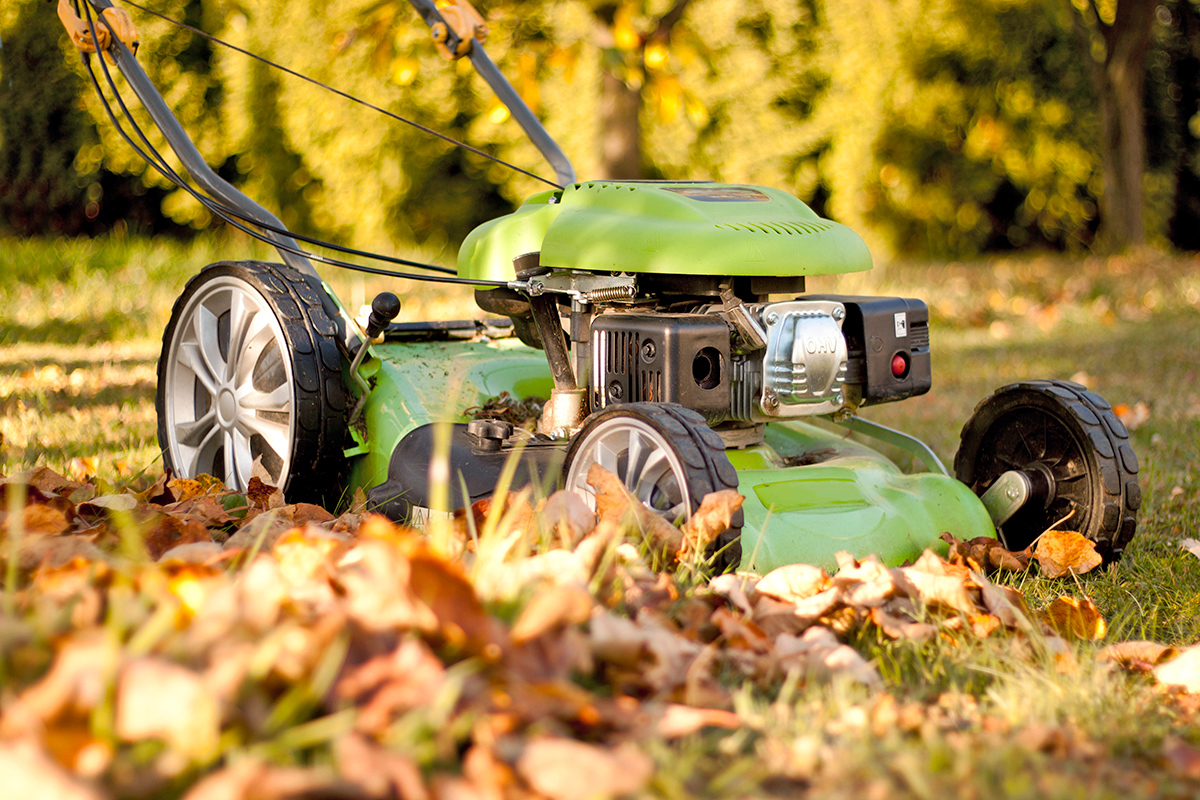
That’s right — put your leaf blower back in the garage and wheel out your mower instead. If leaves are left whole, they will form an impenetrable mat that overwhelms your grass. But if you run your mower over them repeatedly, until the pieces are about dime-sized, you get completely different results.

Related: The Secret to Mums That Last All Fall

The pieces are small enough that the grass can grow right up through them, keeping your lawn green and attractive (you often won’t even notice the leaves). Over the fall and winter, those chopped-up leaves will break down into compost, enriching your lawn and helping it retain moisture, which is a major bonus if you live in a dry climate. Your local ecosystem benefits, too, since many helpful insects and other small creatures rely on those leaves for protection in the winter and spring. Note: You may need to do a little raking if your leaves aren’t spread evenly, just to ensure your mower can mulch them and your entire lawn gets the benefit.

Advertisement

Other Tips and Pointers

If you have only a small quantity of leaves, you can scoop them into a trash can and use a string trimmer to pulverize them. Alternatively, if you have a lot of trees on your property, a stand-alone leaf shredder might be a better way to tackle the load. However you choose to do it, shredded leaves quickly become an asset rather than a liability.

If you don’t want to leave them on your lawn, one of the best ways to use them is as garden mulch. A layer of leaf mulch can help protect your perennials and fall-planted crops, such as garlic, from harsh winters. Then, when gardening season rolls around again, that same layer of mulch will help suppress weeds, retain moisture, and protect your plants from heat waves. If you have a compost pile, the leaves are also a valuable “brown” ingredient to balance your kitchen scraps and grass clippings and keep the compost active and healthy. So, don’t bag ’em, mulch ’em!

Advertisement
Featured Image Credit:  konecny/ Adobe Stock | Updated  Sep 6, 2025 |
Fred Decker
Writer
Fred Decker is a trained chef and former restaurateur. Since closing his restaurants over a decade ago he has been a prolific freelance writer, publishing several thousand articles on dozens of high-volume websites including Taste Of Home, Hunker, Tasting Table, Week&, eHow, and GOBankingRates. He lives on a rural acreage shared with a big garden, chickens, rabbits, and grandkids.
This article is for general informational purposes only.
Featured Image Credit:  konecny/ Adobe Stock | Updated  Sep 6, 2025 |
Advertisement
Food & Drink 2m read
0

Get Room-Temperature Eggs in Minutes With This Baking Hack

If your love of eggs is tempered by the fact that they’re so rarely the right temperature, your time has come. Refrigeration keeps them fresh, of course, but 36 degrees Fahrenheit isn’t the ideal temperature for baking cakes and other treats. There are workarounds — leaving your eggs on the counter for 30 to 60 minutes will bring them up to room temperature — but who wants to sit around when there are macarons to be made?

If your love of eggs is tempered by the fact that they’re so rarely the right temperature, your time has come. Refrigeration keeps them fresh, of course, but 36 degrees Fahrenheit isn’t the ideal temperature for baking cakes and other treats. There are workarounds — leaving your eggs on the counter for 30 to 60…

Waiting is less of a bother than having cold eggs cause the butter to clump during mixing, so soldier on we must. But there’s an easier, quicker way to get your eggs to room temperature, and it’s time we passed this arcane knowledge on to you.

The Warm Water Trick

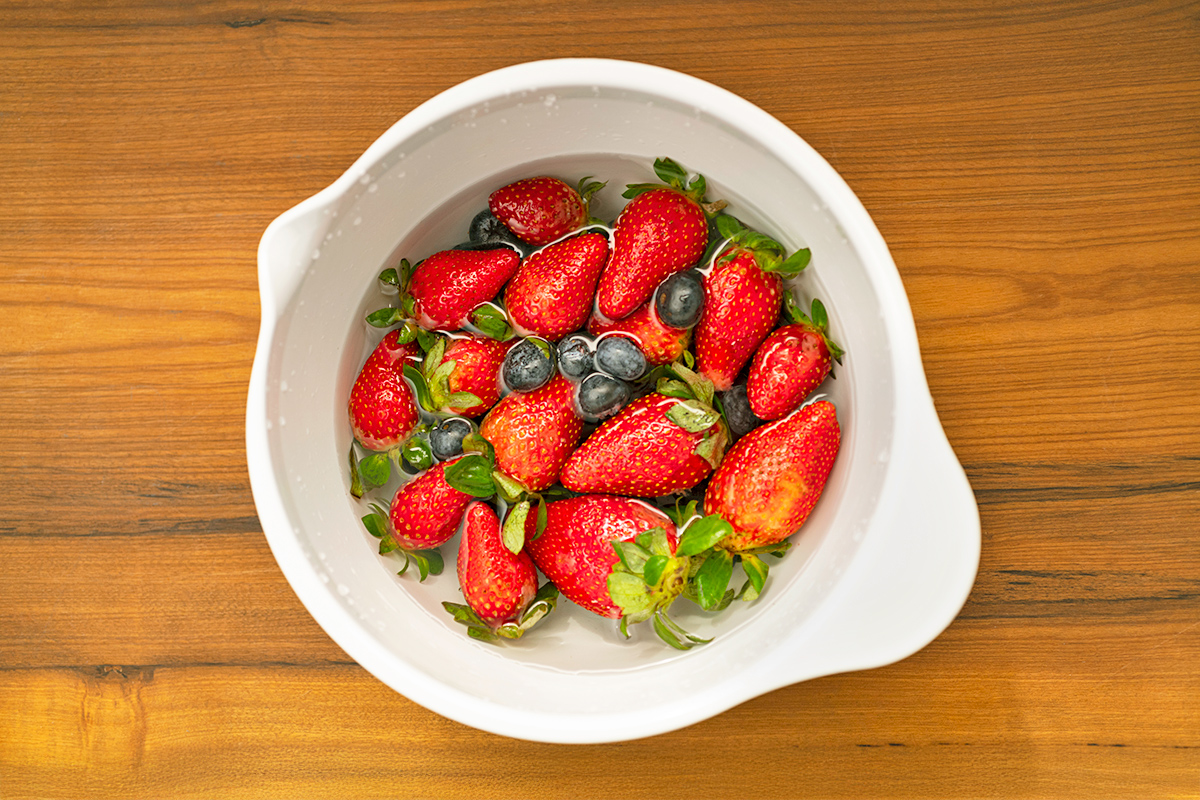
By “arcane,” we mean “simple,” of course, since the hack is not difficult at all. Just fill a bowl with warm (not hot) water, place the eggs in the bowl, and let them sit for five to 10 minutes while you complete other tasks for your recipe (such as measuring ingredients or greasing the pan). Voilà: perfectly room-temperature eggs for your next soufflé or cheesecake. The other ingredients won’t reharden, the eggs themselves will whip up with better volume and a lighter texture, and you’ll feel like a pro for not just winging it with cold eggs.

Advertisement
Related: How To Soften Butter in Minutes (No Microwave Required)

Speeding up the process this way has two major benefits: Whatever you’re cooking or baking will taste better, and you’ll be more encouraged to repeat the recipe in the future now that you know how to make it more efficiently. It’s a win-win that makes the journey as rewarding as the destination.

Advertisement
Advertisement
Cleaning 2m read
0

3 Things You Can Clean With a Lint Roller

When cleaning your house, how often do you reach for your lint roller? If you’re only using it to spruce up your clothes, you’re missing out. These simple tools are a powerful cleaning product. Not only are they affordable and available everywhere, but they can also clean an impressive variety of items in your home. Here are three things you may not have realized you can easily clean with a lint roller.

All featured products and deals are selected independently and objectively by the author. House Outlook may receive a share of sales via affiliate links in content.

When cleaning your house, how often do you reach for your lint roller? If you’re only using it to spruce up your clothes, you’re missing out. These simple tools are a powerful cleaning product. Not only are they affordable and available everywhere, but they can also clean an impressive variety of items in your home.…

1. Lampshades

If you’re a pet parent, you know that lampshades are essentially magnets for dog and cat hair. They also collect tons of dust and other debris, and are notoriously hard to clean because of their awkward shape. A mini lint roller is the perfect solution. Just make sure to roll it very gently, as lampshades are delicate and can be damaged easily.

Related: This Unexpected Tool Is a Pet Hair Magnet

2. Rugs and Carpets

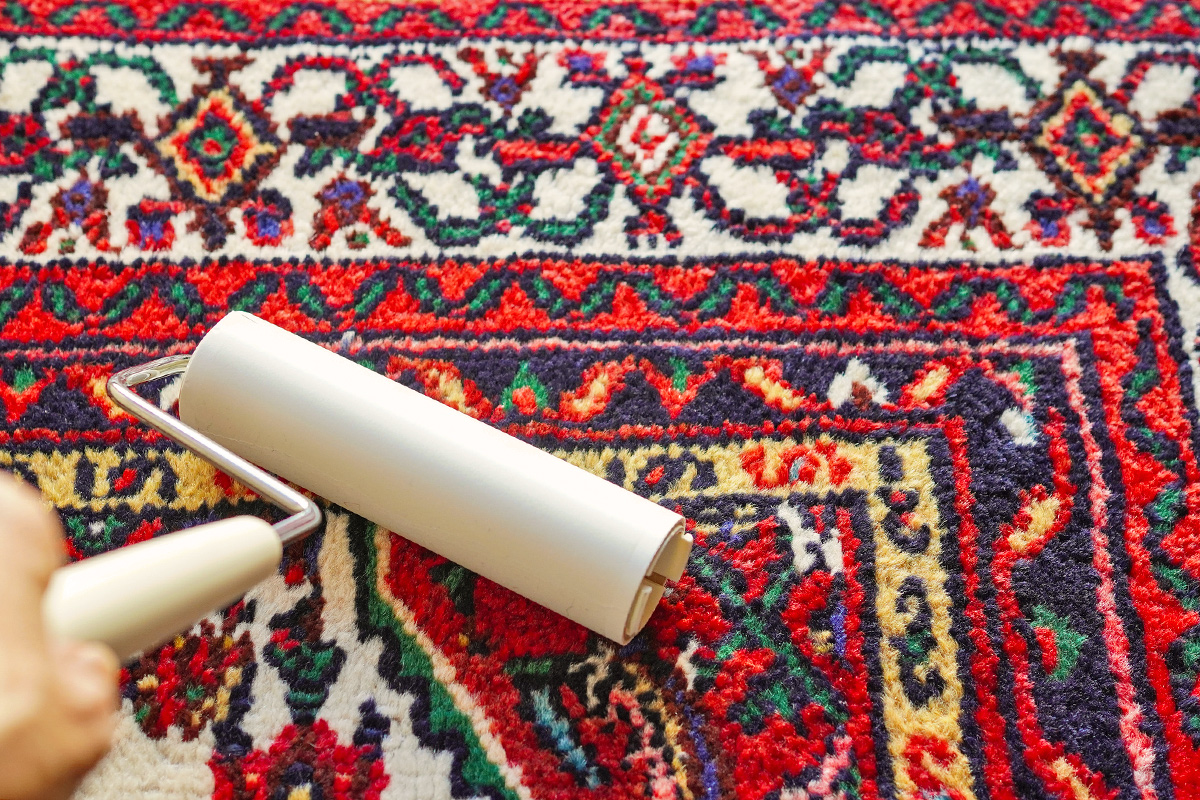
Have you ever vacuumed a rug and still felt like it wasn’t enough? Or have you ever spilled a vial of seed beads all over the floor while crafting? In either scenario, as long as you’re dealing with a relatively small area, a lint roller does a great job of grabbing those finer particles the vacuum missed. Just roll it over the offending area and watch the magic happen. You can even get an adaptable lint roller with an extendable handle that allows you to clean without bending over, which is a huge plus for your lower back.

Advertisement

3. Cabinets and Drawers

Similar to lampshades, the insides of cabinets and drawers can be tricky to clean. They collect impressive amounts of detritus, leaving you scratching your head as you try to figure out how to get it all out. If you’re dealing with crumbs, you can use a handheld vacuum to suck them out, but it doesn’t always pick up everything. Use a lint roller to grab those finer food crumbs and spilled spices. For the corners the lint roller can’t reach, use cotton swabs to get them sparkling clean.

Advertisement
Advertisement
Organizing 2m read
0

How To Store Casual Clothes Without Hogging Hangers

When it comes to organizing closets, you’ve likely wondered: Which clothes should I hang, fold, or roll? Pieces that are easily wrinkled (looking at you, linen), flowy fabrics, jackets, dresses, and delicate items should make their way onto hangers. Heavier items, such as sweaters and hoodies, are easy to fold. Last but not least is the rolling option, which is a perfect way to store your casual clothes — arguably the most beloved items in your closet.

All featured products and deals are selected independently and objectively by the author. House Outlook may receive a share of sales via affiliate links in content.

When it comes to organizing closets, you’ve likely wondered: Which clothes should I hang, fold, or roll? Pieces that are easily wrinkled (looking at you, linen), flowy fabrics, jackets, dresses, and delicate items should make their way onto hangers. Heavier items, such as sweaters and hoodies, are easy to fold. Last but not least is…

Why You Should Roll Loungewear and Activewear

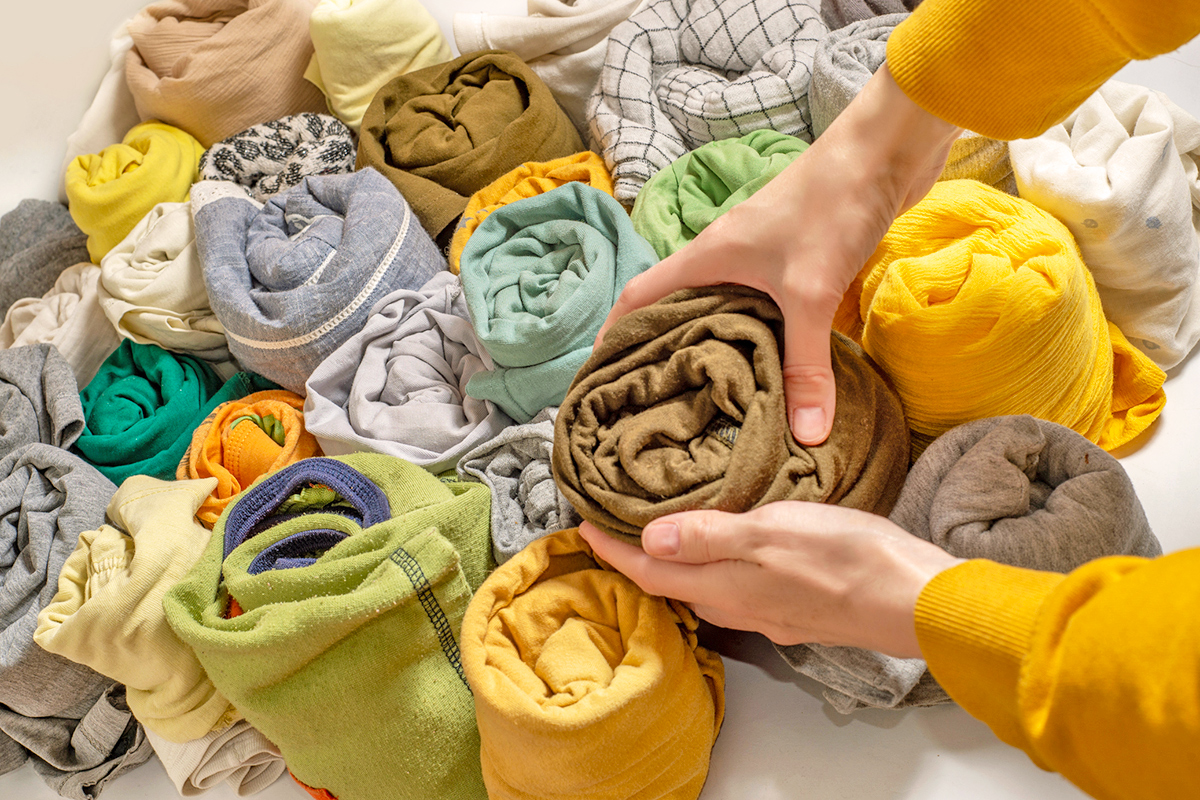
Rolling clothes isn’t just a space-saving packing technique to make room in your luggage. It’s also a fantastic method for organizing casual clothes such as activewear and loungewear. Sweatpants, shorts, pajamas, leggings, workout tops, and other casual pieces fall under the “roll” category.

Roll Your Way to More Closet Space

The act of rolling a piece of clothing is pretty self-explanatory (it’s one of the easiest ways to organize clothes, after all). But it’s how you store them that really saves hanger space in your closet.

Instead of squeezing rolled clothes into a dresser drawer, try using large baskets. This clears up precious closet space while making it easy to view and pick out your casual outfit of the day or night.

Advertisement
Related: This Jean-Hanging Hack Will Make Your Closet Look Like a Boutique

How To Minimize Wrinkling When Rolling Clothes

Since your casual clothes are made to be, well, casual, you might not care if there’s a little wrinkling. However, to prevent heavy wrinkles when rolling your clothes, first smooth out the item on a clean, flat surface. Then, roll it tightly enough to hold its shape, but not so tightly that it creates new wrinkles.

Advertisement
Advertisement
Home Improvement 4m read
0

The One Thing You Must Do Before Turning On Your Heat This Season

With colder weather on the horizon, it’s time to start thinking about getting those puffer jackets out of storage and stocking up on copious amounts of hot cocoa mix. It’s also just about time to turn on the heat for the first time in months. Before you do, though, there’s one related task that you should always deal with first. This simple yet essential step will help your furnace run smoothly and effectively throughout the colder months.

All featured products and deals are selected independently and objectively by the author. House Outlook may receive a share of sales via affiliate links in content.

With colder weather on the horizon, it’s time to start thinking about getting those puffer jackets out of storage and stocking up on copious amounts of hot cocoa mix. It’s also just about time to turn on the heat for the first time in months. Before you do, though, there’s one related task that you…

Locate the Furnace Filter

When was the last time you changed your furnace’s air filter? And furthermore, did you even know that it had an air filter? In any case, it’s worth swapping it out every three months. A new filter can improve your air quality, boost heating efficiency, and extend the life of the unit in a major way.

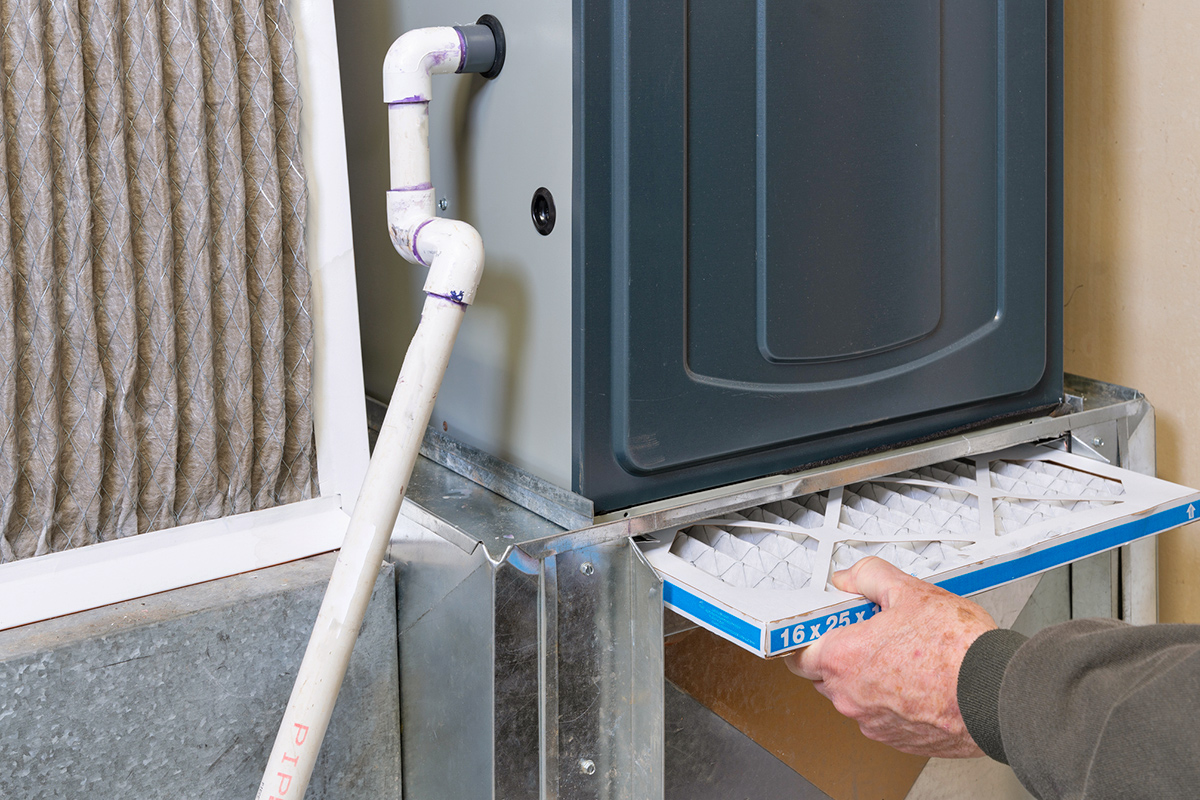
The very first step is to turn off the heating system — otherwise you risk potential injury or damage to the furnace. Next, locate the unit’s air filter, which may be in a variety of places, depending on the model.

Related: Helpful Hacks To Lower Your Heating Costs During the Colder Months

The two most common locations are inside the furnace itself or within a return air vent. A furnace filter is typically located in the blower compartment, often behind a removable door or panel. Alternatively, your filter may be in a large return air vent, behind the grille where air is drawn into your HVAC system. These vents are most often found on a wall, ceiling, or floor.

Consult your unit’s manual if you’re not sure where the filter is. Once you’ve found it, remove the old filter, use a shop vac to suck up any dust or debris from the filter slot, then slide the new filter into place. Finally, turn your heating system back on.

Advertisement

How To Choose the Right Filter

When shopping for a furnace air filter, consider whether you value energy efficiency, improved air quality, or a balance of both. Most products sold today are labeled with a MERV (Minimum Efficiency Reporting Value) rating, an industry standard that measures how well a filter captures different-sized airborne particles on a scale of 1 to 20.

Thirteen and above is deemed a high rating; these filters are capable of trapping tiny particles including bacteria, smoke, smog, and allergens. However, the dense material restricts airflow, potentially overworking older or less powerful HVAC systems. This is why many people opt for something in the middle with a MERV rating between 8 and 11, which provides clean air without damaging the system.

Remember to buy the correct size filter, as needs vary by unit. It’s also important to install it the right direction; the arrows on the packaging should always point in the direction of the unit’s airflow. (If you’re still unsure, check out this helpful video from an Ace Hardware expert.)

Safety Tip

Before you fire up the furnace, it’s imperative to install working carbon monoxide detectors on every floor of your house. This colorless, odorless, and potentially fatal gas may leak from a faulty furnace and is impossible for humans to detect on their own. Check your existing detectors to make sure they’re working properly, install new ones in recommended locations, and/or replace any that are old or broken.

Advertisement
Featured Image Credit:  Bill Oxford/ iStock | Updated  Sep 6, 2025 |
Bennett Kleinman
Staff Writer
Bennett Kleinman is a New York City-based staff writer for Inbox Studio, covering topics for several brands including House Outlook and Better Report. He previously contributed to television programs such as "Late Show With David Letterman" and "Impractical Jokers," and digital publications like The Onion. Bennett is also a devoted New York Yankees and New Jersey Devils fan, and thinks plain seltzer is the best drink ever invented.
This article is for general informational purposes only.
Featured Image Credit:  Bill Oxford/ iStock | Updated  Sep 6, 2025 |
Advertisement
Gardening 3m read
0

Why You Should Plant Garlic Today

Some garden plants are finicky and high-maintenance, but not garlic. You’ll spend barely two hours from start to finish cultivating your year’s supply, including harvesting it next summer, and it needs little care. For most gardeners, autumn is the best time to get started. Here’s a quick beginner’s guide to growing garlic and why we do it when the rest of our garden is shutting down.

All featured products and deals are selected independently and objectively by the author. House Outlook may receive a share of sales via affiliate links in content.

Some garden plants are finicky and high-maintenance, but not garlic. You’ll spend barely two hours from start to finish cultivating your year’s supply, including harvesting it next summer, and it needs little care. For most gardeners, autumn is the best time to get started. Here’s a quick beginner’s guide to growing garlic and why we…

When To Plant Garlic

The ideal time to plant garlic is about four to six weeks before the ground freezes in your USDA growing zone. To be clear, we’re not talking about just the first frost, but about when the ground actually freezes solid. Depending on where you live, this can happen anytime from late September to December. If you’re growing in a warmer climate where the ground never freezes, don’t worry — you can still follow the same planting timeline.

This schedule caters to garlic’s natural life cycle. In the weeks before the ground freezes, it will put out roots but won’t produce any top growth. Then, as the soil thaws and the sun returns in spring, the green shoots will be among the first things to appear in your garden. By late July or early August, it will be ready to harvest.

How To Plant Garlic

You can grow out whatever garlic your supermarket sells (preferably organic), or buy garlic for planting from a nursery or seed supplier. Hardneck varieties, which have a woody stem in the middle of the bulb, are your best bet for northern and Midwest gardens. As a bonus, these are the types that produce garlic scapes (seed stems) in midsummer. Softneck varieties lack the central stem and are better suited for warmer climates.

Advertisement

Separate the individual cloves and plant the largest ones, as big cloves grow big bulbs. Plant each clove, peel still on, with the flat root end facing down and the pointy tip facing up, about 2 inches deep and 6 inches apart. Cover the soil with 3 to 5 inches of straw or mulch to protect them from harsh winter weather and suppress weeds in the spring. For best growth, be sure to water your bulbs consistently in spring and early summer, and consider using a bit of fish fertilizer every week or two.

Related: A Simple Trick for Getting the Garlic Smell Off Your Hands

Harvest and Storage

Hardneck garlic will put up scapes in mid-to-late June, so be sure to harvest and enjoy those while you’re waiting for your main crop. Your bulbs will usually be ready by late July or early August. Leave them to dry or “cure” in a well-ventilated space for a few weeks. Then, you can either hang them or pack them in paper bags and store them in a cool, dark place for the long term.

Advertisement
Featured Image Credit:  alicjane/ iStock | Updated  Sep 6, 2025 |
Fred Decker
Writer
Fred Decker is a trained chef and former restaurateur. Since closing his restaurants over a decade ago he has been a prolific freelance writer, publishing several thousand articles on dozens of high-volume websites including Taste Of Home, Hunker, Tasting Table, Week&, eHow, and GOBankingRates. He lives on a rural acreage shared with a big garden, chickens, rabbits, and grandkids.
This article is for general informational purposes only.
Featured Image Credit:  alicjane/ iStock | Updated  Sep 6, 2025 |
Advertisement
Food & Drink 3m read
0

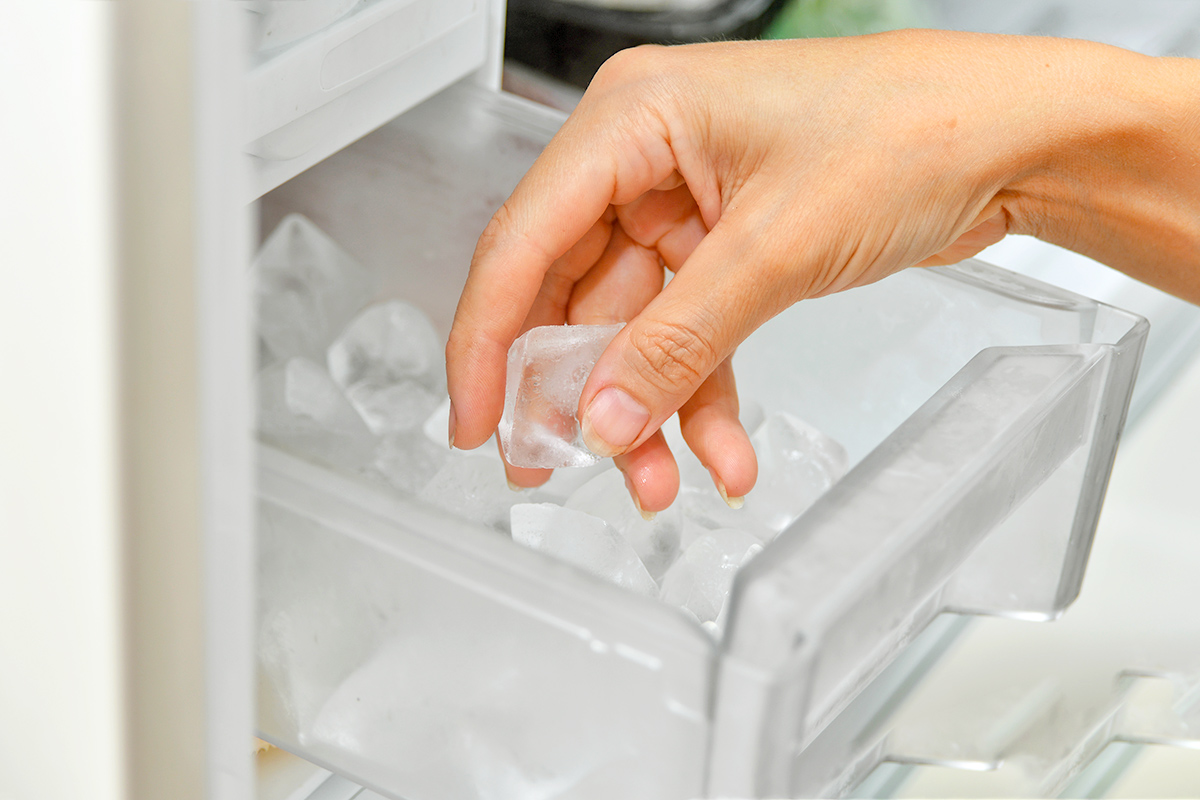
Why Your Ice Tastes Weird — And How To Fix It

If your drinks have a slightly funky aftertaste, don’t blame the beverage — your ice cubes might be the problem. Even crystal-clear cubes can carry an unpleasant flavor or odor, ruining an otherwise perfectly refreshing sip. So, what’s going on?

All featured products and deals are selected independently and objectively by the author. House Outlook may receive a share of sales via affiliate links in content.

If your drinks have a slightly funky aftertaste, don’t blame the beverage — your ice cubes might be the problem. Even crystal-clear cubes can carry an unpleasant flavor or odor, ruining an otherwise perfectly refreshing sip. So, what’s going on?

Ice easily absorbs smells and flavors from your freezer and the materials it’s stored in. That weird taste is more common than you’d think, and thankfully, it’s easy to prevent with a few simple changes.

The Problem: Ice Absorbs Everything

Ice acts like a sponge in your freezer. If you have exposed leftovers, open bags of frozen food, or old takeout containers, their odors can seep into your ice cubes. The longer the cubes sit, the stronger the taste.

Plastic ice cube trays can also be part of the problem. Many are made from porous materials that trap smells over time, transferring them to every new batch of ice.

The Fix: Clean Freezer, Better Tray

Start with a freezer overhaul. Toss any expired or smelly items and wipe down surfaces with a solution of baking soda and water. (Mix 1 tablespoon of baking soda with 1 quart of warm water and use a microfiber cloth dipped in the solution to get everything sparkling clean.) From now on, keep any strong-scented foods sealed in airtight containers.

Next, it’s time to upgrade your ice cube trays. Swapping out your plastic trays for a nonabsorbent stainless steel ice cube tray can make a noticeable difference. Stainless steel doesn’t trap odors, is easy to clean, and lasts much longer than most plastic alternatives. This stainless steel tray is a great place to start.

Finally, if you use an ice bin, make sure it has a lid and gets cleaned regularly. Uncovered cubes can develop that stale freezer flavor if they’re just sitting around.

Advertisement
What About Your Refrigerator’s Ice Maker?

If you primarily use ice cubes from your refrigerator’s automatic ice maker, start by dumping the existing cubes. Then, clean both the delivery chute and the storage bin with the baking soda and water mixture referenced above. Remember to replace your refrigerator’s water filter regularly, and consider placing an open box of baking soda near the storage bin to absorb odors.

Related: 3 Ways To Use Ice Cube Trays for Organizing

Bonus Tip: Use Filtered Water

If your freezer is clean and your tray is upgraded but your ice still tastes off, try using filtered water. Tap water can contain chlorine or minerals that affect flavor, but filtered water helps ensure your cubes taste fresh from the start.

Advertisement
Featured Image Credit:  andov/ Adobe Stock | Updated  Sep 6, 2025 |
Jill Layton
Writer
Jill Layton started writing professionally when she realized her emails and texts were kinda funny. She’s an affiliate shopping writer and lifestyle contributor for Scary Mommy, Bustle, Mic, and Best Products. She’s the mom of two alarmingly witty kids and the world’s most perfect dog.
This article is for general informational purposes only.
Featured Image Credit:  andov/ Adobe Stock | Updated  Sep 6, 2025 |
Advertisement
Decorating 3m read
0

The Furniture Trick That Instantly Opens Up a Room

When it comes to making a cramped room feel larger, you have two options. One: physically expand the footprint, an expensive and often unrealistic venture. Two: trick the eye into seeing more space by carefully choosing what you put (and don’t put) inside it. The secret to the latter, according to TikTok creator @itshomey_, who lives in a petite New York City apartment, is to furnish it with “open” furniture.

All featured products and deals are selected independently and objectively by the author. House Outlook may receive a share of sales via affiliate links in content.

When it comes to making a cramped room feel larger, you have two options. One: physically expand the footprint, an expensive and often unrealistic venture. Two: trick the eye into seeing more space by carefully choosing what you put (and don’t put) inside it. The secret to the latter, according to TikTok creator @itshomey_, who…

Bulky, boxy silhouettes can visually shrink a room. But open furniture — think slim-legged tables and transparent materials — allows light to flow through, creating a sense of spaciousness. These pieces don’t block sight lines, so even the tiniest home can feel breezier and more comfortable.

Related: 12 Design Tricks To Make a Small Room Feel More Spacious

For example, instead of a heavy bed frame with a velvet-upholstered headboard, try one with tall, visible legs and a rattan headboard. Swap out a chunky entertainment center for a media console on legs, or trade a closed bookcase for one with open sides. These simple switches are far from subtle; they reduce visual clutter, let floors peek through, and still provide plenty of storage and display space without overwhelming the room.

Advertisement

Types of Open Furniture

Living Room

Acrylic or glass coffee table: Transparent materials keep sight lines clear, unlike solid wood.

• Slim-legged sofa: A sofa or loveseat on legs allows the floor to be seen.

Open shelving unit or floating shelves: Display books and decor without the bulk of closed cabinets.

Bedroom

Platform bed with legs: Avoid bulky bases that block the floor.

Floating nightstands: Wall-mounted styles leave visible space underneath.

Slatted headboard: Add the structure of a headboard without the mass.

Garment rack: Instead of a heavy dresser, consider this more flexible alternative.

Advertisement

Dining Room

 Dining chairs with slatted or cane backs: Light passes through, creating an airier look.

Open buffet with shelving: Swap out a heavy sideboard with doors for a leaner option.

Entryway

Wall-mounted coat rack: Keep coats organized without a cumbersome armoire.

Bench with an open base: Tuck baskets underneath instead of relying on built-in drawers.

Home Office

Wire or mesh desk chair: These styles are lighter on the eyes than upholstered chairs.

Acrylic desk: Its transparency extends sight lines, which is especially helpful for small workspaces.

Desk with open cubbies: You’ll still have storage without the heaviness of drawers.

Advertisement
Featured Image Credit:  Orbon Alija/ iStock | Updated  Sep 5, 2025 |
Megan McCarty
Writer
Megan McCarty is a Los Angeles-based writer who covers the fun stuff: design, travel, wellness, beauty, and fashion. She has written for publications including Domino, The Spruce, MyDomaine, Bustle, and Rue Magazine. Her life rules include, but are not limited to, zipper when merging, contribute to your IRA, and do the nice thing.
This article is for general informational purposes only.
Featured Image Credit:  Orbon Alija/ iStock | Updated  Sep 5, 2025 |
Advertisement
Cleaning 3m read
0

The Easiest Way To Keep Baseboards Clean

If you’ve sworn off dryer sheets because of the potential damage they can cause your dryer and clothing, you likely have a half-empty box of them sitting around. Don’t let them collect dust in your laundry room — put them to use repelling dust from your baseboards. A single dryer sheet can help them look pristine and stay that way for weeks to come.

All featured products and deals are selected independently and objectively by the author. House Outlook may receive a share of sales via affiliate links in content.

If you’ve sworn off dryer sheets because of the potential damage they can cause your dryer and clothing, you likely have a half-empty box of them sitting around. Don’t let them collect dust in your laundry room — put them to use repelling dust from your baseboards. A single dryer sheet can help them look…

An Unexpected Dust-Buster

You might be wondering why you should use dryer sheets instead of a wet paper towel or a microfiber duster. The answer lies in the physical makeup of these tiny polyester rectangles. Dryer sheets are designed to repel static from clothing, and that same logic applies to baseboards. They leave behind an antistatic residue that helps repel dust and pet hair for weeks.

Related: A Dust-Busting Trick for Cleaning Under Appliances

Before you try this, we recommend giving your baseboards a more thorough cleaning, especially if it’s been a while since you last washed them. Just take a damp microfiber cloth and a bit of liquid dish soap or distilled white vinegar and wipe them down to remove any obvious dirt or pesky stains.

Advertisement

Once the baseboards are clean, rub a dryer sheet along them. Not only will this collect any remaining dust, but the antistatic residue will also act as a shield for several weeks or even months. Best of all, this method takes barely any time at all; you’ll need only a few minutes to quickly wipe down every baseboard in the room. And as a bonus, dryer sheets leave behind a pleasant scent that makes the space smell nice.

Back Problems? No Problem

If you have back problems or other ailments, it can be difficult to bend over and wipe baseboards with a dryer sheet. Thankfully, a tool such as the Swiffer Sweeper can solve this. It has a long handle, and the flat mop head features four grabbers on the top to hold cleaning pads in place. Instead of using the Swiffer-brand sweeping cloths it’s sold with, simply attach your preferred brand of dryer sheet to the flat mop head. This allows you to tackle the task without needing to bend over and put strain on your back.

Advertisement
Featured Image Credit:  Spiderstock/ iStock | Updated  Sep 5, 2025 |
Bennett Kleinman
Staff Writer
Bennett Kleinman is a New York City-based staff writer for Inbox Studio, covering topics for several brands including House Outlook and Better Report. He previously contributed to television programs such as "Late Show With David Letterman" and "Impractical Jokers," and digital publications like The Onion. Bennett is also a devoted New York Yankees and New Jersey Devils fan, and thinks plain seltzer is the best drink ever invented.
This article is for general informational purposes only.
Featured Image Credit:  Spiderstock/ iStock | Updated  Sep 5, 2025 |