Advertisement
Food & Drink 4m read
0

Want Tender, Juicy Chicken? Try This Easy Trick

Chicken is one of the most popular protein sources, and for good reason: It’s flavorful, versatile, and generally affordable. Its only real flaw is that it’s relatively easy to overcook. Ideally, chicken should be tender and juicy, but when it’s overdone, it can become dry and tough. Fortunately, there’s a simple and easy trick, beloved by chefs and home cooks alike, that can help you get juicy, tender chicken every time: brining.

All featured products and deals are selected independently and objectively by the author. House Outlook may receive a share of sales via affiliate links in content.

Chicken is one of the most popular protein sources, and for good reason: It’s flavorful, versatile, and generally affordable. Its only real flaw is that it’s relatively easy to overcook. Ideally, chicken should be tender and juicy, but when it’s overdone, it can become dry and tough. Fortunately, there’s a simple and easy trick, beloved…

How To Brine a Chicken

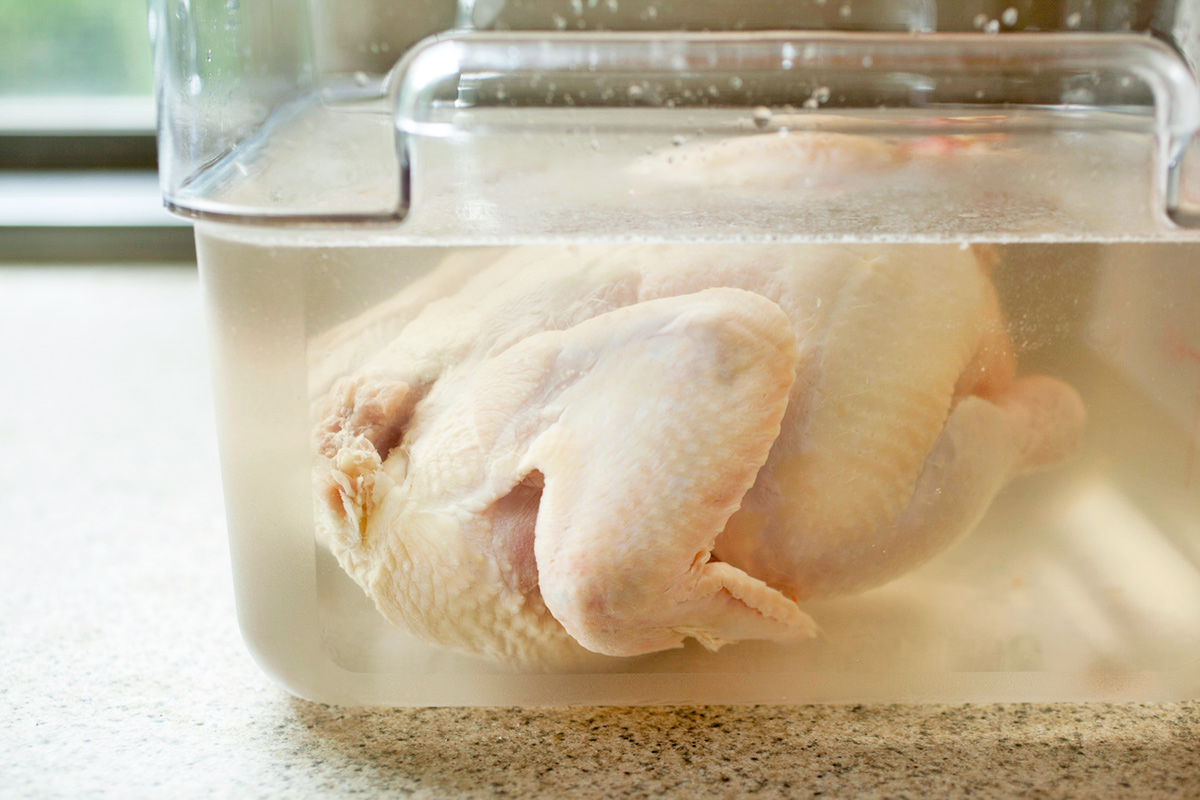
So, how does it work? Through a process called osmosis. When you put your bird in salted water, the salt alters the protein structure of the meat, allowing it to absorb some of the brine. Then, as the chicken cooks, that trapped brine seasons the meat and keeps it moist, providing a safeguard against overcooking.

The steps are easy to follow. You’ll need a container that can hold your chicken and won’t react with the salt or any acidic ingredients you add. Consider using glass, stainless steel, food-grade plastic, or ceramic. For easier cleanup, you can also use a leakproof freezer bag.

Add the chicken to the container and enough water to fully submerge it. Then, remove the chicken, measure the water you’ve used, and add enough salt to get the right concentration. A good rule of thumb is 1 cup of salt per gallon of water, but this is only a rough estimate because salt crystal sizes vary greatly. Table salt is finer than pickling salt, which is finer than Morton’s, which is finer than Diamond Crystal. It’s often helpful to use an online “brining calculator,” which lets you specify the type of salt you’re using for better accuracy.

Advertisement

Regardless of the salt you choose, a whole chicken should brine for at least four hours and no more than 12 hours. For boneless, skinless chicken breasts, you only need about 30 minutes to two hours. While brining chicken thighs is not always necessary, if you choose to do so, one to two hours should be sufficient. For bone-in cuts, allow two to four hours for brining.

Tip: Check the label to see if your chicken has been preseasoned. Those are likely already brined, so you won’t want to do it again.

Dry Brine Your Chicken

That may sound like a lot of work, and it can be. You’ll also need to make sure you have enough fridge space for a container full of bird and brine. This is why many cooks prefer dry brining, which means you don’t have to contend with a large container of salty water. A dry brine is as simple as rubbing your chicken with salt and letting it sit.

Advertisement

The process still works because the salt draws moisture from the chicken, which dissolves the salt and creates a small amount of concentrated brine. That brine is then reabsorbed into the bird, seasoning the meat and altering its structure just enough to help it retain its own moisture better. Not only is it a simpler method, but it also gives you a more concentrated chicken flavor.

Related: Why You Should Always Add a Carrot to Your Frying Pan

You don’t need as much salt, either — just about ½ ounce by weight, rubbed evenly all over a whole chicken or individual cuts. Simply leave the chicken — whether it’s a whole bird or individual cuts such as thighs or breasts — uncovered on a plate in the fridge overnight, and you’re good to go. There’s no need to rinse the chicken before cooking, as this can spread bacteria around your kitchen and wash away the flavor. Patting the meat dry, however, will help you achieve delicious, crispy skin.
Advertisement
Featured Image Credit:  haha21/ iStock | Updated  Sep 29, 2025 |
Fred Decker
Writer
Fred Decker is a trained chef and former restaurateur. Since closing his restaurants over a decade ago he has been a prolific freelance writer, publishing several thousand articles on dozens of high-volume websites including Taste Of Home, Hunker, Tasting Table, Week&, eHow, and GOBankingRates. He lives on a rural acreage shared with a big garden, chickens, rabbits, and grandkids.
This article is for general informational purposes only.
Featured Image Credit:  haha21/ iStock | Updated  Sep 29, 2025 |
Advertisement
Decorating 3m read
0

How Long Is Too Long To Burn a Candle?

Candles are one of life’s greatest little luxuries. They instantly set the mood, making any space — whether it’s a living room, a bedroom, or a bathroom — feel cozy while smelling incredible. But while lighting a candle may seem effortless, for safety’s sake, there’s actually some science behind how long you should let that flame burn.

All featured products and deals are selected independently and objectively by the author. House Outlook may receive a share of sales via affiliate links in content.

Candles are one of life’s greatest little luxuries. They instantly set the mood, making any space — whether it’s a living room, a bedroom, or a bathroom — feel cozy while smelling incredible. But while lighting a candle may seem effortless, for safety’s sake, there’s actually some science behind how long you should let that…

Burn it too briefly, and you’ll waste wax; burn it for too long, and you could damage the candle or the surface it sits on. Follow these simple burn-time guidelines to get the most glow for your buck.

Why You Shouldn’t Burn a Candle for More Than Four Hours

While there’s no need to set a timer, you should be careful not to burn a candle for longer than four hours at a time. After that mark, the wick can develop a “mushroom” — a carbon buildup that causes popping, uneven flames, and extra smoke. That’s not a relaxing way to bask in candlelight.

Excessive burn times also create a safety hazard. While candle jars are designed to handle warmth, they’re not intended to handle hours of intense heat. If the glass overheats, it can crack or shatter, which could lead to hot wax and broken glass all over your furniture.

How Long To Burn a Candle for Even Wax

Candle connoisseurs know the first burn is the most important. Don’t light it 15 minutes before your bedtime — it’s imperative to give the wax enough time to melt evenly across the entire vessel. This prevents the dreaded “tunneling” effect, where wax clings stubbornly to the sides (though there are tricks to fixing a tunneled candle).

Advertisement

So, how long should you let a candle burn? Burning it for one to three hours at a time will maximize your candle’s lifespan while keeping your home safe.

Related: A Quick Fix for Leaning Taper Candles
Bonus Tip: Don’t Forget To Trim the Wick

A little wick trim goes a long way. For a cleaner, longer-lasting burn, snip the wick to about a quarter-inch before each lighting. This step helps prevent wick mushrooming, reduces smoke, and keeps the flame even.

Advertisement
Featured Image Credit:  Anna Shvets/ Pexels | Updated  Sep 29, 2025 |
Megan McCarty
Writer
Megan McCarty is a Los Angeles-based writer who covers the fun stuff: design, travel, wellness, beauty, and fashion. She has written for publications including Domino, The Spruce, MyDomaine, Bustle, and Rue Magazine. Her life rules include, but are not limited to, zipper when merging, contribute to your IRA, and do the nice thing.
This article is for general informational purposes only.
Featured Image Credit:  Anna Shvets/ Pexels | Updated  Sep 29, 2025 |
Advertisement
Cleaning 3m read
0

Pine-Sol in Laundry? Here’s Why It’s a Game-Changer

Tired of Tide? Done with Downy? Gaining nothing from Gain? If so, we may have the solution to your laundry woes. Believe it or not, Pine-Sol — yes, the multipurpose cleaner — is a surprisingly effective tool for eliminating strong, musty odors from clothing. Here’s why you should give this game-changing tactic a try.

All featured products and deals are selected independently and objectively by the author. House Outlook may receive a share of sales via affiliate links in content.

Tired of Tide? Done with Downy? Gaining nothing from Gain? If so, we may have the solution to your laundry woes. Believe it or not, Pine-Sol — yes, the multipurpose cleaner — is a surprisingly effective tool for eliminating strong, musty odors from clothing. Here’s why you should give this game-changing tactic a try.

More Than Just a Fresh Scent

Unlike other multisurface cleaners, Pine-Sol is perfectly safe to use in a laundry load, as long as you add it to a wash with only water and regular detergent. Be sure to never mix Pine-Sol with bleach or ammonia (or anything containing either of those ingredients), as that can produce toxic fumes. As long as you follow this one (very important!) rule, it’s completely fine, a fact confirmed on the brand’s own website.

Start by sorting your laundry into whites and colors. Then, add one of the piles of clothes to the machine along with your regular detergent — just make sure it’s bleach- and ammonia-free.

Related: This Genius Laundry Hack Can Significantly Reduce Drying Time

Before you start the wash, add ¼ cup of Pine-Sol Multisurface Cleaner to the main wash compartment — avoid adding it directly into the drum or the softener compartment. It’s safe to mix Pine-Sol with your detergent in the main wash compartment but be careful not to overfill it. Now, continue the wash and dry cycles as normal, and your laundry will come out fresher than ever. You might also notice that the inside of your washing machine looks cleaner after using this method.

Advertisement

This trick works particularly well for tackling those gross, musty odors that regular detergents may struggle to eliminate. It’s also capable of getting rid of tougher grease and oil stains, so consider trying it with your next load of odorous or heavily stained laundry.

Test Before You Wash

According to the parent company, “Pine-Sol Multisurface Cleaner is recommended for colorfast items only.” So, before you use it, you should always spot-test your clothing. Here’s how: Apply a single drop of Pine-Sol to a concealed, colorful area of the garment, wait five minutes, and then rinse it out with water. After the spot has dried, if the color remains unchanged, it’s safe to use. But if you notice any discoloration, it’s best to avoid using Pine-Sol with that piece of clothing.

Advertisement
Featured Image Credit:  SOPA Images Limited/ Alamy Stock Photo | Updated  Sep 29, 2025 |
Bennett Kleinman
Staff Writer
Bennett Kleinman is a New York City-based staff writer for Inbox Studio, covering topics for several brands including House Outlook and Better Report. He previously contributed to television programs such as "Late Show With David Letterman" and "Impractical Jokers," and digital publications like The Onion. Bennett is also a devoted New York Yankees and New Jersey Devils fan, and thinks plain seltzer is the best drink ever invented.
This article is for general informational purposes only.
Featured Image Credit:  SOPA Images Limited/ Alamy Stock Photo | Updated  Sep 29, 2025 |
Advertisement
Organizing 3m read
0

Why Every Home Needs an ‘I Don’t Know’ Bin

Every home has that random collection of items you don’t quite know what to do with but you’re hesitant to toss: a mysterious plastic piece that looks like it belongs to something important, an unfamiliar key, a charger that you’re sure connects to a gadget you once owned. Instead of letting these miscellaneous objects sit on countertops, in junk drawers, and on shelves for who knows how long, give them a home of their own: the “I Don’t Know” bin.

All featured products and deals are selected independently and objectively by the author. House Outlook may receive a share of sales via affiliate links in content.

Every home has that random collection of items you don’t quite know what to do with but you’re hesitant to toss: a mysterious plastic piece that looks like it belongs to something important, an unfamiliar key, a charger that you’re sure connects to a gadget you once owned. Instead of letting these miscellaneous objects sit…

What Is an “I Don’t Know” Bin?

At its core, the “I Don’t Know” bin is exactly what it sounds like: a simple container for all those items you can’t immediately categorize. It isn’t about creating clutter; it’s about containing it. By designating one spot, you don’t have to stress or even think about where something should go in the moment. No more agonizing over whether that stray Allen wrench belongs in the toolbox or the kitchen drawer. Drop it in the bin and move on with your day.

Related: This One Question Will Change How You Declutter

How It Can Help

The beauty of this system is that it provides both order and flexibility. Life is full of those “just in case” moments, and chances are good that the item you’ll be searching for weeks later is sitting in your bin. That once-mysterious plastic piece? Turns out it’s from your kid’s toy that has resurfaced. And that unidentified key? It unlocks the padlock you swore you’d never lose the key to.

Advertisement

To make the most of your “I Don’t Know” bin, keep it small to medium in size and store it somewhere central and accessible, such as a hall closet, utility room, or even a shelf in the garage. It should be easy to toss items in, but not so out of the way that you forget it exists. Every few months, do a quick sift through. Some items will reveal their purpose, some will no longer be relevant, and others may earn a more permanent spot. (But if it’s been there for a year or more, you can safely assume it’s garbage.)

In a world where organization often feels like an endless battle, the “I Don’t Know” bin is refreshingly realistic. It acknowledges that not everything has an immediate place, and that’s OK. By containing those mystery items in one spot, you reclaim surfaces, save time, and may even solve the puzzle of that extra screw you found rolling on the floor.

Advertisement
Featured Image Credit:  KM6064/ iStock | Updated  Sep 22, 2025 |
Jill Layton
Writer
Jill Layton started writing professionally when she realized her emails and texts were kinda funny. She’s an affiliate shopping writer and lifestyle contributor for Scary Mommy, Bustle, Mic, and Best Products. She’s the mom of two alarmingly witty kids and the world’s most perfect dog.
This article is for general informational purposes only.
Featured Image Credit:  KM6064/ iStock | Updated  Sep 22, 2025 |
Advertisement
Home Improvement 3m read
0

How To Drill Into Drywall Without Making a Mess

It doesn’t matter if you’re Bob Vila or Bob the Builder — drilling into drywall creates a major mess. Those tiny specks of dust and debris can easily scatter around the room and are a nightmare to clean up. But there is a surprisingly simple way to keep the mess contained, and all you’ll need is one common item you probably have lying around the office.

All featured products and deals are selected independently and objectively by the author. House Outlook may receive a share of sales via affiliate links in content.

It doesn’t matter if you’re Bob Vila or Bob the Builder — drilling into drywall creates a major mess. Those tiny specks of dust and debris can easily scatter around the room and are a nightmare to clean up. But there is a surprisingly simple way to keep the mess contained, and all you’ll need…

Grab a Post-It, Posthaste

Post-it notes are more than just a convenient way to jot down a quick note at work; they’re also very useful for catching the mess when you’re drilling into drywall. Here’s how it works: Take a single Post-it note and stick it onto the drywall about an inch below where you plan to drill. Then, fold the bottom half of the note up and away from the wall, creasing it in the middle to create a tiny folded shelf that hangs on the wall.

As you drill, the Post-it note should catch all of the tiny shavings before they ever hit the ground. Once you’re done, carefully unstick the note and throw it all in the trash — it’s that simple.

Other Sticky Solutions

If you don’t have a Post-it note handy, there are a few other options you can try. For instance, you can use painter’s tape, which sticks to the drywall without causing damage. Take a 6-inch piece of tape and fold it in half lengthwise so it forms a “V” shape. Then, press the folded edge of the “V” against the wall, just under your drilling spot. The bottom strip of sticky tape will hold it in place, while the top strip sticks out to create a little shelf that catches falling drywall dust.

Advertisement
Related: A Surprisingly Easy Way To Locate Wall Studs

Alternatively, you can use a standard envelope. Grab a piece of masking tape or painter’s tape and affix the envelope to the wall so the open pouch will catch all the drywall shavings. All three of these methods follow the same logic, and it simply comes down to what sticky material you have around the house. If you’re not convinced, just think of all the time you’ll save on cleanup afterward. Now, get to drilling.

Advertisement
Featured Image Credit:  mixetto/ iStock | Updated  Sep 22, 2025 |
Bennett Kleinman
Staff Writer
Bennett Kleinman is a New York City-based staff writer for Inbox Studio, covering topics for several brands including House Outlook and Better Report. He previously contributed to television programs such as "Late Show With David Letterman" and "Impractical Jokers," and digital publications like The Onion. Bennett is also a devoted New York Yankees and New Jersey Devils fan, and thinks plain seltzer is the best drink ever invented.
This article is for general informational purposes only.
Featured Image Credit:  mixetto/ iStock | Updated  Sep 22, 2025 |
Advertisement
Gardening 3m read
0

Why You Should Never Throw Away Your Washed Rice Water

Whether it’s vegetable scraps made into a delicious stock or used coffee grounds repurposed for a rejuvenating body scrub, there are many ways to reuse what we already have on hand. In this economy, ensuring nothing goes to waste can help you save money and get more out of your grocery bill. And when it comes to groceries, rice is not only one of the best budget-friendly ingredients for your home-cooked meals but also one of the best DIY fertilizers for your houseplants.

All featured products and deals are selected independently and objectively by the author. House Outlook may receive a share of sales via affiliate links in content.

Whether it’s vegetable scraps made into a delicious stock or used coffee grounds repurposed for a rejuvenating body scrub, there are many ways to reuse what we already have on hand. In this economy, ensuring nothing goes to waste can help you save money and get more out of your grocery bill. And when it…

Rice Water as Fertilizer

The secret to making the best rice is to rinse it before cooking. This helps remove excess starch, so you don’t end up with clumpy rice. But don’t pour that rice water down the drain. Instead, use it to fertilize your plants.

Rice water is milky and murky and full of beneficial nutrients that can help plants thrive, including nitrogen, iron, calcium, phosphorus, potassium, vitamins, and minerals. The starches also feed soil microbes, which creates a healthier environment for roots to grow strong and new leaves to sprout.

How To Fertilize Plants With Rice Water

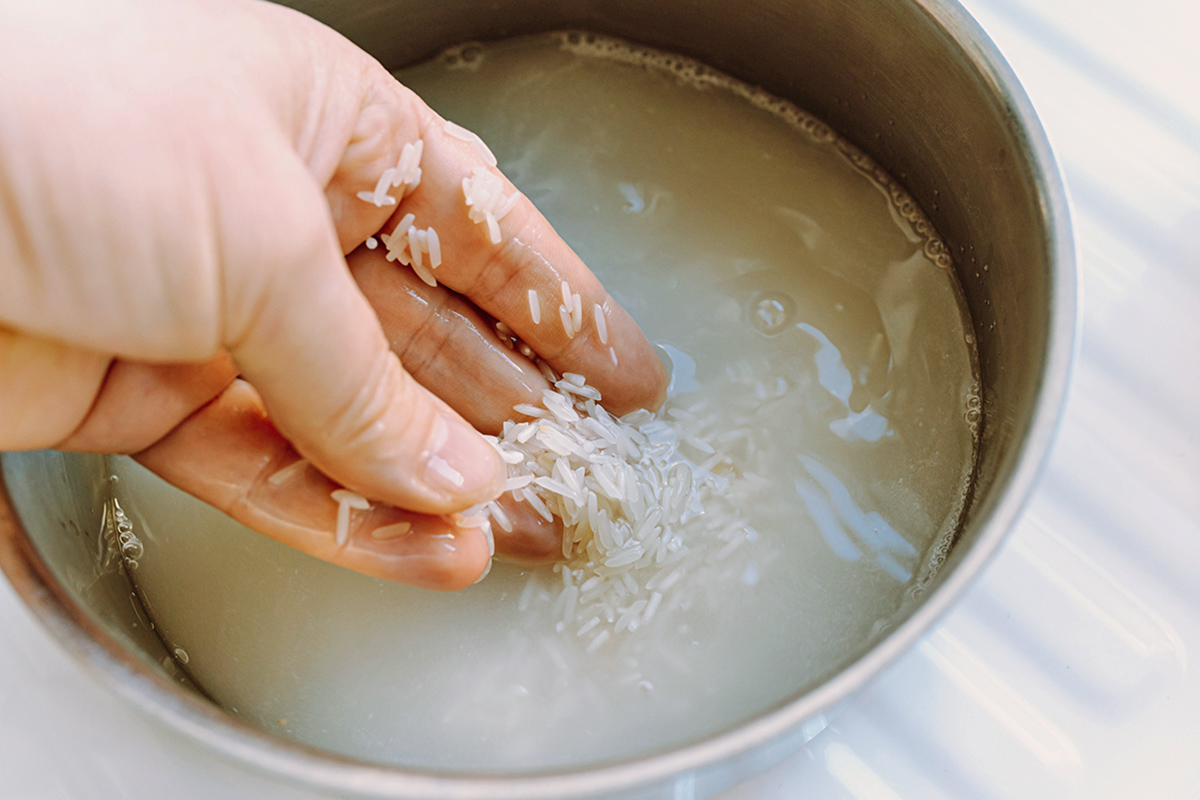
To fertilize plants with rice water, you’ll first need to make — or at least rinse — some rice. Start by measuring the rice and adding it to a mixing bowl. Fill the bowl with cold water until the rice is fully covered, and then use your hands to swish it around for about 10 seconds. Next, grab another bowl and a sieve, and strain the rice, letting the drained water collect in the new bowl underneath.

Advertisement
Related: Stop Your Plants From Leaning With This Free Fix

Once you’ve collected your rice water, pour it into a small watering can and add it to your plants’ soil. The amount to use depends on the plant, but a general rule of thumb is 1 cup (or less for smaller plants). As with other fertilizers, houseplants need rice water only one to two times per month during their growing season, so be careful not to overdo it. Providing them with too much rice water can result in overfertilization, which can lead to a range of problems, from root damage to nutrient imbalances.

Advertisement
Featured Image Credit:  Larisa Stefanuyk/ iStock | Updated  Sep 22, 2025 |
Jessie Quinn
Writer
Jessie Quinn is a Los Angeles-based lifestyle journalist with words published in PEOPLE, StyleCaster, Apartment Therapy, The Spruce, Byrdie, and more. She has a Bachelor's Degree in fashion journalism from Academy of Art University and her work spans across many categories, including style, beauty, home, health, crafts, and more.
This article is for general informational purposes only.
Featured Image Credit:  Larisa Stefanuyk/ iStock | Updated  Sep 22, 2025 |
Advertisement
Food & Drink 3m read
0

Make Your Potatoes Last Longer With Only a Cardboard Box

Potatoes are one of the world’s main staple crops, and for good reason. They grow in most climates, they’re solidly nutritious, and they keep pretty well. For our ancestors, that last part was crucial — they couldn’t just grab some at the supermarket if they ran out. Knowing how to store potatoes successfully was literally a matter of life and death. While it used to be as simple as popping them in a root cellar, most of us don’t have one of those today. In a modern kitchen, the best way to store potatoes is surprisingly easy.

All featured products and deals are selected independently and objectively by the author. House Outlook may receive a share of sales via affiliate links in content.

Potatoes are one of the world’s main staple crops, and for good reason. They grow in most climates, they’re solidly nutritious, and they keep pretty well. For our ancestors, that last part was crucial — they couldn’t just grab some at the supermarket if they ran out. Knowing how to store potatoes successfully was literally…

How To Keep Potatoes Longer Without a Cellar

As you’d expect, the potato industry has this down to an exact science. According to the Idaho Potato Commission, that means a climate-controlled room with no light, 95% humidity, and a steady temperature of 45 degrees Fahrenheit. But that’s not practical for a kitchen, even for the most spud-obsessed cook.

Related: How To Peel Potatoes Effortlessly When You Don’t Have a Peeler

Instead, your best option might be a plain, corrugated cardboard box. Arrange the potatoes in a single layer, close the flaps, and put the box in a cupboard, pantry, or even a closet near your kitchen. The box provides a cozy environment that helps block out the light and allows the potatoes to respire, which discourages sprouting. If you have too many potatoes for a single layer, you’ll need to take a couple of additional steps. Place a sheet of corrugated cardboard between the layers to separate them and poke a few holes in the sides of the box and the cardboard divider to help air circulate. Otherwise, moisture will build up and damage the spuds.

Advertisement

Other Options for Storing Potatoes

Using the cardboard box method, your potatoes should last for a couple of months. If you don’t have space for a box, a paper bag with a few holes for airflow can also work. A mesh bag, such as an onion bag or a purpose-made produce bag, isn’t a bad choice either. Even the spuds’ original packaging is reasonably effective (they chose it for a reason), as long as you keep them in a cool, dark place. While your potatoes may not last as long or taste quite as good, it’s still better than keeping them in an open basket in your kitchen.

Advertisement
Featured Image Credit:  hxyume/ iStock | Updated  Sep 22, 2025 |
Fred Decker
Writer
Fred Decker is a trained chef and former restaurateur. Since closing his restaurants over a decade ago he has been a prolific freelance writer, publishing several thousand articles on dozens of high-volume websites including Taste Of Home, Hunker, Tasting Table, Week&, eHow, and GOBankingRates. He lives on a rural acreage shared with a big garden, chickens, rabbits, and grandkids.
This article is for general informational purposes only.
Featured Image Credit:  hxyume/ iStock | Updated  Sep 22, 2025 |
Advertisement
Decorating 3m read
0

If Your Room Feels Off, It’s Probably Missing This

Ever walk into a living room and feel a little … unsettled? It’s not you; it’s the layout. The furniture may be perfectly proportioned, the paint color just the right shade of soothing, and still, there’s a sense that something is off. The likely culprit? The focal point — or the lack of one.

Ever walk into a living room and feel a little … unsettled? It’s not you; it’s the layout. The furniture may be perfectly proportioned, the paint color just the right shade of soothing, and still, there’s a sense that something is off. The likely culprit? The focal point — or the lack of one.

“Focal points are so important because the eye always needs an initial landing spot, a place for your brain to settle before you can take in the rest of the room,” says interior designer Gray Benko, co-founder of Gray Benko Home.

Without a visual anchor, the space’s design will be adrift. But if you intentionally include one, your living room will not only look better, but also feel better.

Related: How To Combine Styles Like an Interior Designer

Why Your Living Space Needs a Focal Point

A focal point completes a room. “Without [it], you are left floating off in space, not sure of what to look at first,” Benko says, adding that it helps you “to settle in and take in the vibe of the room you are standing in.”

Fireplaces and televisions are common anchors, but there are plenty of other options, too. Benko prioritizes aesthetics over function when choosing one. “Wherever the eye naturally lands first, I want it to be interesting! That is the No. 1 requirement,” she says. That could mean a jewel-toned velvet sofa, a dramatic piece of wall art, or a picture window that frames the outdoors.

Advertisement

Balance Is Key

Once your main attraction is established, the rest of the decor should complement it, not compete for your eye’s attention. There’s no need to limit yourself to just one focal point, but Benko suggests capping it at one focal point per wall. “I love it when a room can pique your interest and then hold onto it by giving you multiple points of visual interest to explore,” she says. “It’s all about balance.” Your focal point should set the tone, while the surrounding details support the story. This creates depth without cluttered chaos.

Bonus Tip: An Affordable Focal Point

For a budget-friendly focal point, Benko recommends surrounding a standout piece of furniture — bonus points if it’s antique — with a one-of-a-kind gallery wall. “The quirkier the art, the better,” she says. No need to splurge, either. Antique malls and thrift stores are full of fun, affordable treasures. Benko recommends, “Pay close attention to what catches your eye when you are shopping and pick the pieces that you are most drawn to.”

Advertisement
Featured Image Credit:  Sameh AlAbhar/ Unsplash | Updated  Sep 22, 2025 |
Megan McCarty
Writer
Megan McCarty is a Los Angeles-based writer who covers the fun stuff: design, travel, wellness, beauty, and fashion. She has written for publications including Domino, The Spruce, MyDomaine, Bustle, and Rue Magazine. Her life rules include, but are not limited to, zipper when merging, contribute to your IRA, and do the nice thing.
This article is for general informational purposes only.
Featured Image Credit:  Sameh AlAbhar/ Unsplash | Updated  Sep 22, 2025 |
Advertisement
Cleaning 3m read
0

3 Simple Hacks To Keep Spiders Out of Your Home

For a lot of us, spiders are among the creepiest things we can expect to find crawling around the house, short of inviting the Addams Family over for dinner. These little critters aren’t there to hurt us and are probably looking for food or safety. But even so, many people would agree that these eight-legged pests are unwelcome houseguests. So, how can you keep the pesky arachnids from entering your home in the first place? It’s actually quite simple — here are a few easy preventative measures to try out.

All featured products and deals are selected independently and objectively by the author. House Outlook may receive a share of sales via affiliate links in content.

For a lot of us, spiders are among the creepiest things we can expect to find crawling around the house, short of inviting the Addams Family over for dinner. These little critters aren’t there to hurt us and are probably looking for food or safety. But even so, many people would agree that these eight-legged…

Run a Dehumidifier

Spiders are drawn to humid environments — there’s a reason the itsy-bitsy spider was crawling up the water spout in that famous nursery rhyme. This makes dehumidifiers ideal for keeping them at bay. By removing the moisture from the air, dehumidifiers create a dry environment that spiders find less hospitable. Consider running one in your bathroom, basement, garage, or anywhere else moisture may build and spiders may gather.

Related: Fruit Fly Invasion? Here’s How To Get Rid of Them

Spray Peppermint Oil

Due to its pungent aroma, peppermint oil is a fantastic natural spider repellent. Just fill a spray bottle with water and add a dash of liquid dish soap and about five to 10 drops of peppermint oil. Then, spray the mixture in any areas where spiders might enter your home, such as underneath doorways or along windowsills. The oil’s strong scent will deter spiders, prompting them to seek refuge elsewhere. Keep in mind that peppermint oil is toxic to pets when ingested or inhaled, so consider alternative methods if you have dogs or cats at home.

Advertisement

Scatter Cedarwood

Both cedarwood chips and cedarwood oil work similarly to peppermint oil, as their pungent aroma keeps spiders away. Place a few cedarwood chips (or shavings) in various areas around your home, such as in an undisturbed corner of a closet or along a kitchen windowsill. This will deter spiders from making a home in your home. Just make sure to replace the cedarwood chips as needed once they start to lose their pungency.

These are only a few of the many tips you can use to transform your personal space into an inhospitable environment for spiders. And don’t worry, because you won’t be hurting the creatures at all. You’ll just be telling them to spend the night elsewhere.

Advertisement
Featured Image Credit:  Mark Shurpo/ iStock | Updated  Sep 22, 2025 |
Bennett Kleinman
Staff Writer
Bennett Kleinman is a New York City-based staff writer for Inbox Studio, covering topics for several brands including House Outlook and Better Report. He previously contributed to television programs such as "Late Show With David Letterman" and "Impractical Jokers," and digital publications like The Onion. Bennett is also a devoted New York Yankees and New Jersey Devils fan, and thinks plain seltzer is the best drink ever invented.
This article is for general informational purposes only.
Featured Image Credit:  Mark Shurpo/ iStock | Updated  Sep 22, 2025 |
Advertisement
Organizing 3m read
0

This Bin Labeling Trick Makes Seasonal Swaps So Much Easier

If the thought of seasonal storage swaps has you dreading the next closet clean-out, there’s a simple trick that could change the game — and it starts with how you label your bins.

All featured products and deals are selected independently and objectively by the author. House Outlook may receive a share of sales via affiliate links in content.

If the thought of seasonal storage swaps has you dreading the next closet clean-out, there’s a simple trick that could change the game — and it starts with how you label your bins.

One Bin, Two Seasons

Home organizer and TikTok creator @spruced.by.kl shared a clever system that takes the guesswork out of storage transitions. Instead of dedicating separate bins for summer and winter gear (which quickly uses up valuable space), she recommends using a single bin for both seasons — labeling one side for summer and the other side for winter.

Related: Tips and Tricks for Storing Seasonal Clothing

Here’s how it works: Pack up your cold-weather items (such as jackets, scarves, gloves, and hats) in a bin and label one side of the bin with whatever’s inside, such as “sweaters” or “ski clothes.” When the seasons shift, simply flip the bin around, fill it with warm-weather essentials (think swimsuits, shorts, tanks, or beach towels) and label the opposite side. Each season as you empty out the bin and flip it around, you’re also reminding yourself which new seasonal items fit in the bin without having to guess. It’s simple, efficient, and totally repeatable.

This approach is especially helpful for anyone short on storage space, such as folks who live in apartments or families managing multiple wardrobes. It also cuts down on excess containers and makes your seasonal rotation feel less like a chore and more like a quick swap.

Advertisement

For added ease, use large, clear labels or write directly on the bin with a chalk marker so you can update or tweak the label as needed. You can easily apply this trick for storage beyond clothing, too, including seasonal decor, camping gear, or sports equipment.

Best of all, this method gives you a built-in limit. If your off-season items don’t fit in the bin, it might be time to declutter. So next time you’re staring down that pile of seasonal stuff, grab a bin, label it, flip it, and swap like a pro. Your future self (and your closet) will thank you.

Advertisement
Featured Image Credit:  Silvia Moraleja/ iStock | Updated  Sep 22, 2025 |
Jill Layton
Writer
Jill Layton started writing professionally when she realized her emails and texts were kinda funny. She’s an affiliate shopping writer and lifestyle contributor for Scary Mommy, Bustle, Mic, and Best Products. She’s the mom of two alarmingly witty kids and the world’s most perfect dog.
This article is for general informational purposes only.
Featured Image Credit:  Silvia Moraleja/ iStock | Updated  Sep 22, 2025 |