Advertisement
Home Improvement 3m read
65

The Hidden Fridge Setting That Saves Energy

Many people take vacations to relax and reenergize. But as you’re recharging by the pool, think of all the appliances back home that are using up electricity while you’re gone. Take the fridge, for example, which is full of perishables that would quickly spoil if you unplugged it. Thankfully, most modern refrigerators have a hidden vacation setting designed to keep your food cool and your energy bills low. Here’s how it works.

Many people take vacations to relax and reenergize. But as you’re recharging by the pool, think of all the appliances back home that are using up electricity while you’re gone. Take the fridge, for example, which is full of perishables that would quickly spoil if you unplugged it. Thankfully, most modern refrigerators have a hidden…

A Setting That Keeps You From Fretting

While Lindsey Buckingham once sang about “Holiday Road,” we’re singing the praises of “holiday mode.” Many modern refrigerators — from the early 2000s onward — are programmed with either a holiday mode or a vacation mode. On most models, switching to this setting raises the temperature inside the fridge compartment by about 10 to 15 degrees Fahrenheit. A normal, food-safe refrigerator temperature is 40 degrees Fahrenheit or below, but in holiday mode, the fridge typically maintains a warmer temperature of around 45 to 50 degrees Fahrenheit to conserve power.

Because of this, you should try to consume any perishables before taking off, leaving behind only low-risk items that are less likely to spoil with the slight increase in temperature. Think acidic or salty condiments, butter, pickles, olives, hard cheeses, jellies and jams, and unopened beverages.

Related: 10 Items Causing Your Electricity Bill To Skyrocket

What makes holiday mode so useful is that it doesn’t kill power to the whole unit. On most modern, dual-compartment appliances, the fridge takes a break while the freezer keeps running as normal — meaning your frozen perishables stay safe while saving you money on electricity.

Advertisement

Many refrigerators are programmed to automatically revert to their standard settings once the door is opened. That said, you should consult the manual to confirm whether that will happen with your fridge, as some models require you to switch the setting off before the fridge starts cooling at full power again.

If you’re unsure whether your fridge has a holiday mode, the quickest way to find out is by consulting the manual, as every model is different. You can also check the display panel for any vacation-themed icons, such as a plane or a beach umbrella. These are a sure sign that your fridge is equipped with this feature.

What if Your Fridge Doesn’t Have Holiday Mode?

Older refrigerators often lack a holiday mode, so you’ll have to take matters into your own hands. As a rule of thumb, if you’ll be away for more than three to four weeks, it may be worthwhile to unplug the refrigerator and defrost the freezer. Of course, you’ll need to use up or throw away everything inside of it, but the energy savings can outweigh those losses. Don’t forget to clean the appliance, dry it thoroughly, and leave the doors cracked to prevent mold. For shorter trips of less than two weeks, it’s best to leave the refrigerator plugged in and remove any perishables before jetting off.

Advertisement
Featured Image Credit:  Jakob Berg/ iStock | Updated  Dec 19, 2025 |
Bennett Kleinman
Staff Writer
Bennett Kleinman is a New York City-based staff writer for Inbox Studio, covering topics for several brands including House Outlook and Better Report. He previously contributed to television programs such as "Late Show With David Letterman" and "Impractical Jokers," and digital publications like The Onion. Bennett is also a devoted New York Yankees and New Jersey Devils fan, and thinks plain seltzer is the best drink ever invented.
This article is for general informational purposes only.
Featured Image Credit:  Jakob Berg/ iStock | Updated  Dec 19, 2025 |
Advertisement
Food & Drink 3m read
106

The Secret to Super Crispy Oven-Roasted Potatoes

Potatoes are one of the most versatile — and delicious — vegetables around. You can eat them with any meal, at any time of day, and the ways to prepare them are virtually endless. Still, there’s one thing about potatoes that constantly befuddles home chefs: How do you get roasted potatoes as crispy as the ones served in restaurants?

All featured products and deals are selected independently and objectively by the author. House Outlook may receive a share of sales via affiliate links in content.

Potatoes are one of the most versatile — and delicious — vegetables around. You can eat them with any meal, at any time of day, and the ways to prepare them are virtually endless. Still, there’s one thing about potatoes that constantly befuddles home chefs: How do you get roasted potatoes as crispy as the ones served…

Something Crispy This Way Comes

There’s a simple trick to this using something you probably already have in your pantry: cornstarch. America’s Test Kitchen is credited with creating this method, and it works like a charm. Here’s how to do it:

Grab a bag of Yukon Gold baby potatoes, or another small variety, and cut them in half. If your potatoes vary in size, cut the larger ones down so all the pieces are uniform. In a microwave-safe bowl large enough to hold your potatoes, whisk together 2 tablespoons of cornstarch and 1/2 cup of water. (This ratio is for 1 1/2 pounds of potatoes; adjust the measurements proportionally for larger or smaller batches.)

Related: Make Your Potatoes Last Longer With Only a Cardboard Box

Microwave the mixture in 20-second increments until it forms a gooey, jellylike substance. Next, add your potatoes to the bowl and use your hands to coat them thoroughly. This coating is what helps the potatoes get nice and crunchy on the outside while remaining creamy on the inside.

Advertisement

Preheat your oven to 425 degrees Fahrenheit. Coat a sheet pan with both cooking spray and a neutral oil with a high smoke point (e.g., avocado oil, grapeseed oil, vegetable oil, or canola oil). Don’t skip the cooking spray — its specific ingredients offer that extra bit of slip needed to keep the potatoes from sticking. Place your potatoes cut-side down on the sheet pan and tent it with aluminum foil. Roast in the oven for 15 minutes. The foil tent steams the potatoes, helping them achieve that wonderfully fluffy interior.

Next, remove the foil and return the pan to the oven until the potatoes are perfectly browned and crisp. This step typically takes 15 to 20 minutes, though you may need a bit longer depending on the size of your spuds.

Just before serving, toss the potatoes with your desired seasonings and pop them back in the oven for five more minutes to get them ultra-crispy.

Advertisement
Advertisement
Decorating 3m read
143

The Trick Designers Use To Mix Patterns Perfectly

If you’ve ever tried mixing patterns at home — floral wallpaper here, gingham pillows there, a checkered rug for good measure — and wound up with a room that feels a little dizzying, you’re not alone. According to TikTok creator and interior designer Lily Walters, many people make the same mistake when decorating: They try to design with both color and pattern at the same time.

If you’ve ever tried mixing patterns at home — floral wallpaper here, gingham pillows there, a checkered rug for good measure — and wound up with a room that feels a little dizzying, you’re not alone. According to TikTok creator and interior designer Lily Walters, many people make the same mistake when decorating: They try…

The result is visual chaos. Fortunately, there’s an easy fix. With a simple mindset shift and a few smart guidelines, you’ll be layering prints like a pro in no time.

First, Decide What Kind of Decorator You Are

Walters says there are two kinds of decorators: color people and pattern people. While many of us try to be both, the results often feel disjointed. The real magic happens when you pick a lane.

If you’re drawn to color, let your home come alive through rich hues and bold contrasts. Lean into saturated paint, statement upholstery, and materials that carry your preferred color palette across the room. Let your colors do the talking while keeping patterns to a minimum.

Related: Create a Whole Home Color Palette That Looks Expertly Designed

If you’re more of a pattern person, focus on texture and layering. Consider adding wallpaper, patterned rugs, graphic tile, and printed upholstered furniture to build a collected, dimensional look. Don’t just pick your prints haphazardly — instead, use them within a structured framework.

Advertisement

Keep the Palette Tight and the Patterns Balanced

For pattern lovers, Walters says successful mixing comes down to two key rules:

1. Stick to Two or Three Tones

A tight color palette keeps the room cohesive. Whether you’re playing with stripes, florals, geometrics, animal prints, or all of the above, repeating the same curated colors makes every element feel intentional rather than overwhelming.

2. Mix the Scale of the Patterns

Varying the scale of the patterns is essential for a balanced, purposeful look. Aim for a mix of one large, one medium, and one small print. Then, let solid colors  — perhaps on your furniture or walls — act as the visual breathing space between them. By varying the scale, you allow the eye to rest, ensuring your patterns look expertly styled instead of noisy.

Advertisement
Featured Image Credit:  Clay Banks/ Unsplash+ | Updated  Dec 19, 2025 |
Megan McCarty
Writer
Megan McCarty is a Los Angeles-based writer who covers the fun stuff: design, travel, wellness, beauty, and fashion. She has written for publications including Domino, The Spruce, MyDomaine, Bustle, and Rue Magazine. Her life rules include, but are not limited to, zipper when merging, contribute to your IRA, and do the nice thing.
This article is for general informational purposes only.
Featured Image Credit:  Clay Banks/ Unsplash+ | Updated  Dec 19, 2025 |
Advertisement
Cleaning 3m read
2,394

How To Eliminate Mold From Your Front-Load Washer

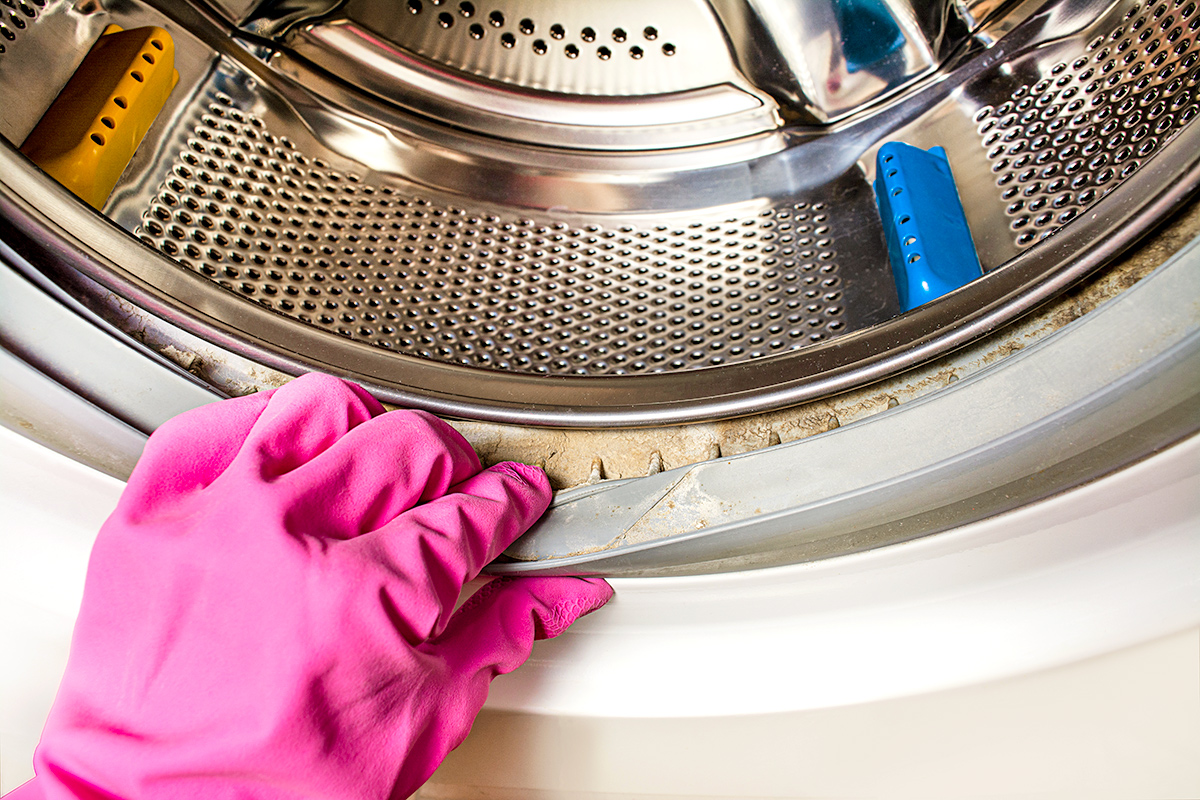
Front-load washers are efficient, quiet, and great for conserving water, but they’re also notorious for harboring mold. Airtight seals trap moisture, leading to musty odors and mold growth along the rubber gasket. If replacing the door seal is beyond your DIY abilities, don’t worry — you can still eliminate the mold and the stubborn stains it leaves behind.

All featured products and deals are selected independently and objectively by the author. House Outlook may receive a share of sales via affiliate links in content.

Front-load washers are efficient, quiet, and great for conserving water, but they’re also notorious for harboring mold. Airtight seals trap moisture, leading to musty odors and mold growth along the rubber gasket. If replacing the door seal is beyond your DIY abilities, don’t worry — you can still eliminate the mold and the stubborn stains it…

Why Front-Load Washers Get Moldy

Because front-loaders rely on rubber gaskets to keep water sealed inside, any moisture trapped within those folds becomes a breeding ground for mold. Add detergent residue or fabric-softener buildup to the mix, and you have a damp little ecosystem where mold thrives.

Related: This Dryer Trick Reduces Wrinkles and Energy Bills

How To Do a Monthly Deep Clean

Even if you make a habit of opening the door and detergent drawer to air them out, your machine still needs a deep clean about once a month. Start by removing any debris from the gasket and drum, then choose one of the following methods:

1. Run a cleaning tablet cycle: Drop a washing machine descaling tablet into an empty drum and run the hottest cycle. These are formulated to break down residue and flush out hidden gunk.

Advertisement

2. Neutralize with vinegar: For a natural alternative, pour two cups of distilled white vinegar directly into the drum and run a hot cycle.

3. Spot-clean stubborn areas: For mold that’s just beginning to appear around the seal, use a soft-bristled brush dipped in a mild bleach solution to scrub the affected areas. Caution: Never mix bleach with vinegar, and always rinse the area thoroughly afterward.

When Mold Has Already Built Up

If you’re dealing with multiple mold spots or persistent staining on the rubber gasket, you’ll need a more targeted approach. A gel-based cleaner, such as Active Mold Stain Remover, works especially well on front-load washers because it clings to curved surfaces without dripping. Apply the gel to the affected areas, allow it to sit for the recommended time, and wipe it away. Finish by running a hot rinse cycle or using a cleaning tablet to leave the machine sparkling.

With a monthly deep cleaning, your front-load washer will remain fresh, odor-free, and mold-resistant, no matter how many loads you run each week.

Advertisement
Featured Image Credit:  Юлия Ромашко/ Adobe Stock | Updated  Dec 19, 2025 |
Jill Layton
Writer
Jill Layton started writing professionally when she realized her emails and texts were kinda funny. She’s an affiliate shopping writer and lifestyle contributor for Scary Mommy, Bustle, Mic, and Best Products. She’s the mom of two alarmingly witty kids and the world’s most perfect dog.
This article is for general informational purposes only.
Featured Image Credit:  Юлия Ромашко/ Adobe Stock | Updated  Dec 19, 2025 |
Advertisement
Home Improvement 3m read
1,106

This Little-Known Trick Makes Shoveling Snow Easier

Much like a juicy steak or a relaxing bath, some things are immeasurably better when you add a little salt. The same holds true for shoveling snow; the job is a whole lot easier when salt is there to melt those fallen flurries. But while many people wait until after a snowstorm to start scattering, there are major benefits to beating Mother Nature to the punch. Here’s why you should salt long before the first snowflake hits the ground.

Much like a juicy steak or a relaxing bath, some things are immeasurably better when you add a little salt. The same holds true for shoveling snow; the job is a whole lot easier when salt is there to melt those fallen flurries. But while many people wait until after a snowstorm to start scattering,…

A Tip Worth One’s Salt

Salting early prevents snow and ice from bonding to the pavement and forming a solid sheet beneath your feet. Not only is ice tough to remove, but it’s also often hidden under a fresh layer of snow — making it all too easy to slip and possibly injure yourself while shoveling.

Being proactive and pre-salting your walkways is the best way to avoid these potential perils, though there are a few tricks to getting the most effective result. First, try to scatter your salt while temperatures are still above freezing. While that isn’t always possible, especially in colder parts of the country, doing so allows the salt to dissolve and creates a protective layer between the pavement and the snow. If you wait until it’s below freezing, the salt crystals will remain in their solid form instead of melting into that protective layer.

A few more tips: Aim to salt one hour before the anticipated snowfall to allow the granules enough time to dissolve. Also, keep your layers even and thin. Overuse can lead to pitted pavement or a withered lawn.

Advertisement

Doing Double Duty

Just because you’ve pre-salted doesn’t mean that the work is done — you’ll want to salt after the storm too. Shovel away as much snow as possible before adding this second layer of salt, as it doesn’t have the power to melt through snow that’s several inches deep. Also, always salt immediately after you finish shoveling to prevent black ice from forming.

Related: Stop Snow From Clinging to Your Shovel With This

Different Types of Salt

Not all ice melt products are created equal. Sodium chloride (aka rock salt) is the cheapest option, but it’s also corrosive, dangerous to pets, and less effective below 20 degrees Fahrenheit. Magnesium chloride is a better (albeit more expensive) choice; it continues working in temperatures as low as -13 degrees Fahrenheit and is gentler on the environment and pets. For truly frigid conditions, opt for calcium chloride, which performs in temperatures down to -25 degrees Fahrenheit. Note, however, that it comes with a higher price tag and can easily damage nearby vegetation if applied too heavily.

Advertisement
Featured Image Credit:  patty_c/ iStock | Updated  Dec 19, 2025 |
Bennett Kleinman
Staff Writer
Bennett Kleinman is a New York City-based staff writer for Inbox Studio, covering topics for several brands including House Outlook and Better Report. He previously contributed to television programs such as "Late Show With David Letterman" and "Impractical Jokers," and digital publications like The Onion. Bennett is also a devoted New York Yankees and New Jersey Devils fan, and thinks plain seltzer is the best drink ever invented.
This article is for general informational purposes only.
Featured Image Credit:  patty_c/ iStock | Updated  Dec 19, 2025 |
Advertisement
Organizing 2m read
36

The 5/7 Rule for Cleaner, Clearer Surfaces

If clutter is a constant struggle in your household, you’ve likely tried a hack or two to tidy up your space. Some require daily practice, like the “closing shift,” where you cross a few tasks off your cleaning to-do list every night to make mornings less stressful. Then there’s the 10-10 hack, which focuses on getting rid of 100 items in just 10 days. Another trick to try is the 5/7 rule — the results can leave your surfaces practically spotless.

If clutter is a constant struggle in your household, you’ve likely tried a hack or two to tidy up your space. Some require daily practice, like the “closing shift,” where you cross a few tasks off your cleaning to-do list every night to make mornings less stressful. Then there’s the 10-10 hack, which focuses on…

What Is the 5/7 Rule?

According to minimalist influencer Madeline Hegedus, the 5/7 method dictates that an item stays on the counter if — and only if — you use it at least five out of seven days a week. Everything else should be stored away. Taking inventory of what you actually use allows you to declutter any surface in a matter of days.

Related: 17 Clever Ways To Get Organized With a Rolling Cart

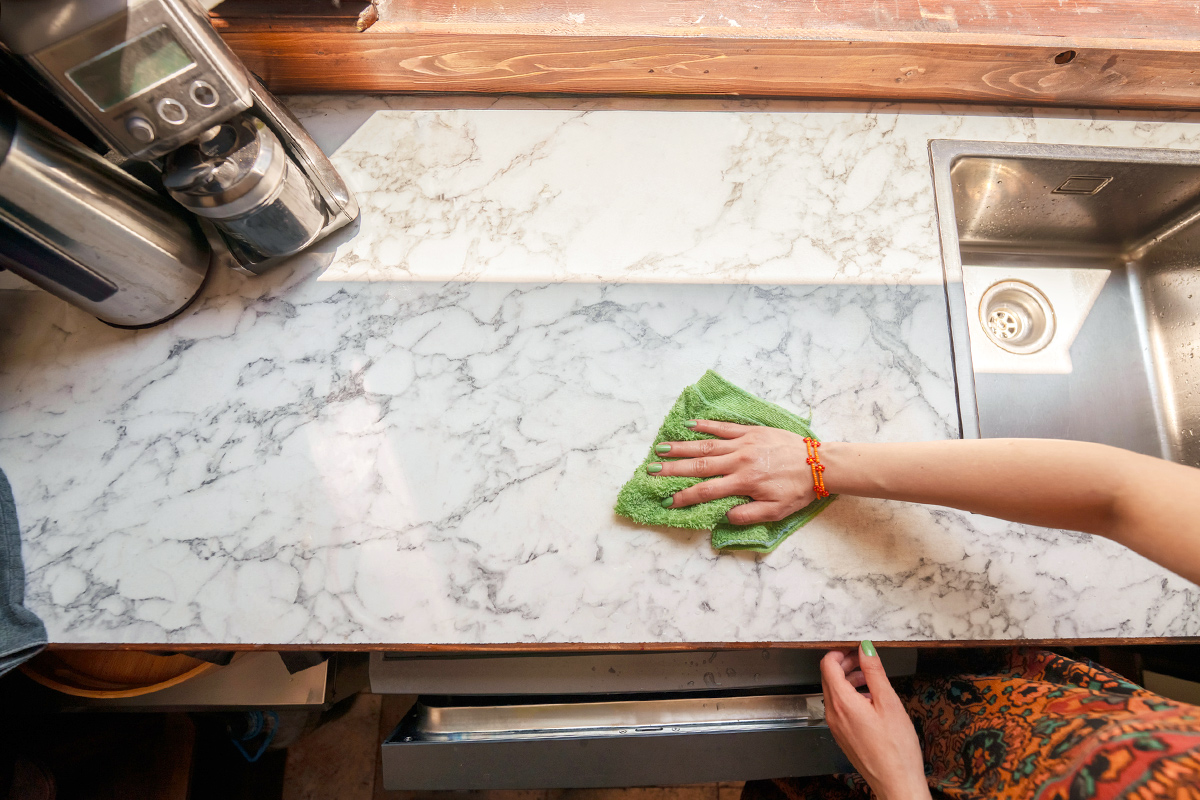
Take the kitchen, for example. Countertops are magnets for clutter, especially in busy homes. Between dinnerware, small appliances, and stray snacks, you can lose your workspace before you know it. If you make smoothies every morning, your beloved blender deserves its prime real estate. But that stand mixer you swear you’ll use more? If it’s just collecting dust, tuck it away in a pantry cabinet. As aesthetically pleasing as it might be, we bet you’ll love having the extra counter space even more.

Advertisement

Where To Use the 5/7 Rule

The 5/7 rule can be applied to any room in your home. While the kitchen is often the best place to start, don’t overlook the bathroom. With even less counter space to spare, this method helps keep surfaces clear and essentials within reach. But don’t stop there — the 5/7 rule can transform your desk, entryway, nightstands, and coffee table, too.

Advertisement
Advertisement
Gardening 12m read
20,680

10 Easy Ways To Fix Common Houseplant Problems

Much like the people or pets many of us share our homes with, houseplants make a space feel more vibrant — only they do so quietly and are relatively low-maintenance in comparison. They also have the advantage of staying where you put them, allowing them to play a consistent role in your home’s decor.

All featured products and deals are selected independently and objectively by the author. House Outlook may receive a share of sales via affiliate links in content.

Much like the people or pets many of us share our homes with, houseplants make a space feel more vibrant — only they do so quietly and are relatively low-maintenance in comparison. They also have the advantage of staying where you put them, allowing them to play a consistent role in your home’s decor.

Of course, like any other living thing, houseplants can also be frustratingly uncooperative. Just when you have everything set up the way you like it, one or another of your plants will often start having problems or showing signs of stress. Any number of things can go wrong with houseplants, but a handful — such as spider mites, root rot, or watering issues — are especially common. Here are 10 houseplant problems you might face, along with easy fixes for them.

1. Your Plant Is Dropping Leaves

Sometimes a plant that’s been flourishing nicely will suddenly seem to have a “fit of the vapors” (to use a charming 18th-century phrase) and start dropping leaves for no apparent reason. While other problems can also cause leaves to drop off, if it happens abruptly without them curling or changing color first, it usually means the plant has been subjected to some kind of environmental shock.

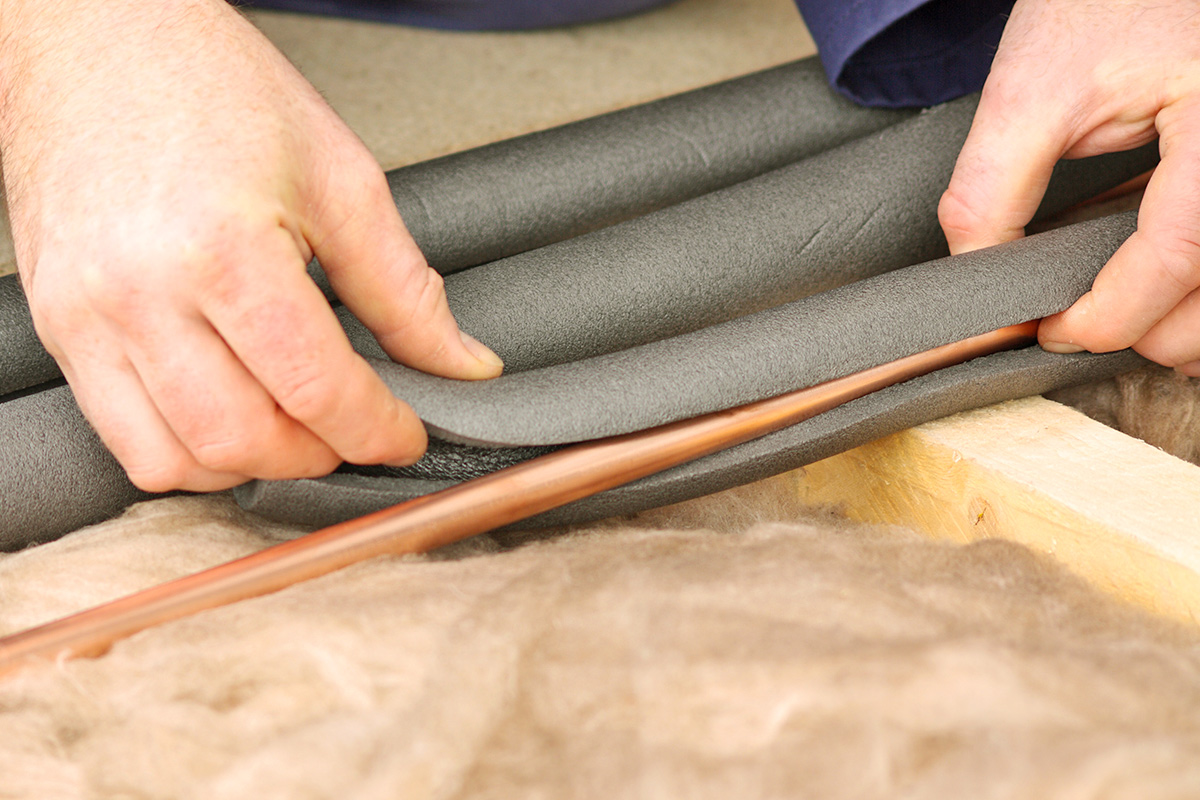
This often indicates exposure to a cold draft. The easy fix is to simply move the plant away from the source of the draft. If that’s not practical, for whatever reason, you will have to address the source of the draft, or add some protection for your plant. This could mean using spray-foam insulation to fill window gaps, or doing something simpler, like putting a small decorative screen between the plant and the draft.

Credit: Elena Kutuzova/ iStock

2. A Plant Is Leaning Badly, or Falling Over

This issue has a few potential causes, depending on your situation. One is that your plant is becoming “leggy,” meaning it’s tall and spindly; we’ll return to that shortly. The second is that your plant is stretching toward its light source. This is easy to check for (look where the light is coming from — is the plant leaning that way?), and thankfully, easy to fix. Just rotate your plant regularly and it will straighten out. Blowing a fan on the plant can also help it develop stronger stems.

The third possibility is that the plant is overgrown relative to the size of its pot and the amount of soil around its roots, making it top-heavy. You have a couple of options, depending on your plant’s needs: First, you can prune or cut it back. Second, you can transplant it into a pot with a wider base, which gives it more stability. A heavier pot can also help, as long as it’s not too heavy to move around conveniently. Note that potting up to a larger container adds stability through weight, but it can also encourage the plant to get bigger, which just aggravates the problem.

Credit: uchar/ iStock
Advertisement

3. Your Plant Has Yellow Leaves

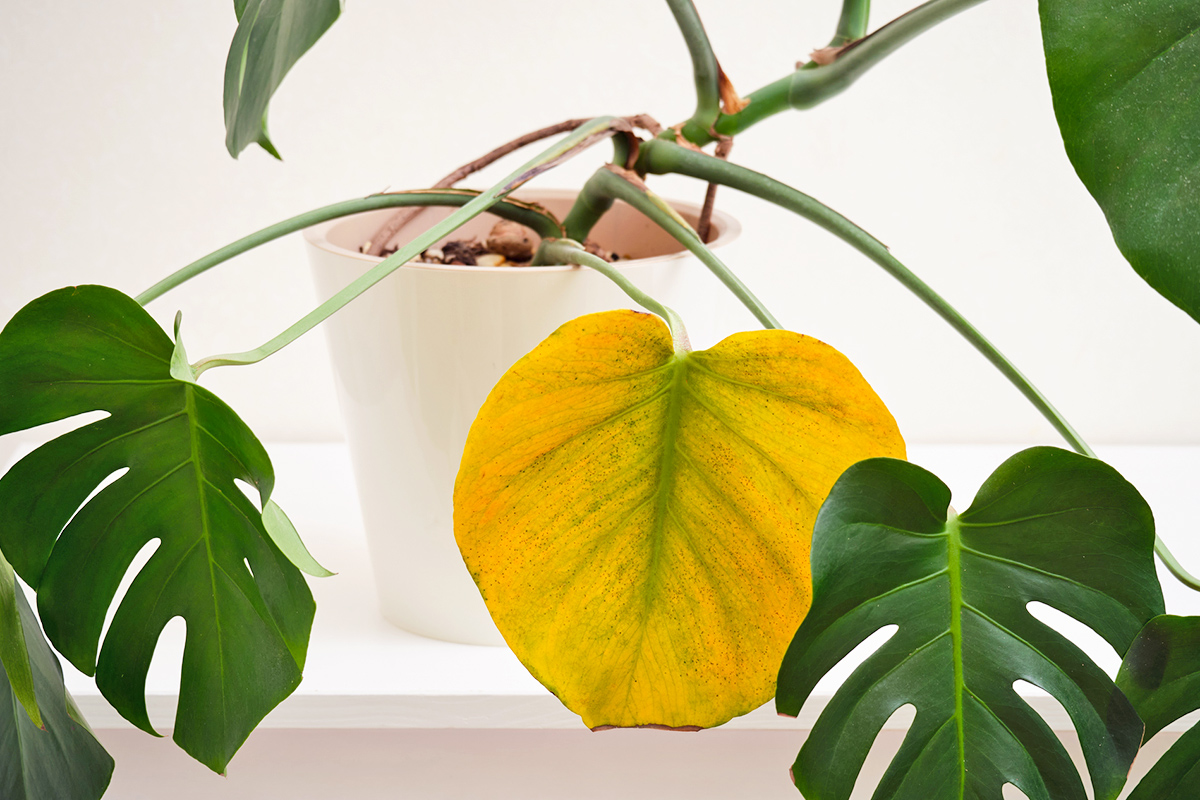
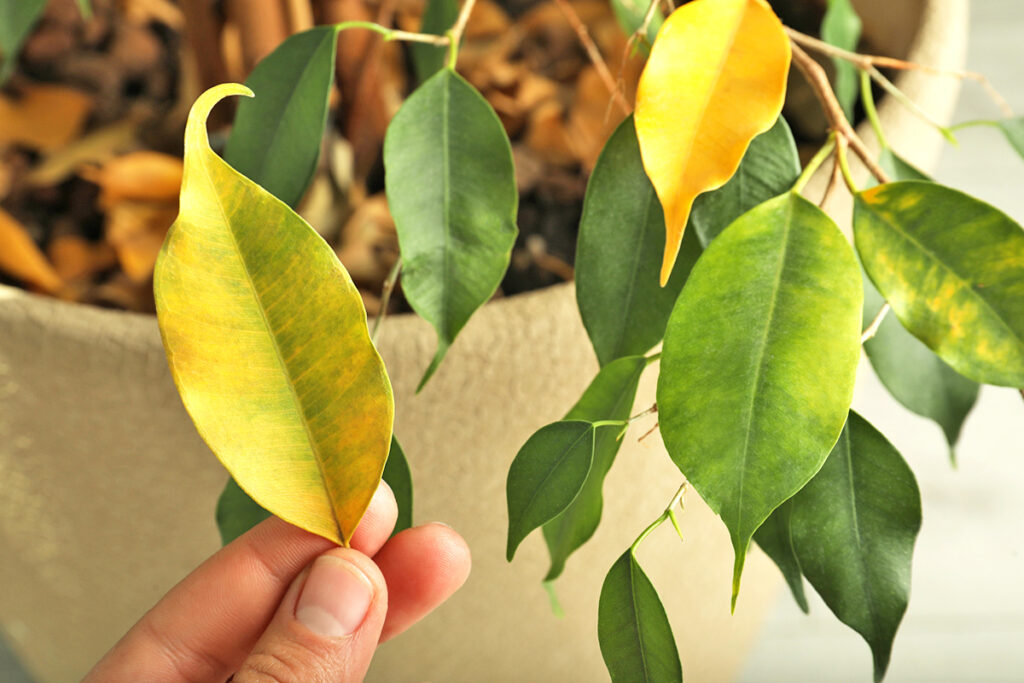
Unless it’s October and your “houseplant” is a birch or poplar tree, yellow leaves almost always mean the soil is too wet. Usually, this suggests overwatering, but not always. You might have used a moisture-retaining potting soil for a plant that needs quick-draining soil, or the pot itself might not have enough drainage (especially if it’s a decorative one). Occasionally, a nutrient deficiency can also be the cause.

The simplest solution is to cut back on watering. Generally, you should water only if the top 1.5 to 2 inches of soil are dry when you push a finger into it. It’s also a good idea to check online, or with your local nursery or extension service, to see if you’ve used the wrong type of potting soil. Soil-testing kits can help you identify nutrient deficiencies. Finally, you can improve your plant’s drainage by switching to a different pot or by drilling drainage holes in the one you already have.

Credit: Liudmila Chernetska/ iStock

4. Your Plants Are Long, Frail, and Skinny

Another common issue is when your plants grow long and skinny instead of sturdy and robust. Gardeners call that “leggy,” and it’s a clear sign your plants aren’t getting enough light. Instead of pushing out lush foliage and blossoms, they’re stretching every which way to find a brighter spot.

The fix is pretty intuitive: Your plants need more light. That might mean moving them around your living space or arranging them so the plants that need more light sit closer to the window than the ones that can tolerate shade. If your space doesn’t get much natural light, you have two options: Add supplemental lighting with grow lights, or select plants that do well in low-light conditions

Credit: Natallia Dzenisenka/ iStock
Advertisement

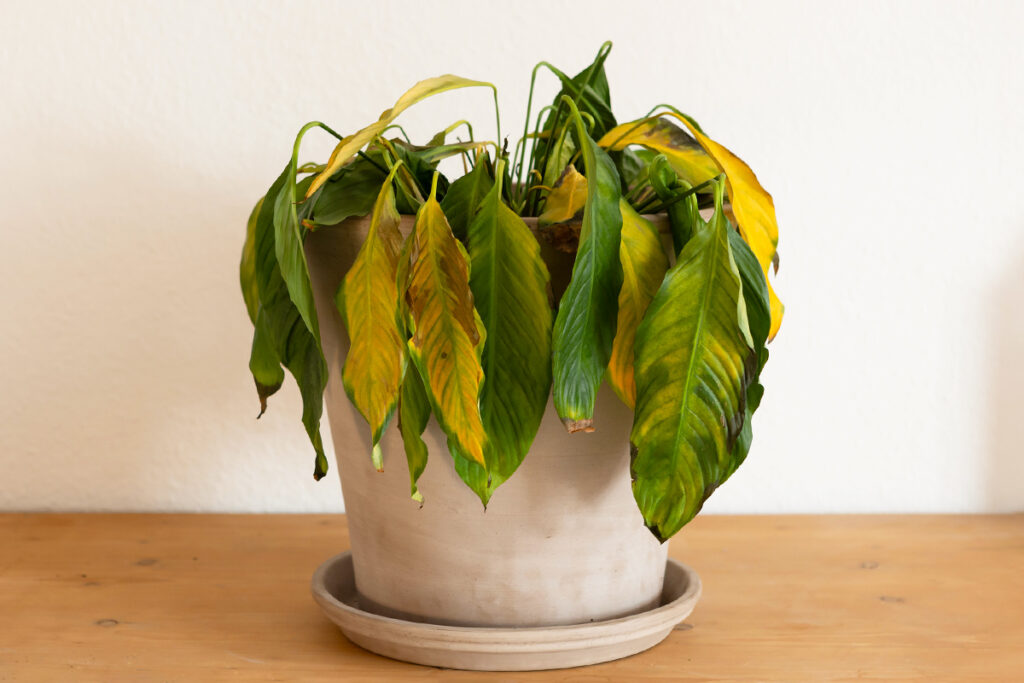
5. A Plant Is Wilting, Even Though the Soil Is Moist

Plants will wilt if they’re neglected and underwatered, although some are more resistant than others (which is why they feature prominently on lists of the best houseplants for beginners). If your plant is wilting, but the soil is moist, this suggests another outcome of overwatering or soil that retains too much water. In this situation, your plant may be a victim of root rot, which develops when the roots stay wet for too long.

Soil that’s downright soggy, not just moist, prevents roots from taking up oxygen, as the little air pockets they need are filled with water. When this happens, the roots begin to rot. The fix is to gently slide your plant from its pot and carefully brush or rinse away most of the old soil. Healthy roots will look white or pale yellow, but damaged ones will be dark and mushy. Cut those away to stop the rot, and then repot the plant using a new soil that’s suited to its moisture needs.

You may also see fungus gnats, which can cause similar symptoms and often appear alongside root rot. The adult gnats are irritating but won’t harm your plant. It’s their larvae that cause damage by chowing down on the plant’s roots. Since they don’t do well in dry soil, keeping the topsoil dry is your best “ounce of prevention.” If you already have an infestation, put a slice of raw potato cut-side down in the pot. The larvae will be attracted to this high-value food source, so you can simply discard the slice of potato and replace it with a fresh one every day. Doing this for a week or two will help remove a large number of larvae from the pot.

Credit: manuel_adorf/ iStock

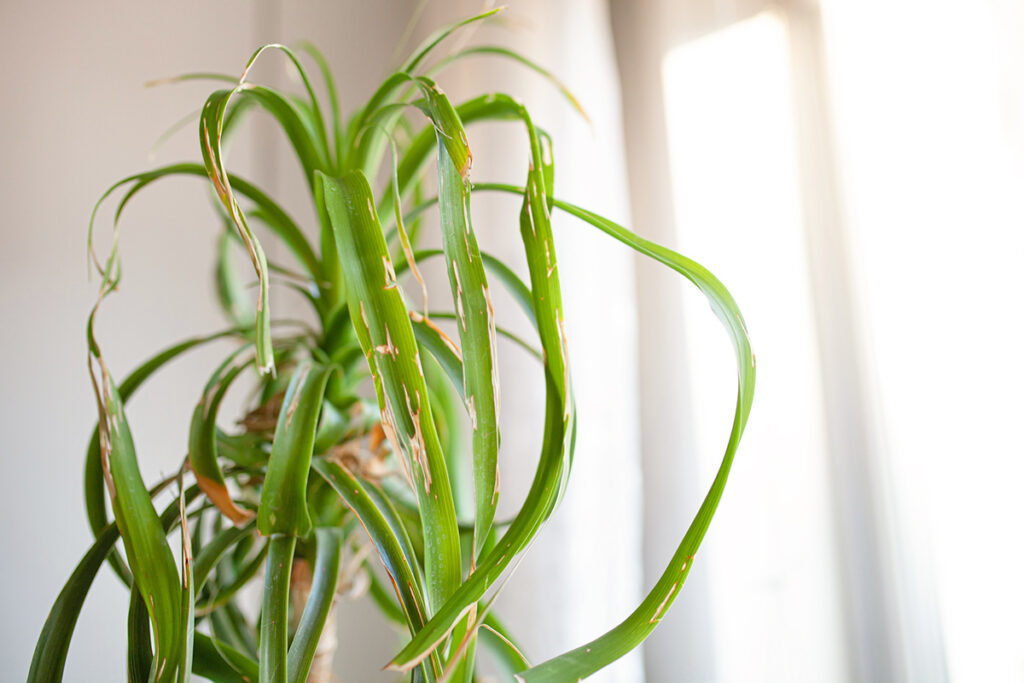
6. The Edges of a Plant’s Leaves Get Brown and Crispy

Sometimes you may notice that the edges of a plant’s leaves have started to turn brown, becoming dry and brittle. This usually happens with tropical plants, though not always. When we hear “tropical,” we tend to think of heat, but humidity is equally important. Many popular houseplants originated in tropical rainforests, and those desiccated leaves are a sign that they’re not getting enough ambient humidity. In temperate climates, this is usually seen in winter, when home heating dries out the air. However, in hot, arid climates, the issue may arise during the summer instead.

One easy way to “hack” humidity is to cluster plants together. Alternatively, try moving plants closer to existing sources of humidity in your house, such as a bathroom or a busy kitchen. (You could even shower with your plants.) Investing in a cool-mist humidifier will also do wonders for your plants, but this must be balanced against considerations like the comfort of those in your household or the risk of mold growth. If you’re in a hot, dry climate, using a swamp cooler instead of conventional air conditioning is a great way to keep your plants comfortable. 

Credit: matunka/ iStock
Advertisement

7. The Leaves of Your Plant Are Curling

Curling is another way plants respond defensively to different forms of stress (it reduces the leaves’ exposed surface area), so you’ll need to do a bit of detective work to find the culprit in your case. 

One possibility is that the plant isn’t getting enough water. You might be underwatering it, for example, or it might be rootbound, meaning there isn’t enough soil left in the pot to hold the moisture the plant needs. It’s also possible you’ve used a quick-draining potting soil that dries out too quickly for this particular plant’s needs.

Curled-up leaves can also signal that pests are attacking your plants. Carefully unfurl a few leaves and check them for insects, eggs, sticky residues from feeding, or other signs of an infestation. If you spot anything, wash the leaves with insecticidal soap (read the instructions first) or apply a suitable pesticide for the pest you’ve identified.

Credit: CoinUp/ iStock

8. You’ve Found Spider Mites on Your Plants

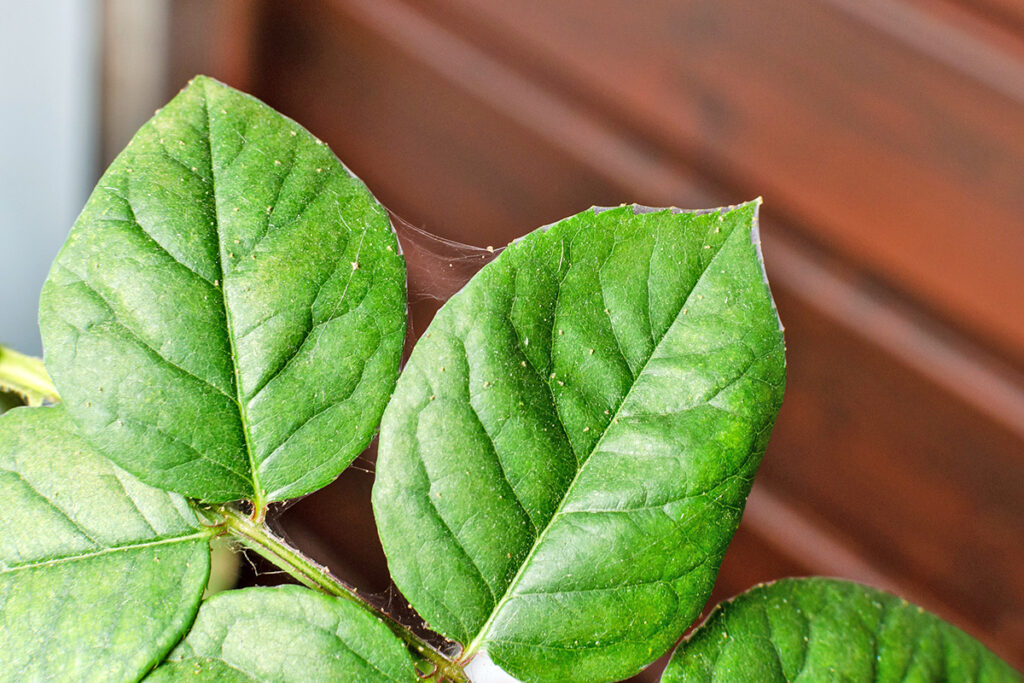
Spider mites are among the most common plant pests, and fortunately, they’re easy to identify. You’ll spot gauzy, spiderlike webs on your plants, and the leaves will start to look speckled. If you look closely, you’ll see the mites themselves — tiny, spider-shaped specks in shades of green, yellow, red, or brown.

They’re the opposite of the fungus gnats mentioned earlier: Gnats show up when soil stays too wet, while spider mites prefer hot, dry conditions. To get rid of them, you can blast them off the leaves with a strong stream of water from a spray bottle or gently wipe them away with a damp cloth. Insecticidal soap and miticides also work well. Greenhouse growers often use predatory insects to control them, but that’s a step further than most houseplant parents want to go (though predatory mites can help without filling your home with creepy-crawlies). For prevention, just keep your plants properly watered and make sure they have enough humidity.

Credit: Annetka/ iStock
Advertisement

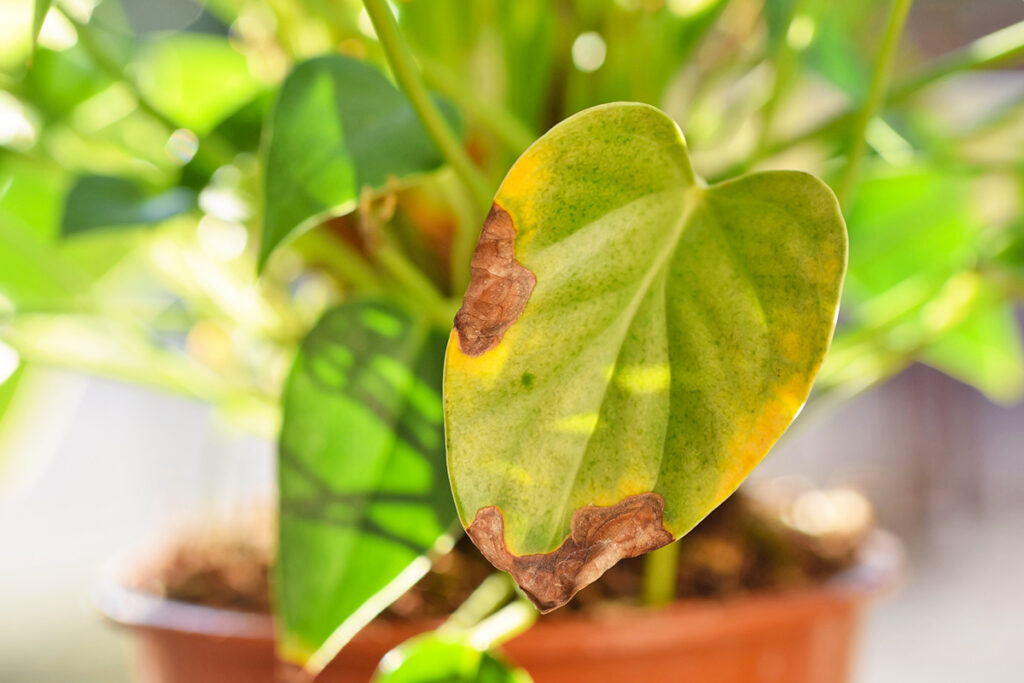
9. Your Plants Have Spots on Their Leaves

The word “spots” is doing some heavy lifting here — it can mean anything from tiny freckles to big, ugly bullseye rings of yellow, brown, and black. Here are a few common possibilities:

• Small speckles, bumps, and yellowed spots often point to insect pests. Check closely for eggs or the pests themselves.

• Small brown spots can indicate watering issues in certain plants, or potentially a mineral deficiency. Test your soil and double-check your plant’s watering needs.

• Large, irregular spots with dark or dried-out centers and brown or yellow edges usually indicate leaf spot disease or a similar fungal infection.

Removing the damaged leaves and treating the underlying cause — with an appropriate fungicide, pesticide, or fertilizer — usually clears things up. If you need help diagnosing the underlying issue, your local nursery or extension service can be a great resource.

Credit: Elena Perova/ iStock

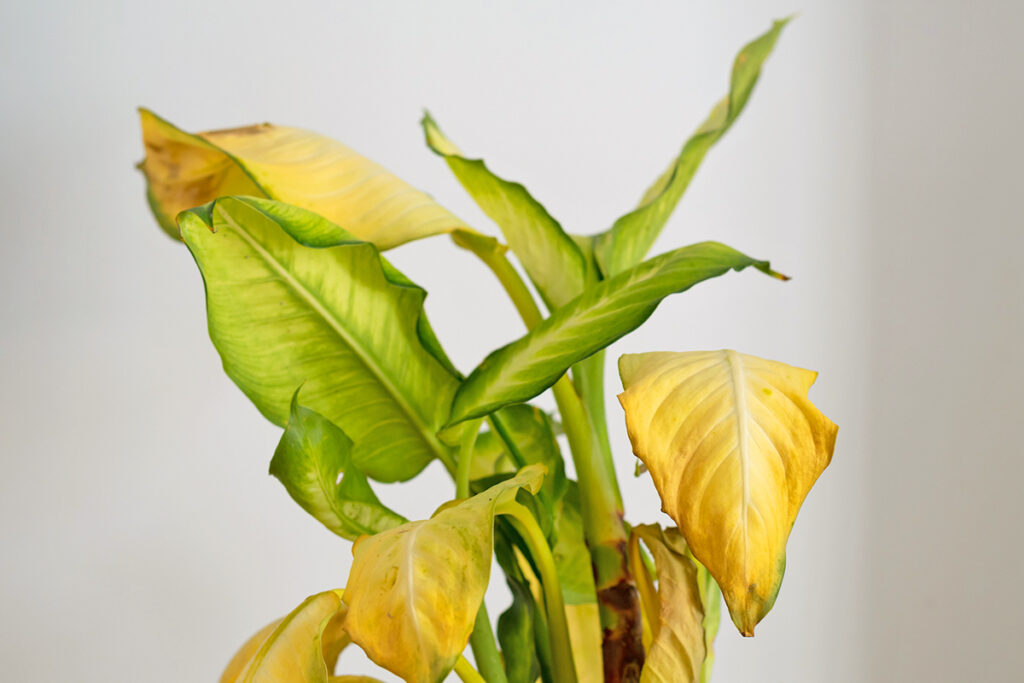
10. Your Plants’ Leaves Look Bleached or Scorched

This is basically the flip side of the “legginess” issue. Plants get leggy when they’re not getting enough light, but they get bleached, yellowed, or scorched-looking when they’re exposed to too much. As mentioned earlier, many houseplants are tropical and expect warm, humid conditions. Many of them are also forest-floor plants, adapted to dappled, indirect light.

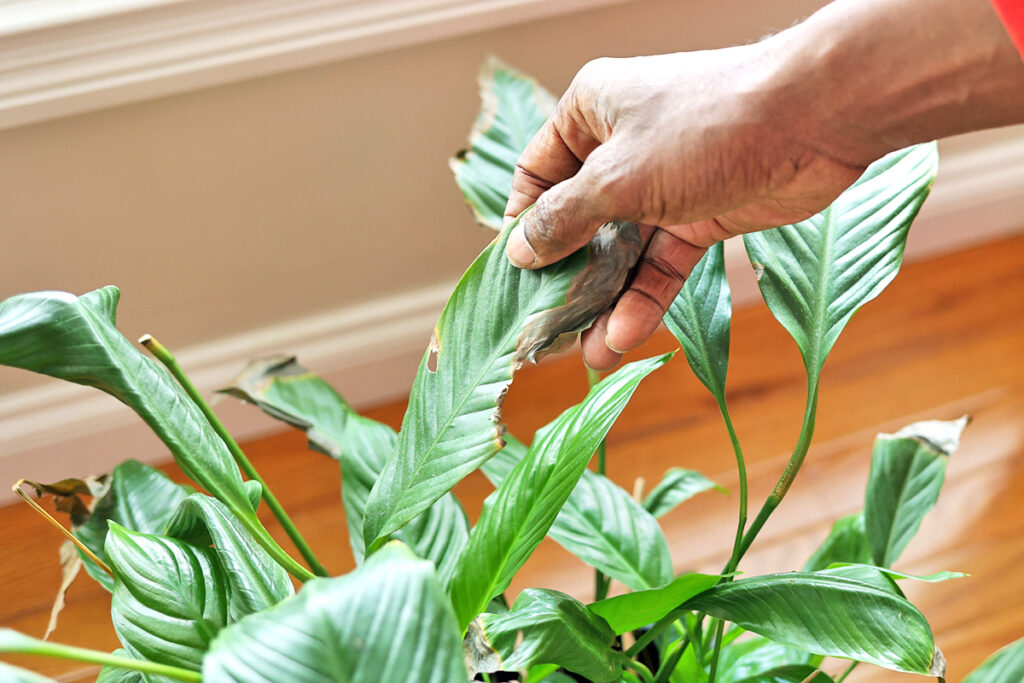
Yellow leaves are frequently a sign of overwatering, but you can tell the difference if you look closely. Overwatering makes the leaves uniformly yellow, while sunburn affects only the parts of the leaf exposed to direct light. Sunburn can also cause the edges of the leaves to develop brown, crispy patches.

Your best bet is to move the plant to a spot where it won’t get so much light. You can also shade it using taller plants, blinds, or decorative elements, such as a small lattice or rice-paper screen. And if you have the option, gradually increasing the plant’s exposure to light can help “harden it off” so it can tolerate a sunnier spot if needed.

Credit: Robin Gentry/ iStock
Advertisement

Bonus Tip: Your Plant Is Just Not Flourishing Like It Used To

This one can be a little tricky. Sometimes you won’t see any specific symptoms, but a plant that was once flourishing and healthy-looking just starts to lose its oomph. New growth slows to a crawl, blooms stop appearing, and the whole plant starts looking tired and feeble.

If this happens, and you don’t see any signs of pests or disease, it might simply be time to repot your plant into a larger container. Over time, potting soil loses nutrients, and roots can become tightly packed, making it hard for the plant to thrive even with regular fertilizing. Select a pot that is just an inch or two larger than the current one and provides good drainage. 

Gently remove the plant from its current pot and brush away as much of the old soil as possible. If you see roots encircling the entire pot, snip them with sanitized scissors or a knife. Trim any roots that look damaged or dark and mushy. Then fill the new pot with fresh soil, make a well in the middle for the root ball, and nestle the plant in before packing the soil around it. (Here’s a hack for getting a perfect fit when repotting.) With fresh soil and room to grow, your plant should bounce back pretty quickly.

Advertisement
Featured Image Credit:  Andrey Zhuravlev/ iStock | Updated  Dec 16, 2025 |
Fred Decker
Writer
Fred Decker is a trained chef and former restaurateur. Since closing his restaurants over a decade ago he has been a prolific freelance writer, publishing several thousand articles on dozens of high-volume websites including Taste Of Home, Hunker, Tasting Table, Week&, eHow, and GOBankingRates. He lives on a rural acreage shared with a big garden, chickens, rabbits, and grandkids.
This article is for general informational purposes only.
Featured Image Credit:  Andrey Zhuravlev/ iStock | Updated  Dec 16, 2025 |
Advertisement
Food & Drink 3m read
605

How To Store Spices Like a Chef

Culinarily speaking, one of the most valuable pieces of real estate in your kitchen is the spot where you store your spices and herbs. Square inch for square inch, there’s no other area that gives you such flavor and versatility for a relatively small investment in space. Yet, many of us don’t give enough thought to where we situate our spice storage, or what that implies for their lifespan. To put things into perspective, let’s take a look at how chefs store spices and herbs.

All featured products and deals are selected independently and objectively by the author. House Outlook may receive a share of sales via affiliate links in content.

Culinarily speaking, one of the most valuable pieces of real estate in your kitchen is the spot where you store your spices and herbs. Square inch for square inch, there’s no other area that gives you such flavor and versatility for a relatively small investment in space. Yet, many of us don’t give enough thought…

Know Your Enemy: What Conditions Age Spices Quickly?

The flavors of spices and dried herbs come from a range of volatile compounds — organic molecules that create the familiar aromas and sweet or savory tastes that tickle our taste buds. Some of these are highly volatile and evaporate quickly (that’s why fresh-ground spices have the most flavor), but others will last for a longer or shorter time depending on the conditions they face. The biggest factors that cause spices to go stale and lose their taste are:

• Heat and humidity

• Direct light

• Exposure to oxygen

Related: When You Should Toss Old Spices

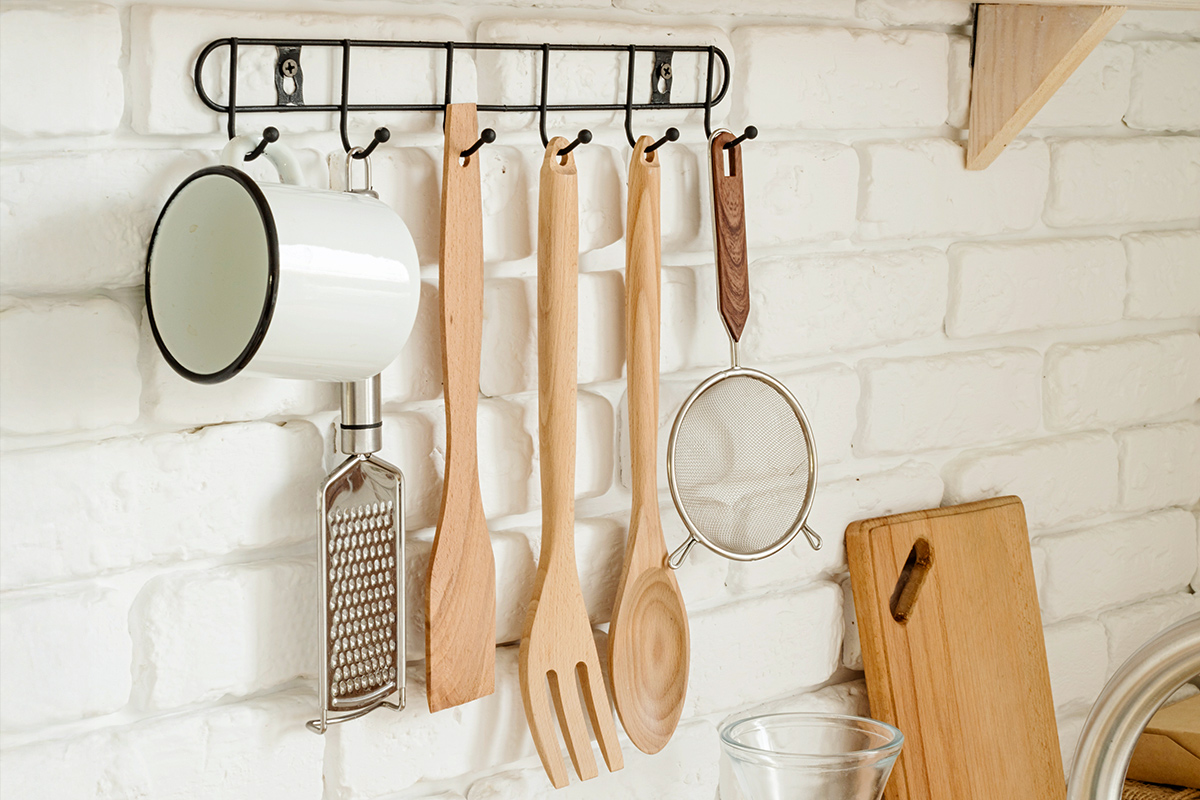
A rack of spice jars hanging in a well-lit kitchen on the wall beside your stove (or worse yet, over it) is just about the worst-case scenario, but that’s where we often put them. Here’s how to change your storage habits to ensure peak, long-lasting flavor.

Advertisement

Professional-Grade Spice Storage

So, how do chefs store their spices? They start by choosing a cool, dark, well-ventilated location in or very close to the kitchen (such as a pantry). The cool and dark environment addresses the heat and light issues, while ventilation helps control humidity. Chefs also tend to buy their spices whole, grating or grinding them only as needed; this prevents oxidation and flavor loss. (For this, you’ll just need an inexpensive spice grinder or a small mortar and pestle.)

For spices you use infrequently and in small amounts, ordinary spice jars are perfectly fine, provided you keep them in a dark spot. For the spices you use more often, however, opt for small jars with an airtight seal. Mylar bags with a zipper seal are a good option for whole spices or dried herbs, and they take up less space inside a cupboard or drawer.

It’s fine to keep a few of your most-used spices near where you cook. For this setup, metal spice jars are your best bet, as they block light while allowing you to keep your favorites close to the stove. An in-drawer spice organizer is an excellent solution. You can find organizers that lay the spices flat in skinny drawers, or tiered versions for deeper drawers that angle the jars for space-efficient storage.

Advertisement
Featured Image Credit:  Panther Media Global/ Alamy Stock Photo | Updated  Dec 16, 2025 |
Fred Decker
Writer
Fred Decker is a trained chef and former restaurateur. Since closing his restaurants over a decade ago he has been a prolific freelance writer, publishing several thousand articles on dozens of high-volume websites including Taste Of Home, Hunker, Tasting Table, Week&, eHow, and GOBankingRates. He lives on a rural acreage shared with a big garden, chickens, rabbits, and grandkids.
This article is for general informational purposes only.
Featured Image Credit:  Panther Media Global/ Alamy Stock Photo | Updated  Dec 16, 2025 |
Advertisement
Cleaning 3m read
703

Remove Sweater Pills Using a Tool You Already Own

Frightful weather outside calls for cozy sweaters inside. Whether you’re wearing a brand-new style you snagged during a Black Friday sale, an incredible vintage find, or that favorite crewneck you always reach for this time of year, it’s hard to avoid pilling or shedding of the sweater fibers.

All featured products and deals are selected independently and objectively by the author. House Outlook may receive a share of sales via affiliate links in content.

Frightful weather outside calls for cozy sweaters inside. Whether you’re wearing a brand-new style you snagged during a Black Friday sale, an incredible vintage find, or that favorite crewneck you always reach for this time of year, it’s hard to avoid pilling or shedding of the sweater fibers.

Why Do Sweaters Pill?

The yarn used to knit sweaters consists of fibers (be it wool, cotton, cashmere, or synthetic materials like acrylic) spun together in a continuous strand. Depending on the materials used to create the fiber and the yarn’s construction, the knitted fabric can start to pill when it rubs against other surfaces or itself — such as the underarm area or around the waist and ribbing when layering with jackets. This is especially true for sweaters made with blended materials, such as wool and polyester, or any ultrasoft and shorter fiber, as these weaker fibers are easier to snag or break away from the strand. This breakage results in shedding or pilling.

How To Remove Pills From Sweaters

Although they’re annoying, pills are actually quite easy to remove. While you can invest in a fancy electric fabric shaver, you probably already have the best tool for removing pills stashed away in your bathroom. In a pinch, a sharp, new disposable razor can shave off the tiny wads of fiber and help reduce shedding. Any razor will work, as long as it doesn’t have a moisture strip (which can cause more pilling). However, a single blade razor is preferred because it provides a little more control when trimming off the pills.

Advertisement
Related: The Best Amazon Finds for a Neat and Organized Closet

To remove pills, lay the sweater on a flat surface, then use one hand to hold the material taut. Gently glide the razor in short, upward strokes with light pressure. Unlike with actual shaving, you don’t want to glide the razor too close to the fabric. Instead, focus on reducing the pills on the surface, being careful not to scrape the underlying fabric. Once you’re finished, use a piece of tape to clean up the trimmed pills and fibers.

Advertisement
Featured Image Credit:  Gunars/ Adobe Stock | Updated  Dec 16, 2025 |
Jessie Quinn
Writer
Jessie Quinn is a Los Angeles-based lifestyle journalist with words published in PEOPLE, StyleCaster, Apartment Therapy, The Spruce, Byrdie, and more. She has a Bachelor's Degree in fashion journalism from Academy of Art University and her work spans across many categories, including style, beauty, home, health, crafts, and more.
This article is for general informational purposes only.
Featured Image Credit:  Gunars/ Adobe Stock | Updated  Dec 16, 2025 |
Advertisement
Organizing 3m read
30

Do This Now To Avoid Tangled Christmas Lights Next Year

The last present has been unwrapped, the final cookie consumed, and you can’t stand to hear one more holiday song. You know what that means: It’s time to tackle the bittersweet task of taking down the Christmas tree. If you’ve ever spent an entire afternoon accidentally building a ball of knots, consider this end-of-season cheer: There’s an easy way to ensure tangle-free Christmas lights for next year, and you don’t need anything except a regular coat hanger.

All featured products and deals are selected independently and objectively by the author. House Outlook may receive a share of sales via affiliate links in content.

The last present has been unwrapped, the final cookie consumed, and you can’t stand to hear one more holiday song. You know what that means: It’s time to tackle the bittersweet task of taking down the Christmas tree. If you’ve ever spent an entire afternoon accidentally building a ball of knots, consider this end-of-season cheer:…

This hack keeps your lights neat, compact, and blissfully organized until next season. Your future self will thank you.

How To Wind Lights on Hangers

Instead of pulling an entire strand of lights off the tree, wrap it around a hanger as you take it off branch by branch. Start at the plug end and wind the strand around the hanger — narrow end to wide end, then back again. Think of it like wrapping a hose around a reel.

Related: An Inexpensive Storage Hack for Christmas Ornaments

Keep gentle tension on the strand as you wrap; this ensures the lights lie flat and prevents loops from slipping off. Once you’ve wrapped an entire strand, secure the last few inches by tucking them under a wrapped section or looping them around the hanger’s hook. The result is a tidy, portable bundle of lights that won’t morph into a knotted mess over the next 11 months. 

Advertisement

Where To Store the Hangers

Your newly wrapped hangers can hang on a closet rod, making them easy to store. If you have space to spare in a coat closet or guest bedroom wardrobe, group all of your light bundles together to free up valuable floor space. Then, whenever you decide to decorate again, simply grab a hanger, head to the tree, and unwind the strand with ease. Your tree will be glowing before you know it — no detangling sessions required.

Label Before You Store

Before storing your light bundles, label each hanger by wrapping a piece of masking tape around its neck. Quick identifiers, such as “tree lights” or “outdoor garland,” will ensure you know which set goes where next December. This means no more guesswork — just effortless holiday magic.

Advertisement
Featured Image Credit:  LeoPatrizi/ iStock | Updated  Dec 16, 2025 |
Megan McCarty
Writer
Megan McCarty is a Los Angeles-based writer who covers the fun stuff: design, travel, wellness, beauty, and fashion. She has written for publications including Domino, The Spruce, MyDomaine, Bustle, and Rue Magazine. Her life rules include, but are not limited to, zipper when merging, contribute to your IRA, and do the nice thing.
This article is for general informational purposes only.
Featured Image Credit:  LeoPatrizi/ iStock | Updated  Dec 16, 2025 |