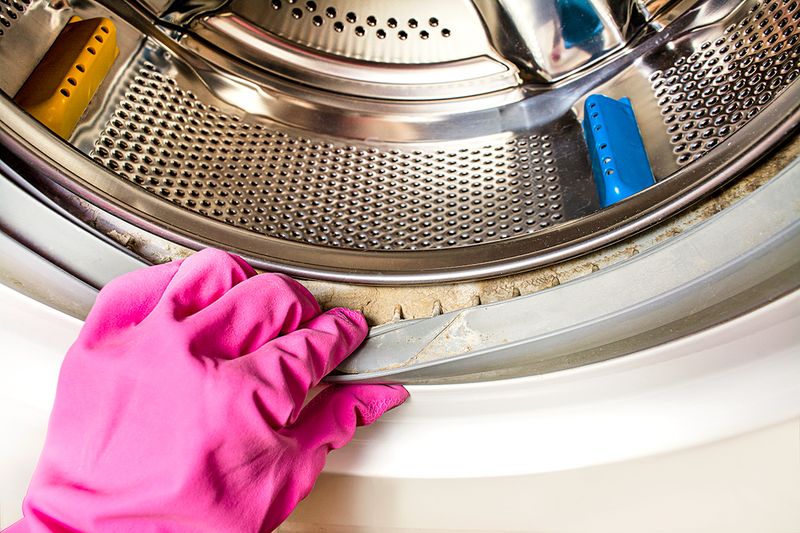
Why Front-Load Washers Get Moldy
Because front-loaders rely on rubber gaskets to keep water sealed inside, any moisture trapped within those folds becomes a breeding ground for mold. Add detergent residue or fabric-softener buildup to the mix, and you have a damp little ecosystem where mold thrives.
How To Do a Monthly Deep Clean
Even if you make a habit of opening the door and detergent drawer to air them out, your machine still needs a deep clean about once a month. Start by removing any debris from the gasket and drum, then choose one of the following methods:
1. Run a cleaning tablet cycle: Drop a washing machine descaling tablet into an empty drum and run the hottest cycle. These are formulated to break down residue and flush out hidden gunk.
2. Neutralize with vinegar: For a natural alternative, pour two cups of distilled white vinegar directly into the drum and run a hot cycle.
More from our network
House Outlook is part of Inbox Studio, which publishes content that uplifts, informs, and inspires.



3. Spot-clean stubborn areas: For mold that’s just beginning to appear around the seal, use a soft-bristled brush dipped in a mild bleach solution to scrub the affected areas. Caution: Never mix bleach with vinegar, and always rinse the area thoroughly afterward.
When Mold Has Already Built Up
If you’re dealing with multiple mold spots or persistent staining on the rubber gasket, you’ll need a more targeted approach. A gel-based cleaner, such as Active Mold Stain Remover, works especially well on front-load washers because it clings to curved surfaces without dripping. Apply the gel to the affected areas, allow it to sit for the recommended time, and wipe it away. Finish by running a hot rinse cycle or using a cleaning tablet to leave the machine sparkling.
With a monthly deep cleaning, your front-load washer will remain fresh, odor-free, and mold-resistant, no matter how many loads you run each week.