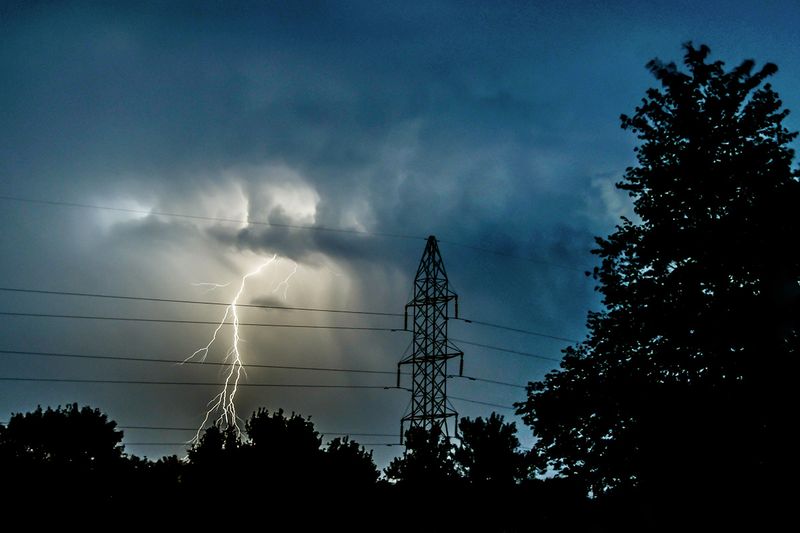
Lightning is more capable than most people realize. It travels through plumbing, electrical wiring, metal pipes, and along concrete. It doesn’t need a direct hit on your house to reach you, either. A nearby strike can send a charge traveling through the systems your home depends on, and if you happen to be in contact with any of them at the wrong moment, the consequences can be severe.
Here’s what to stop doing the moment a thunderstorm rolls in.
1. Taking a Shower or Bath
When lightning strikes near your home, it looks for the path of least resistance, and metal plumbing pipes are excellent conductors. If you’re standing under a metal showerhead with water running over your body, you are directly connected to that pathway.
The CDC advises avoiding all contact with plumbing and running water during a lightning storm, regardless of whether your pipes are metal or plastic. Plastic pipes do carry a lower risk, but not zero risk.

More from our network
House Outlook is part of Inbox Studio, which publishes content that uplifts, informs, and inspires.



2. Washing the Dishes
You might assume that washing dishes is a lower-stakes activity during a storm, and you’d be partially right. It does carry somewhat less risk than bathing, but that doesn’t make it safe. Your hands are still in contact with water running through the home’s plumbing, and that’s enough of a connection to matter.

3. Running the Dishwasher or Washing Machine
Appliances that use water and electricity during a storm are doubly risky. The dishwasher, washing machine, and dryer all create exposure points during a lightning event. A power surge caused by a nearby strike can travel through appliances, damaging them or, worse, creating a hazard for anyone who touches them.

4. Using Corded Electronics or Appliances
Anything plugged into an electrical outlet is a potential conductor during a lightning storm. Computers, TVs, gaming systems, and small appliances all connect your body to the home’s electrical system when you’re actively using them. A lightning strike on or near your home can send a surge through the wiring, and if you’re at the other end of that circuit, you absorb it. Unplug what you can, and avoid using anything that stays plugged in during the storm. A whole-home surge protector, which requires professional installation, can help prevent damage to large appliances during sudden voltage spikes.

5. Standing Near Windows or Glass Doors
A window might feel like the best place to watch a dramatic storm roll through, but it puts you in harm’s way. Lightning can shatter glass, and a nearby strike can send a shockwave that breaks windows even without a direct hit. Standing near a window often means standing near an exterior wall, too, which carries its own risks (more on that next).

6. Leaning on Concrete Walls or Floors
Concrete feels solid and permanent — it’s the very image of shelter. But concrete is typically reinforced with metal rebar, and metal conducts electricity efficiently. If lightning strikes your home or hits nearby ground, that charge can travel through the rebar embedded in concrete walls and floors. Basements with concrete floors, garage walls, and exterior-facing concrete surfaces are all potential conductors. During a storm, avoid leaning against concrete walls or sitting directly on a concrete floor, and put an insulating object between you and the surface — ideally something elevated like a wood dining chair.

7. Touching the Stove or Other Metal Fixtures
Metal fixtures throughout the home, including stoves, radiators, plumbing hardware, and metal door frames, can all conduct electricity during a lightning event. This is the same logic that applies to plumbing: Metal runs throughout your home’s structure, and a charge introduced at any point can travel to another.

How Long Should You Wait?
The National Weather Service recommendation is clear: Stay inside for 30 minutes after the last clap of thunder. Lightning can strike well ahead of and behind the visible storm, and the “wait until it stops raining” instinct is unreliable. Thunder is your actual indicator. No thunder for 30 minutes means the lightning has moved far enough away to resume normal activity.