But chances are, you’ve been doing it wrong.
According to conventional wisdom — and most package directions — you must boil pasta in plenty of salted water. But like many other long-held cooking traditions, that rule doesn’t hold up under scientific scrutiny. Making one simple tweak saves time, lowers your gas or electric bill, and yields the best pasta of your life.
Use Just Enough Water To Cook Pasta
Food science author Harold McGee was among the first to question the traditional method, and other science-minded food writers like J. Kenji López-Alt of Serious Eats independently confirmed his findings. The secret? Using significantly less water.
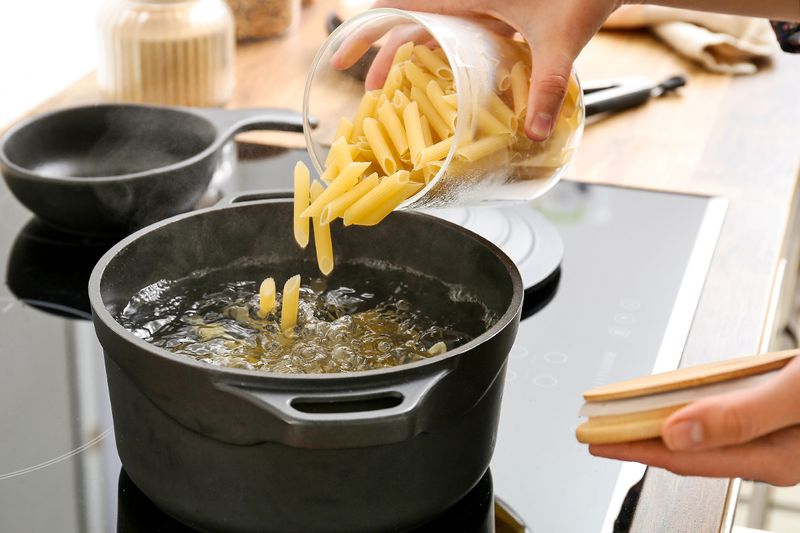
Here’s how it works: Cover the pasta with cold water using roughly 4 parts water to 1 part pasta (about 2 quarts for a 1-pound box). Stir the pasta a few times at the start to prevent clumping, then cook until al dente. While it cooks, heat your sauce in a separate pan. The leftover pasta water will look thick and cloudy, but that concentrated starch is exactly what you want. Drain the pasta over a bowl to catch that liquid gold. (We’ll explain what to do with it in the next section.)
More from our network
House Outlook is part of Inbox Studio, which publishes content that uplifts, informs, and inspires.



How This Trick Improves Your Pasta
At this point, if you pull out a piece of pasta and try it, it’ll taste and feel the same as usual. Add the cooked pasta to your warmed sauce, toss it, and give it a taste. Again, completely normal. Now, add a splash of your starchy pasta water to the pan and toss it again. You’ll see the sauce — whether tomato, pesto, or Alfredo — begin to cling to the noodles, giving each piece its own silky coating. That’s what concentrated pasta water brings to the table.
It works because the heavy starches in the water act as an emulsifier, bringing fats and liquids together in a single, luxurious sauce. Classic dishes like cacio e pepe rely almost entirely on this reaction. As a bonus, using less water means your pot comes to a boil faster. That saves both time and energy, helping you put a better meal on the table in less time.