Advertisement
Food & Drink 3m read
2,320

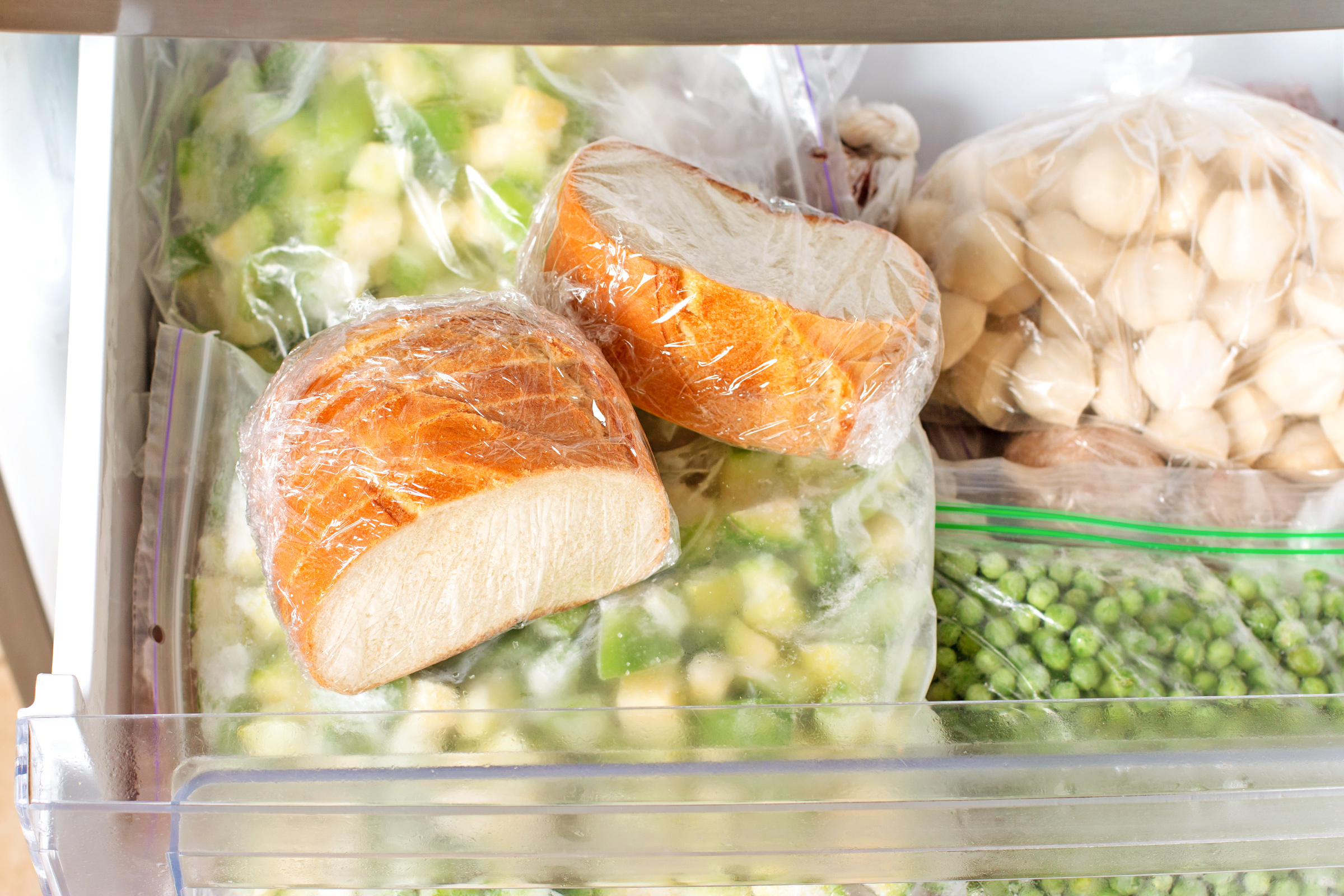
Why You Should Freeze Bread Before You Eat It

Low-carb diets have deeper roots than you might imagine. In the late 19th century — nearly 150 years ago — Union Army doctor James Salisbury (yes, the Salisbury steak guy) became convinced that a meat-heavy diet was the healthiest way to live. Other diets, such as Atkins and Paleo, revolve around a similar theory, and while they aren’t as trendy as they used to be, many of us still pay close attention to our carbohydrate intake.

Low-carb diets have deeper roots than you might imagine. In the late 19th century — nearly 150 years ago — Union Army doctor James Salisbury (yes, the Salisbury steak guy) became convinced that a meat-heavy diet was the healthiest way to live. Other diets, such as Atkins and Paleo, revolve around a similar theory, and while…

Why? Because quickly digested carbs can cause blood sugar spikes that are dangerous for diabetics and can leave the rest of us feeling sluggish. That’s unfortunate news for bread lovers — especially fans of white bread, which is the classic example of a high-glycemic index (GI) food. But there’s a silver lining: It turns out that freezing bread can actually lower its GI. Here’s the science behind how it works.

Why Freezing Bread Lowers Its GI

The starches in flour are complicated tangles of simple sugars, but our bodies are good at “untying” those knots and turning them back into glucose. This is why your blood sugar spikes after eating bread. So, how does freezing come into the picture? Well, when you bake bread, heating the dough turns those starches soft and gel-like. That’s why a loaf fresh from the oven feels a bit doughy even when it’s perfectly baked. As it cools, the bread loses its doughy texture but stays soft.

Related: The Best Costco Finds To Stock Your Freezer With

But when you freeze that bread, you force the starches to change their structure. They recrystallize into a firmer, more stable form through a process called “retrogradation.” In this new form, the starches resist your body’s attempts to break them down into sugars, which slows their absorption into your bloodstream. These are referred to as “resistant starches.”

Advertisement

How Resistant Starches Change Your Bread

There is a slight catch: Retrogradation makes the bread lose some of its softness and it may feel a bit drier in your mouth. If you’re using it in sandwiches, for example, you’ll want to freshen it up just as you would with stale bread. Toasting it is even better. Not only does it mask the textural change, but a study out of England found that toasting frozen bread actually reduces its GI even further.

Most of us know that fiber is good for gut health. The cool thing about resistant starches is that once they reach your gut, they act much like the heart-healthy soluble fiber found in oats and beans. They’re classified as prebiotics, meaning they’re food for the probiotic microbes in your digestive system. So, while freezing won’t turn bread into a superfood, it does lessen the loaf’s glycemic impact.

Advertisement
Featured Image Credit:  qwartm/ Adobe Stock | Updated  Jan 27, 2026 |
Fred Decker
Writer
Fred Decker is a trained chef and former restaurateur. Since closing his restaurants over a decade ago he has been a prolific freelance writer, publishing several thousand articles on dozens of high-volume websites including Taste Of Home, Hunker, Tasting Table, Week&, eHow, and GOBankingRates. He lives on a rural acreage shared with a big garden, chickens, rabbits, and grandkids.
This article is for general informational purposes only.
Featured Image Credit:  qwartm/ Adobe Stock | Updated  Jan 27, 2026 |
Advertisement
Decorating 3m read
139

Is Your Furniture Too ‘Leggy’? Here’s the Fix

If Goldilocks had grown up to be an interior designer, she wouldn’t just be picky about porridge. She’d survey your living room and immediately notice when something feels off — a sofa that reads too heavy, a coffee table that skews too light. The goal, as in the fairy tale, is achieving a “just right” balance of visual weight.

All featured products and deals are selected independently and objectively by the author. House Outlook may receive a share of sales via affiliate links in content.

If Goldilocks had grown up to be an interior designer, she wouldn’t just be picky about porridge. She’d survey your living room and immediately notice when something feels off — a sofa that reads too heavy, a coffee table that skews too light. The goal, as in the fairy tale, is achieving a “just right”…

If a room in your home — be it the living area, dining room, or bedroom — feels inexplicably flat, the issue might not be paint color or furniture layout. Instead, consider the furniture’s visual weight and how those weights interact with one another. According to TikTok creator and interior designer Hans Lorei, compelling interiors come from contrast. By pairing solid, grounded pieces with lighter, more delicate ones, you create a sense of balance. That tension is what makes a space feel effortless and lived-in, rather than staged or bland. 

Why Visual Weight Matters

Visual weight refers to how heavy a piece looks — not necessarily how many friends you bribed with pizza to help you move it inside. If every element in a room sits on spindly legs, the space can feel fragile or unfinished. But fill that same room with low, blocky silhouettes, and it can appear dense and overwhelming. 

Design-minded folks instinctively mix the two: A solid oak dining table looks more inviting when complemented by cane-backed chairs on tapered legs. A chunky sofa becomes more dynamic when balanced with a leggy side table, a sculptural floor lamp, or a glass-topped coffee table. That contrast creates a design that feels equally energetic and comfortable.

Advertisement

How To Mix Chunky and Light Pieces

Every room can benefit from intentional weight contrast. In a dining room, a delicate dining table can be anchored by a set of chunky chairs, or vice versa. Moving to the bedroom, a solid upholstered or wooden bed frame shines when accented by long-legged nightstands and a bench that reveals the floor underneath. Prefer the opposite look? A four-poster bed reads more grounded when flanked by solid side tables and a weighty bench at the foot. 

Related: The Interior Design Trends Set To Take Over in 2026

Living rooms especially benefit from this mix. Consider pairing a slim-legged sofa with a solid stone coffee table, or offsetting a large sectional with an open-base accent chair. Even decor accents can get in on the action, since light-catching accessories like ceramics and airy baskets can subtly shift the visual balance. 

Advertisement
Featured Image Credit:  Unsplash+ via Getty Images | Updated  Jan 21, 2026 |
Megan McCarty
Writer
Megan McCarty is a Los Angeles-based writer who covers the fun stuff: design, travel, wellness, beauty, and fashion. She has written for publications including Domino, The Spruce, MyDomaine, Bustle, and Rue Magazine. Her life rules include, but are not limited to, zipper when merging, contribute to your IRA, and do the nice thing.
This article is for general informational purposes only.
Featured Image Credit:  Unsplash+ via Getty Images | Updated  Jan 21, 2026 |
Advertisement
Cleaning 2m read
83

Why You Shouldn’t Clean Windows on Sunny Days

There’s something about a bright, sunny day that puts a little pep in your step. For many, it’s the perfect time to get productive and cross a few items off the to-do list. When it comes to cleaning the house, you might feel inspired to open the windows, dust off shelves, or shake out the rugs. But there are a few cleaning tasks you should actually avoid on sunny days, and washing your windows is one of them.

All featured products and deals are selected independently and objectively by the author. House Outlook may receive a share of sales via affiliate links in content.

There’s something about a bright, sunny day that puts a little pep in your step. For many, it’s the perfect time to get productive and cross a few items off the to-do list. When it comes to cleaning the house, you might feel inspired to open the windows, dust off shelves, or shake out the…

Sunny Skies, Streaky Windows

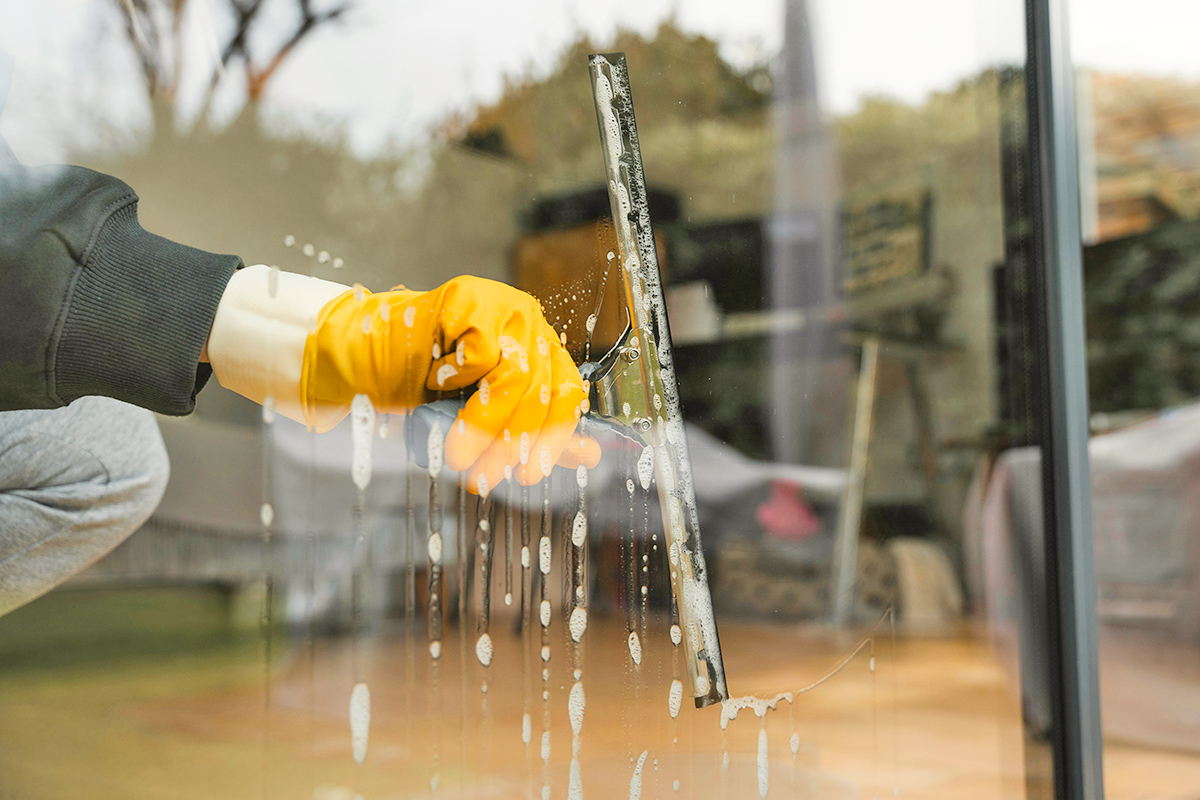
If you’ve caught the cleaning bug on a sunny day, you’ll want to skip the windows — or more specifically, the glass. While sunlight is a powerful tool for removing stains, disinfecting, and deodorizing, it’s far less helpful when it comes to window washing. When direct sunlight heats the glass, cleaning solutions evaporate too quickly. This results in streaks and spots, rather than a crystal-clear view.

The Best Time To Clean

Now that we know the worst time to clean windows, when is the best? Cloudy, overcast days are ideal for achieving that streak-free result. During the warmer months, you can also aim for early mornings or early evenings when the sun is low and the temperature is a bit cooler.

Advertisement
Related: Cleaning Your Mirrors This Way Will Prevent Bathroom Fog

How To Clean Windows

It takes only a few easy steps to get your windows sparkling. First, start with a surface that’s as dust-free as possible. Give the window a quick once-over with a dry cloth to remove any loose debris. Next, grab your preferred window cleaner or a DIY solution of equal parts water and distilled white vinegar. (For extra-dirty windows, a drop of dish soap helps to cut through the grime.) Spray the glass and wipe it down quickly with a microfiber cloth or a coffee filter. For a professional, streak-free finish, try using a squeegee.

Advertisement
Advertisement
Cleaning 3m read
157

The Weird Household Item That Makes Sofa Cleaning Easy

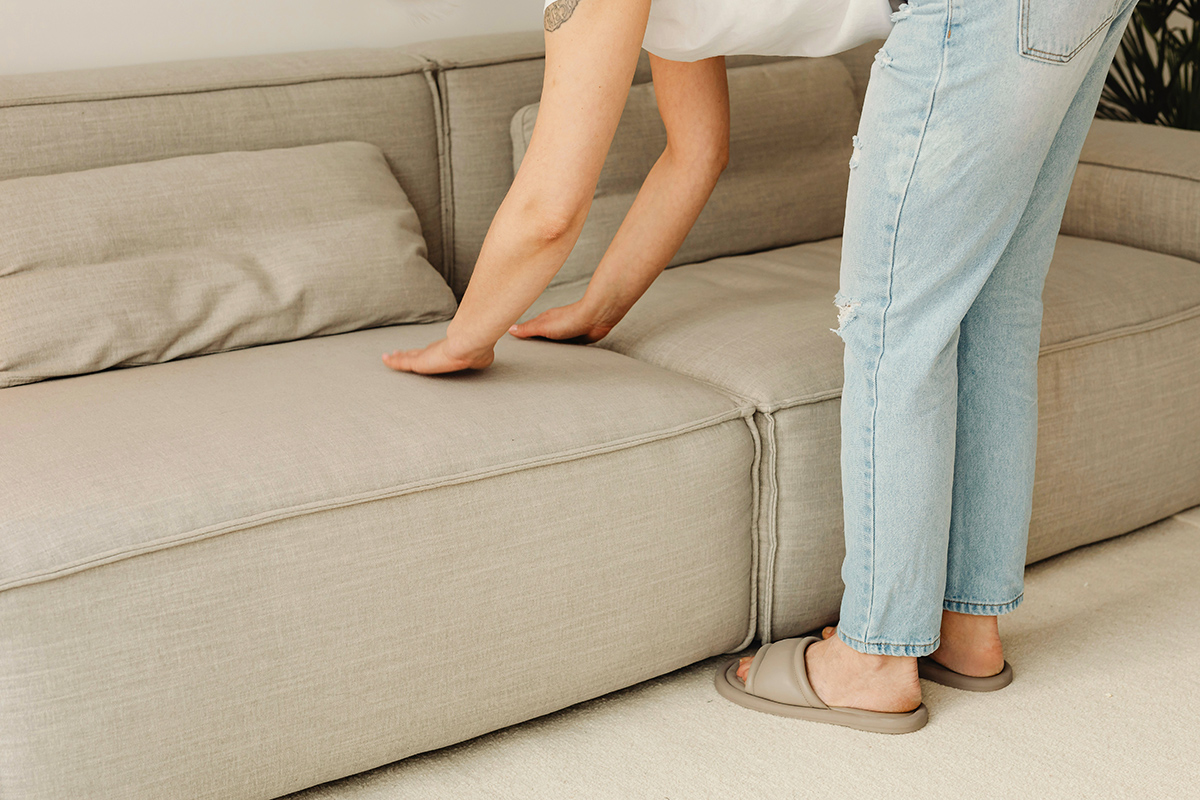
You don’t need to lug out your vacuum or portable spot cleaner every time your sofa needs a refresh. For surface-level stains that don’t require the “big tools,” this helpful hack will have your furniture looking brand-new in just a few minutes.

All featured products and deals are selected independently and objectively by the author. House Outlook may receive a share of sales via affiliate links in content.

You don’t need to lug out your vacuum or portable spot cleaner every time your sofa needs a refresh. For surface-level stains that don’t require the “big tools,” this helpful hack will have your furniture looking brand-new in just a few minutes.

A Quick Cushion Refresh

To clean your cushions in record time, you’ll first need to gather a few household supplies: a large bowl, warm water, liquid laundry detergent, a microfiber cloth, and a pot lid with a handle. The lid should be small enough to be fully wrapped in the cloth, creating a flat, handheld scrubber.

Now, let’s get to cleaning: Start by removing any debris or surface dust from the fabric. You can give your cushions a quick once-over with a vacuum attachment, or a few passes with a lint roller if you’re dealing just with crumbs or pet hair. Next, mix about 1 teaspoon of liquid detergent with 2 to 3 cups of warm water in a wide bowl.

Related: 5 Essential Tips for Cleaning Smarter, Not Harder

Submerge the cloth in the soapy water and wring it out before wrapping it around your pot lid. To do this, lay the cloth flat and place the pot lid in the center with the handle facing up. Gather the corners toward the middle, securing them with your fingers or tying a knot if there is enough excess fabric.

Advertisement

Scrub the cushions using long, overlapping strokes, applying even pressure for a consistent clean. Depending on the size of your furniture, you’ll likely need to repeat this process — rinsing the cloth in clean water and resoaking it whenever it starts to dry out or look grimy.

The original hack doesn’t call for it, but a secondary rinse with a clean, damp cloth will ensure no soapy residue is left behind. Finally, allow the furniture to dry completely before use.

Why Does It Work?

By using a pot lid instead of a wet rag, you create a flat, even surface that lifts dirt without oversaturating the cushions. Every inch of your fabric is agitated consistently, pulling grime out onto the cloth instead of pushing it deeper into the upholstery.

Keep in mind that this hack is best for light surface stains. If you’re dealing with deep-set stains, you’ll want to use a portable spot cleaner, such as the Shark StainStriker or the Bissell Little Green.

Advertisement
Advertisement
Home Improvement 2m read
7,848

3 Clever Ways To Reuse Plastic Bags at Home

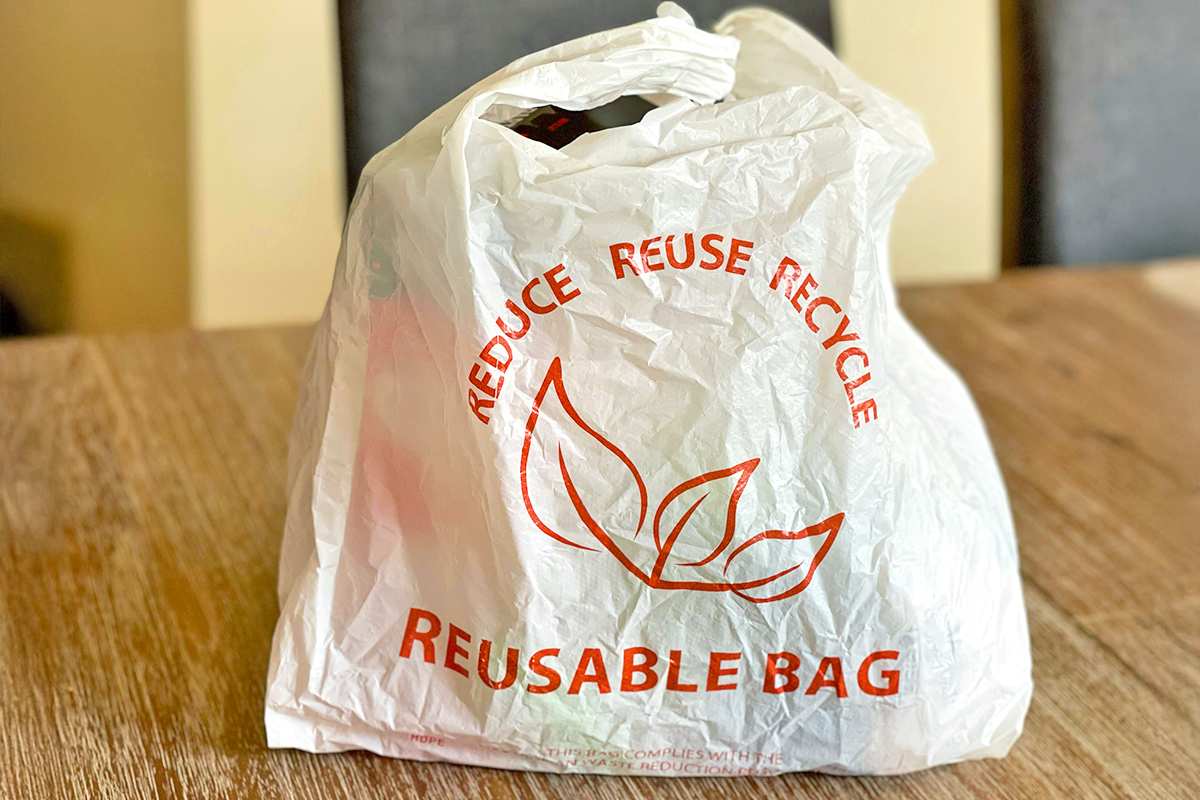
A growing number of states are phasing out plastic bags in favor of paper or reusable bags. Yet, between takeout orders, produce bags, and purchases from retailers excluded from the bans, they still manage to clutter up our drawers. Aside from using them as wastebasket liners, how can you put them to good use? As it turns out, there are a few ways to give plastic bags a second life.

A growing number of states are phasing out plastic bags in favor of paper or reusable bags. Yet, between takeout orders, produce bags, and purchases from retailers excluded from the bans, they still manage to clutter up our drawers. Aside from using them as wastebasket liners, how can you put them to good use? As…

1. Line a Paint Tray

Paint trays don’t have to be a single-use item. If you have an old one with dried-on paint, just line it with a plastic bag to get more uses out of it. It beats struggling to chip away at old paint or tossing the tray in the trash. You can also use this hack for new trays, keeping them fresh for longer and saving you the cost of store-bought liners.

Related: 3 Surprising Uses for Tennis Balls Off the Court

2. Keep Your Knees Clean When Gardening

As relaxing as gardening can be, it can also be messy and — quite literally — a pain. Fortunately, you can reuse plastic bags to help with both problems. To keep your knees clean and lightly cushioned while you work, try tying plastic bags around them, spreading out the plastic to provide extra protection from the damp ground.

Advertisement

3. Waterproof a Tote Bag

Much like the paint tray trick, you can use a plastic bag to waterproof the interior of a tote bag or backpack. This is perfect for shielding your essentials from the rain or for safely transporting wet items, such as a bathing suit or a dripping umbrella.

When in Doubt, There’s Always Recycling

Having a few plastic bags stored away will come in handy eventually, but if your collection is getting out of control, you can always recycle them. Since most curbside recycling programs won’t accept them, look up local drop-off points or specialized recycling centers that can process them for you. Many big-box stores and grocery stores, including Walmart, Target, Lowe’s, Kroger, Safeway, and Whole Foods, also offer drop-off bins for plastic bag recycling.

Advertisement
Advertisement
Cleaning 2m read
645

Do You Really Need To Separate Laundry?

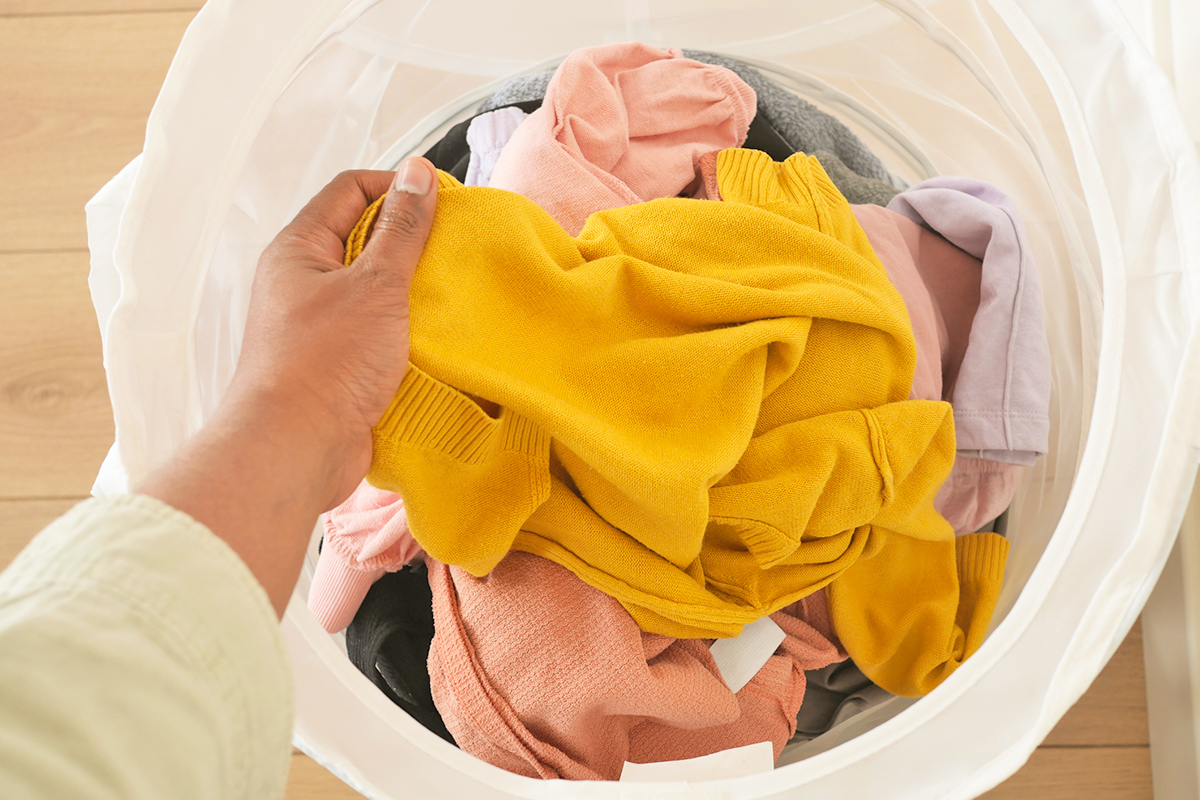
Like using animal fat as detergent, separating clothing by color was once considered a laundry-day essential. But thanks to technological improvements, we’ve realized this habit may no longer be the necessity it once was for our parents and grandparents. Sure, there are plenty of us who still separate our loads into lights and darks — old habits die hard — but is it actually required? Apparently, the answer is no.

All featured products and deals are selected independently and objectively by the author. House Outlook may receive a share of sales via affiliate links in content.

Like using animal fat as detergent, separating clothing by color was once considered a laundry-day essential. But thanks to technological improvements, we’ve realized this habit may no longer be the necessity it once was for our parents and grandparents. Sure, there are plenty of us who still separate our loads into lights and darks —…

The textiles we surround ourselves with today are a lot different from those of previous generations. Because many modern garments are colorfast or prewashed, dye bleeding is rarely a concern. Detergent formulas have also evolved, making separating laundry almost entirely unnecessary — especially if you wash in cold water. While laundering whites with darks can still cause fabrics to dull over time, it’s no longer the hard-and-fast rule it once was.

Related: How To Pick the Right Water Temperature for Every Load of Laundry

Mastering the Mixed Load

Before you throw everything into a single load, here are a few important things to keep in mind:

Stick to cold cycles: Washing on cold is the best way to reduce color transfer and prevent garments from fading. Plus, it safeguards against fiber damage and shrinking.

Advertisement

Use a color-catcher: Color-catching sheets, such as Shout Color Catchers, are an effective fail-safe against bleeding or fading, and they’re so much easier than physically sorting your laundry.

Wash whites separately: If you’re worried about specific white garments getting dingy, wash them separately. But don’t fuss over the small stuff like socks, underwear, or sleepwear.

Sort by fabric, not color: Instead of separating clothing by color, it’s often more beneficial to sort by fabric. Materials like cotton, silk, and terry cloth have specific washing needs that are easily overlooked when we’re too focused on the color of the garment.

Advertisement
Featured Image Credit:  towfiqu ahamed/ iStock | Updated  Jan 21, 2026 |
Jessie Quinn
Writer
Jessie Quinn is a Los Angeles-based lifestyle journalist with words published in PEOPLE, StyleCaster, Apartment Therapy, The Spruce, Byrdie, and more. She has a Bachelor's Degree in fashion journalism from Academy of Art University and her work spans across many categories, including style, beauty, home, health, crafts, and more.
This article is for general informational purposes only.
Featured Image Credit:  towfiqu ahamed/ iStock | Updated  Jan 21, 2026 |
Advertisement
Home Improvement 2m read
51

The Quick Fix That Makes Icy Walkways Safer

The only thing worse than face-planting on an icy walkway is having your fall caught on camera and ending up on an episode of America’s Funniest Home Videos. To prevent slippery paths and driveways, many people turn to salt or other chemical melting agents. While effective, these methods are often wasteful and can damage adjacent foliage. Instead, consider a more sustainable alternative — one that reduces slips and falls, but is also reusable and environmentally safe.

All featured products and deals are selected independently and objectively by the author. House Outlook may receive a share of sales via affiliate links in content.

The only thing worse than face-planting on an icy walkway is having your fall caught on camera and ending up on an episode of America’s Funniest Home Videos. To prevent slippery paths and driveways, many people turn to salt or other chemical melting agents. While effective, these methods are often wasteful and can damage adjacent…

A Dandy, Sandy Solution

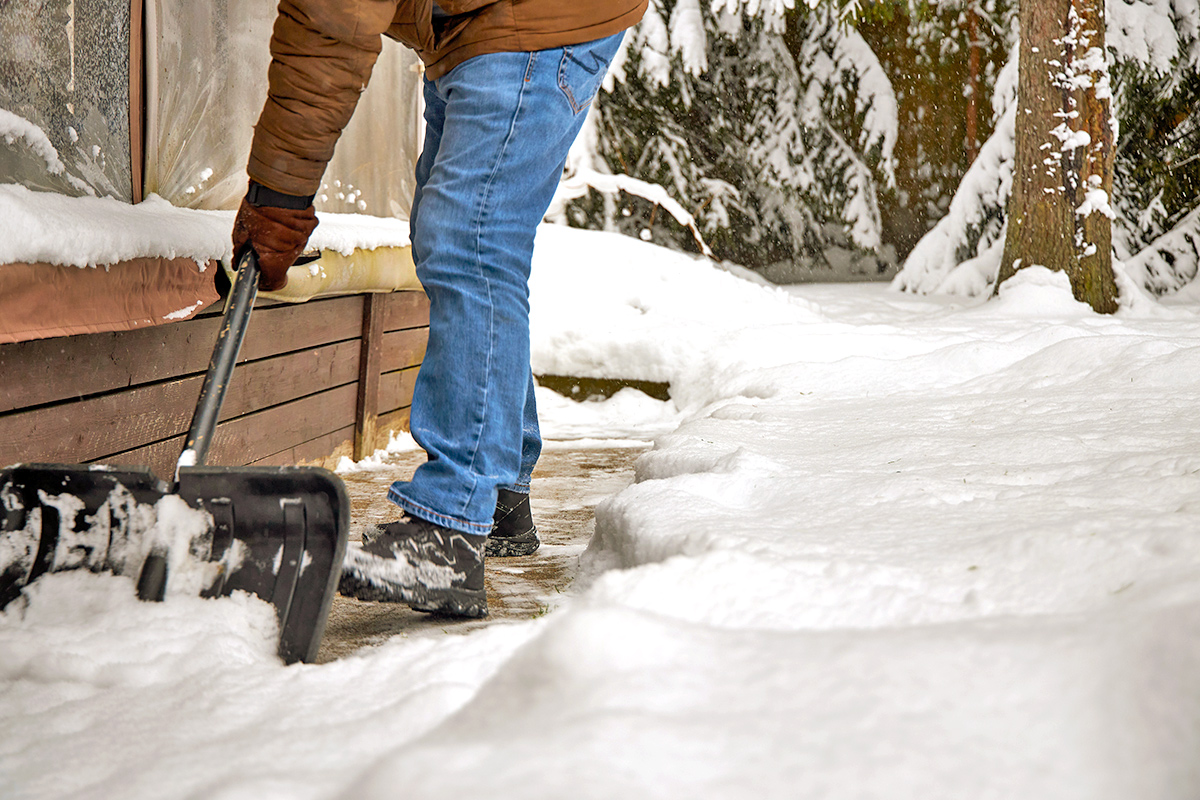
Sand is a highly effective tool when it comes to creating traction on icy walkways. And the best part is that you don’t need to remove every trace of ice to make a pathway safe. A much simpler approach is to focus on adding traction. This can be accomplished by shoveling away the top layer of snow and sprinkling sand over the remaining ice. The grittiness ensures your boots stay firmly on the ground rather than slipping out from under you.

Why Sand Beats Salt

There are several reasons to use sand over salt and other chemical deicers. First, while chemicals are corrosive, sand is much gentler and won’t harm nearby vegetation. It’s also safe for outdoor surfaces — such as concrete, stone, brick, metal, and wood — that are otherwise susceptible to chemical damage. Additionally, while salt washes away, sand is reusable. When the snow melts, the sand remains, allowing you to sweep it up and save it for the next snowfall.

Advertisement
Related: Stop Snow From Clinging to Your Shovel With This

Instead of spending $25 or more on a single-use bag of deicing salt, you can pick up a 7-pound bag of sand for less than $7. Given that sand can be used over and over, it’s not only the greener choice but also the more affordable one.

Advertisement
Featured Image Credit:  Vieille Prune/ Adobe Stock | Updated  Jan 21, 2026 |
Bennett Kleinman
Staff Writer
Bennett Kleinman is a New York City-based staff writer for Inbox Studio, covering topics for several brands including House Outlook and Better Report. He previously contributed to television programs such as "Late Show With David Letterman" and "Impractical Jokers," and digital publications like The Onion. Bennett is also a devoted New York Yankees and New Jersey Devils fan, and thinks plain seltzer is the best drink ever invented.
This article is for general informational purposes only.
Featured Image Credit:  Vieille Prune/ Adobe Stock | Updated  Jan 21, 2026 |
Advertisement
Food & Drink 2m read
39

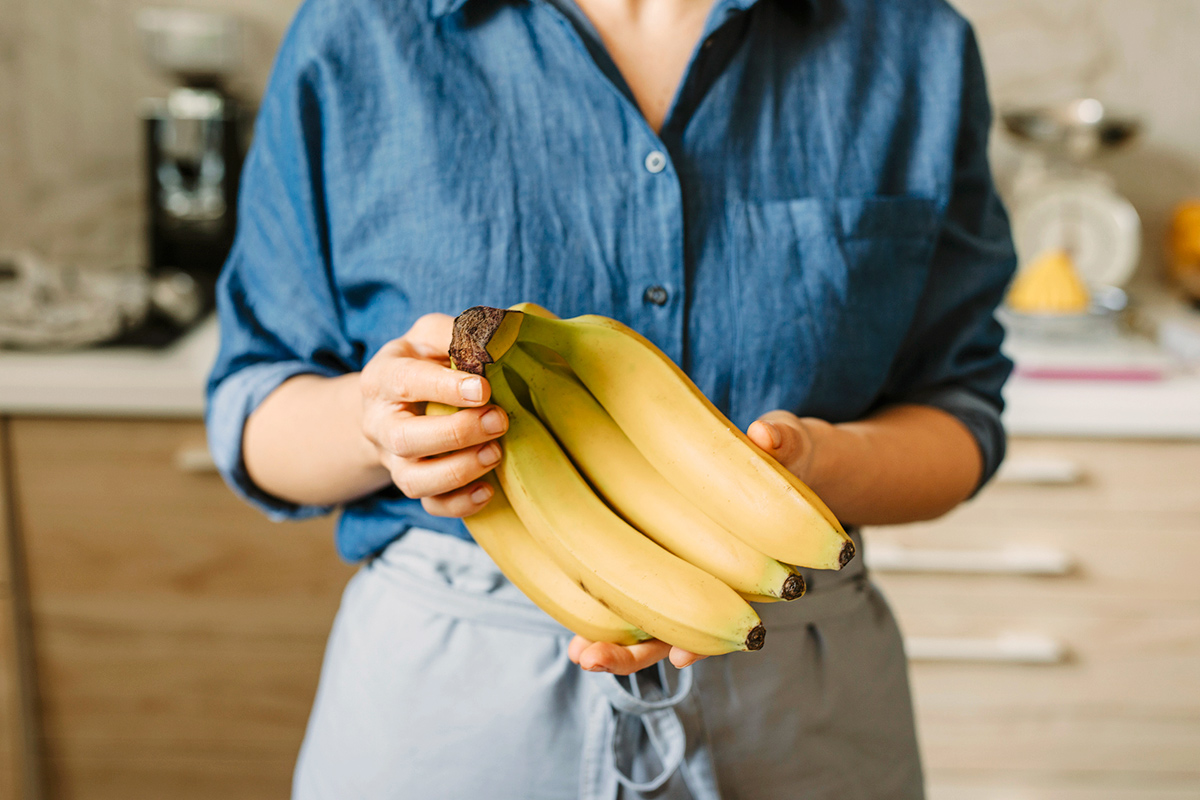
Extend Your Bananas’ Shelf Life in Seconds

Have you ever reached for a banana to snack on, only to find it turned an unappetizing brown color when you weren’t looking? While bananas get a bad rap for having an incredibly short shelf life, that reputation isn’t exactly accurate. Brown bananas are still completely safe to eat and are actually ideal for baking, where they lend a deep sweetness to breads and cakes. However, it’s true they’re only perfect for snacking during that short period of time between their underripe and overripe stages.

All featured products and deals are selected independently and objectively by the author. House Outlook may receive a share of sales via affiliate links in content.

Have you ever reached for a banana to snack on, only to find it turned an unappetizing brown color when you weren’t looking? While bananas get a bad rap for having an incredibly short shelf life, that reputation isn’t exactly accurate. Brown bananas are still completely safe to eat and are actually ideal for baking,…

Why Do Bananas Brown So Quickly?

The peel and the fruit of the banana change color for different reasons. For the peel, the culprit is ethylene gas — a natural ripening agent found in bananas, along with many other fruits and vegetables. This gas breaks down the green chlorophyll and acids into sugars, transforming the color of the peel from green to yellow, and later to brown. The fruit itself browns through a separate process called oxidation, which begins the moment the inside of the fruit is exposed to the air.

How To Slow Down Browning

Try this simple trick to slow down the browning process: Wrap your banana stems in aluminum foil, plastic wrap, or a sustainable alternative such as compostable cling wrap. The stems are a major release point for ethylene gas; by covering them, you contain some of that gas and prevent it from triggering the ripening process in the rest of the fruit. With the ethylene flow restricted, you can extend the shelf life of your bunch. While wrapping the stems won’t completely stop the bananas from browning, it will give you an extra three to five days to use them up.

Advertisement
Related: 5 Tips for Ripening Your Favorite Fruits Faster

Keep in mind that bananas aren’t the only type of produce affected by ethylene gas. Apples, peaches, pears, mangoes, melons, tomatoes, avocados, and potatoes are all ethylene producers. That’s why you should never store them together; their proximity can speed up the ripening process and cause them to brown even faster. Providing ample space between them ensures everything stays fresh for as long as possible.

Advertisement
Advertisement
Cleaning 3m read
33

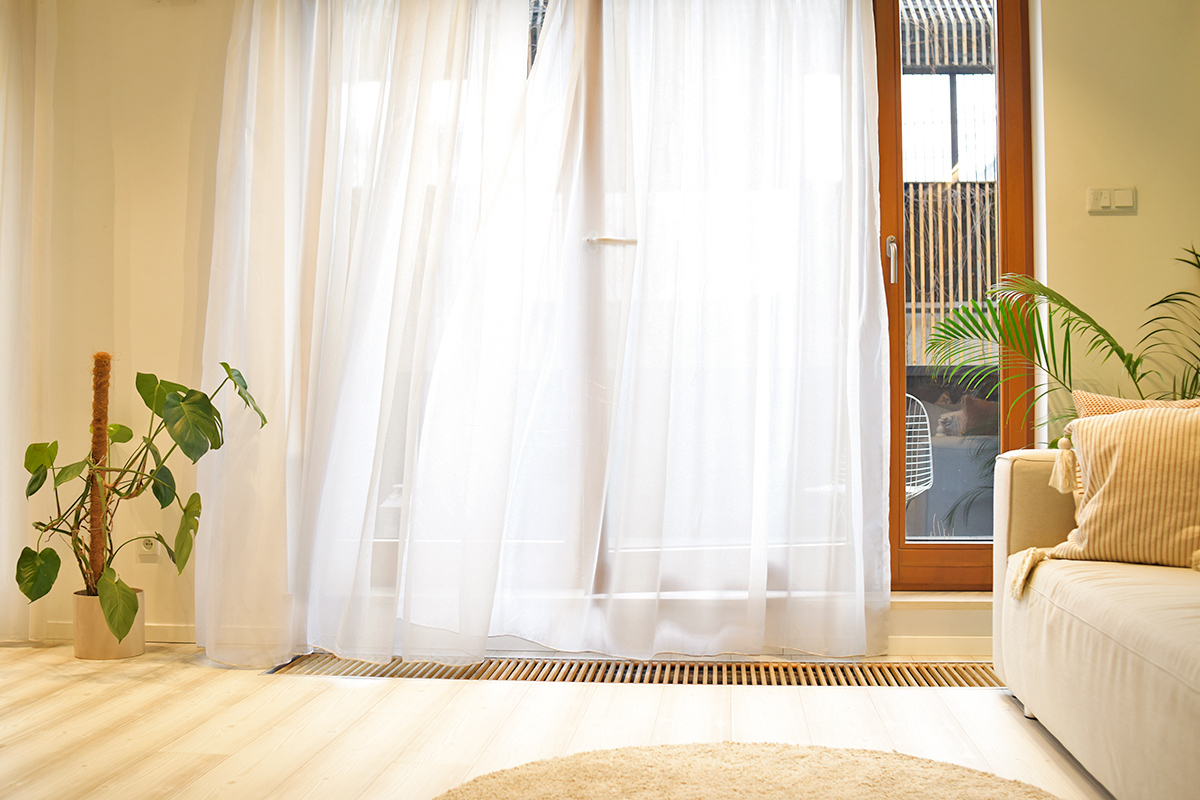
3 Ways To Fix the ‘Dead Air Zones’ in Your Home

Does your room feel stuffy, even with the fan running? You’re likely dealing with a “dead air zone.” Don’t worry, though — it’s not as scary as it sounds. You can get the air circulating again with just a few simple tweaks.

All featured products and deals are selected independently and objectively by the author. House Outlook may receive a share of sales via affiliate links in content.

Does your room feel stuffy, even with the fan running? You’re likely dealing with a “dead air zone.” Don’t worry, though — it’s not as scary as it sounds. You can get the air circulating again with just a few simple tweaks.

What’s a Dead Air Zone?

A dead air zone is a spot where air stops moving. This happens when an air current hits an obstacle, such as a wall or bulky furniture. The lack of an outlet forces the air to curl backward or upward rather than moving through the room. This is why you’ll often find hot air trapped at the ceiling and cold air settled in corners or near the floor, leaving the room feeling unevenly heated.

3 Quick Fixes To Get Dead Air Moving Again

It makes sense for air to feel still in a closed space, but it’s frustrating when you already have a fan, an HVAC vent, or an open window letting in air. When dealing with dead air, the issue isn’t where the air comes from — it’s where it gets stuck. So, what can you do? Here are three easy ways to get things moving.

Related: 9 Forgotten Household Filters You Need To Clean or Replace

Open some windows: Opening your windows wide for five to 10 minutes every day can do wonders for your room’s airflow. Even better, try opening windows on opposite sides of the room to create a cross-breeze. Be sure to keep any doors open as well; this gives the fresh air a clear path to move along, preventing it from getting bottled up in the room.

Advertisement

Rearrange your room: While you can’t move a bay window or an open closet, you can change how your furniture interacts with these features. Look for potential air traps, like the gap behind a heavy sofa or the space under a loft bed. If floor-length curtains or a desk are covering up a vent, move them out of the way so air can enter the space. Finally, try “floating” your furniture by pulling it a few inches away from the wall. This creates a narrow corridor for air to travel through, preventing it from getting stuck.

Put your fans to work: Fans are foolproof if you position them strategically. If your room has a built-in exhaust — like in a bathroom or kitchen — run it to pull out stagnant, humid air. For larger spaces, use box fans to create cross-ventilation: Set up one to blow fresh air into the room, and place another across the space to suck the old air away.

Ceiling fans can also be helpful for breaking up dead air zones, provided they’re spinning in the right direction. In the summer, set it to spin counterclockwise to push air down and keep you cool. In the winter, switch it to clockwise at a low speed; this will draw cool air up from below, displacing the warm air trapped at the ceiling. This circulation clears away trapped air and makes the temperature more comfortable.

Advertisement
Advertisement
Home Improvement 3m read
68

The Surprising Reason To Spray WD-40 on Car Doors

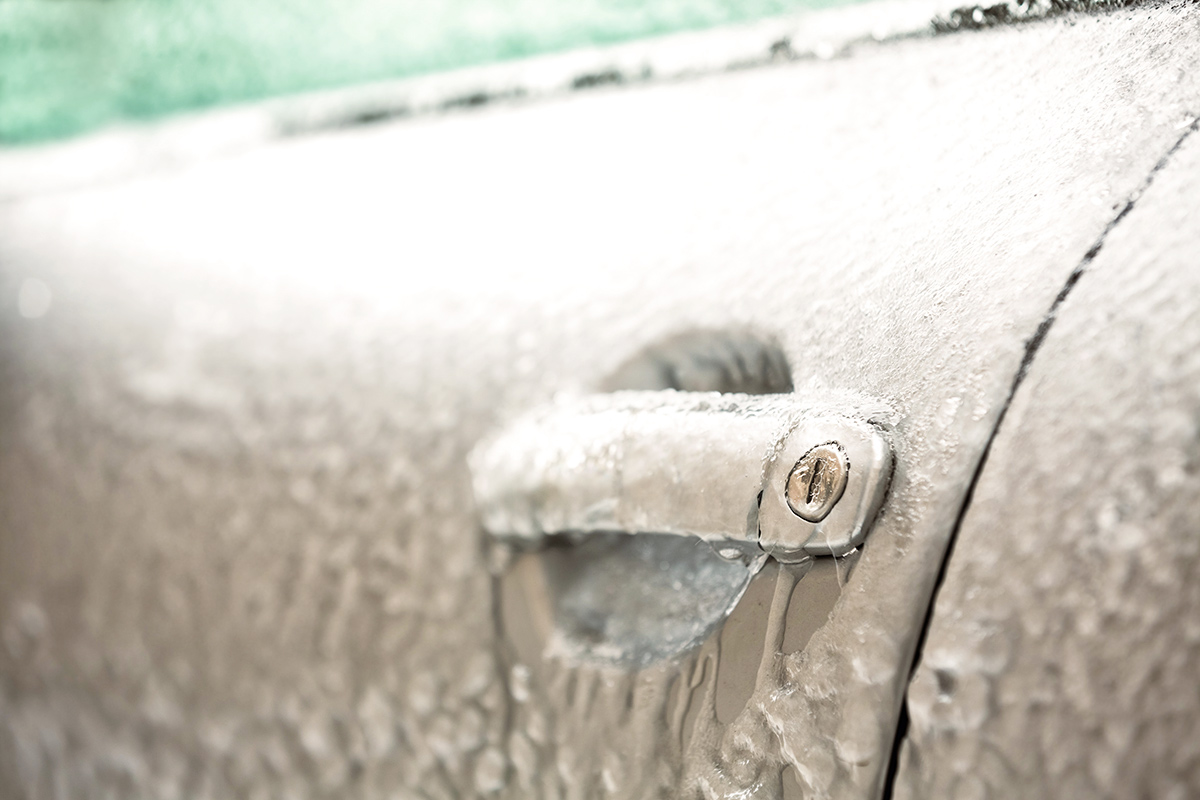
Anyone who has lived in a cold-weather climate knows just how perilous winter driving can be. Between the low visibility, slick roads, and frozen door handles, it’s not easy to motor around in those subzero temperatures. But there’s one household staple that can make life a little easier for winter drivers: WD-40. While it’s best known for silencing squeaky hinges, it’s also the perfect cold-weather tool for car owners.

All featured products and deals are selected independently and objectively by the author. House Outlook may receive a share of sales via affiliate links in content.

Anyone who has lived in a cold-weather climate knows just how perilous winter driving can be. Between the low visibility, slick roads, and frozen door handles, it’s not easy to motor around in those subzero temperatures. But there’s one household staple that can make life a little easier for winter drivers: WD-40. While it’s best…

A Slick Solution

The “WD” in WD-40 stands for “water displacement,” which hints at its effectiveness against snow and ice. You can use it to unstick doors, handles, or even windshield wipers that have been frozen in place. To try this yourself, you’ll need two things: a can of WD-40 quick-drying silicone spray and a microfiber cloth you don’t mind getting a little dirty.

For car doors: Spray some WD-40 onto a microfiber cloth, open the door, and wipe down the weatherstripping. You don’t need to oversaturate the rubber — a little lubrication goes a long way. This creates a protective barrier that prevents the door from sticking shut. It’s best to do this as a preventative measure before the snow starts to fall or the temperature drops below freezing.

For door handles and keyholes: Rub the WD-40-treated cloth over frozen handles and keyholes to break the bond between the ice and the car’s surface. If you spray it on these components before freezing weather hits, it also acts as a preventative measure.

Advertisement

For windshield wipers: It’s best to rub down your wipers before a freeze to help prevent them from sticking to the windshield. But if they’re already frozen, a bit of WD-40 — either on a rag or sprayed directly from the can — will do the trick. The wipers should come unstuck within a couple of minutes, allowing you to proceed safely down the road.

Related: The Best Organizers To Tame Car Clutter

All of these tricks go a long way toward ensuring you reach your destination safely and are never left stranded in the cold. Keep a can of WD-40 in your house and a spare in your car; that way, you’re always prepared for whatever Mother Nature throws at you.

Advertisement
Featured Image Credit:  borchee/ iStock | Updated  Jan 13, 2026 |
Bennett Kleinman
Staff Writer
Bennett Kleinman is a New York City-based staff writer for Inbox Studio, covering topics for several brands including House Outlook and Better Report. He previously contributed to television programs such as "Late Show With David Letterman" and "Impractical Jokers," and digital publications like The Onion. Bennett is also a devoted New York Yankees and New Jersey Devils fan, and thinks plain seltzer is the best drink ever invented.
This article is for general informational purposes only.
Featured Image Credit:  borchee/ iStock | Updated  Jan 13, 2026 |