Advertisement
Home Improvement 6m read
1,222

9 Forgotten Household Filters You Need To Clean or Replace

Filters are the unsung heroes of the home, quietly catching grime, protecting appliances, and keeping the air and water you use daily cleaner than you realize. But because they’re usually tucked behind panels or hidden inside machines, they’re easy to forget about. And when filters clog, efficiency drops, utility bills rise, and expensive appliances wear down long before their time.

All featured products and deals are selected independently and objectively by the author. House Outlook may receive a share of sales via affiliate links in content.

Filters are the unsung heroes of the home, quietly catching grime, protecting appliances, and keeping the air and water you use daily cleaner than you realize. But because they’re usually tucked behind panels or hidden inside machines, they’re easy to forget about. And when filters clog, efficiency drops, utility bills rise, and expensive appliances wear…

If you can’t remember the last time you checked your dishwasher filter — or you didn’t even know your washing machine had one — you aren’t alone. Here are the forgotten household filters that deserve a place on your maintenance checklist, along with general guidance on how to clean or replace them.

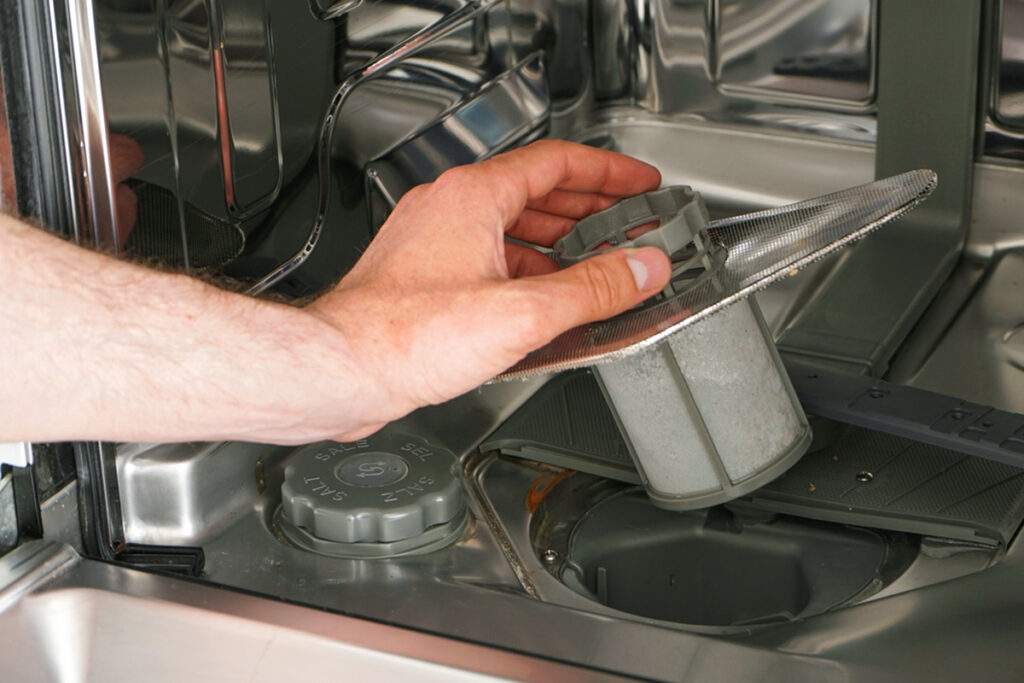
1. Dishwasher Filter

If your dishwasher is leaving behind gritty residue or cloudy glasses, the filter is usually the culprit. Most modern dishwashers have a removable mesh filter at the bottom of the machine (usually where the spray arm attaches) that traps food particles before they can recirculate.

How to maintain it: Remove the filter, rinse it under warm water, and use a soft brush to scrub away debris. Avoid abrasive tools that can damage the mesh. For most households, a monthly cleaning is sufficient, though busy kitchens may require more frequent maintenance.
Credit: Volodymyr Bushmelov/ iStock
Advertisement

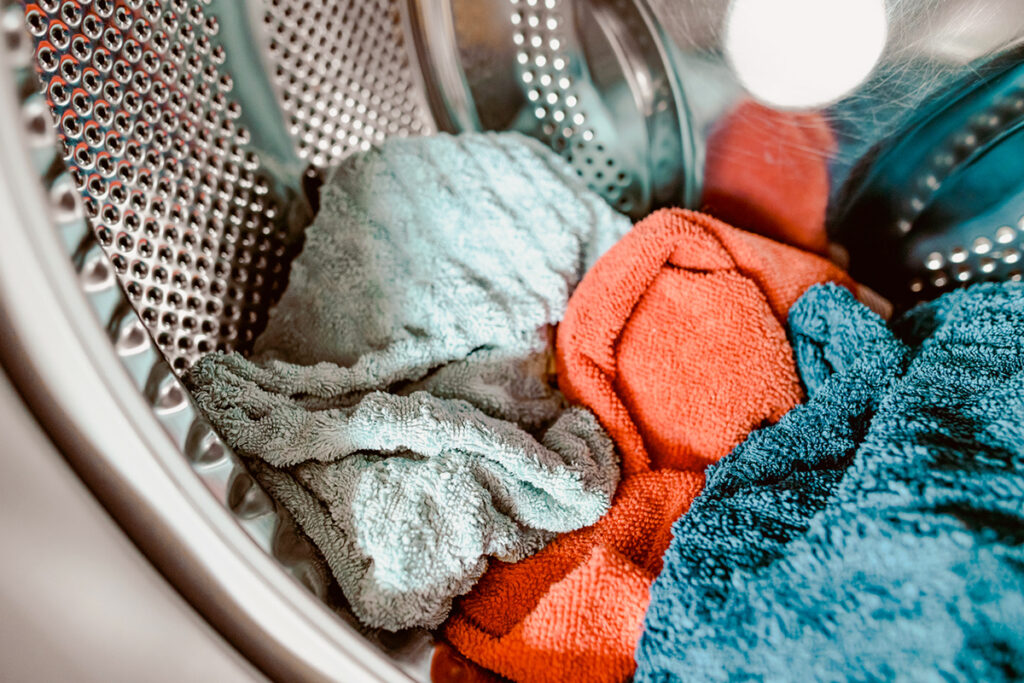
2. Washing Machine Filter

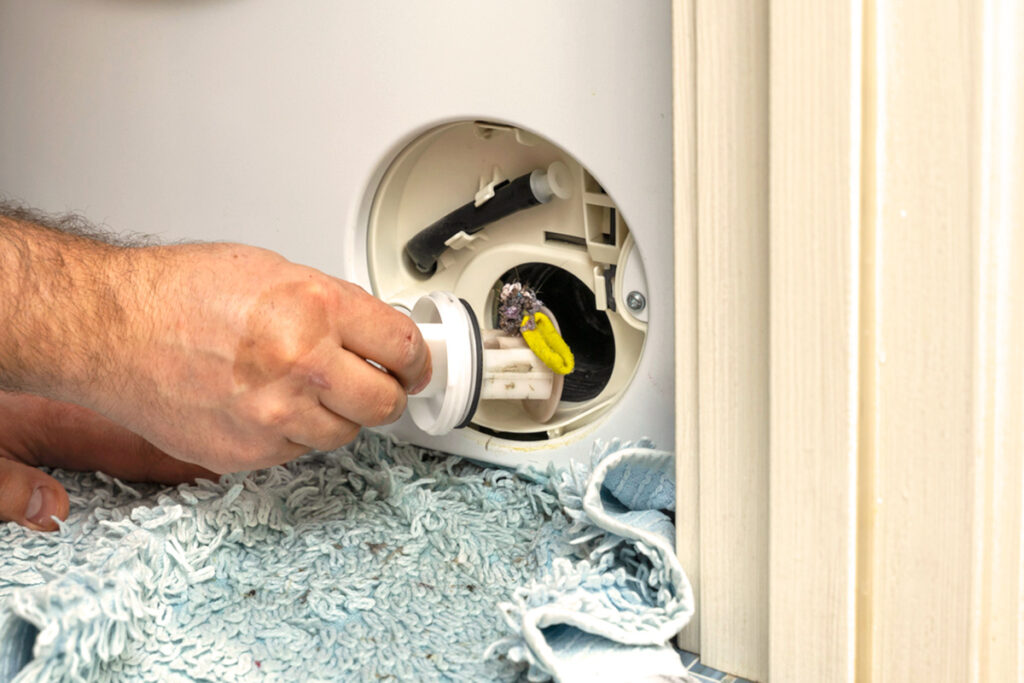
Both front-loading and top-loading washers typically have filters, though they are often well hidden. On front-loaders, the filter is usually behind a small door at the bottom of the machine; on top-loaders, it’s often inside the agitator or along the top edge of the drum. These filters catch lint, coins, hair ties, and anything else left in pockets. A clogged washer filter can lead to odors, drainage issues, or poor cleaning performance.

How to maintain it: Remove the filter and rinse it thoroughly. A quarterly cleaning works for most households, but pet owners or large families may need to clean it monthly.
Credit: Elena Gurova/ iStock
Related: How To Eliminate Mold From Your Front-Load Washer

3. Vacuum Cleaner Filter

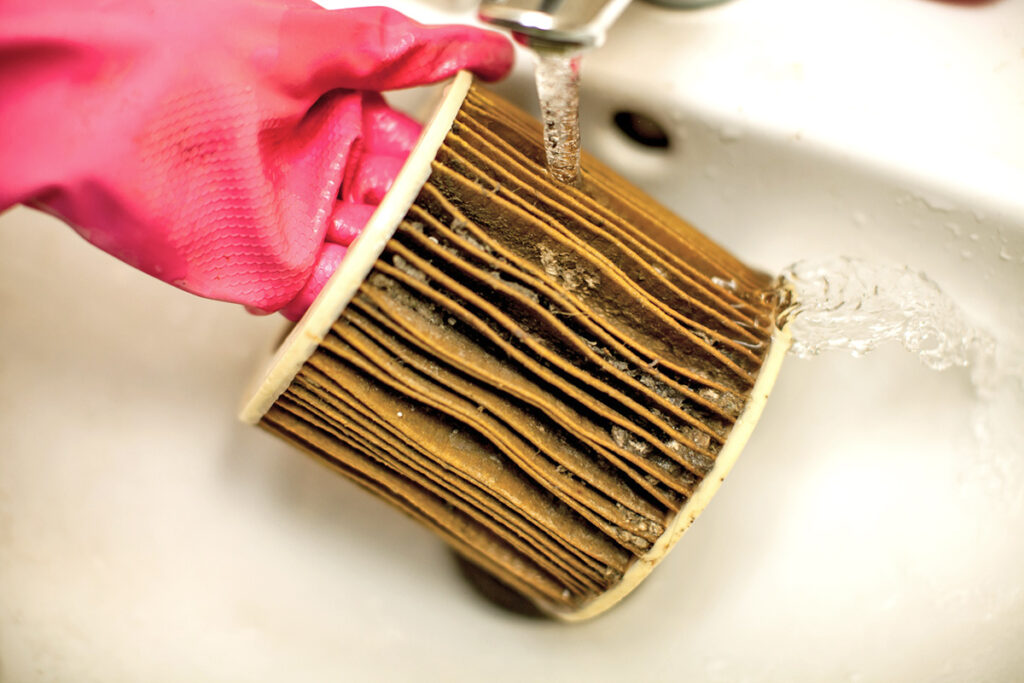
Vacuum filters capture everything from fine dust to pet hair. When they’re overloaded, suction drops dramatically. Keeping these filters clean is the simplest way to extend the life of your vacuum’s motor.

How to maintain it: Most vacuums have two filters: a premotor filter and an exhaust or HEPA filter. Foam or mesh filters can usually be rinsed under water and must be air-dried completely before reinstallation. HEPA filters are often replace-only, depending on the model. Cleaning or replacing these every one to three months keeps suction strong.

Credit: Mikhail Artamonov/ iStock
Advertisement

4. Furnace and HVAC Filters

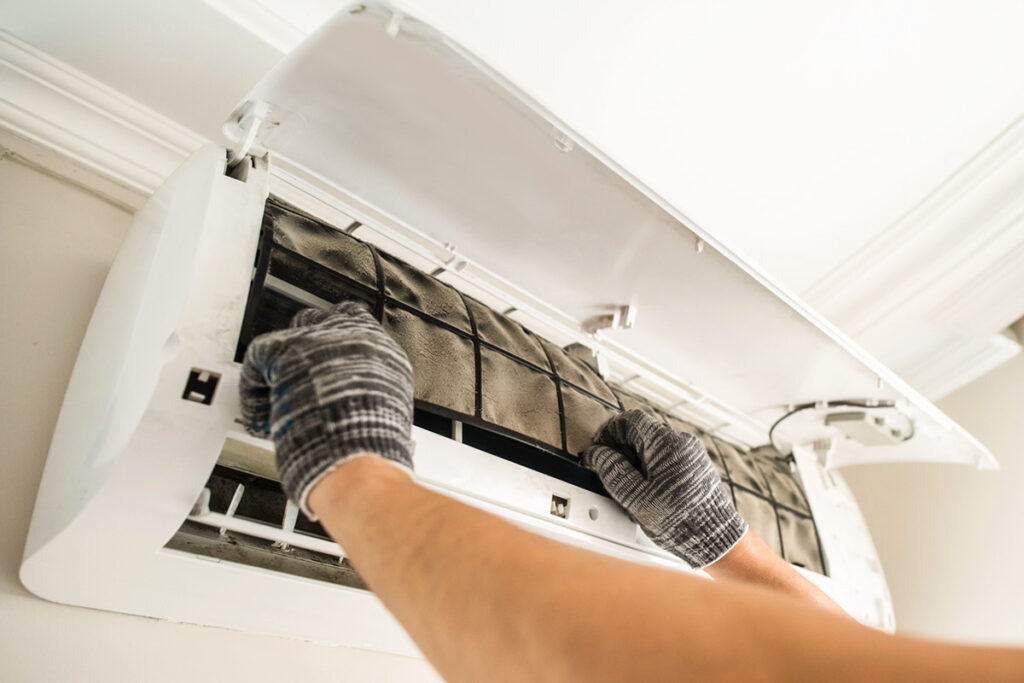
Your heating and cooling system relies on steady airflow. A dirty filter forces the system to work harder, increasing energy costs and circulating dust throughout your home.

How to maintain them: Change disposable filters every one to three months, depending on usage and dust levels. If you have a reusable filter, remove it and rinse with warm water. Make sure it’s completely dry before reinserting it to prevent mold growth.
Credit: ArtMarie/ iStock

5. Range Hood Filter

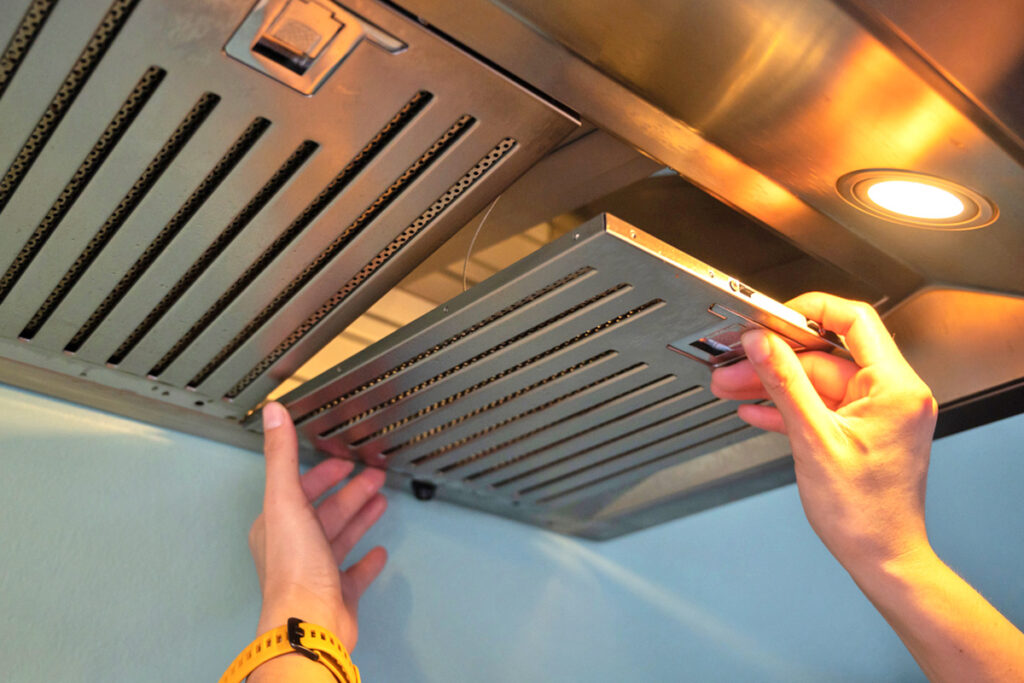
The filter above your stovetop captures grease and cooking residue. Over time, it becomes coated in a sticky layer that reduces ventilation and can even become a fire hazard.

How to maintain it: Remove metal mesh filters and soak them in hot, soapy water, or wash them on the top rack of a dishwasher if the manufacturer allows it. This should be done once a month to maintain proper airflow and prevent buildup. Charcoal range hood filters can’t be cleaned and should be replaced every three to six months, depending on how often you cook.
Credit: Boyloso/ iStock
Advertisement

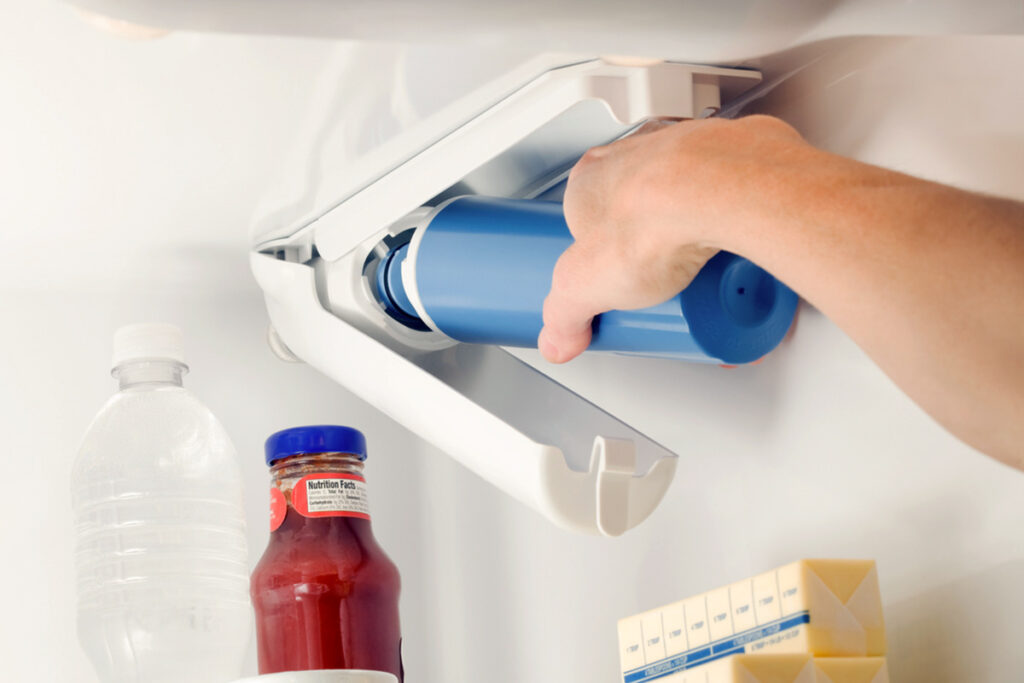
6. Refrigerator Water Filter

A refrigerator’s filter traps impurities in your water and ice. Once it becomes saturated, however, it stops functioning effectively and can lead to slow water flow or off-tasting ice.

How to maintain it: Most refrigerator filters need to be replaced every six months, though this varies based on water quality and usage. Follow the manufacturer’s instructions for installing a new filter and flush the system by running water for three to five minutes afterward.
Credit: BanksPhotos/ iStock
Related: The One Thing You Should Do To Make Your Refrigerator Run More Efficiently

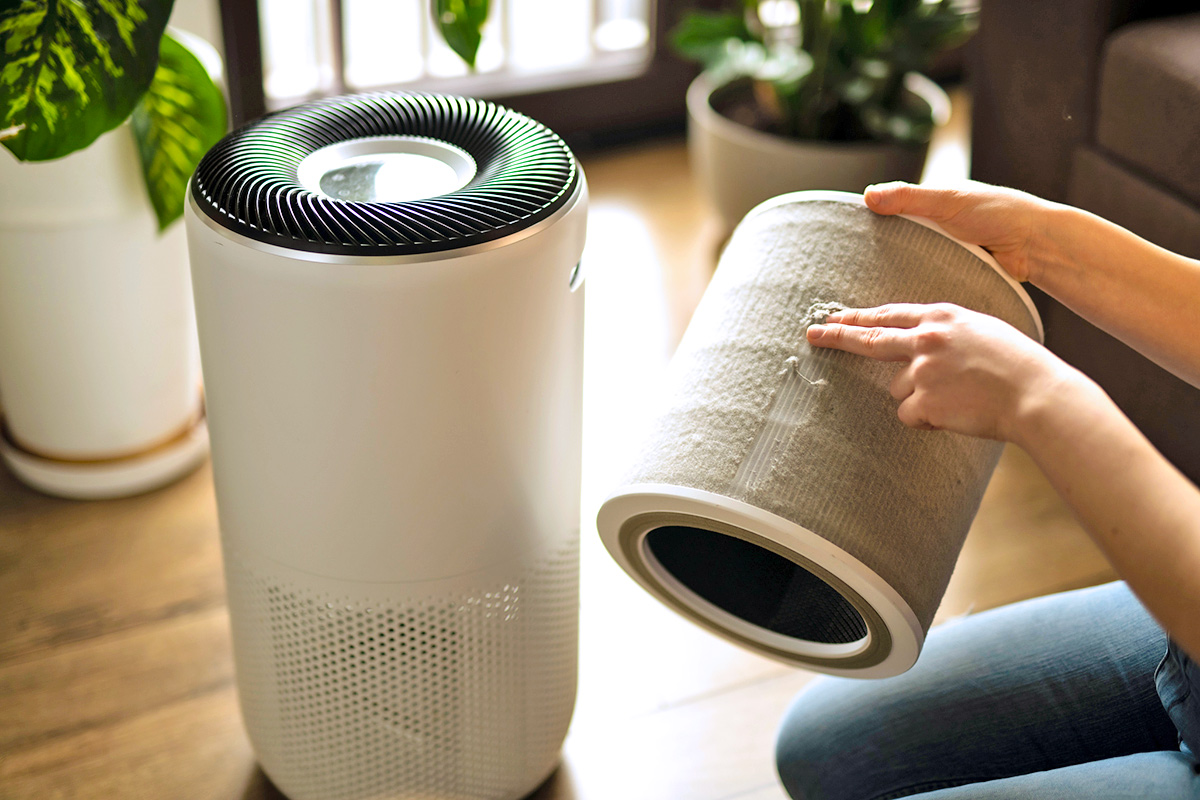
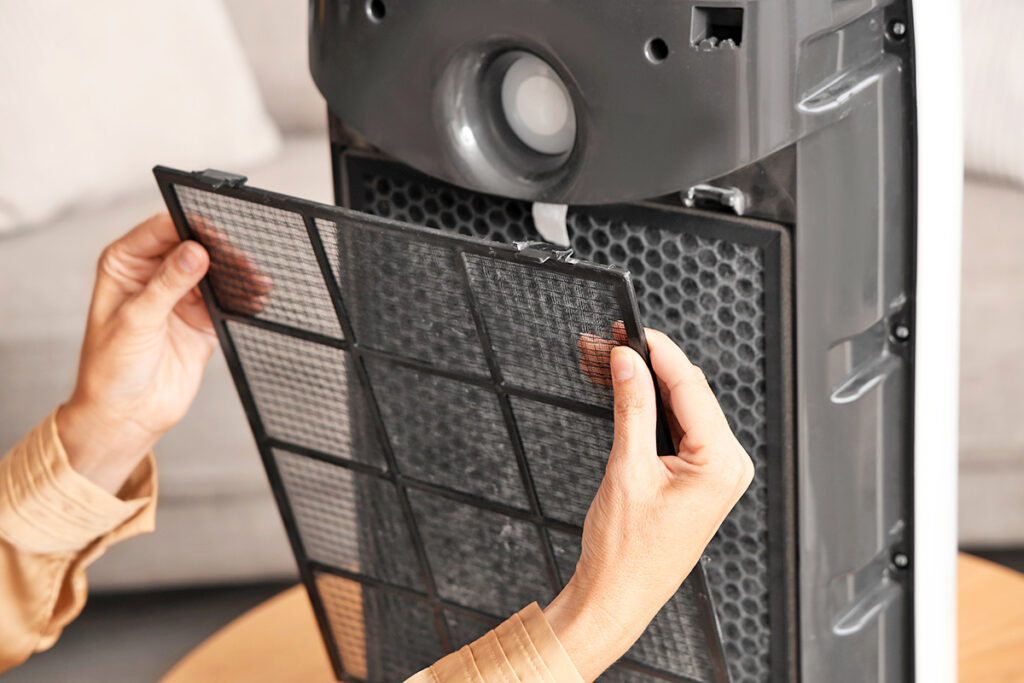
7. Air Purifier Filter

Air purifiers equipped with HEPA filters capture allergens, smoke, pet dander, and dust to improve indoor air quality. If you notice reduced airflow or the motor running louder than usual, the filter likely needs attention.

How to maintain it: Most purifiers contain both a washable prefilter and a replace-only HEPA filter. Clean the prefilter monthly and replace the HEPA filter every six to 12 months, depending on usage and air quality. Some models have indicator lights that make this easier to track.
Credit: Pixel-Shot/ Adobe Stock
Advertisement

8. Dryer Exhaust Vent System

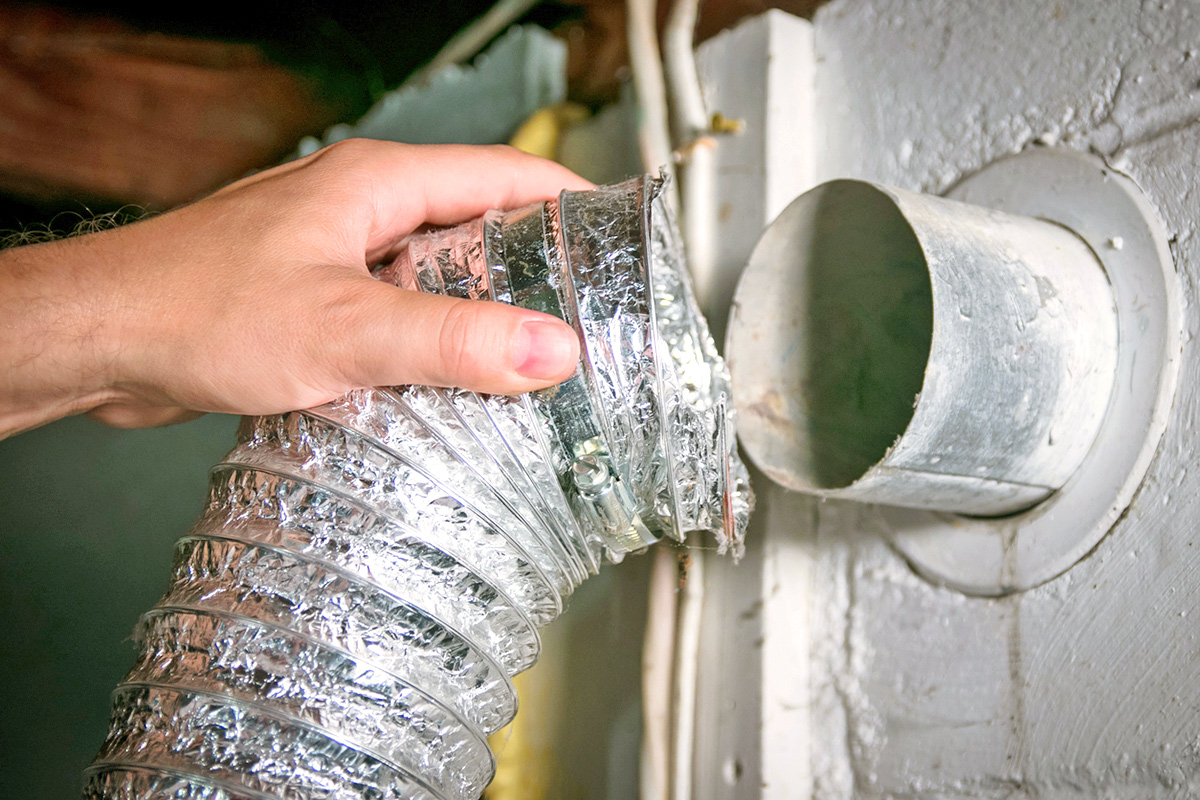
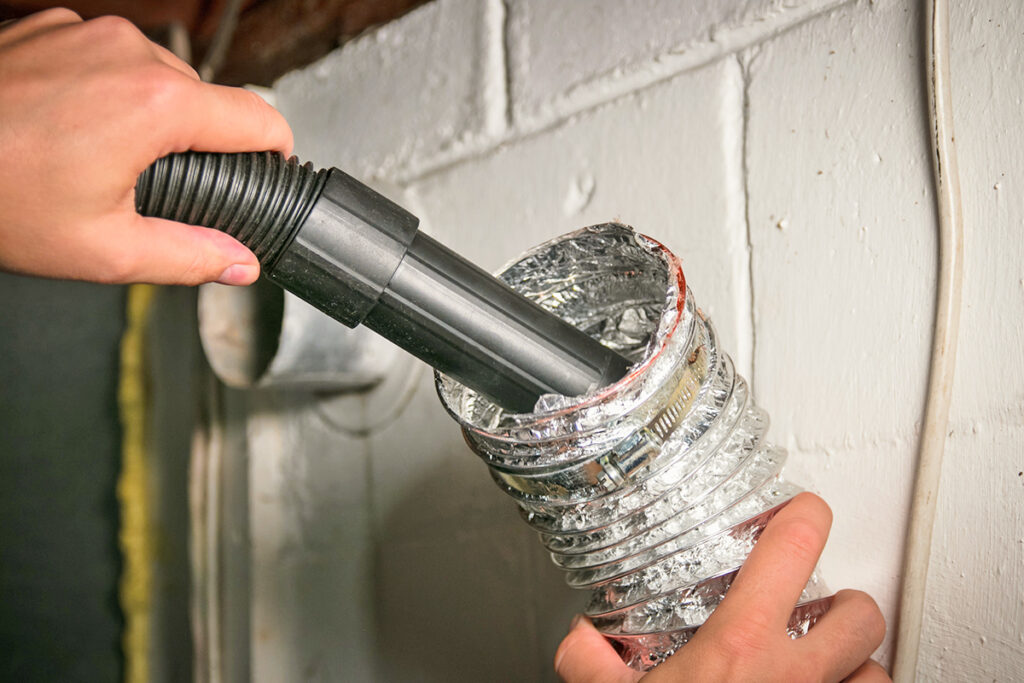
While the lint trap is easy to remember, many people forget the exhaust duct and exterior vent. The exhaust duct is the permanent pipe that transports hot air and lint away from the house, while the exterior vent is the exit point, typically covered by a louvered cap. A blocked exhaust vent system doesn’t just slow down drying time — it is a leading cause of household fires.

How to maintain it: Clean the lint screen before every load. Once a year, disconnect the dryer to vacuum lint from the vent hose (a flexible, Slinky-like tube), exhaust duct, and exterior vent opening. You can also use an electric or battery-powered leaf blower to make the job easier. It’s a good idea to perform this maintenance task more often, such as every six months, if you dry daily loads of laundry or have shedding pets.
Credit: Benjamin Clapp/ iStock

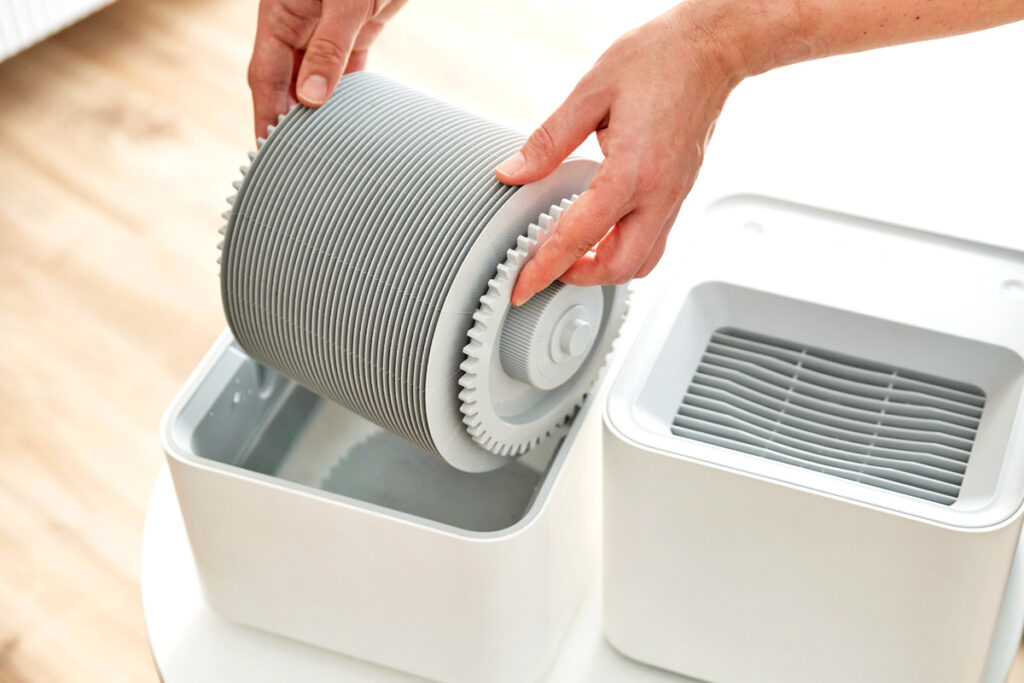
9. Humidifier or Dehumidifier Filters

These appliances condition the air but rely on filters to prevent mineral deposits and mold from circulating. A dirty filter can become a breeding ground for bacteria, which is then dispersed into the air.

How to maintain it: Most dehumidifier filters are removable and made of plastic mesh. They should be vacuumed while dry, then rinsed under lukewarm water. To combat unpleasant odors, soak the filter in soapy water or a mixture of vinegar and water for 15 to 30 minutes. Do this every two to four weeks during the humid season.

Most evaporative humidifiers — commonly found in whole-home systems or large stand-alone units — rely on a paper or fabric “wicking” filter. These should be replaced every 30 to 90 days, or immediately if you notice musty odors or crusty mineral deposits. Ultrasonic humidifiers, on the other hand, are typically filter-free but require weekly cleaning to prevent mold growth and hard water scale.
Credit: simpson33/ iStock

The Takeaway

Filters don’t ask for much — just an occasional rinse or replacement — yet they play a massive role in maintaining  appliance efficiency, improving air quality, and keeping your home running smoothly.
Advertisement
Featured Image Credit:  ArtistGNDphotography/ iStock | Updated  Jan 13, 2026 |
Jill Layton
Writer
Jill Layton started writing professionally when she realized her emails and texts were kinda funny. She’s an affiliate shopping writer and lifestyle contributor for Scary Mommy, Bustle, Mic, and Best Products. She’s the mom of two alarmingly witty kids and the world’s most perfect dog.
This article is for general informational purposes only.
Featured Image Credit:  ArtistGNDphotography/ iStock | Updated  Jan 13, 2026 |
Advertisement
Home Improvement 3m read
68

The Surprising Reason To Spray WD-40 on Car Doors

Anyone who has lived in a cold-weather climate knows just how perilous winter driving can be. Between the low visibility, slick roads, and frozen door handles, it’s not easy to motor around in those subzero temperatures. But there’s one household staple that can make life a little easier for winter drivers: WD-40. While it’s best known for silencing squeaky hinges, it’s also the perfect cold-weather tool for car owners.

All featured products and deals are selected independently and objectively by the author. House Outlook may receive a share of sales via affiliate links in content.

Anyone who has lived in a cold-weather climate knows just how perilous winter driving can be. Between the low visibility, slick roads, and frozen door handles, it’s not easy to motor around in those subzero temperatures. But there’s one household staple that can make life a little easier for winter drivers: WD-40. While it’s best…

A Slick Solution

The “WD” in WD-40 stands for “water displacement,” which hints at its effectiveness against snow and ice. You can use it to unstick doors, handles, or even windshield wipers that have been frozen in place. To try this yourself, you’ll need two things: a can of WD-40 quick-drying silicone spray and a microfiber cloth you don’t mind getting a little dirty.

For car doors: Spray some WD-40 onto a microfiber cloth, open the door, and wipe down the weatherstripping. You don’t need to oversaturate the rubber — a little lubrication goes a long way. This creates a protective barrier that prevents the door from sticking shut. It’s best to do this as a preventative measure before the snow starts to fall or the temperature drops below freezing.

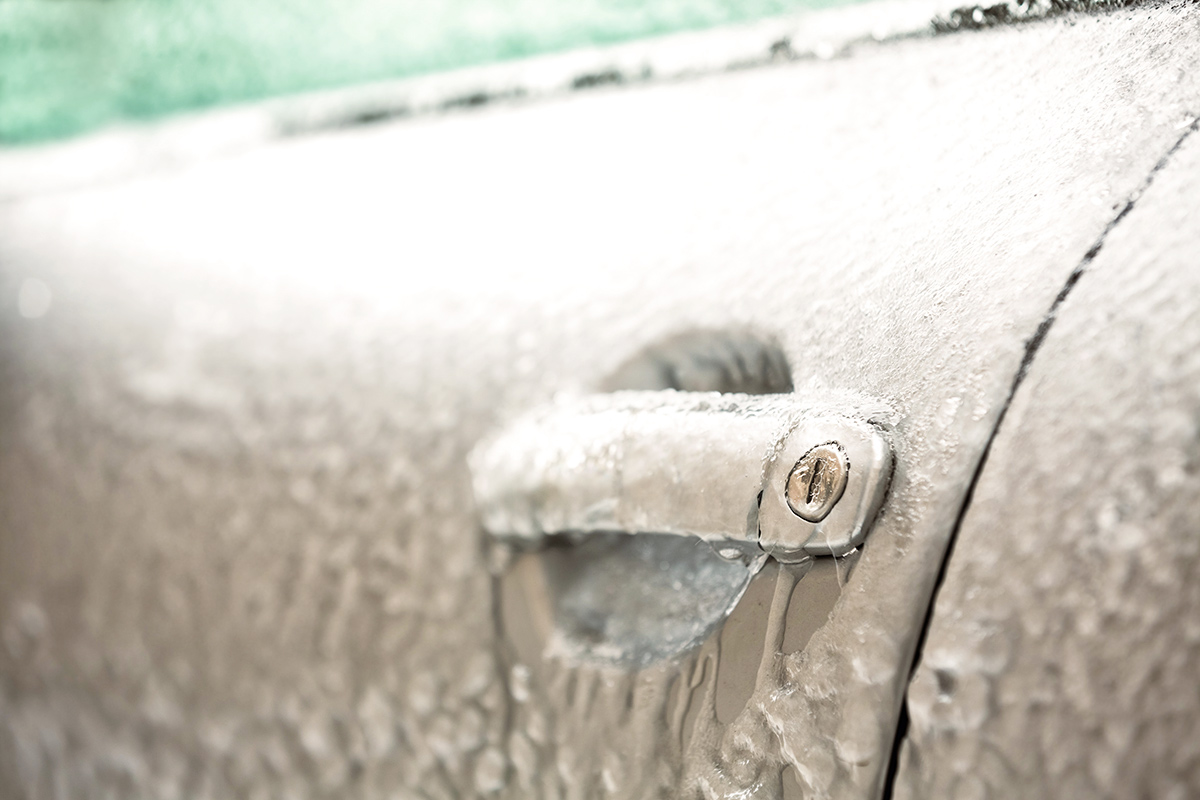
For door handles and keyholes: Rub the WD-40-treated cloth over frozen handles and keyholes to break the bond between the ice and the car’s surface. If you spray it on these components before freezing weather hits, it also acts as a preventative measure.

Advertisement

For windshield wipers: It’s best to rub down your wipers before a freeze to help prevent them from sticking to the windshield. But if they’re already frozen, a bit of WD-40 — either on a rag or sprayed directly from the can — will do the trick. The wipers should come unstuck within a couple of minutes, allowing you to proceed safely down the road.

Related: The Best Organizers To Tame Car Clutter

All of these tricks go a long way toward ensuring you reach your destination safely and are never left stranded in the cold. Keep a can of WD-40 in your house and a spare in your car; that way, you’re always prepared for whatever Mother Nature throws at you.

Advertisement
Featured Image Credit:  borchee/ iStock | Updated  Jan 13, 2026 |
Bennett Kleinman
Staff Writer
Bennett Kleinman is a New York City-based staff writer for Inbox Studio, covering topics for several brands including House Outlook and Better Report. He previously contributed to television programs such as "Late Show With David Letterman" and "Impractical Jokers," and digital publications like The Onion. Bennett is also a devoted New York Yankees and New Jersey Devils fan, and thinks plain seltzer is the best drink ever invented.
This article is for general informational purposes only.
Featured Image Credit:  borchee/ iStock | Updated  Jan 13, 2026 |
Advertisement
Food & Drink 3m read
120

Are You Cooking With the Right Kind of Salt?

Every home cook stocks a different array of seasonings in their kitchen, but salt is a constant. It’s simply the most versatile ingredient; without it, few foods would taste right. Even cultures that don’t use refined salt often rely on salty fermented staples, such as soy or fish sauce, to get the same result. Of course, the plain white stuff in your shaker isn’t the only kind of salt a recipe might call for. Many specify sea salt, kosher salt, or a fancy finishing salt. Are you using the right one for the job? Let’s look at the three main types of salt and the specific role each one plays.

All featured products and deals are selected independently and objectively by the author. House Outlook may receive a share of sales via affiliate links in content.

Every home cook stocks a different array of seasonings in their kitchen, but salt is a constant. It’s simply the most versatile ingredient; without it, few foods would taste right. Even cultures that don’t use refined salt often rely on salty fermented staples, such as soy or fish sauce, to get the same result. Of…

1. Table Salt

Table salt is likely the kind you’ve known your whole life. It’s fully refined and produced with a fine texture so it can be dispensed easily from a shaker (or even the can), and sprinkled onto your food, chef-fashion, from your fingertips. When a recipe simply calls for “salt,” this is what it means.

Related: How To Choose the Right Cooking Oil, According to a Chef

Some recipes advise against it, however, because table salt is often iodized. An iodine compound has been added to certain varieties of U.S. table salt since 1924 to prevent goiter, an enlargement of the thyroid gland often caused by an iodine deficiency. It can add a faint bitterness to your food and discolor pickles or brines, which is why those recipes usually call for kosher salt. Noniodized table salt is easily available, though, if you prefer the fine texture.

Advertisement

2. Coarse Salt

“Coarse” just refers to the size of the grains. It might be sold as kosher salt or even decorative pink Himalayan salt, which looks appealing in a grinder. Because it’s typically noniodized, it offers a cleaner flavor (sea salt being the exception, as the taste depends on its origins). Those big grains are sometimes used as a textural element on things like soft pretzels, focaccia, or margarita rims.

Coarse salt is the go-to for brines, marinades, and pickles, but be careful: Crystal sizes vary widely by brand, so swapping one for another can be a complication.

3. Finishing Salt

Finishing salt is a less obvious category than the others, though these gourmet varieties have risen in popularity over the last few decades. It refers to premium, specialized salts (usually sea salts) that you add at the very last moment as a garnish. Pyramid-shaped Maldon flakes or French “sel gris” and “sel de Guérande” are good examples. You’d use those on a dish like carpaccio, where their crunch or delicate flavor elevate the finished dish.

Advertisement
Featured Image Credit:  AleksandarGeorgiev/ iStock | Updated  Jan 13, 2026 |
Fred Decker
Writer
Fred Decker is a trained chef and former restaurateur. Since closing his restaurants over a decade ago he has been a prolific freelance writer, publishing several thousand articles on dozens of high-volume websites including Taste Of Home, Hunker, Tasting Table, Week&, eHow, and GOBankingRates. He lives on a rural acreage shared with a big garden, chickens, rabbits, and grandkids.
This article is for general informational purposes only.
Featured Image Credit:  AleksandarGeorgiev/ iStock | Updated  Jan 13, 2026 |
Advertisement
Gardening 3m read
87

The One Thing You Should Never Do to Houseplants in Winter

The best thing you can do for your houseplants during the cold-weather season? Leave them exactly as they are. While it’s tempting to use the slow, indoor months to repot your collection — perhaps as part of a seasonal reset for your home — the most caring thing you can do is exercise patience. Wait until the days are noticeably longer before making any big moves.

All featured products and deals are selected independently and objectively by the author. House Outlook may receive a share of sales via affiliate links in content.

The best thing you can do for your houseplants during the cold-weather season? Leave them exactly as they are. While it’s tempting to use the slow, indoor months to repot your collection — perhaps as part of a seasonal reset for your home — the most caring thing you can do is exercise patience. Wait…

Why Wait for Winter To Pass?

No matter where you live, winter brings shorter days and less of the sunlight plants need to photosynthesize carbon and water into glucose, aka natural plant food. Repotting when light is scarce can stress them out because they just don’t have the energy reserves they’d have in, say, early summer. Plus, with less sun to help excess water evaporate from the surface of your plant’s soil, even the most seasoned plant parents can accidentally overwater.

Related: 10 Easy Ways To Fix Common Houseplant Problems

Many plants go semidormant in the winter and uprooting during their hibernation cycle can send them into shock. Unless a repot is absolutely necessary, hold off until early to mid-spring or until you see the first signs of new growth. This way, your plants will have the best conditions for laying strong, happy roots in their new homes.

Advertisement

The Right Time To Repot

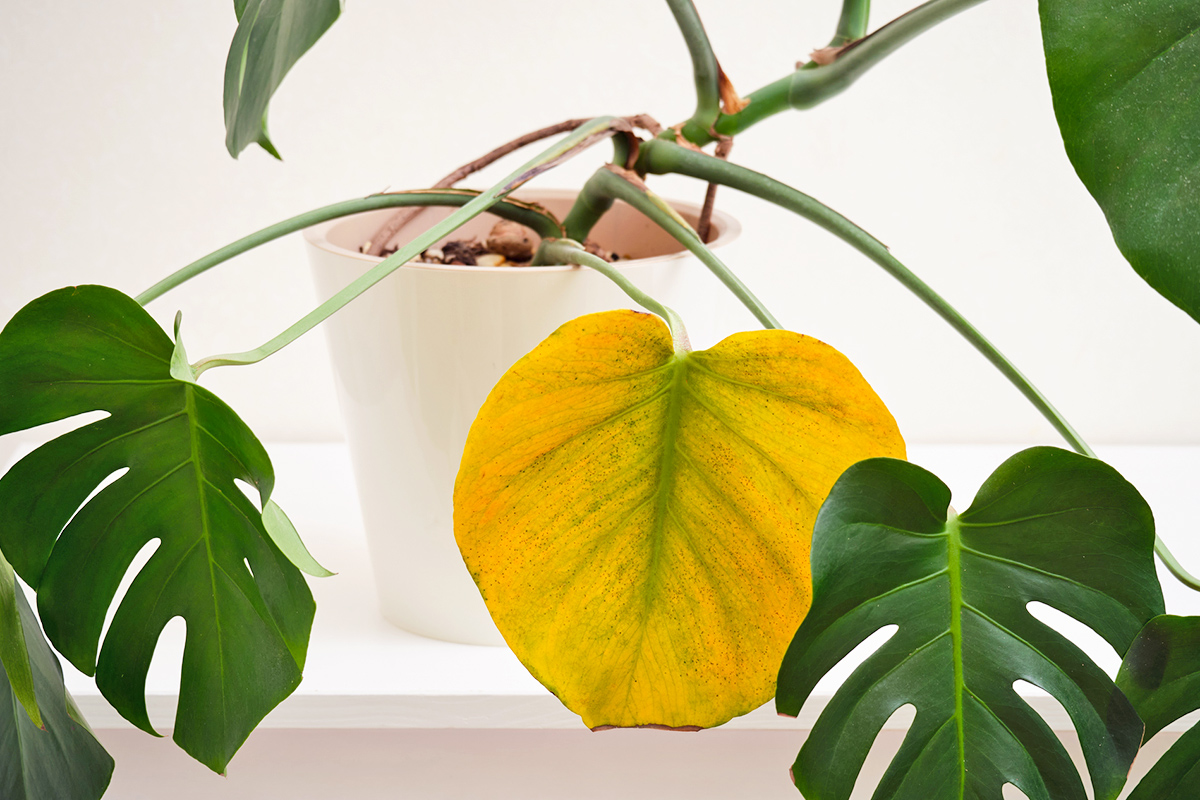
Sometimes, waiting for longer, warmer days isn’t the right move, and emergency intervention is the answer. Root problems shouldn’t be put off. If your plant is severely rootbound, with roots peeking over the soil or pushing through the drainage holes, you’ll want to repot sooner rather than later. An even more urgent matter is root rot, caused by overwatering. If you spot yellow, wilting leaves on a plant with moist soil; mushy, dark brown or black roots; or a sour smell, you’ll need to act fast. Rinse and cut away the affected roots, then repot the plant in a clean container with fresh, well-draining soil.

Finally, a swarm of fungus gnats could be a sign that your plant needs to be repotted. If you’re close to spring, you could try using sticky traps to catch the adults. If you have a bad case, however, you’ll need to target the larvae living beneath the soil. Toss that old soil, give the container a deep clean with hot soapy water to kill any lingering eggs, and start fresh with a high-quality potting mix.

Advertisement
Advertisement
Cleaning 2m read
26

The Easy Way To Remove Stubborn Cooktop Stains

A cooktop stove, whether induction or electric, is a great way to save space in your kitchen, allowing you to install cabinets underneath and place the oven elsewhere. It also offers a sleeker, more modern look, and if it breaks, you only need to replace the cooktop itself, rather than an all-in-one range. These surfaces are also praised for their easy cleanup — especially when compared to open-flame burners or electric coils.

All featured products and deals are selected independently and objectively by the author. House Outlook may receive a share of sales via affiliate links in content.

A cooktop stove, whether induction or electric, is a great way to save space in your kitchen, allowing you to install cabinets underneath and place the oven elsewhere. It also offers a sleeker, more modern look, and if it breaks, you only need to replace the cooktop itself, rather than an all-in-one range. These surfaces…

To clean a cooktop, you can typically just wipe it down. For everyday messes, a spray bottle filled with equal parts water and distilled white vinegar will get the job done. Since the surface is completely flat, you don’t have to fuss over every nook and cranny. However, spills that happen midcooking can get baked-on since the glass is often too hot to wipe down immediately. Even after it cools, some cooktop stains remain stuck, no matter how hard you scrub. Thankfully, there’s an easy way to get that glass looking brand-new again.

Scrape Away the Stains

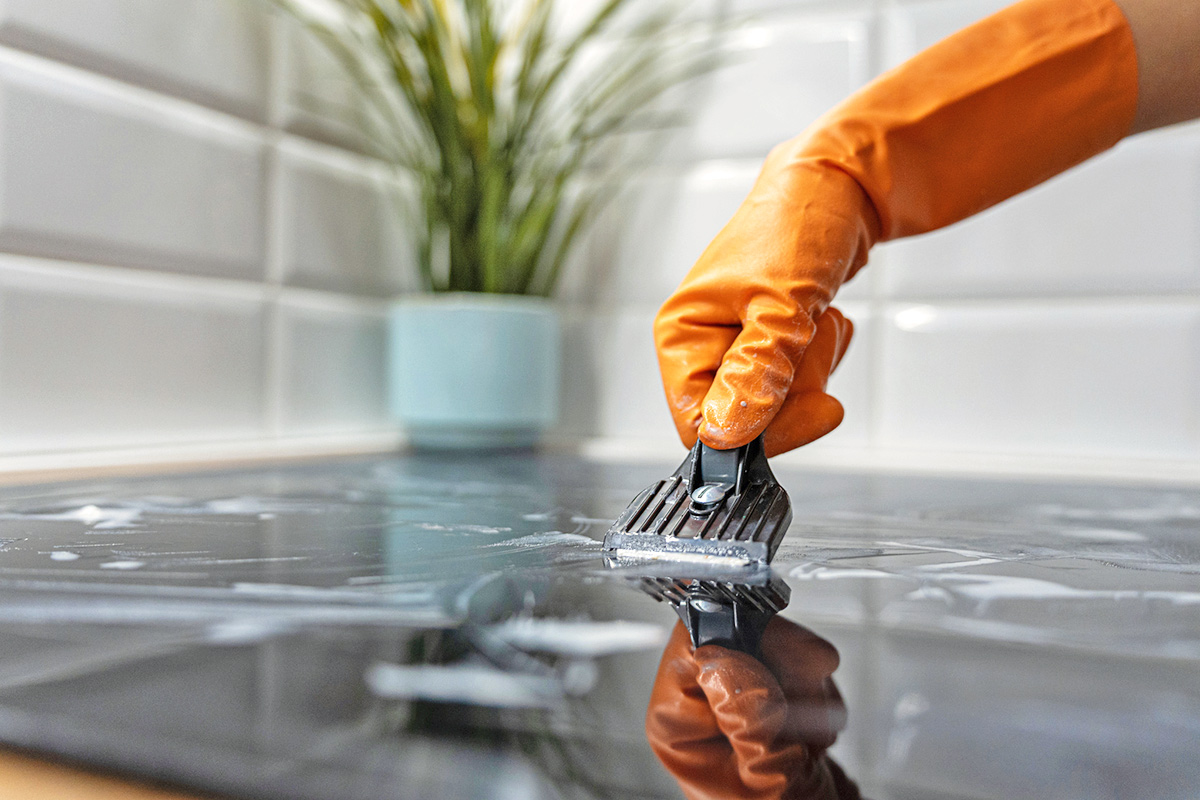
Start by spraying the cooktop with a degreaser, such as Dawn Powerwash, then scrub in circular motions using a nonscratch scouring pad. Wipe the surface with a clean, damp microfiber cloth to remove any excess product, then buff it dry with another clean cloth. You could follow up with a nonabrasive cooktop cleaner, but for particularly stubborn messes, reach for a razor blade scraper.

Advertisement
Related: The Safety Tip Everyone With a Glass Cooktop Needs To Know

It’s important to use a fresh blade every time you do this, as a rusty blade can result in a scratched cooktop. You should also apply a mixture of dish soap and warm water to the cooktop for lubrication. Hold the tool at a 45-degree angle and gently scrape away any burnt-on residue. Remember to work slowly and use a light touch. Once everything is scraped off, give the cooktop one last spray with your cleaner of choice and wipe it away for a crystal-clear finish.

Advertisement
Featured Image Credit:  FluxFactory/ iStock | Updated  Jan 13, 2026 |
Jessie Quinn
Writer
Jessie Quinn is a Los Angeles-based lifestyle journalist with words published in PEOPLE, StyleCaster, Apartment Therapy, The Spruce, Byrdie, and more. She has a Bachelor's Degree in fashion journalism from Academy of Art University and her work spans across many categories, including style, beauty, home, health, crafts, and more.
This article is for general informational purposes only.
Featured Image Credit:  FluxFactory/ iStock | Updated  Jan 13, 2026 |
Advertisement
Home Improvement 4m read
56

Your Dryer Vent Needs a Leaf Blower, Not a Vacuum Attachment

When it comes to laundry room tasks, washing clothes isn’t nearly as bad as some of the more aggravating chores. Cleaning the dryer vent (not to be confused with cleaning the lint trap, which should be done after every use) is a bigger headache, but it’s a task you need to tackle every three to six months to help prevent fires and keep your dryer running smoothly.

All featured products and deals are selected independently and objectively by the author. House Outlook may receive a share of sales via affiliate links in content.

When it comes to laundry room tasks, washing clothes isn’t nearly as bad as some of the more aggravating chores. Cleaning the dryer vent (not to be confused with cleaning the lint trap, which should be done after every use) is a bigger headache, but it’s a task you need to tackle every three to…

Many people default to sticking a vacuum attachment down the dryer vent to suck up what they can, but this method isn’t always effective. A leaf blower is far more useful, as the high-powered airflow dislodges hidden dust your vacuum might otherwise miss. Let’s take a look at why this trick works so well and how you can try it yourself.

A Word of Caution

If you’re attempting this hack indoors, use only a battery-powered or electric leaf blower. You’ll want to avoid gas-powered models to prevent any dangerous carbon monoxide buildup.

Advertisement

Blast Away the Lint

First, a quick vocabulary lesson: The dryer vent hose is the Slinky-like tube connecting your appliance to the wall. The exhaust duct is a permanent pipe found in your walls, floor, or ceiling that carries hot air (and lint) away from your house. The exterior vent is the exit door; it’s usually fitted with flaps and a cover to block out pests and moisture.

Related: The Easiest Way To Clean Tower Fans

Before getting started, shut off the breaker for the dryer, unplug the appliance, and disconnect the dryer vent hose. Next, tape a 1-gallon resealable storage bag to the end of your leaf blower nozzle, securing it tightly so it doesn’t come flying off. Cut open the bottom of the bag; this will create a seal against the interior walls of the exhaust duct, forcing air through the pipe and out the exterior vent. Lastly (before you insert the leaf blower into the duct), feed a flex brush into the exhaust duct to dislodge any pesky dust that’s stuck to the interior walls.

Advertisement

With the prep work out of the way, it’s time to power up the leaf blower. Insert the nozzle of the leaf blower into the opening of the exhaust duct and start on a low setting. Once you’ve confirmed the air is flowing, turn it to full blast to propel all of the loose dust through the exhaust duct and out of the house. This method is far better than using a vacuum, which often lacks the reach or suction to clear out debris trapped deep inside the piping. A gust of air from the leaf blower, conversely, handles those far-off dust bunnies with ease.

Contain the Mess

The one drawback to the leaf blower method is the potential mess wherever the exhaust duct empties out — like your backyard or driveway. To prevent dust from getting everywhere, have a helper hold a shop vac at the exterior vent (remember to remove the cover first) to catch the debris as it exits. You might have to seal the shop vac to the exterior vent to keep everything contained. While you’re using the leaf blower to push dust out, the vacuum will be there to swallow it at the other end. And just like that, you’ll have a clean dryer vent without a secondary mess to clean up afterward.

Advertisement
Featured Image Credit:  Benjamin Clapp/ iStock | Updated  Jan 13, 2026 |
Bennett Kleinman
Staff Writer
Bennett Kleinman is a New York City-based staff writer for Inbox Studio, covering topics for several brands including House Outlook and Better Report. He previously contributed to television programs such as "Late Show With David Letterman" and "Impractical Jokers," and digital publications like The Onion. Bennett is also a devoted New York Yankees and New Jersey Devils fan, and thinks plain seltzer is the best drink ever invented.
This article is for general informational purposes only.
Featured Image Credit:  Benjamin Clapp/ iStock | Updated  Jan 13, 2026 |
Advertisement
Food & Drink 3m read
27

Stop Prepping Avocados the Hard Way — Use a Whisk

In the U.S., avocados have exploded in popularity over the last several decades. You can now find them on virtually any restaurant menu, used in everything from avocado toast and guacamole to sushi and salads. They’re versatile and delicious, with a creamy texture that’s rarely found in other produce. Packed with fiber, healthy fats, and antioxidants, the fruit has become a staple on many people’s weekly grocery lists.

All featured products and deals are selected independently and objectively by the author. House Outlook may receive a share of sales via affiliate links in content.

In the U.S., avocados have exploded in popularity over the last several decades. You can now find them on virtually any restaurant menu, used in everything from avocado toast and guacamole to sushi and salads. They’re versatile and delicious, with a creamy texture that’s rarely found in other produce. Packed with fiber, healthy fats, and…

The one downside to cooking with avocados is preparing them. You have to remove the pit, scoop out the flesh, and cut it into pieces — or mash it for guacamole. While it isn’t the most difficult process, it becomes tedious when you’re dealing with a large quantity of avocados. While many people use a knife to pit and slice, doing so can easily result in a nasty hand injury, especially if you’re trying to move fast through a large batch.

Related: Fruits and Vegetables You Should Never Store Together

A Hack That Will Whisk You Off Your Feet

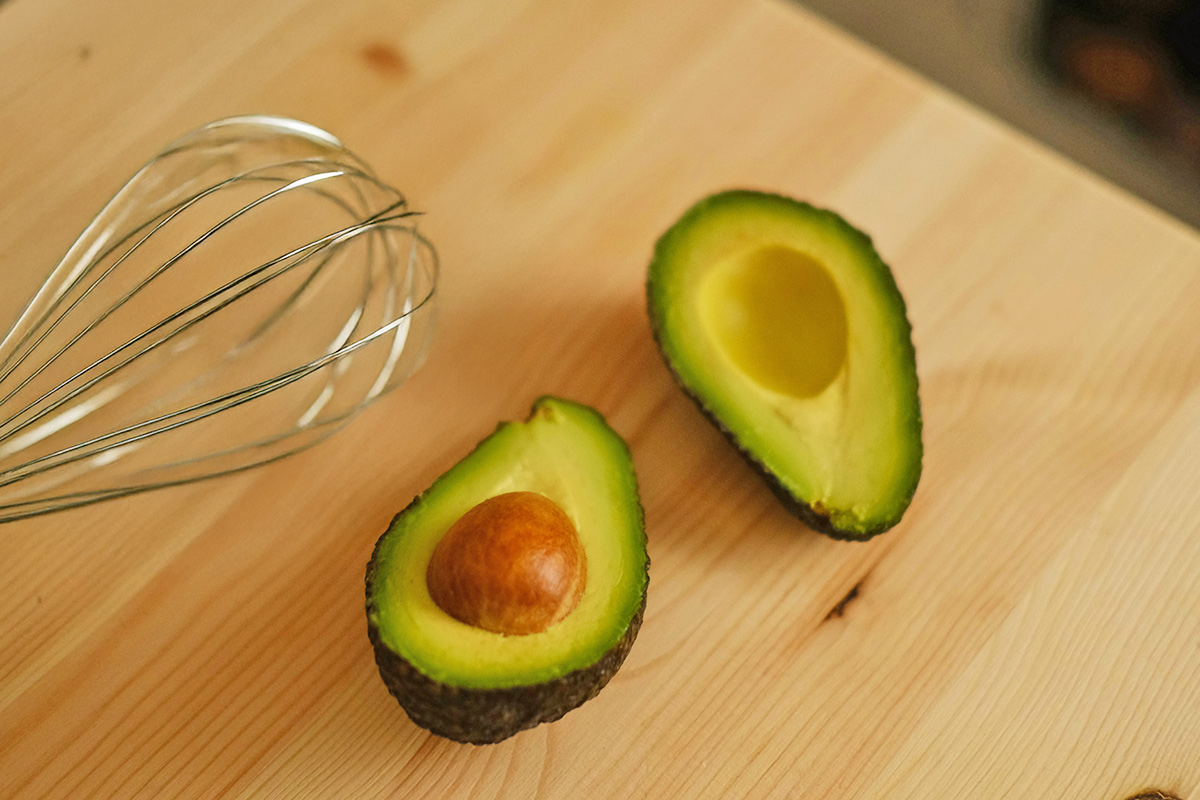
That’s where this trick comes in. It uses a tool you almost certainly have in your kitchen drawer: a wire whisk.

To start, cut your avocado in half and remove the pit — you can do the latter safely using your fingers or a spoon. Hold an avocado half in your nondominant hand and a wire whisk in your dominant hand. Press the head of the whisk straight into the fruit until it reaches the skin, then gently twist in either direction.

Advertisement

This clever hack achieves two goals at once: It scoops the flesh out of the skin and it cuts it into bite-sized pieces. The flesh will stay inside the whisk — all you need to do is tap it against the side of your bowl to release it. If you’re a visual learner, check out this helpful video tutorial.

Bonus Hack: Brush Leftover Avocado Halves With Lemon Juice

Cut too many avocado halves? Simply brush them with lemon or lime juice. The acidity slows the oxidization process, preventing the avocados from turning brown as quickly. You’ll still want to use them up within one or two days, though, before the texture starts to turn mushy.

Advertisement
Advertisement
Cleaning 3m read
65

3 Hacks for Dusting Oddly Shaped Items

There’s something deeply satisfying about running a handheld duster over a smooth, flat surface. But honestly, how often does that really happen? With home decor clustered on shelves and tabletops, dusting is only ever that easy if you remove everything first. And while a deep clean calls for clearing surfaces, weekly maintenance requires something more accessible — especially since those oddly shaped items need dusting too.

All featured products and deals are selected independently and objectively by the author. House Outlook may receive a share of sales via affiliate links in content.

There’s something deeply satisfying about running a handheld duster over a smooth, flat surface. But honestly, how often does that really happen? With home decor clustered on shelves and tabletops, dusting is only ever that easy if you remove everything first. And while a deep clean calls for clearing surfaces, weekly maintenance requires something more…

How To Dust Oddly Shaped Objects

Instead of struggling to pick up every speck of dust with a traditional duster, try one of these easy ways to clean oddly shaped objects — whether it’s a bookend, sculptural decor, or that collection of crystals scattered across your shelf.

Related: Dust Less Often With This DIY Cleaning Spray

1. Use Microfiber Dusting Gloves

Microfiber cloths pick up nearly everything, making them one of the best tools for dusting — and gloves made from the same material take it a step further. Microfiber dusting gloves give you more control when cleaning, which is especially helpful for delicate items, such as houseplant leaves, as well as odd-shaped tchotchkes and souvenirs from your travels. With these gloves, you can cover larger surface areas with the palm of your hand, reach into tight crevices with your fingers, and maintain a gentle touch that protects your valuables.

Advertisement

2. Try a Paintbrush

A paintbrush is another great hack for dusting oddly shaped objects, especially those with lots of nooks and crannies. Since paintbrush bristles work more like a tiny broom than a duster, however, the dust doesn’t really cling to them. That’s why we recommend saving this trick for deep-cleaning days, when you can take items down, give them a good brush, and put them back without kicking up a bunch of dust.

3. Opt for a Lint Roller on Upholstery

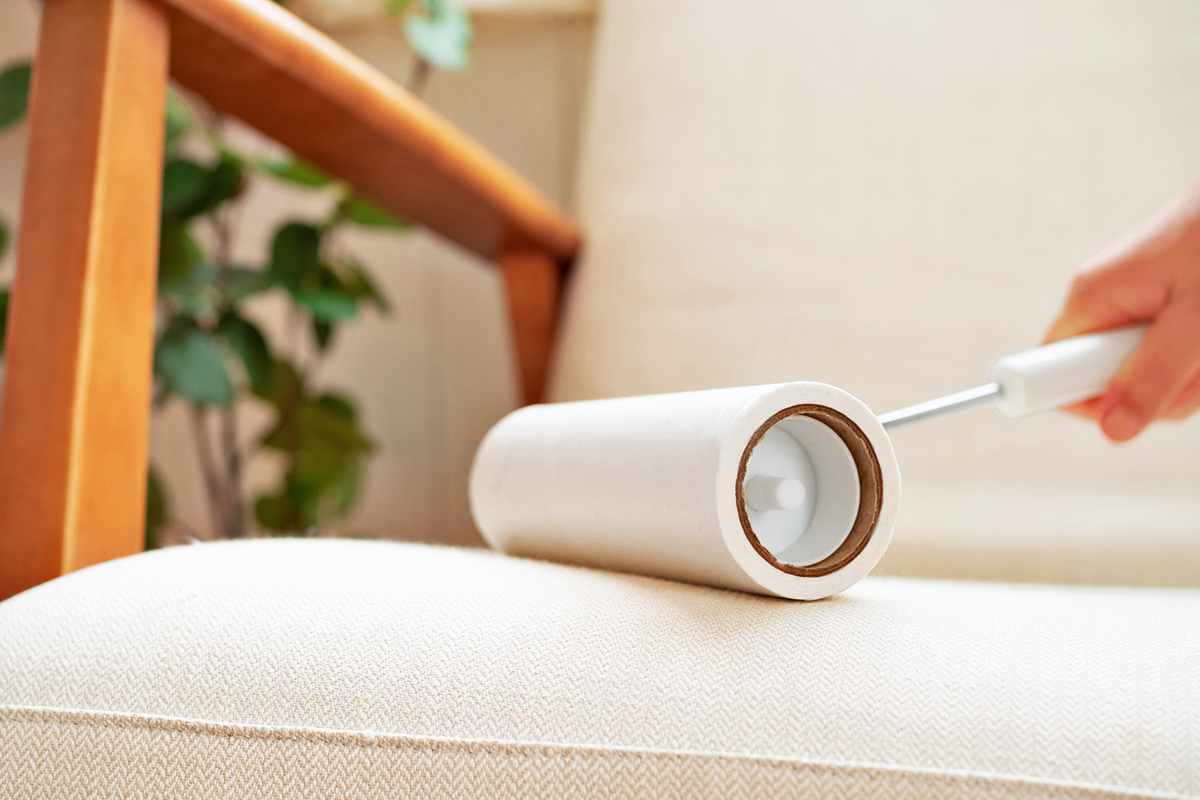
Lint rollers are a household essential for pet owners. While these tools are typically used to remove fur and lint from clothing, they work just as well on upholstered furniture and decor. For bigger jobs, you can even find extra-large versions with extendable handles to use on your sofa, bed, and rugs.

Advertisement
Featured Image Credit:  kaorinne/ iStock | Updated  Jan 13, 2026 |
Jessie Quinn
Writer
Jessie Quinn is a Los Angeles-based lifestyle journalist with words published in PEOPLE, StyleCaster, Apartment Therapy, The Spruce, Byrdie, and more. She has a Bachelor's Degree in fashion journalism from Academy of Art University and her work spans across many categories, including style, beauty, home, health, crafts, and more.
This article is for general informational purposes only.
Featured Image Credit:  kaorinne/ iStock | Updated  Jan 13, 2026 |
Advertisement
Organizing 3m read
368

‘Scary Hour’ Helps You Complete Tasks You Don’t Want To Do

There’s no shortage of clever productivity tricks floating around TikTok, but every now and then a hack comes along that actually sticks. Enter “scary hour,” a simple yet genius system created by TikTok user @tiredbutcozy to help you finally tackle the annoying, stressful tasks you’ve been pretending don’t exist. Think: paying that parking ticket you shoved in a drawer, rescheduling your dentist appointment for the third time, or responding to an uncomfortable email you’d rather leave unread forever. These are your “scary” tasks — small but dreadful — and scary hour carves out a dedicated window to confront them.

There’s no shortage of clever productivity tricks floating around TikTok, but every now and then a hack comes along that actually sticks. Enter “scary hour,” a simple yet genius system created by TikTok user @tiredbutcozy to help you finally tackle the annoying, stressful tasks you’ve been pretending don’t exist. Think: paying that parking ticket you…

The Premise

Dedicate one hour a day to handling up to three scary tasks, and then you’re done. No bonus tasks, no adding things at the last minute, and no spiraling into a four-hour stress marathon. To reiterate: one hour, a maximum of three tasks, and nothing more.

Related: This One Question Will Change How You Declutter

Why It Works

This approach works because it sets boundaries around the tasks you’d otherwise avoid indefinitely. Instead of letting dread snowball until a chore feels monumental, scary hour contains the discomfort inside a predictable, time-boxed window. And if you don’t finish? You simply carry the leftovers into the next day’s scary hour — no guilt and no pressure to power through. If a task is large (hello, insurance phone calls), you can split it across several days without feeling like you failed.

Advertisement

A Surprising Bonus

The tasks rarely take the full hour. You might spend five minutes disputing a charge or 10 minutes making that doctor’s appointment you’ve been putting off for six months. This structure helps you realize that scary tasks are rarely as big as they feel; they’re just emotionally daunting. Once you face them, they shrink.

How To Get Started

To try it yourself, start by listing every nagging task you’ve been avoiding. Pick up to three for tomorrow’s scary hour, set a timer, and get to work. Keep the vibe low-pressure. Play music, make a cup of coffee, or light a candle — whatever makes the hour feel tolerable, even cozy. When the timer goes off, you’re officially done for the day, regardless of how much you finished.

It’s simple, manageable, and honestly kind of freeing. With scary hour in your back pocket, that pile of dreaded to-dos suddenly feels a lot less … scary.

Advertisement
Featured Image Credit:  Unsplash+ via Getty Images | Updated  Jan 12, 2026 |
Jill Layton
Writer
Jill Layton started writing professionally when she realized her emails and texts were kinda funny. She’s an affiliate shopping writer and lifestyle contributor for Scary Mommy, Bustle, Mic, and Best Products. She’s the mom of two alarmingly witty kids and the world’s most perfect dog.
This article is for general informational purposes only.
Featured Image Credit:  Unsplash+ via Getty Images | Updated  Jan 12, 2026 |
Advertisement
Cleaning 3m read
2,322

How To Pick the Right Water Temperature for Every Load of Laundry

Choosing the right water temperature can be the difference between clothes that last and those that look worn out far too soon. While fabric care labels offer helpful guidance, knowing why certain temperatures work better for specific items can make laundry day a whole lot easier. Here’s a simple breakdown of when to use cold, warm, or hot water, and what each temperature is best for tackling.

All featured products and deals are selected independently and objectively by the author. House Outlook may receive a share of sales via affiliate links in content.

Choosing the right water temperature can be the difference between clothes that last and those that look worn out far too soon. While fabric care labels offer helpful guidance, knowing why certain temperatures work better for specific items can make laundry day a whole lot easier. Here’s a simple breakdown of when to use cold,…

Cold Water

Cold water is the go-to for preserving fabric integrity and color. Because it’s gentle, it helps prevent shrinking, stretching, and fading, making it ideal for clothes you want to keep looking new as long as possible. It’s also the most energy-efficient option because the washer doesn’t have to heat the water.

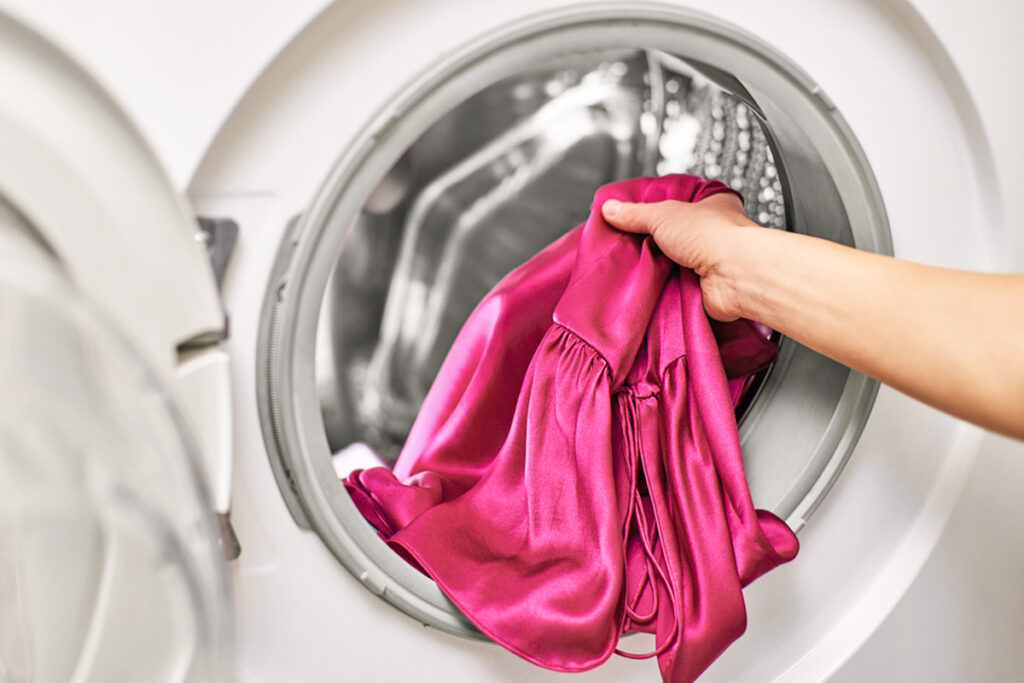
Best for: Delicates such as silk, lace, and wool; bright or dark colors prone to bleeding; activewear and lightweight fabrics; and lightly soiled everyday items (think loungewear or outer layers). Most modern detergents are formulated to clean effectively in cold water, so you’re not sacrificing cleanliness by opting for a lower temperature.

Credit: Erstudiostok/ iStock
Related: Why You Should Have Two Different Laundry Hampers

Warm Water

Warm water strikes a balance between gentleness and cleaning power, which is why it’s the default setting for many households. This temperature helps dissolve detergent efficiently and is tough enough to remove light to moderate soil without being too harsh on most fabrics.

Best for: Synthetic fabrics (such as polyester and nylon), cotton blends, knits, jeans, T-shirts, gym clothes, and everyday wear. It’s also a reliable option for sheets and towels that aren’t heavily soiled. Just be cautious with bright colors or items labeled for cold wash only, as warm water may gradually fade dyes over time.

Credit: FabrikaCr/ iStock
Advertisement

Hot Water

Hot water offers the most powerful clean, but with that cleaning power comes the risk of shrinkage, fading, and fabric damage. Because it uses significantly more energy, hot water should be reserved for items that truly need deep sanitizing or heavy-duty stain removal.

Best for: Heavily soiled items, kitchen towels, bath towels, bedding, underwear, cloth diapers, and anything that may harbor bacteria. Hot water helps break down oils, sweat, and grime, making it ideal for loads that need a deep clean. White cotton items also benefit from occasional hot-water washes to keep them bright and free of buildup.

Credit: matth_be/ iStock

The Bottom Line

When you’re unsure, cold water is the safest bet, especially for delicate, colorful, or lightly worn clothing. Warm water is an all-purpose workhorse for everyday outfits and blended fabrics. Hot water should be saved for sanitizing or tackling tough messes on sturdy materials.

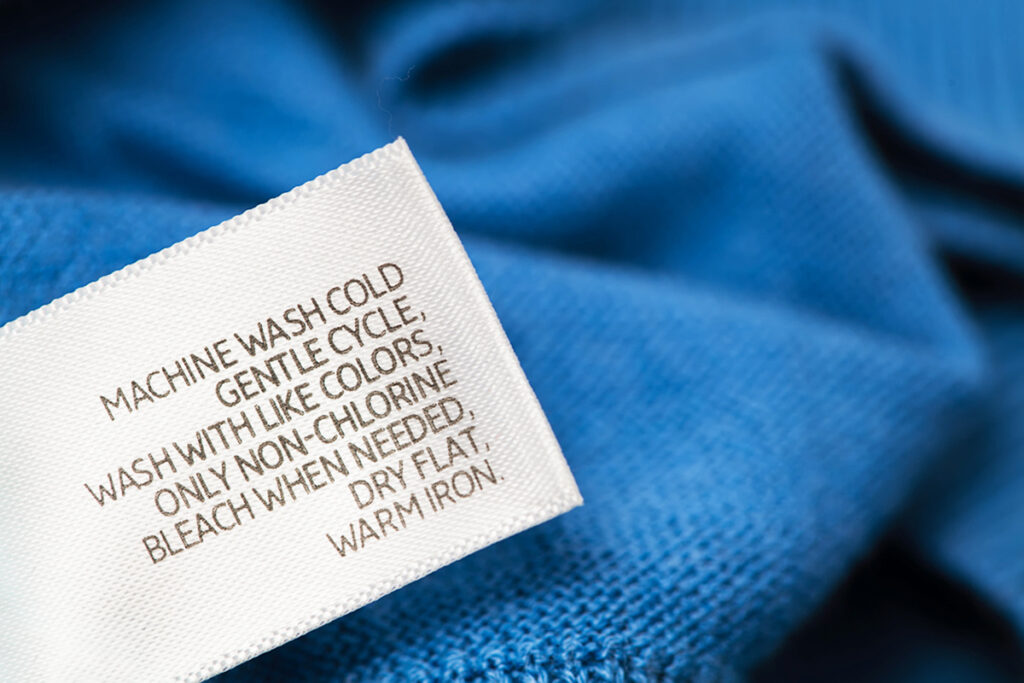
And always check care labels. A quick glance can save your favorite pieces from shrinking, fading, or stretching.

Credit: ollzha/ iStock
Advertisement
Featured Image Credit:  golibtolibov/ Unsplash+ | Updated  Jan 7, 2026 |
Jill Layton
Writer
Jill Layton started writing professionally when she realized her emails and texts were kinda funny. She’s an affiliate shopping writer and lifestyle contributor for Scary Mommy, Bustle, Mic, and Best Products. She’s the mom of two alarmingly witty kids and the world’s most perfect dog.
This article is for general informational purposes only.
Featured Image Credit:  golibtolibov/ Unsplash+ | Updated  Jan 7, 2026 |