Advertisement
Cleaning 2m read
279

Clean Your Grimy Bathtub in Half the Time

As relaxing as a bath can be, keeping the tub clean is tough. It’s one of those spots in the home that gets grimy seemingly as soon as you’re done scrubbing it; between daily use and the constant humidity in your bathroom, buildup can appear in just a few days. Fortunately, there are easy ways to keep your tub looking fresh. Simple habits such as a post-shower squeegee or a quick rinse after a bath go a long way, but if you’re dealing with existing stains, this DIY cleaner is exactly what you need.

All featured products and deals are selected independently and objectively by the author. House Outlook may receive a share of sales via affiliate links in content.

As relaxing as a bath can be, keeping the tub clean is tough. It’s one of those spots in the home that gets grimy seemingly as soon as you’re done scrubbing it; between daily use and the constant humidity in your bathroom, buildup can appear in just a few days. Fortunately, there are easy ways…

Out With the Grime, In With a DIY Cleaner

If you guessed that baking soda is partially responsible for removing those stubborn stains, you’re correct. (Honestly, what can’t baking soda fix?) To get your bathtub sparkling again, all you need is baking soda and 3% hydrogen peroxide.

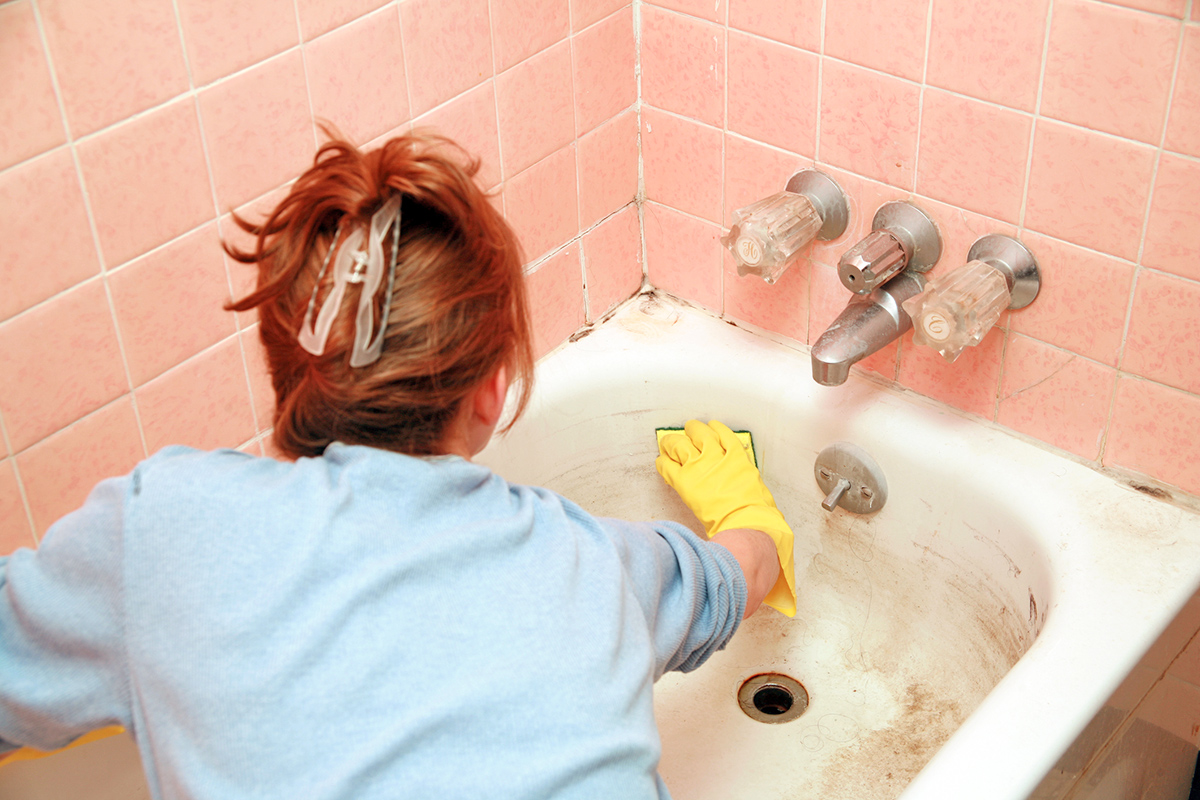
Mix two parts baking soda with one part 3% hydrogen peroxide to create a thick paste. Apply the mixture to any bathtub stains — whether it’s soap scum or hard water — and let it sit for anywhere from 10 minutes to an hour, depending on the severity of the discoloration.

After allowing the paste to work its magic, take a nonabrasive sponge and begin scrubbing. Buff the paste into the stains and watch them disappear. Between the gentle abrasiveness of the baking soda and the stain-fighting power of the hydrogen peroxide, bathtub grime doesn’t stand a chance. Just give it a thorough rinse afterward, and your bathtub will be looking brand-new.

Advertisement
Related: Get Rid of Soap Scum Buildup on Shower Doors

Stubborn Stains? No Problem

If you have a stain that just won’t budge, don’t give up yet. You can repeat the process, but instead of waiting only 10 minutes, let the paste sit for the full hour. This allows the ingredients to really sink in before you scrub your way to a stain-free tub.

Advertisement
Advertisement
Organizing 3m read
248

How To Keep Your Home Tidy With Almost Zero Effort

If you’ve ever looked around your living room and wondered how all those little messes piled up so fast, you’re in good — if slightly cluttered — company. Busy schedules, family chaos, and an ever-growing to-do list can make a clean house feel like an impossible feat. But what if the secret to a tidier space is not a major cleaning overhaul or a fancy new storage system, but a tiny habit that takes less than 60 seconds?

If you’ve ever looked around your living room and wondered how all those little messes piled up so fast, you’re in good — if slightly cluttered — company. Busy schedules, family chaos, and an ever-growing to-do list can make a clean house feel like an impossible feat. But what if the secret to a tidier…

Enter the “one-minute rule” — a simple mindset shift that keeps your home neat without the stress.

What’s the One-Minute Rule?

If a task takes 60 seconds or less to complete, do it right away instead of postponing it. This idea turns quick actions into major long-term payoff. By tackling small chores the moment they pop up, you stop the mess before it ever has the chance to become clutter.

Why It Works

Clutter isn’t born from big messes — it’s created by lots of tiny ones. A lone sock on the floor, a single dish in the sink, a stack of mail on the counter — each feels harmless, until, suddenly, it isn’t.

The brilliance of the one-minute rule lies in its simplicity:

It’s fast: You have dozens of “spare” minutes every day.

It’s automatic: Acting immediately trains your brain to stop procrastinating.

It prevents buildup: Small actions stop minor messes from becoming a major headache.

By handling these micro tasks in the moment, you reclaim your space — clearing both the clutter on your counters and the noise inside your head.

Advertisement

How To Practice It Daily

Here are easy, everyday ways to make the one-minute rule work in your household:

• Hang up your jacket as soon as you walk in the door.

• Wipe the bathroom counter after getting ready.

• Return books to the shelf when you’re done reading.

• Toss trash and recyclables right away.

• Go through the mail as you receive it.

Related: ‘Scary Hour’ Helps You Complete Tasks You Don’t Want To Do

Eventually, your home stays orderly without the need for marathon cleaning sessions, and your brain finally gets a break from carrying around all those little to-dos.

Advertisement
Featured Image Credit:  Daiga Ellaby/ Unsplash | Updated  Mar 3, 2026 |
Jill Layton
Writer
Jill Layton started writing professionally when she realized her emails and texts were kinda funny. She’s an affiliate shopping writer and lifestyle contributor for Scary Mommy, Bustle, Mic, and Best Products. She’s the mom of two alarmingly witty kids and the world’s most perfect dog.
This article is for general informational purposes only.
Featured Image Credit:  Daiga Ellaby/ Unsplash | Updated  Mar 3, 2026 |
Advertisement
Home Improvement 3m read
22

The 30-Second Test To Find Hidden Drafts in Your Home

Whether cold or warm, drafty air is more than just an annoyance — it forces your HVAC unit to work overtime. But much like finding a needle in a haystack, locating the source of these drafts can feel nearly impossible. While searching for the leak might seem like an uphill battle, the solution is actually quite simple. And best of all, tracking down the source will take only about 30 seconds.

All featured products and deals are selected independently and objectively by the author. House Outlook may receive a share of sales via affiliate links in content.

Whether cold or warm, drafty air is more than just an annoyance — it forces your HVAC unit to work overtime. But much like finding a needle in a haystack, locating the source of these drafts can feel nearly impossible. While searching for the leak might seem like an uphill battle, the solution is actually…

Follow the Trail

Most people use incense to make their homes smell amazing, though some burn it while tailgating in a parking lot before seeing a Grateful Dead cover band. But beyond the pleasant aroma, a lit incense stick produces a thin trail of smoke that can be used as a helpful visual guide to help you find drafts. The logic is that a lit incense stick normally produces smoke that slowly wafts upward. However, if that smoke begins to move in an irregular direction, it may be because of an air leak.

Before starting the test, turn off anything that produces a breeze, such as a fan, an air purifier, or an HVAC unit. You should also close every window and door to isolate the airflow in each room — this makes it easier to pinpoint where the draft is coming from.

Once you’ve sealed the perimeter, light a stick of incense and carry it around the room, pausing anywhere drafty air could theoretically creep inside. Common culprits include window frames, the gaps under doors, floor vents, electrical outlets and switches, recessed can lights, fireplace dampers, and attic hatches. If there’s a leak, that incoming air will cause the smoke to change course. You might see the trail suddenly switch directions, pick up speed, or spiral in an unusual way — giving you a clear visual of the “invisible” draft.

Advertisement
Related: 12 Things Silently Draining Your Wallet Every Month

You Found a Leak — Now What?

When that smoke trail starts to waver, you’ve located the source of the draft. Now it’s time to troubleshoot. While the exact solution depends on the issue, most are easy fixes. If air is sneaking under a door, consider a draft stopper. For leaky windows, caulk may need to be added where the frame meets the siding, or the weather stripping along the sashes may need to be replaced. You can seal drafty electrical outlets with foam gaskets, and stop attic air leaks by insulating the hatch with rigid foam board and weather stripping.

There’s still work to be done, but at least you’ve solved the mystery of where that draft is coming from.

Advertisement
Featured Image Credit:  YEVHEN HOLOBORODKO/ iStock | Updated  Feb 24, 2026 |
Bennett Kleinman
Staff Writer
Bennett Kleinman is a New York City-based staff writer for Inbox Studio, covering topics for several brands including House Outlook and Better Report. He previously contributed to television programs such as "Late Show With David Letterman" and "Impractical Jokers," and digital publications like The Onion. Bennett is also a devoted New York Yankees and New Jersey Devils fan, and thinks plain seltzer is the best drink ever invented.
This article is for general informational purposes only.
Featured Image Credit:  YEVHEN HOLOBORODKO/ iStock | Updated  Feb 24, 2026 |
Advertisement
Cleaning 3m read
49

Keep Your Faucets Cleaner for Longer

Hard water marks on faucets are like fingerprints on stainless steel appliances — unsightly little reminders of daily life that nobody enjoys the look of. The unfortunate truth is that these spots are unavoidable if you use the sink or tub. However, you can keep your fixtures looking shinier for longer with a simple trick, and all it takes is an ordinary candle.

All featured products and deals are selected independently and objectively by the author. House Outlook may receive a share of sales via affiliate links in content.

Hard water marks on faucets are like fingerprints on stainless steel appliances — unsightly little reminders of daily life that nobody enjoys the look of. The unfortunate truth is that these spots are unavoidable if you use the sink or tub. However, you can keep your fixtures looking shinier for longer with a simple trick,…

More Than Just a Warm Glow

In addition to setting a relaxing mood, candles are an unlikely secret weapon for preventing water marks on faucets. While there’s no way to avoid these marks altogether, you can keep your fixtures looking clean for days longer. The wax acts as a protective layer, which causes the water to bead up and roll off instead of sitting on the surface and leaving behind mineral deposits.

Related: Why You Should Rub Wax Paper on Your Closet Rod

Wax On, Water Off

To get started, you’ll need a white, unscented candle — skip those with colors or scents, as they could stain the finish and leave your bathroom reeking of patchouli. Beyond that, all you’ll need is a microfiber cloth. If you don’t have a candle or would prefer not to waste one, wax paper, beeswax bars, and even jarred wax work just as well. As long as the substance is waxy, scentless, and colorless, it’ll get the job done.

Advertisement

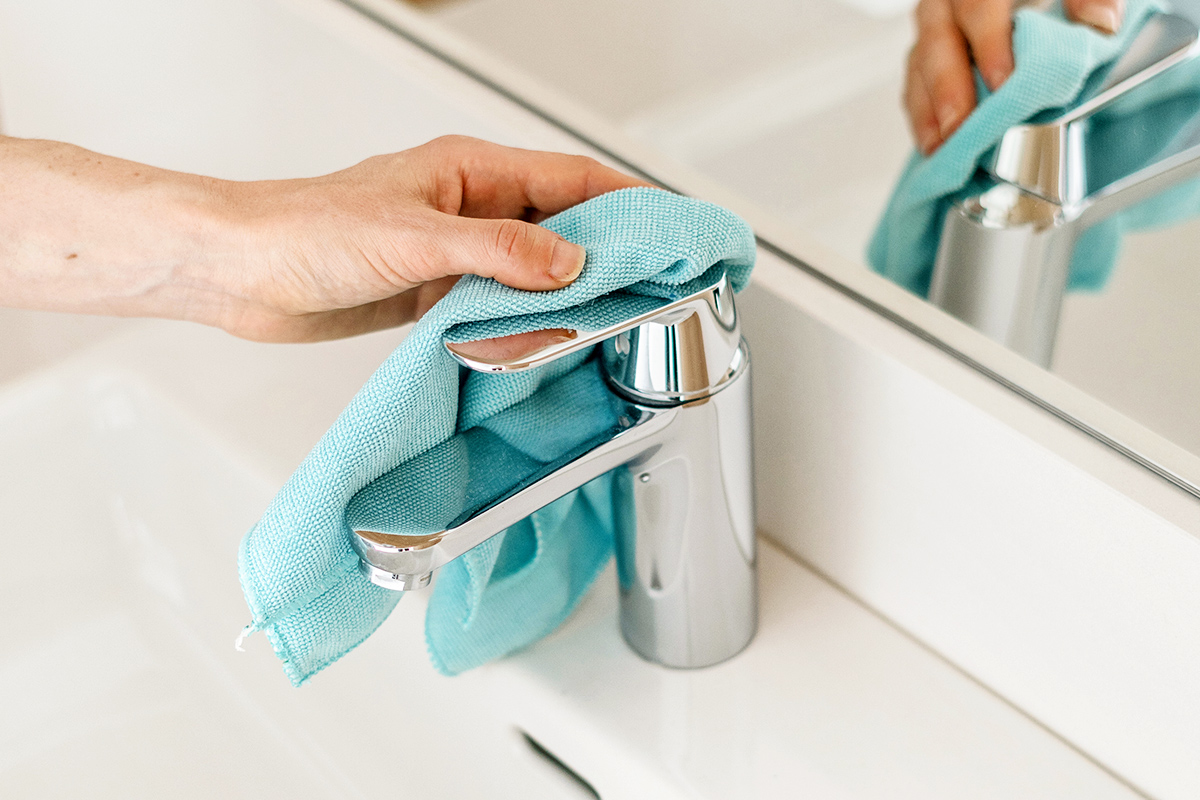
Take your candle and rub it all over the faucet until a visible layer begins to form. Don’t worry about the finish; the wax is soft and won’t cause scuffing. Next, take a clean, dry microfiber cloth and use it to buff the wax into the faucet — this will leave it looking bright and shiny. But more importantly, that protective barrier will keep your faucet pristine and stain-free for days, if not weeks.

This trick isn’t a permanent fix, but it’s a whole lot better than worrying about water stains forming every time you turn on the tap. For the best results, plan to reapply the wax every five to seven days — a small price to pay when you consider how much time you used to spend scrubbing away those stubborn mineral deposits.

Advertisement
Featured Image Credit:  brizmaker/ iStock | Updated  Feb 24, 2026 |
Bennett Kleinman
Staff Writer
Bennett Kleinman is a New York City-based staff writer for Inbox Studio, covering topics for several brands including House Outlook and Better Report. He previously contributed to television programs such as "Late Show With David Letterman" and "Impractical Jokers," and digital publications like The Onion. Bennett is also a devoted New York Yankees and New Jersey Devils fan, and thinks plain seltzer is the best drink ever invented.
This article is for general informational purposes only.
Featured Image Credit:  brizmaker/ iStock | Updated  Feb 24, 2026 |
Advertisement
Decorating 3m read
19

The Optical Illusion That Brightens Up Dark Corners

If you have a small bedroom, there isn’t much you can do about the square footage. Unless you’re a homeowner with a renovation budget and room to expand, you’re likely stuck with the existing footprint. To make matters worse, limited natural light often exaggerates dim corners, making even a thoughtfully decorated space feel closed in.

All featured products and deals are selected independently and objectively by the author. House Outlook may receive a share of sales via affiliate links in content.

If you have a small bedroom, there isn’t much you can do about the square footage. Unless you’re a homeowner with a renovation budget and room to expand, you’re likely stuck with the existing footprint. To make matters worse, limited natural light often exaggerates dim corners, making even a thoughtfully decorated space feel closed in.

Fortunately, you don’t need to knock down walls to brighten up a small space. With one simple styling trick, you can visually double your light and soften shadows. All it takes is placing a mirror behind each nightstand with a lamp positioned in front of it. It sounds almost too easy, but the effect is surprisingly transformative.

Why Reflecting Light Helps Small Spaces

It’s simple science: A mirror positioned directly behind a nightstand lamp catches the light, bouncing the glow around the room. Instead of light radiating in just one direction, it reaches the walls, the ceiling, and even the darkest corners.

This trick works because the human eye interprets reflection as depth. When your brain sees the lamp and part of the room repeated in the mirror, it perceives more space than actually exists. The effect is immediate: Hard shadows soften, the ceiling looks taller, and the room feels less confined.

This optical illusion is especially helpful in bedrooms where overhead lighting is often too harsh, but it’s equally useful in entryways, hallways, living spaces, and other low-light areas.

Advertisement

How To Style the Nightstand

The scale of the mirrors is important. Choose a style that’s slightly narrower than the nightstand so the arrangement appears balanced. Leaning a mirror against the wall creates a relaxed look, while mounting it produces a tailored effect.

Related: The Mirror-Hanging Mistake Almost Everyone Makes

For the prettiest glow, opt for warm bulbs around 2700 Kelvin and lampshades in soft white or linen. The diffused light prevents glare and creates a flattering reflection. Leave a few inches between the lamp and mirror so the light can spread naturally, and keep cords neatly tucked away. In minutes, a once-dim bedroom will feel bigger and brighter.

Advertisement
Featured Image Credit:  Africa Studio/ Adobe Stock | Updated  Feb 24, 2026 |
Megan McCarty
Writer
Megan McCarty is a Los Angeles-based writer who covers the fun stuff: design, travel, wellness, beauty, and fashion. She has written for publications including Domino, The Spruce, MyDomaine, Bustle, and Rue Magazine. Her life rules include, but are not limited to, zipper when merging, contribute to your IRA, and do the nice thing.
This article is for general informational purposes only.
Featured Image Credit:  Africa Studio/ Adobe Stock | Updated  Feb 24, 2026 |
Advertisement
Food & Drink 3m read
3,621

The Secret to Always Buying Fresh Olive Oil

How many cooking oils do you keep in your pantry? Ideally, we’d have exactly the right type of oil for every culinary task, but that would get unwieldy quickly. Cooking oils are perishable, after all, and take up a lot of shelf space. Most home cooks find it easier to use one general-purpose oil as their workhorse, keeping a high-quality extra-virgin olive oil on standby for moments when the flavor truly matters.

All featured products and deals are selected independently and objectively by the author. House Outlook may receive a share of sales via affiliate links in content.

How many cooking oils do you keep in your pantry? Ideally, we’d have exactly the right type of oil for every culinary task, but that would get unwieldy quickly. Cooking oils are perishable, after all, and take up a lot of shelf space. Most home cooks find it easier to use one general-purpose oil as…

But here’s the thing: While all oils eventually go bad, extra-virgin olive oil begins losing its fresh flavor the minute it’s pressed. Its distinctive profile comes from polyphenols, natural antioxidants that help the oil stay stable. However, these compounds are delicate and fade over time. This causes the oil to “go flat” long before it actually becomes unsafe to consume. So, buying the freshest bottle you can find is the secret to getting the best flavor.

The “Best By” Date Isn’t Your Guide to Freshness

Now, you might think picking a fresh oil is easy: Just look at the “best before” date and you’re good, right? Well …not exactly. Those dates are unregulated at the federal level in the United States, so manufacturers can be quite generous with them. The date you actually want is the harvest date, which you’ll find on any high-quality bottle of extra-virgin olive oil. Keep in mind that olives are harvested in late fall and early winter — typically October through December in the Northern Hemisphere, and April through June in the Southern Hemisphere.

Related: When You Should Toss Old Spices

Look for a harvest date within the past year — the more recent, the better. It takes time to press, bottle, and ship the oil, so while the timeline varies by producer and region, aiming for a year or less is your best bet. Premium olive oils offer a range of grassy, peppery, herbal, floral, or fruity notes, but these qualities fade quickly after pressing. So, wherever you happen to live, make freshness your top priority.

Advertisement

A Few More Olive Oil Tips

Here are a few more tips for finding the best bottle:

• Always buy your oil in a dark glass bottle or a tin. Light degrades the oil faster. 

• California-grown EVOO is lab-verified by law. Oils with a designated geographic origin, such as DOP/PDO (Europe) or COOC (California), usually adhere to stricter quality standards. 

• Attend tastings whenever you can. You’ll soon be able to recognize quality just by the flavor. 

• Some oil producers sell directly to the consumer. This cuts out the retail lag time, which ideally results in fresher oil.

Advertisement
Featured Image Credit:  sergeyryzhov/ iStock | Updated  Feb 24, 2026 |
Fred Decker
Writer
Fred Decker is a trained chef and former restaurateur. Since closing his restaurants over a decade ago he has been a prolific freelance writer, publishing several thousand articles on dozens of high-volume websites including Taste Of Home, Hunker, Tasting Table, Week&, eHow, and GOBankingRates. He lives on a rural acreage shared with a big garden, chickens, rabbits, and grandkids.
This article is for general informational purposes only.
Featured Image Credit:  sergeyryzhov/ iStock | Updated  Feb 24, 2026 |
Advertisement
Gardening 12m read
9,312

How To Prep Your Garden for Spring While It’s Still Winter

If you’re new to gardening, you may be surprised to learn that it’s a four-season activity — even in regions with long, cold winters. Spring, of course, is for planting, while summer erupts with blossoms and short-season crops. Then, as autumn arrives, it’s time to gather your main harvest.

All featured products and deals are selected independently and objectively by the author. House Outlook may receive a share of sales via affiliate links in content.

If you’re new to gardening, you may be surprised to learn that it’s a four-season activity — even in regions with long, cold winters. Spring, of course, is for planting, while summer erupts with blossoms and short-season crops. Then, as autumn arrives, it’s time to gather your main harvest.

But winter, which is the fallow season for growth, is no less important. This is the time for garden planning and preparation, when you take stock of the previous year’s lessons and brainstorm the things you’ll do — or change — in the coming months. As a lifelong gardener (my father’s gardening magazines were among my earliest reading), I recommend these 12 things you can do in winter to make your garden more successful.

1. Show Your Hand Tools Some TLC

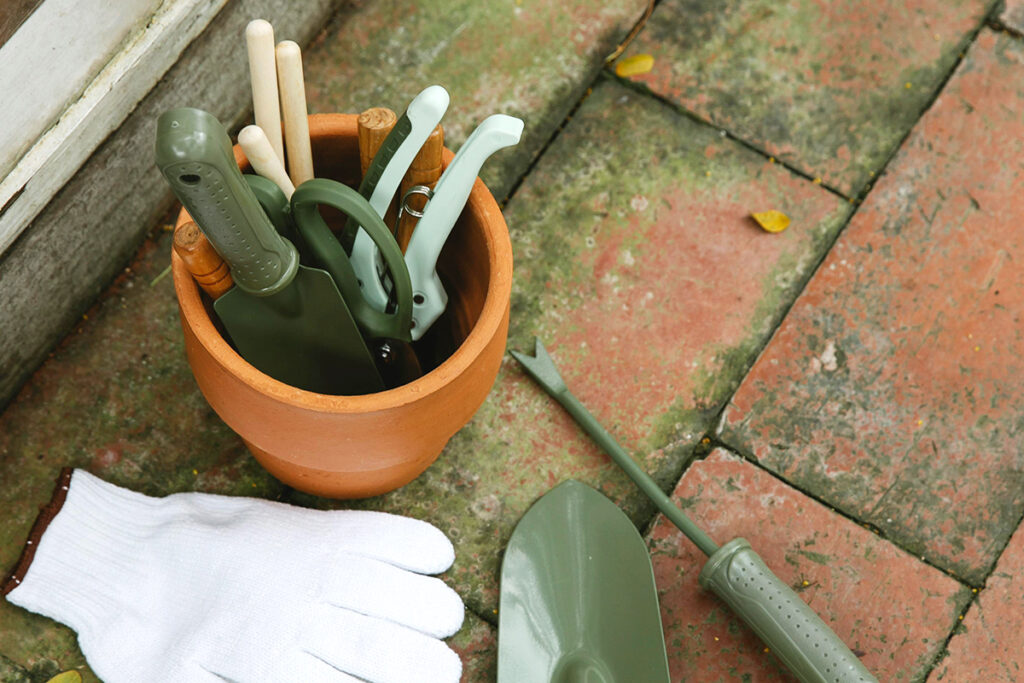
Even if you have a lawn tractor with all the attachments and a shed full of cordless outdoor power tools, hand tools remain fundamental to any gardener. It makes sense to use this relative downtime to return them to top condition so they’ll last longer and work better. Block off some time before spring to:

• Condition the wooden handles with linseed oil or tung oil to prevent cracking and rot.

• Replace any handles that are badly damaged.

• Remove rust from blades and working surfaces. 

• Oil or repaint blades as needed. (I like to use bright colors that make them easier to spot.) 

• Sharpen the blades of not just your clippers, trimmers, and pruning shears, but also your shovels and hoes. They’ll cut through roots and dense soil with less effort. 

• Clean and lubricate the moving parts of clippers and pruners and check if your wheelbarrow axle needs grease.

These aren’t just practical steps; they are a soothing, satisfying activity in their own right. And if you haven’t already, ensure your hoses are drained and your outdoor faucets are protected, lest a late-winter cold snap arrive.

Credit: Gary Barnes/ Pexels

2. Mothball Your Yard Machines

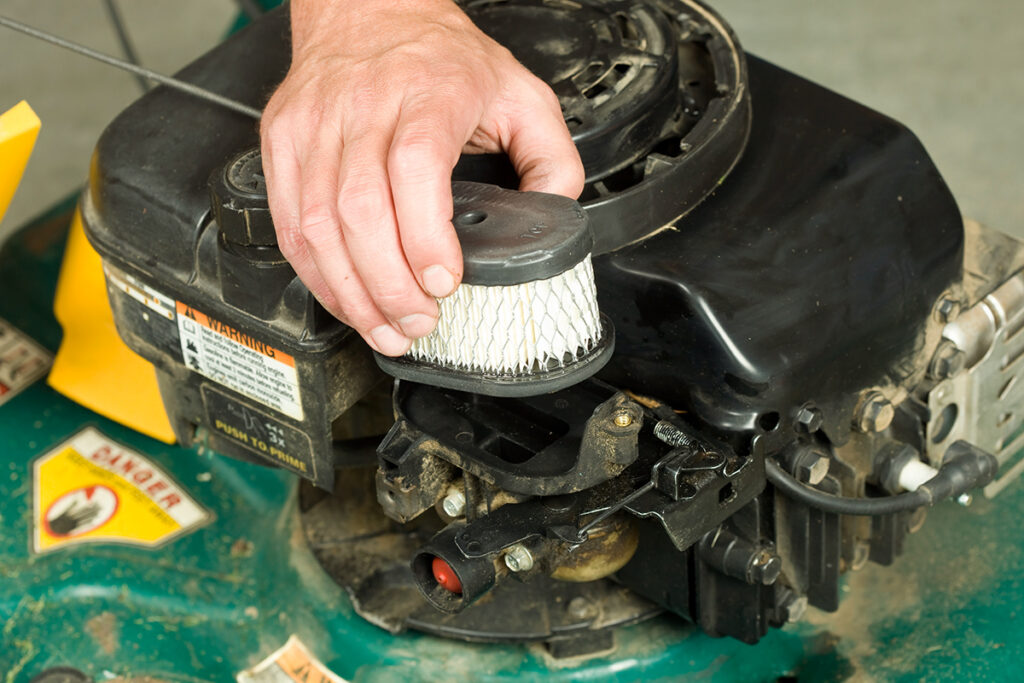
Hand tools may be the foundation of your gardening life, but power tools are what really take the backbreaking labor out of a great garden. Whether cordless or gas-powered, these machines also benefit from offseason care. Without getting too far into the metaphorical weeds — since every model has its own needs — here are a few standard maintenance tasks to complete this winter:

• Drain or use up any unused gasoline. Alcohol-blended gas separates in cold weather and can gum up your carburetor; transfer it to another machine you’re still using, such as a snowblower or chainsaw. 

• Clean each machine thoroughly, lubricate moving parts according to the manufacturer’s instructions, and treat any rust spots. 

• Sharpen the tines on your tiller to ensure it’s ready for spring soil. 

• Store your machines in a weatherproof storage area, or make sure they’re at least adequately covered to keep out ice and snow.

• Stock up on consumables, such as string trimmer line, to beat the spring rush.

Credit: BanksPhotos/ iStock
Advertisement

3. Plan Your Spring Garden in Detail

Garden planning is the single best way to give yourself a leg up for spring. Having an overall plan for what you’ll grow — and how you’ll grow it — sets the tone for the entire year. By investing time now, you can prepare efficiently, ensure your supplies are ordered before you start, and avoid unnecessary trial and error.

Here are a few things to think about as you formulate your plan:

Look back on past harvests: Pinpoint the crops you wish you’d grown more of and those that resulted in a surplus, so you can adjust your planting for this year. (Tip: Choosing early-, mid-, and late-season varieties of your favorite produce, such as tomatoes and beans, helps stagger your harvest.)

Evaluate your cultivars: Assess and track which cultivars (i.e., specific plant varieties) tasted good and grew well, versus those that were disappointing. This will help you decide whether to try something different this season.

Improve the layout: Decide if you want to expand, shrink, or reconfigure your garden’s layout to take better advantage of sun, drainage, or soil quality.

Plan for new structures: Determine whether you need to add any new physical features, like drainage channels or structures such as trellises and raised beds.

Learn from your mistakes: Review any specific irritations or shortcomings from last year’s garden and brainstorm what you can do differently this year.

Keeping a detailed garden journal throughout the year helps immensely. I’ll confess I’ve struggled with it myself, but even partial records are better than relying entirely on memory.

Credit: lucentius/ iStock
Related: The One Thing You Should Never Do to Houseplants in Winter

4. Invest in New and Upgraded Tools

Once you’ve settled on next season’s gardening plan, take some time to review the tools you have and how they measure up against your vision for the space. One benefit of cleaning and maintaining your tools is that doing so gives you a realistic look at how well they’re holding up and whether it’s time to replace or upgrade them. You may even find that your new plans require a specialized tool or two. If you buy them now during the offseason, you’ll have plenty of time to familiarize yourself with them before gardening season starts in earnest.

Credit: Igor-Kardasov/ iStock
Advertisement

5. Build Any New Structures You Need

Planning your garden in advance also gives you those long winter evenings to build any new structures you might need. Depending on your goals, this could be anything from simple cold frames and raised beds to a full-scale greenhouse or potting shed. Of course, not everyone has the tools or space for these projects. But if you network with other gardeners in your area, you can often find opportunities to share space, expertise, and materials.

Credit: egon69/ iStock

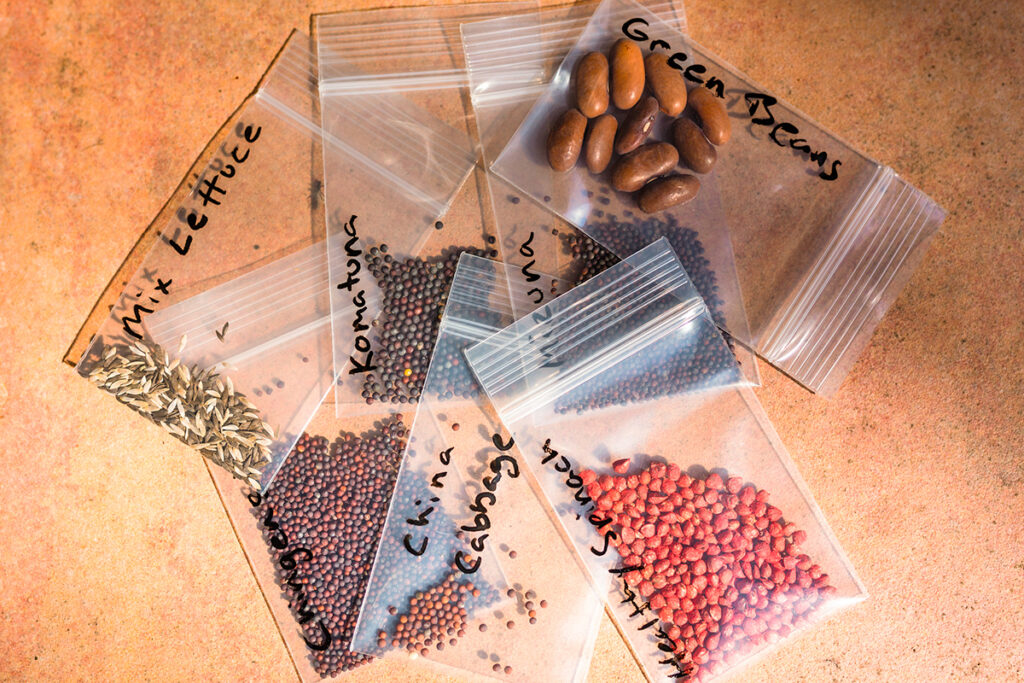
6. Test the Germination Rate of Your Saved Seeds

Most gardeners wind up with extra seeds at the end of planting season, and some of us — myself included — deliberately save seeds for the following year. However, some seeds remain viable for years, while others have a remarkably short shelf life. As a general rule, larger seeds outlast smaller ones, though some (looking at you, parsnips) notoriously don’t keep even for one season.

Testing your seeds’ viability takes only a few minutes of hands-on effort, followed by a week or two of waiting. If you get at least 70% germination, go right ahead and plant those seeds when the time comes. For lower germination rates, it’s your call: If you’re starting indoors, for example, you can sow two or three seeds per cell to maximize your odds, then pinch off any additional sprouts, keeping only the most vigorous seedling.

Credit: GibsonPictures/ iStock
Advertisement

7. Get Your Seed and Bulb Orders in Early

The climate where I live is very similar to that of coastal Maine, my closest U.S. neighbor. For short-season gardeners like me — who do the bulk of our planting in late May — it’s hard to feel any urgency about placing that seed order early. But waiting is a mistake. For one thing, browsing seed catalogs and seed-company websites is just plain fun, so why not enjoy yourself?

On a more practical note, suppliers often sell out of popular seeds, bulbs, and corms well before planting time rolls around. If you’re slow with your order, you might miss out on cultivars you’ve been wanting to try or those you’ve had excellent results with in the past. This is especially true if you make a point of buying your seeds from small, regional suppliers who specialize in varieties that are well suited to local conditions. While they may technically be the same cultivars you’d find elsewhere, seeds from local growers are often hand-selected for your specific climate over many generations — a “cheat” for growing a more resilient garden.

Credit: VGV/ Adobe Stock

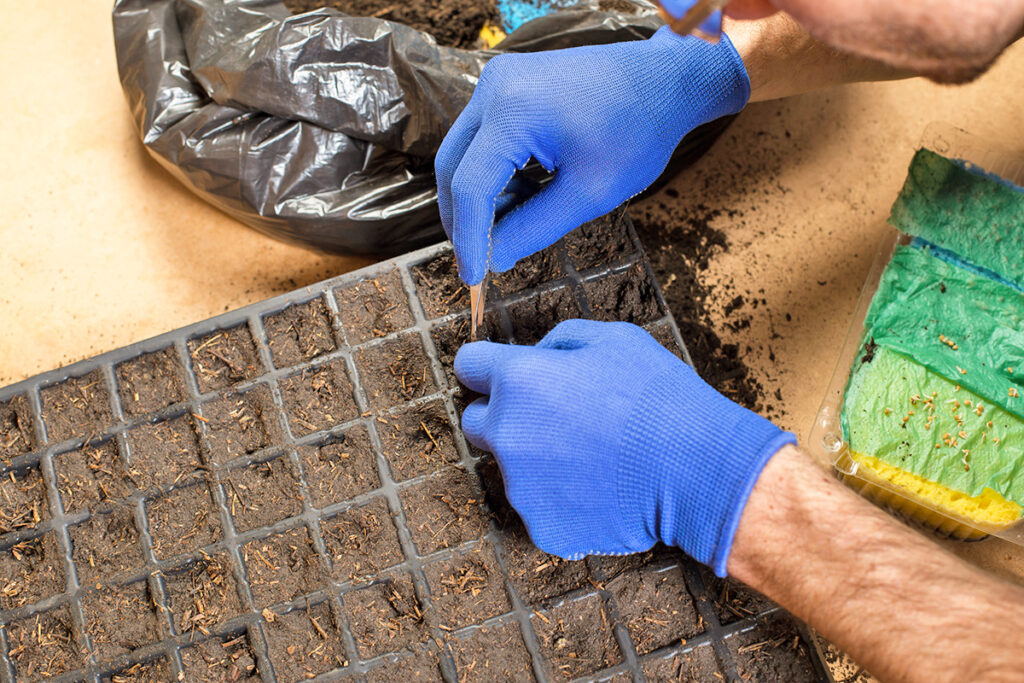
8. Prepare Your Seed-Starting Area

This is something warm-climate gardeners can skip, but those of us in cooler regions often start long-season plants indoors. We then transplant them to our gardens once the risk of frost has passed. Timing varies depending on your location, but the process goes much more smoothly if you organize your space and supplies ahead of time.

The ideal setup is a south-facing window with good natural light that can hold your seed trays or open flats. Once you’ve determined how many seed-starting containers you need, make sure you have enough surfaces to accommodate them. TV trays, folding card tables, and multitier cooling racks are all reliable options. Depending on the lighting situation, you may need supplemental grow lights; most seedlings appreciate 14 to 16 hours of light, which just isn’t possible during the winter.

You should also check your inventory of trays, planting cells, potting soil, and whatever else you need. Finally, consider placing a few small fans near your seedlings to circulate the air. It results in sturdier stems and helps prevent disease and mold problems too.

Credit: Sergiy Akhundov/ iStock
Advertisement

9. Work Up a Planting Schedule

One of the most important details of the gardening season is figuring out exactly when everything needs to be planted. (It’s right up there with knowing your climate zone.) It goes without saying that the best time to do this is well before planting season begins.

Start by figuring out your area’s average last-frost date. You can find this information through your local extension service, weather apps, or websites. (Tip: Over time, your own garden journal can become an invaluable resource for this — especially if you install a home weather station to capture data specific to your microclimate.) Next, check your seed packets to find out how many weeks each variety needs indoors before transplanting. Finally, count that number of weeks backward from your last-frost date to pinpoint your “start planting” date.

Once you’ve done the math, record those dates in your planner, calendar app, or garden journal. The plants with the longest lead times go on the calendar first, followed by those that need less time indoors. As you get within a couple of weeks of your last-frost date, you can block out time to plant cold-hardy seeds that go in “as soon as the soil may be worked,” and, finally, the heat-lovers that must wait until “all danger of frost has passed.”

Credit: Unaihuiziphotography/ iStock
Related: Frost Warning? Try These 3 Hacks To Save Your Plants

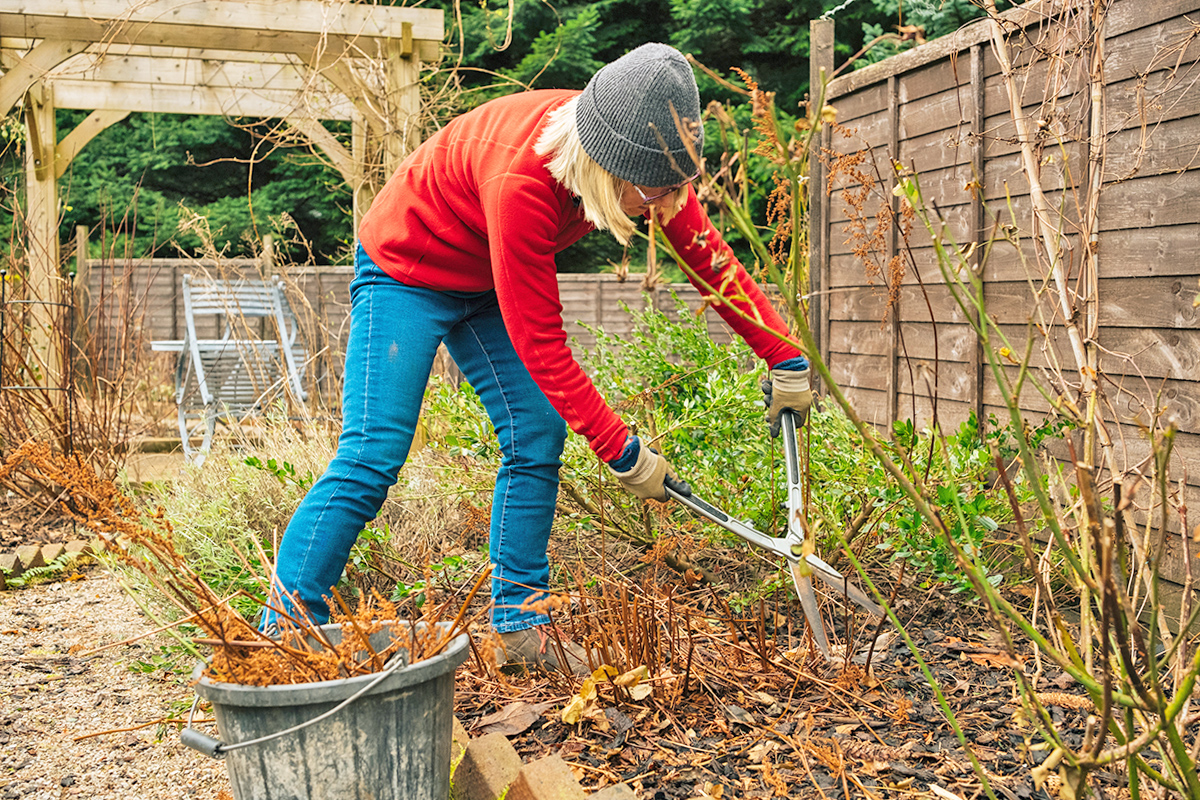
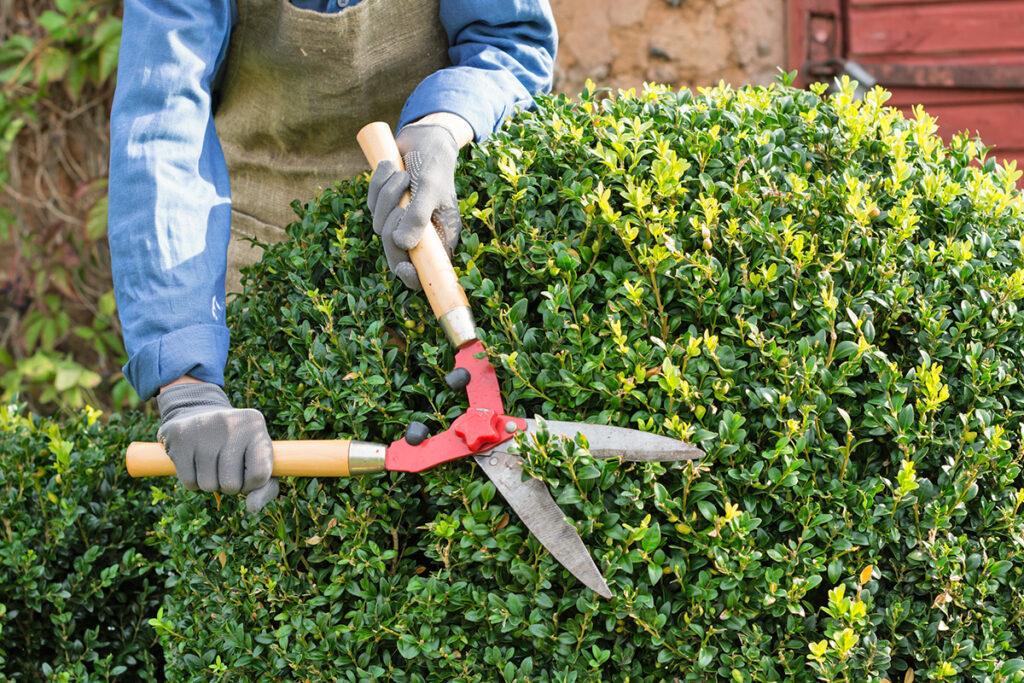
10. Prune Trees and Shrubs

Late winter or very early spring — just before they come out of dormancy — is the ideal time to prune many trees and shrubs. Generally speaking, you should skip anything that blooms in spring. These varieties typically set buds on last year’s growth, so pruning them in winter means losing those blossoms (and for edibles, the corresponding fruit).

Summer-blooming trees and shrubs are the ones to prune in late winter, as they flower on new growth that starts in spring. This group includes roses, crepe myrtle, rose of Sharon, certain hydrangeas, and most fruit trees. To be safe, check with your local garden center or extension service — or do a few online searches — to find specific pruning instructions for each tree or shrub.
If trees growing near your garden are casting too much shade over your beds, late winter is also a good time to thin them out and let in more light. (Again, just check with your local extension service first.) For larger trees, you may want to hire a professional arborist to do the work for you.

Credit: Jurgute/ iStock
Advertisement

11. Make Time for Problem-Solving and Troubleshooting

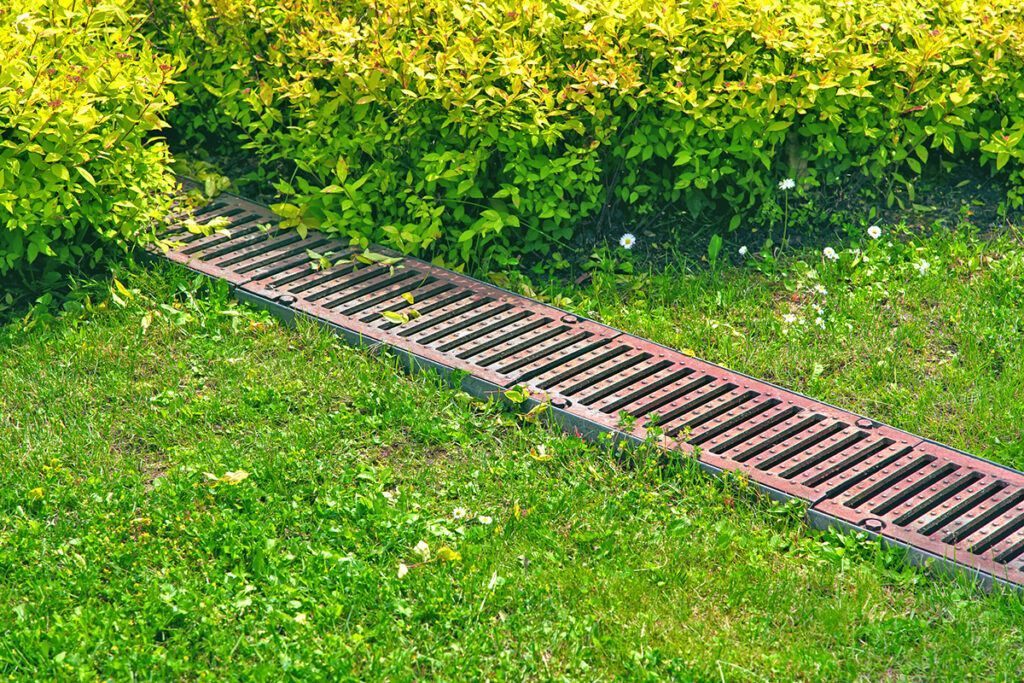
This is an all-winter activity that keeps the mind busy from autumn’s first frost until the spring thaw. Every year brings a mix of new problems and the same old frustrations you’ve faced before. Now is the time for brainstorming creative solutions.

In my area, for example, springs are short, cold, and wet, and the snow often melts before the ground thaws. To manage this, I’ve arranged my beds to slow runoff and dug channels to improve drainage while corralling meltwater, allowing it to seep slowly into the ground and replenish the aquifer. Whatever your specific challenges may be, use this time to mitigate predictable problems and consider how you’ll respond to less-predictable issues as they crop up.

Late winter is a good time to gauge which parts of your garden receive the most light; the areas where the snow melts first (or the morning dew dries the quickest) are your “hot spots.” You can use this information to decide where to situate your most sun-seeking plants and where to tuck away those that prefer a bit of shade.

Credit: Bespalyi/ iStock

12. Test and Adjust Your Soil

You can fit soil testing in as the last task of fall or the very first task of spring — whichever suits your climate and personal inclinations. Because my springs are wet and cold, I typically aim for late fall.

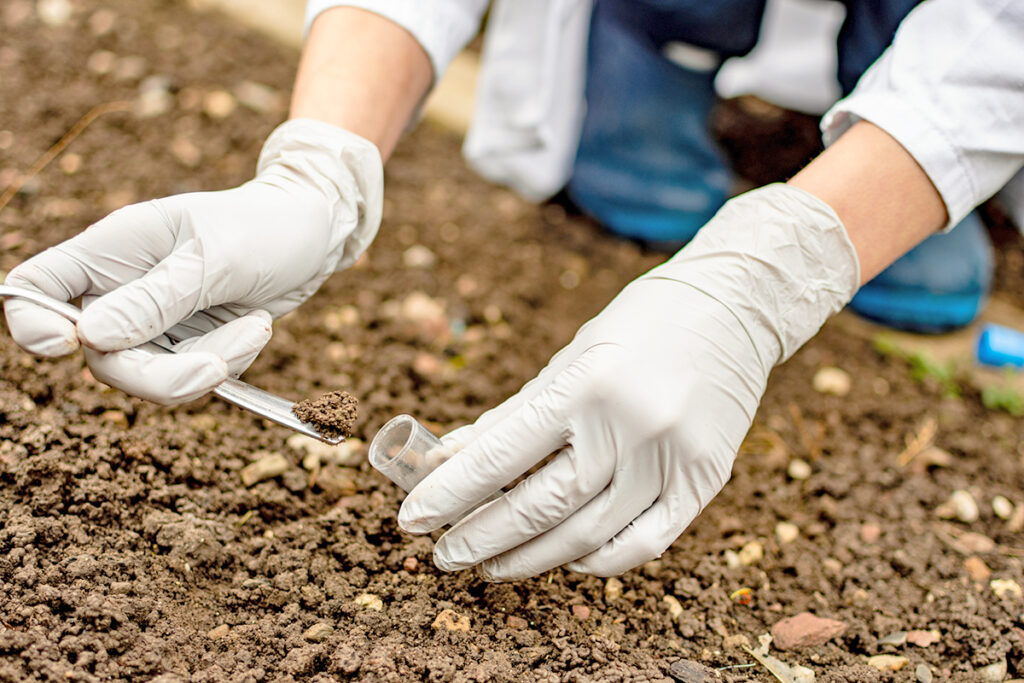
Use the offseason to test your soil and determine what it needs for the next growing season. If your test shows you need to raise the pH, for example, consider adding fireplace ashes to the soil (which will impart nutrients as well). You can apply other amendments such as mulch, compost, or slow-release fertilizers in early or late winter so they have time to settle before spring.

By ticking all of these boxes over the course of the winter, you’ll be well positioned for your best garden yet once spring rolls around.

Credit: CasarsaGuru/ iStock
Advertisement
Featured Image Credit:  Peter Burnett/ iStock | Updated  Feb 18, 2026 |
Fred Decker
Writer
Fred Decker is a trained chef and former restaurateur. Since closing his restaurants over a decade ago he has been a prolific freelance writer, publishing several thousand articles on dozens of high-volume websites including Taste Of Home, Hunker, Tasting Table, Week&, eHow, and GOBankingRates. He lives on a rural acreage shared with a big garden, chickens, rabbits, and grandkids.
This article is for general informational purposes only.
Featured Image Credit:  Peter Burnett/ iStock | Updated  Feb 18, 2026 |
Advertisement
Cleaning 3m read
440

Are You Vacuuming Too Fast?

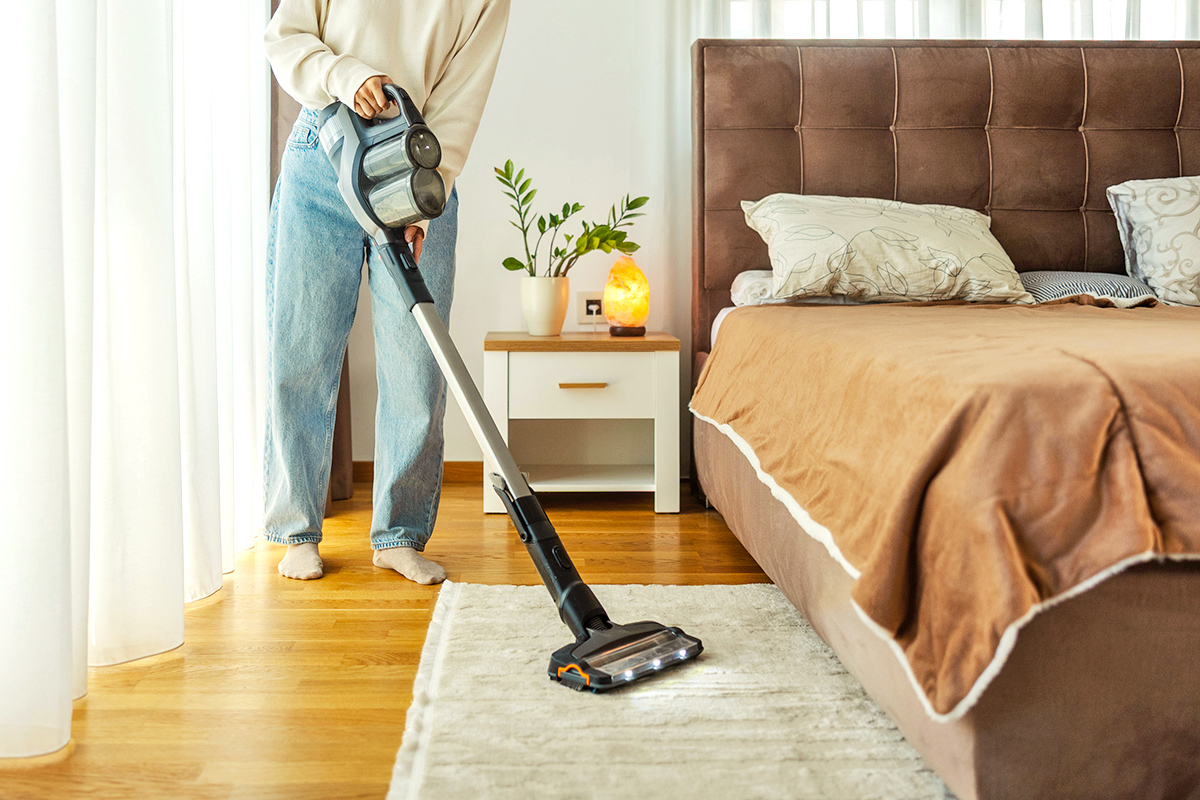
Most people vacuum like company is arriving any minute — though, to be fair, sometimes they actually are. A few quick laps around the room, some noisy passes, and you’re finished — or so you think. The “slow vacuuming” trend resurfacing on TikTok suggests that this rush-job approach might be the reason why your floors never feel truly clean.

Most people vacuum like company is arriving any minute — though, to be fair, sometimes they actually are. A few quick laps around the room, some noisy passes, and you’re finished — or so you think. The “slow vacuuming” trend resurfacing on TikTok suggests that this rush-job approach might be the reason why your floors…

Videos, such as this one from creator Lisa Parker (@piece_of_the_parkers), are racking up views by pointing out something oddly obvious: Your vacuum can’t pick up what it doesn’t have time to grab.

Why Slow Vacuuming Actually Works

It comes down to how vacuums pick up debris. When you zip over a patch of carpet or hardwood:

• The brushes aren’t able to reach deep into the fibers. 

• The suction doesn’t have enough contact time to lift dust and particles.

• Debris gets pushed ahead of the nozzle instead of being pulled inside.

Related: 9 Messes You Should Never Clean With a Vacuum Cleaner

By slowing your pace — often to about half your normal speed — you give the machine a fighting chance. The rotating brush and suction chamber have more time to engage with dirt, resulting in fewer passes and genuinely cleaner floors.

It’s the housekeeping equivalent of marinating meat: You could slap on some spices and toss it straight onto the grill, but taking your time makes all the difference between surface flavor and flavor that permeates.

Advertisement

Tips for Vacuuming More Effectively

If you want to try the slow and steady method, a few tweaks to your technique can make a big difference:

Work in small sections: Mentally divide the room into zones and finish one before moving on to the next.

Overlap each pass: Much like painting, overlapping your strokes by an inch or two helps ensure full coverage.

Vacuum from multiple angles: Follow your forward-and-back passes with a side-to-side sweep to lift debris trapped deep in the carpet pile.

Match settings to surfaces: Set the correct height for the vacuum head: low for hard floors; low-to-medium for low-pile carpet; and high for high-pile or plush carpet. Use the brush roll for carpet and a soft roller for hard surfaces.

Maintain your machine: Remember that a full bin, clogged filter, or tangled brush roll will reduce performance, no matter how slow you go.

Final Sweep

The next time you grab your vacuum, resist the urge to get the chore done as quickly as possible. Channel a slow and steady mindset — your floors (and your vacuum) will thank you. Sometimes the hack isn’t a trick at all; it’s just taking the time to do it right.

Advertisement
Featured Image Credit:  Organic Media/ iStock | Updated  Feb 18, 2026 |
Jill Layton
Writer
Jill Layton started writing professionally when she realized her emails and texts were kinda funny. She’s an affiliate shopping writer and lifestyle contributor for Scary Mommy, Bustle, Mic, and Best Products. She’s the mom of two alarmingly witty kids and the world’s most perfect dog.
This article is for general informational purposes only.
Featured Image Credit:  Organic Media/ iStock | Updated  Feb 18, 2026 |
Advertisement
Decorating 3m read
663

Your House Needs a Theme — Here’s Why

Take a look around your home. Is there a farmhouse table in the dining room, a traditional sofa in the living room, industrial lighting in the kitchen, and a coastal-style bed frame in the bedroom — even though you’re a long road trip away from an ocean? None of those elements is bad on its own. Together, however, they fail to tell a cohesive story, and the result feels unfinished. 

Take a look around your home. Is there a farmhouse table in the dining room, a traditional sofa in the living room, industrial lighting in the kitchen, and a coastal-style bed frame in the bedroom — even though you’re a long road trip away from an ocean? None of those elements is bad on its…

That’s why your home needs a theme. Establishing a clear design direction is one of the simplest ways to elevate your space — no remodeling required. A theme isn’t about committing to anything gimmicky (no Trading Spaces-style stunts) or turning your home into a matchy-matchy showroom. It just means your choices are intentional, not random.

How To Establish a Theme for Your Home

According to interior designer Hans Lorei, establishing a theme starts with choosing seven to 10 elements that you love and that look good together. More importantly, those elements should reflect how you want to feel in your space — perhaps relaxed, warm, dramatic, or elegant. Rather than decorating room by room, consider the big picture by thinking of the house as a whole.

These elements could include:

• A type of wood (walnut, oak, cherry)

• A material (terra-cotta, wrought iron)

• A window treatment (wood blinds, Roman shades)

• A metal finish (brass, nickel, copper)

• A fabric (linen, velvet) 

• An architectural period (art deco, midcentury modern)

• An accent color (blue, oxblood, green)

• A recurring shape (round, tall/tapered)

Advertisement

To keep things interesting, pull your inspiration from a few different categories. Ultimately, though, this is your home, so choose the elements that resonate with you the most. These are now your baseline, guiding every decorating decision going forward.

Related: Design Trends Homeowners Regret the Most, According to Interior Designers

How To Apply the Theme

Next, move through your home and introduce two to three of your chosen elements into each room. There’s no need to jam every item into every space; you just want enough to create continuity. Use furniture, lighting, hardware, art, textiles, and decor to bring the theme together.

Over time, your rooms will begin to relate to one another, making your home feel more cohesive. It’ll make decorating easier too, since you’ll know what fits your theme and what doesn’t.

Advertisement
Featured Image Credit:  Hans/ Unsplash+ | Updated  Feb 17, 2026 |
Megan McCarty
Writer
Megan McCarty is a Los Angeles-based writer who covers the fun stuff: design, travel, wellness, beauty, and fashion. She has written for publications including Domino, The Spruce, MyDomaine, Bustle, and Rue Magazine. Her life rules include, but are not limited to, zipper when merging, contribute to your IRA, and do the nice thing.
This article is for general informational purposes only.
Featured Image Credit:  Hans/ Unsplash+ | Updated  Feb 17, 2026 |
Advertisement
Cleaning 2m read
585

Say Goodbye to Stubborn Toilet Rings

There’s something deeply satisfying about wiping away the dust and grime that builds up in our homes. But the job isn’t always as simple as spritzing and swiping — especially in the bathroom, where hard water stains wreak havoc on sinks, showers, and toilets. If you’re fed up with stubborn toilet bowl rings, put down the pumice stone and reach for a cleaning solution containing hydrochloric acid.

All featured products and deals are selected independently and objectively by the author. House Outlook may receive a share of sales via affiliate links in content.

There’s something deeply satisfying about wiping away the dust and grime that builds up in our homes. But the job isn’t always as simple as spritzing and swiping — especially in the bathroom, where hard water stains wreak havoc on sinks, showers, and toilets. If you’re fed up with stubborn toilet bowl rings, put down…

What Is Hydrochloric Acid?

Hydrochloric acid is a heavy-duty cleaning agent potent enough to dissolve mineral deposits. While these cleaners won’t prevent future rings — we have a bonus hack for that below — they easily lift buildup, ensuring your toilet reflects all the hard work you put into cleaning it.

Related: How To Keep Your Toilet Brush Germ-Free

Heavy-Duty Mineral Melters

When stocking up on bathroom cleaning supplies, look for products formulated with hydrochloric acid, such as Lysol Lime and Rust or Bar Keepers Friend Toilet Bowl Cleaner. These are designed to tackle the toughest cleaning jobs, from rusty faucets to calcified toilet rings. Bar Keepers Friend is valued for its mild abrasiveness — similar to baking soda or Bon Ami powder cleanser — which adds some extra oomph to your scrubbing.

Advertisement

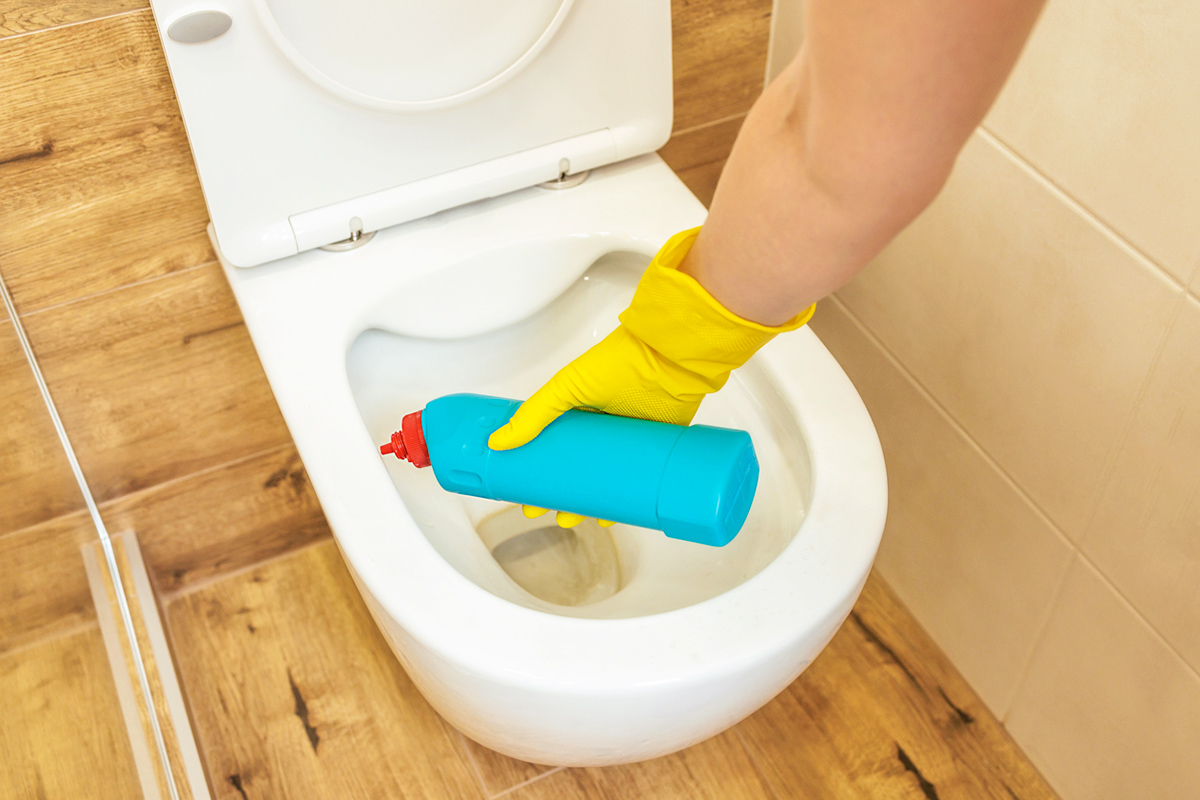
For the best results, use a scoop to remove most of the water from the toilet bowl. Apply the solution under the rim, allowing it to drip down and coat the sides. Let the formula sit for at least 30 minutes, or even overnight for deep stains, to maximize its effectiveness. Then, use a stiff-bristled toilet brush to scrub away the mineral deposits. Flush the toilet to rinse away any remaining product and repeat the process if staining persists.

Bonus Hack

To prevent the rings from coming back, drop an IRON Out tablet into your toilet’s tank every 45 days. Do this immediately after flushing while the tank is nearly empty, placing it in a rear corner away from the valve. These septic-safe tablets work to reduce stains and mineral deposit buildup with every flush.

Advertisement
Featured Image Credit:  Natallia Ramanouskaya/ iStock | Updated  Feb 20, 2026 |
Jessie Quinn
Writer
Jessie Quinn is a Los Angeles-based lifestyle journalist with words published in PEOPLE, StyleCaster, Apartment Therapy, The Spruce, Byrdie, and more. She has a Bachelor's Degree in fashion journalism from Academy of Art University and her work spans across many categories, including style, beauty, home, health, crafts, and more.
This article is for general informational purposes only.
Featured Image Credit:  Natallia Ramanouskaya/ iStock | Updated  Feb 20, 2026 |