The 2-Tablespoon Trick Explained
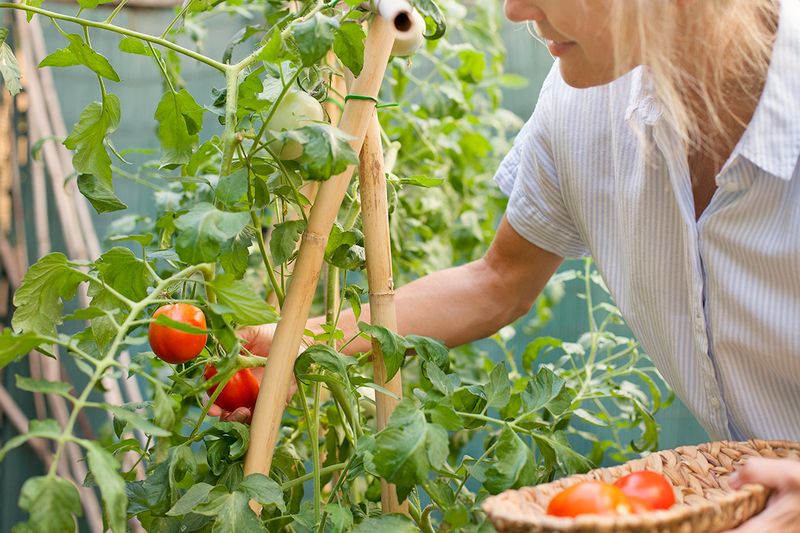
The intriguingly named 2-tablespoon trick is as simple as it is ingenious. Before putting transplants into their beds or direct-seeding your garden, add 1 to 2 tablespoons of bone meal — a widely available organic fertilizer — to the hole. Mix it well with the soil before planting, then continue as usual. If you’re growing determinate tomatoes (the kind that set fruit once and call it a day), 1 tablespoon is often enough. If they’re indeterminate (meaning they grow and fruit until the cold kills them), use 2 tablespoons.
Bone meal is made by grinding animal bones into a fine powder. It’s an excellent source of phosphorus, which releases slowly into the soil to stimulate root systems and produce bigger, sturdier plants that can bear more fruit. (Your harvest will be even more bountiful if you sprinkle in some bone meal while planting the tomato seedlings deep in the soil.) The fertilizer is also a good source of calcium, which helps protect against blossom-end rot.
More from our network
House Outlook is part of Inbox Studio, which publishes content that uplifts, informs, and inspires.





Tips and Cautions
Bone meal isn’t appropriate in every case. It’s important to test your soil’s pH before applying it, as the amendment works best when your soil is in the 6.0 to 7.0 range. Outside of that, it can actually worsen blossom-end rot by inhibiting calcium uptake. (Often, there’s enough calcium in the soil; the plants just struggle to absorb it.)
You should also know that bone meal attracts dogs, raccoons, and other pests if it clumps. To avoid this, mix it well with the soil. Because it’s a fine powder, you should also wear a mask and goggles to prevent inhaling the dust or getting it in your eyes.