Advertisement
Decorating 3m read
1,087

A Designer Trick for Big Furniture on a Budget

When furnishing a home, choosing pieces isn’t simply a matter of whether you like them or not, though it would be nice if decorating were that straightforward. You have to consider material, color, silhouette, style, and price. Then there’s scale. Finding furniture that’s appropriately sized for your space isn’t always as easy (or as budget-friendly) as it sounds.

All featured products and deals are selected independently and objectively by the author. House Outlook may receive a share of sales via affiliate links in content.

When furnishing a home, choosing pieces isn’t simply a matter of whether you like them or not, though it would be nice if decorating were that straightforward. You have to consider material, color, silhouette, style, and price. Then there’s scale. Finding furniture that’s appropriately sized for your space isn’t always as easy (or as budget-friendly)…

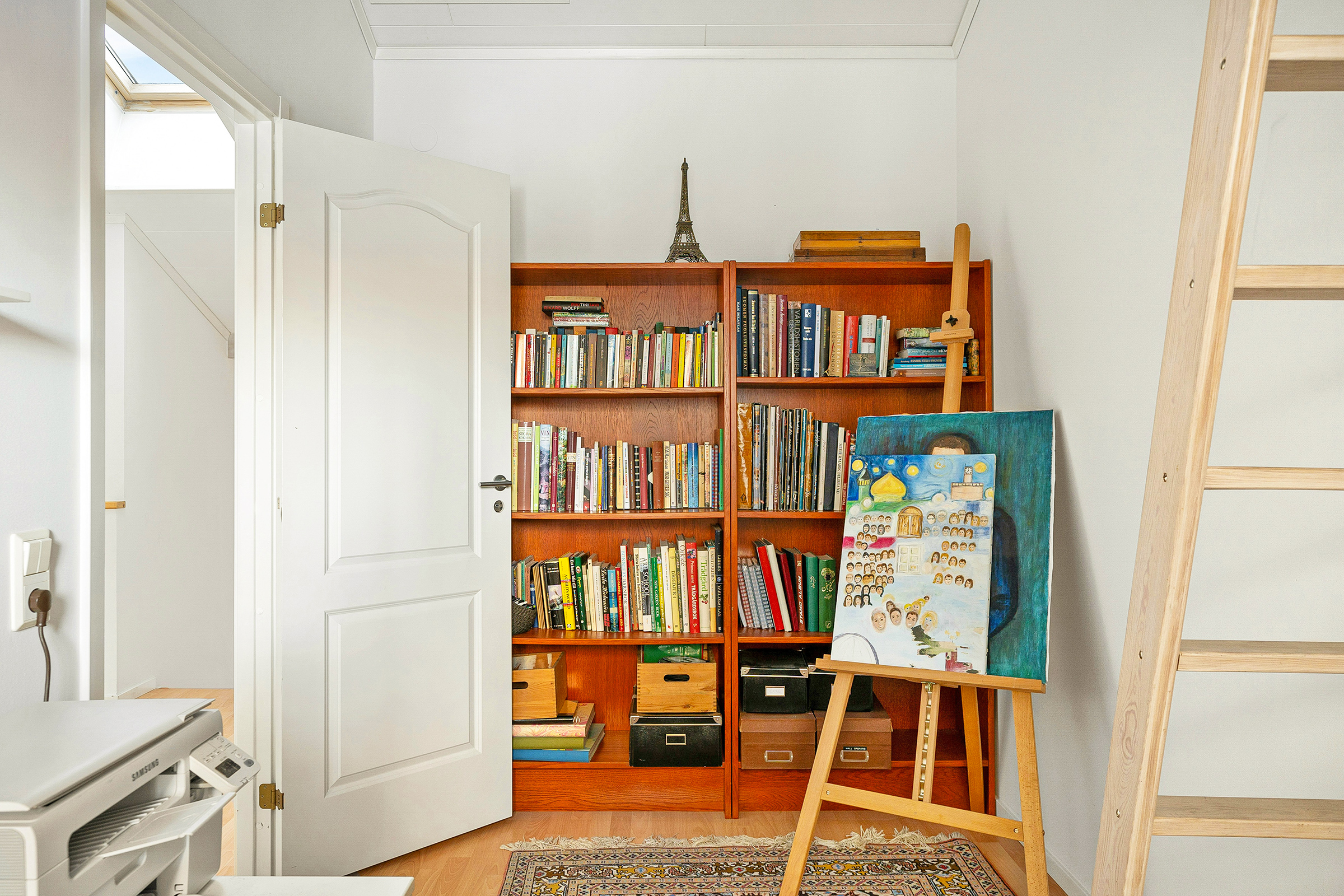
Dining room credenzas, bookcases, media consoles, bedroom dressers, and storage cabinets are often among the most expensive pieces in a home. If you’re struggling to fill a long wall or anchor a large space, consider this designer-approved trick: Buy two of the same piece and place them side-by-side. This simple solution adds substantial storage and visual weight where you need it most, all while potentially saving you money. 

Why the Side-By-Side Furniture Solution Works

Instead of investing in one extra-long sideboard, dresser, or media console, purchasing two smaller-scale pieces often costs less and offers more flexibility. When placed directly next to each other, the repetition creates symmetry that feels intentional and elevated. The eye will read the pair as a single, expansive piece rather than two separate units. 

Related: 25 Hacks Only Interior Designers Know

This trick works especially well in dining rooms and living rooms, where elongated furniture helps ground the space and balance other large-scale elements. Choosing clean-lined designs with flat sides is key, so they sit flush together to give the illusion of a continuous unit.

Advertisement

It’s Functional and Flexible

Beyond the aesthetics, the functionality of doubling up is a major win. Two pieces often provide more usable storage than one long cabinet, offering better organization through additional drawers and compartments. This allows you to group items more efficiently, such as keeping table linens and cocktail glasses in a dining room credenza or electronics and board games in a media console.

For a seamless look, lean on styling. Treat the two pieces as one unit, ignoring the seam. Center your artwork, mirror, or television across the full width of the arrangement and style the surface with balance in mind. Consider placing matching lamps at either end for symmetry, or arranging a single long tray along the center to physically and visually connect the pieces.

Add Personality With Custom Details

A new console — or two — can benefit from a personal touch. Swap out the existing hardware for pulls with patina or character to add age and charm on a budget. This small upgrade instantly unifies the pair in a one-of-a-kind way.

Advertisement
Featured Image Credit:  Lisa Anna/ Unsplash | Updated  Feb 3, 2026 |
Megan McCarty
Writer
Megan McCarty is a Los Angeles-based writer who covers the fun stuff: design, travel, wellness, beauty, and fashion. She has written for publications including Domino, The Spruce, MyDomaine, Bustle, and Rue Magazine. Her life rules include, but are not limited to, zipper when merging, contribute to your IRA, and do the nice thing.
This article is for general informational purposes only.
Featured Image Credit:  Lisa Anna/ Unsplash | Updated  Feb 3, 2026 |
Advertisement
Home Improvement 4m read
14,515

Prevent Burst Pipes During Cold Snaps With These Tricks

Freezing temperatures can pose a serious threat to your home’s plumbing. Even a single cracked pipe can lead to expensive water damage, mold growth, and a stressful cleanup. Fortunately, protecting your plumbing is easier than you think and doesn’t require a major renovation.

All featured products and deals are selected independently and objectively by the author. House Outlook may receive a share of sales via affiliate links in content.

Freezing temperatures can pose a serious threat to your home’s plumbing. Even a single cracked pipe can lead to expensive water damage, mold growth, and a stressful cleanup. Fortunately, protecting your plumbing is easier than you think and doesn’t require a major renovation.

Why Pipes Freeze and Burst

Water expands as it freezes, and in the confined space of a pipe, that expansion builds tremendous pressure until the metal or plastic splits. These bursts often happen where pipes are most exposed to cold air, such as in exterior walls, crawl spaces, attics, and unheated garages.

With a few smart precautions and everyday tricks, you can keep your pipes intact and your home dry, no matter how low the temperature drops.

1. Maintain a Consistent Indoor Temperature

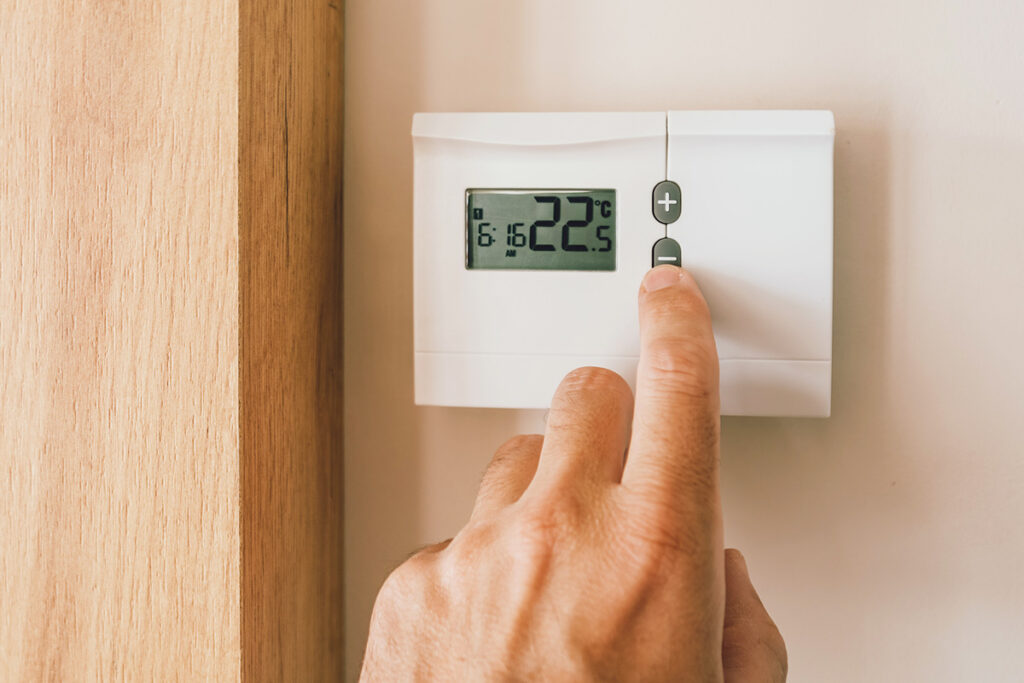
One of the simplest ways to keep pipes from freezing is to keep your house warm, even if you’re away. Experts recommend setting the thermostat no lower than 55 degrees Fahrenheit (13 degrees Celsius) during cold weather. Maintaining consistent heat day and night helps ensure indoor walls and pipes stay above freezing, reducing stress on your plumbing.
Turning the heat down drastically at night or when you leave for a weekend might save on energy bills, but that chill can quickly seep into uninsulated walls and freeze your pipes.

Credit: BitsAndSplits/ iStock
Advertisement

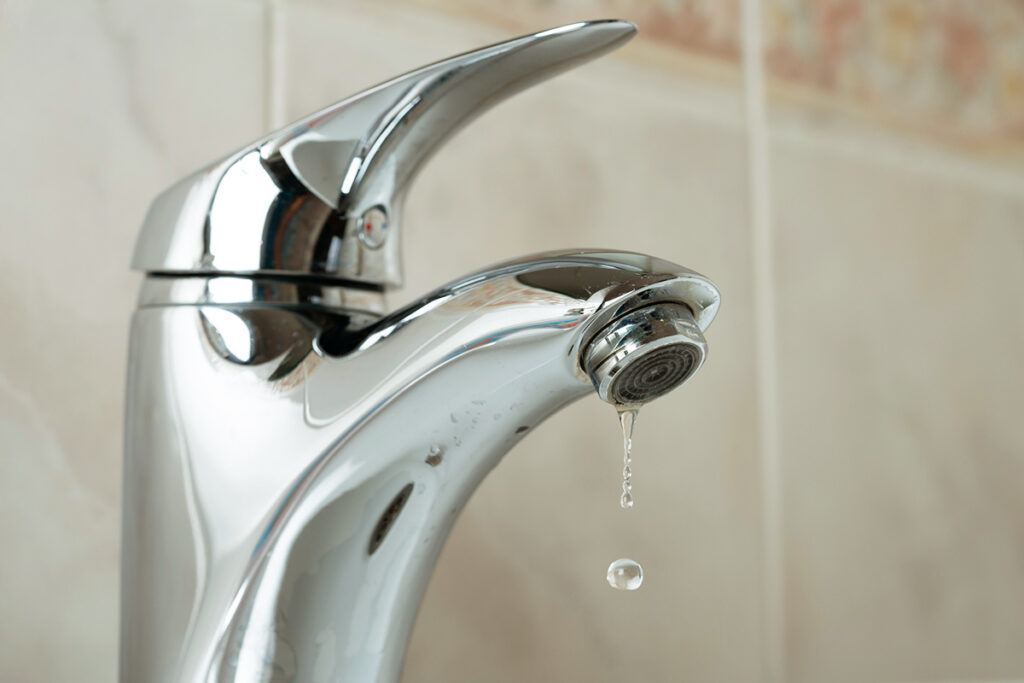
2. Let Faucets Drip — Just a Little

When temperatures plunge, letting cold water trickle from faucets served by exposed or exterior wall pipes can help prevent a disaster. Contrary to popular belief, the goal isn’t just to keep water moving; the drip actually relieves the pressure buildup inside the line that causes pipes to burst.

A slow, steady drip is enough. For dual-handle faucets, open both the hot and cold valves slightly. For single-handle faucets, keep the lever centered between hot and cold.

Credit: banusevim/ iStock
Related: 9 Nutritious Nonperishable Foods To Stock for Emergencies

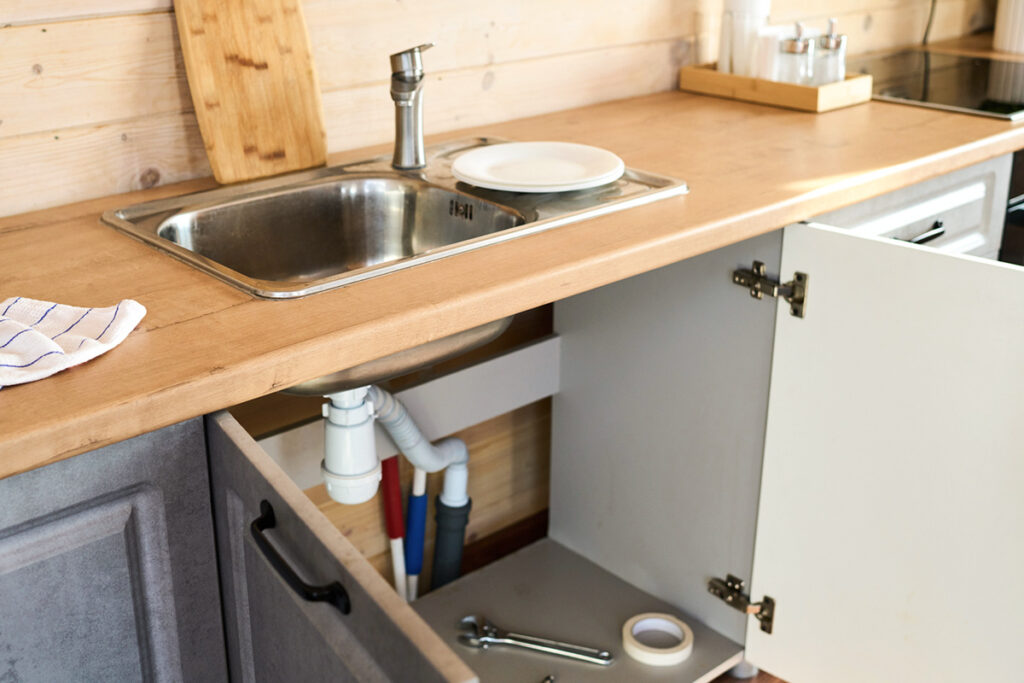
3. Open Cabinets Under Sinks

Pipes located in kitchen and bathroom cabinets — especially those against exterior walls — are particularly vulnerable. Opening these cabinet doors allows warmer air from your heating system to circulate around the pipes, helping keep them above freezing. This simple step is especially useful during overnight cold snaps when temperatures are at their lowest.

Credit: Pressmaster/ iStock
Advertisement

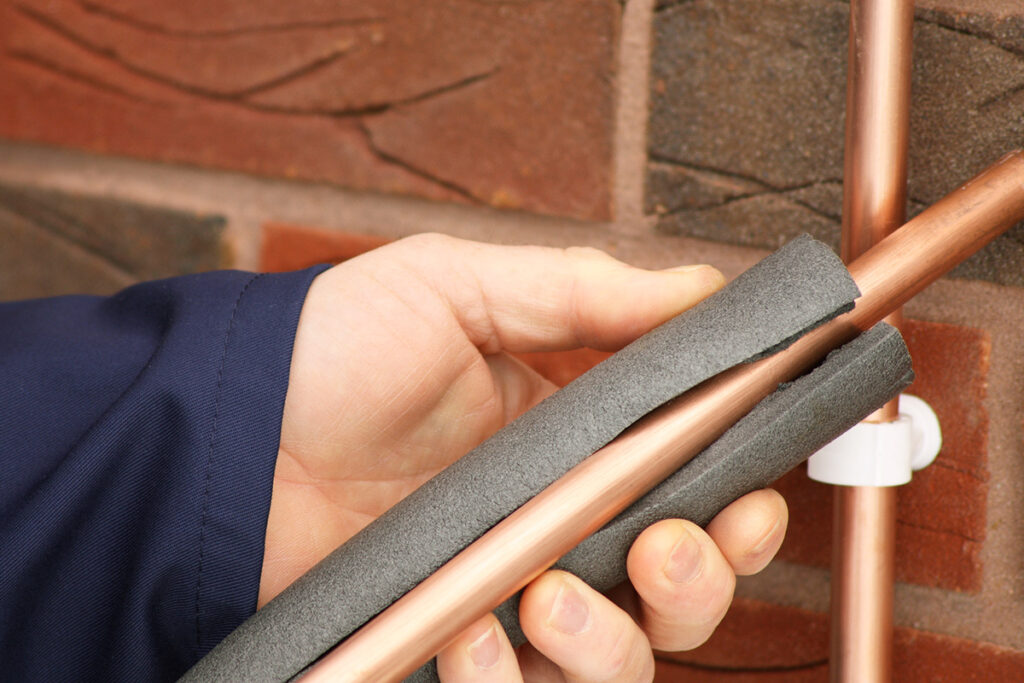
4. Insulate and Shield Your Plumbing

Insulation is your friend when it comes to winterizing pipes.

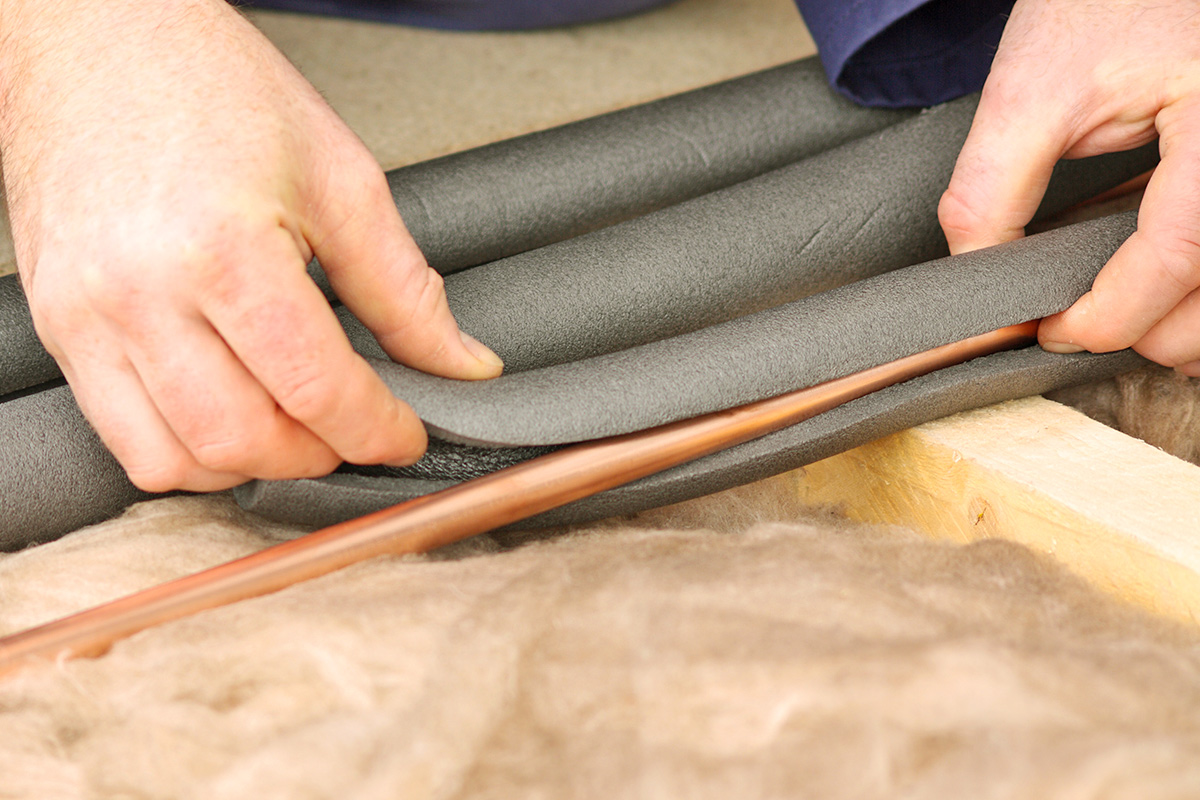
Insulate pipes: Wrap foam sleeves or insulation tape around plumbing in unheated areas such as garages, attics, basements, and crawl spaces.

Seal gaps: Use caulk or expanding foam to seal drafts and cracks in walls, windows, and doors, especially where pipes enter the home. Even a small draft of cold air can chill a pipe to the point of bursting.

Safeguard spigots: Disconnect garden hoses, drain them, and install insulated covers on spigots. This prevents trapped water from freezing and backing up into your interior plumbing.

For especially vulnerable or hard-to-reach pipes, consider installing a heat cable that turns on automatically as temperatures drop.

Credit: nsj-images/ iStock

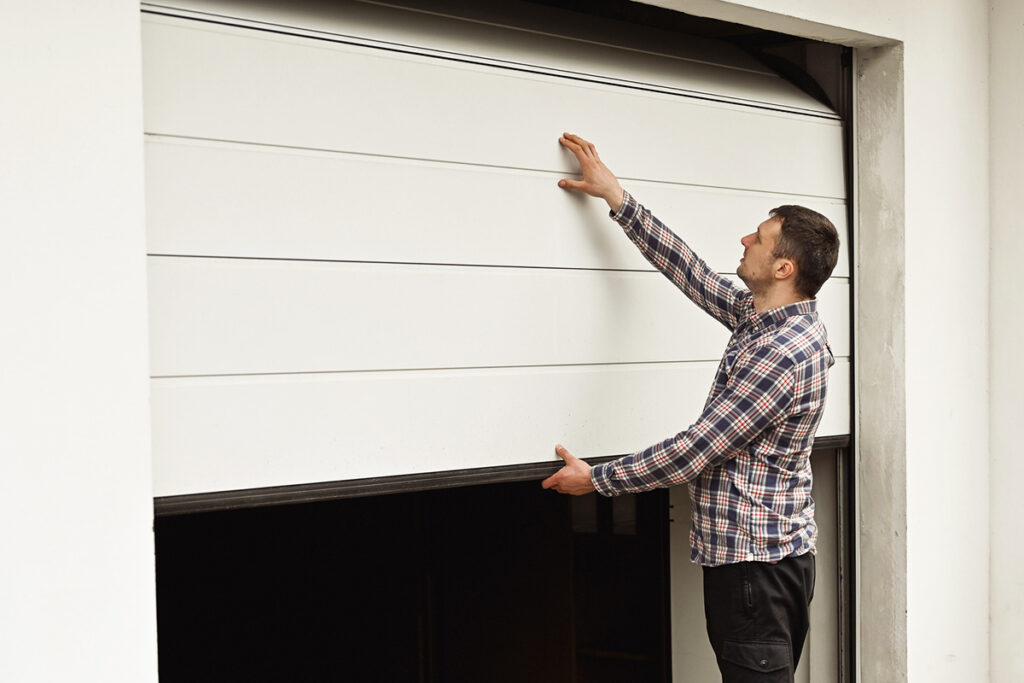
5. Keep Garages and Other Cold Spaces Closed

Cold air doesn’t need much invitation to sneak into your home. Keep your garage door shut, especially if water supply lines run through the space. Closing attic or crawl space vents can also prevent chilly drafts from lowering interior temperatures around pipes. Just remember to reopen them once the weather warms up to ensure proper ventilation.

Credit: Yuliya Taba/ iStock
Advertisement

6. Know Where Your Shut-Off Valve Is

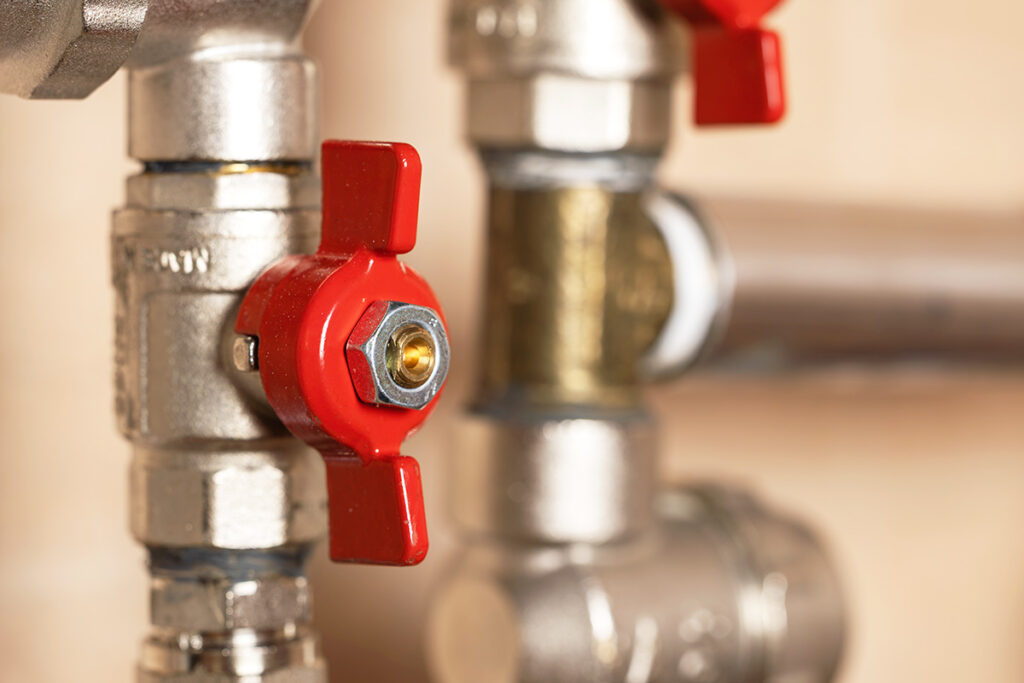
If a pipe bursts, the first step is to stop the water. Locate and label your main shut-off valve now. It could save you thousands in water damage and repair costs later. You’ll typically find the valve near where the main water line enters your home, often in a basement, crawl space, or utility room.

Credit: eliosdnepr/ Adobe Stock
Related: Why Your Home Feels Colder Than It Should

7. Prepare for Power Outages

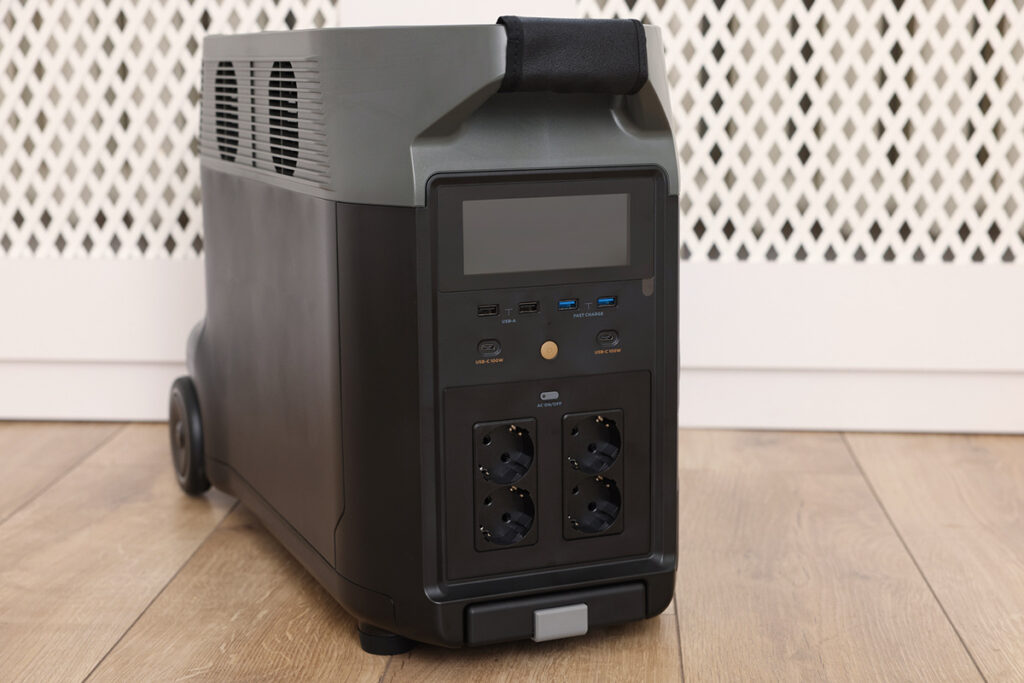
Winter storms sometimes lead to power outages that shut down your heating system. If your area is prone to inclement weather, it’s a good idea to have a backup plan. Consider investing in a portable generator, a power station, or other indoor-safe heat sources to keep your home’s temperature above freezing. This not only helps with comfort but also protects your pipes.

Credit: Olga Yastremska/ iStock
Advertisement
Featured Image Credit:  nsj-images/ iStock | Updated  Jan 27, 2026 |
Jill Layton
Writer
Jill Layton started writing professionally when she realized her emails and texts were kinda funny. She’s an affiliate shopping writer and lifestyle contributor for Scary Mommy, Bustle, Mic, and Best Products. She’s the mom of two alarmingly witty kids and the world’s most perfect dog.
This article is for general informational purposes only.
Featured Image Credit:  nsj-images/ iStock | Updated  Jan 27, 2026 |
Advertisement
Organizing 8m read
17,475

Kitchen Items Professional Chefs Say You’re Storing Wrong

One of the things that makes commercial kitchens work — or not — is their level of organization. Ideally, every tool the cooks rely on should be easily accessible when needed, but out of the way when it’s not.

All featured products and deals are selected independently and objectively by the author. House Outlook may receive a share of sales via affiliate links in content.

One of the things that makes commercial kitchens work — or not — is their level of organization. Ideally, every tool the cooks rely on should be easily accessible when needed, but out of the way when it’s not.

The same holds true for home cooks, though your meal prep is (hopefully) a lot less stressful than a restaurant’s. Since most of us are contending with limited cabinet space, we’re always on the lookout for storage ideas to make our lives easier. But not every organizing “hack” is worth implementing in your own kitchen — in fact, some storage methods can actually do more harm than good for the longevity of your gear. Here are eight kitchen items you’re probably storing wrong, along with the right way to handle them.

1. Countertop Appliances

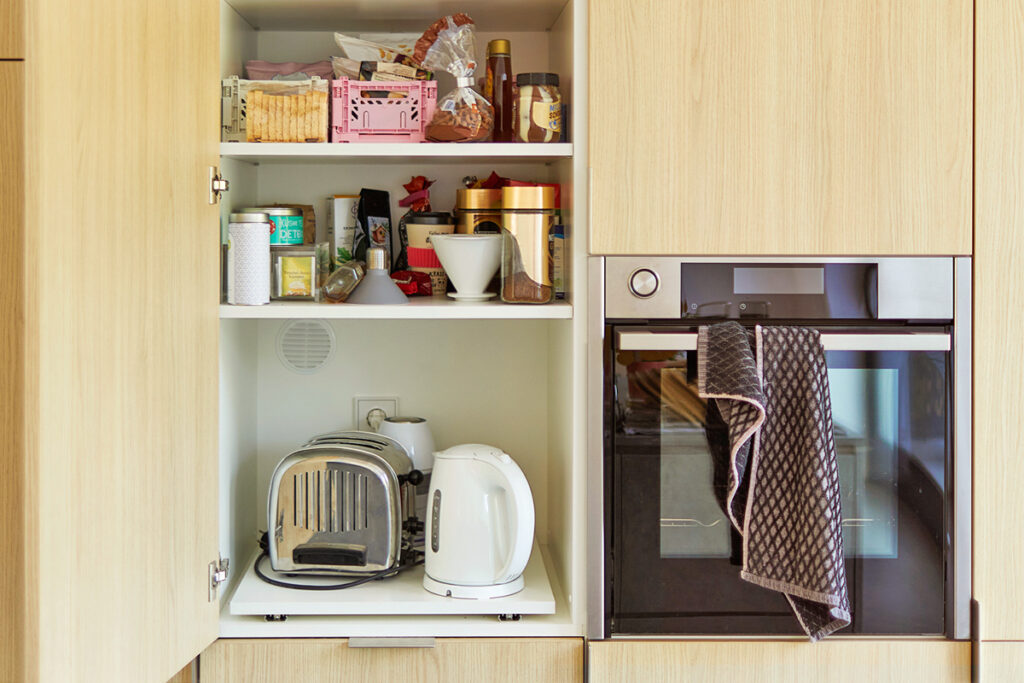
Look, we get it. You love your air fryer and use it constantly, but if you keep every “countertop appliance” out in the open, you’ll soon have no space left to work on. Finding a home for the appliances you don’t use daily is a thorny problem, mostly because they tend to be bulky and awkwardly shaped.

I personally use a section of my pantry as an improvised “appliance garage” for my stand mixer, blender, food processor, and waffle irons (yes, plural). Whether you use your existing cabinetry, add a space-efficient storage rack, or go for purpose-built storage during a  renovation, heed this warning: Never put heavy items in a high cupboard. It’s an injury waiting to happen. You can get spring-loaded platforms that lift or lower them for you — something that’s on my own “must add” list for my next kitchen project.

Credit: 2K Studio/ iStock

2. Cast-Iron and Nonstick Pans

In most of the home kitchens I’ve seen, there’s an unruly stack of pots and skillets tucked away in a cabinet — or perhaps a pull-out drawer in newer builds. Admittedly, it’s a space-efficient solution since saucepans are typically made to nest and skillets stack quite neatly.

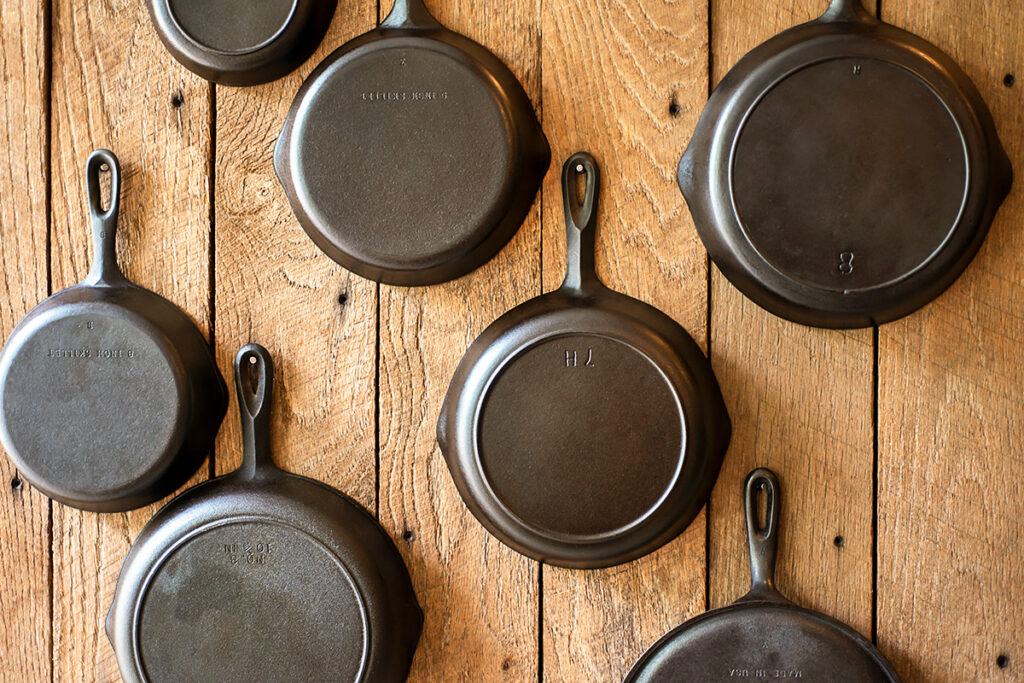
The issue with this approach, however, is that you can easily damage the finish or even dent the pans if they’re lightweight. With cast iron, it’s all too easy to chip the seasoning; with nonstick, the coating itself is at risk. The simplest fix is to put something between each pan. You can buy durable felt liners made for this exact purpose, but a sheet of paper towel or even a disposable paper plate will get the job done, too. In fact, those paper products will absorb moisture, helping protect your cast iron against rust.

Credit: rudisill/ iStock
Advertisement

3. Kitchen Knives

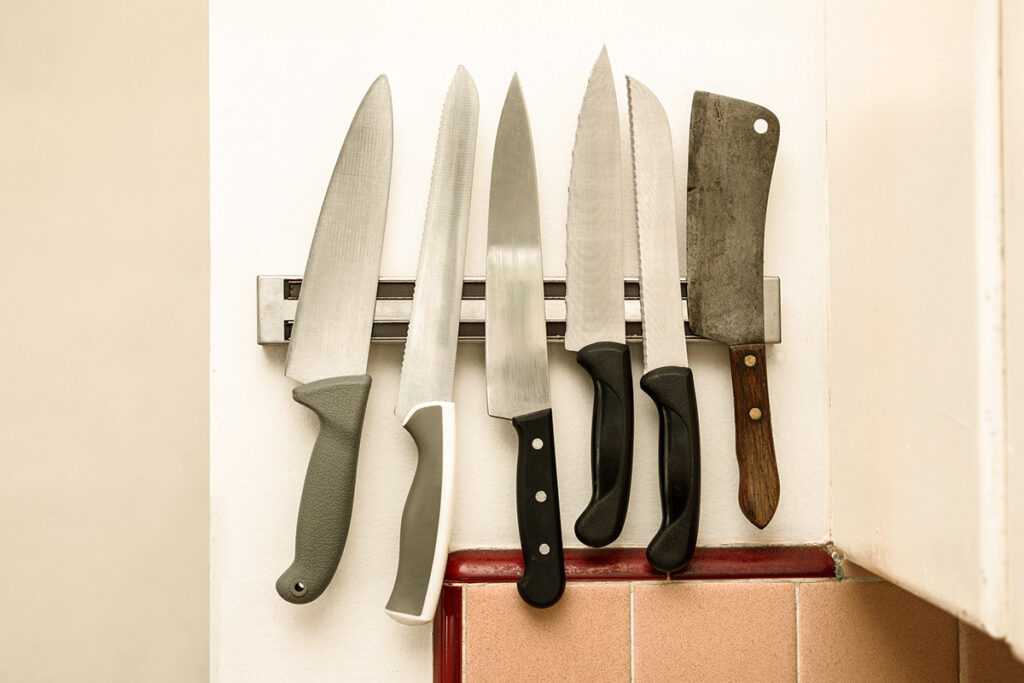
If there’s one thing we chefs are notoriously protective of, it’s our knives. You’ll rarely see our personal knives go through a dishwasher — even at work — because those harsh detergents can pit the blades and compromise the handles. Storage is another sore spot. I cringe whenever I’m in someone’s kitchen and find a random assortment of knives rattling loose in a drawer. Not only is that an emergency room visit waiting to happen, but it’s also hard on the knives themselves.

A knife block is a much safer bet, protecting both your knives and your fingers while keeping the tools accessible. My only gripe is that most blocks can’t be cleaned, meaning dirt, dust, and grease build up inside them. I always recommend a washable knife block to prevent cross-contamination. Another option is a wall-mounted magnetic strip. If you must use a drawer, invest in an in-drawer knife organizer to keep your edges sharp and your fingers intact.

Credit: Petra Richli/ iStock
Related: 15 Things To Declutter From Your Kitchen Right Now

4. Wine Glasses and Other Stemware

Most of the things we drink from aren’t especially high-maintenance. Coffee cups, water tumblers, and insulated travel mugs are pretty forgiving and can be stored just about anywhere.

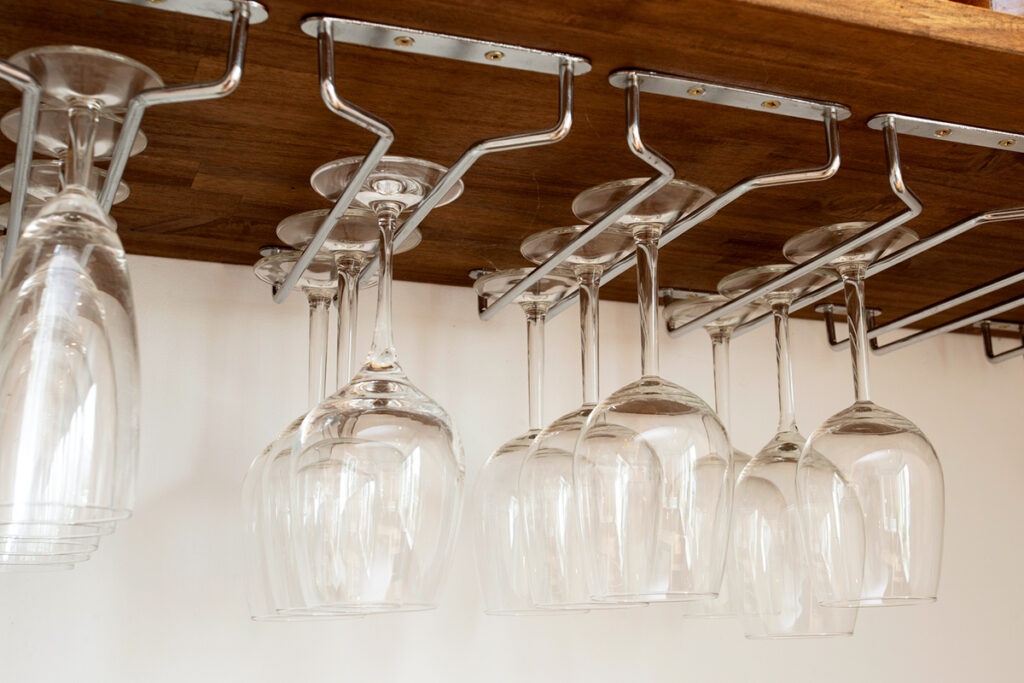
Stemware is a different story. Glasses with stems — standard wine glasses, champagne flutes, and some cocktail glasses — are often quite fragile, especially high-end pieces from makers like Riedel or Spiegelau. Because they see only occasional use, a lot of people store them upside-down to keep the dust out. If you have a hanging rack, go for it. But if they’re on a cupboard shelf, keep them upright. Stemware is thickest where the stem meets the bowl and thinnest at the lip, so when you store them upside-down, you’re putting the glass’s entire weight on its most breakable part.

Ideally, you should store them in a dedicated cabinet where they won’t be banging around with your novelty mugs. As for dust, cabinet doors keep most of it away, and giving your glasses a quick wipe before using them is a small price to pay to avoid a chipped rim.

Credit: cerro_photography/ iStock
Advertisement

5. Cleaning Supplies

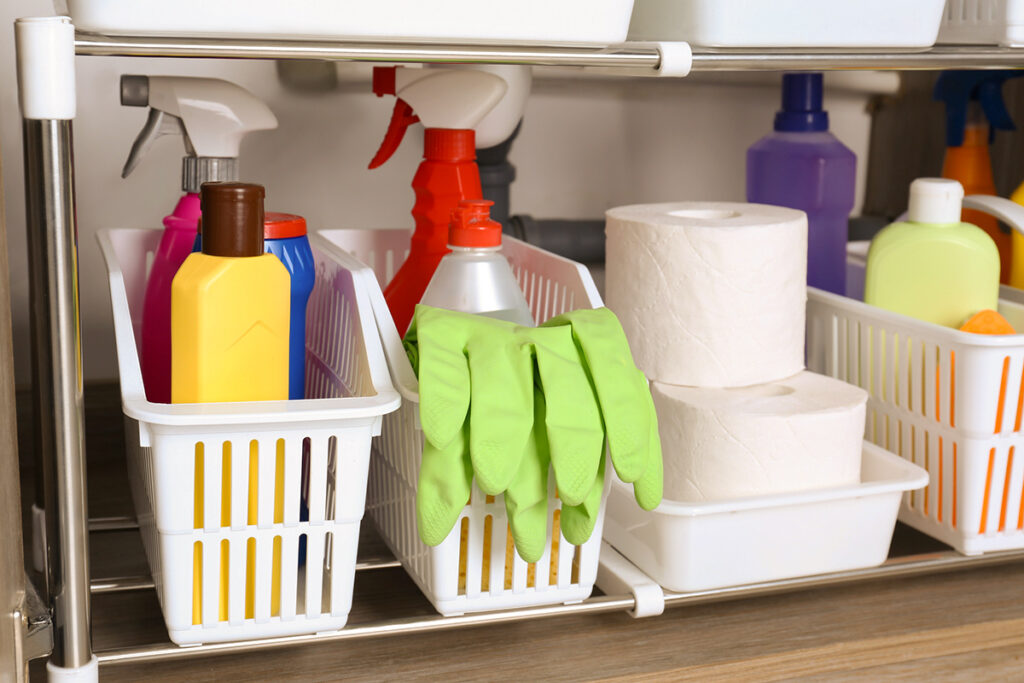
You might find this surprising, but the common practice of storing cleaning supplies under the sink is a no-go in commercial kitchens. Why? Because most cleaning and sanitizing products are toxic if they happen to get into your food. Many can also off-gas dangerous vapors if they’re not closed properly or if that cramped, airless cabinet gets too hot.

As a home cook, you don’t have to worry about a health inspector threatening your license to operate, but it’s still worth playing it safe. Especially in hot climates, consider moving volatile cleaning products to a space where they’re less likely to come into contact with your food. A hall closet near the kitchen is ideal — even better if it has louvered doors to allow for air circulation.

Credit: Liudmila Chernetska/ iStock

6. Silicone Baking Mats

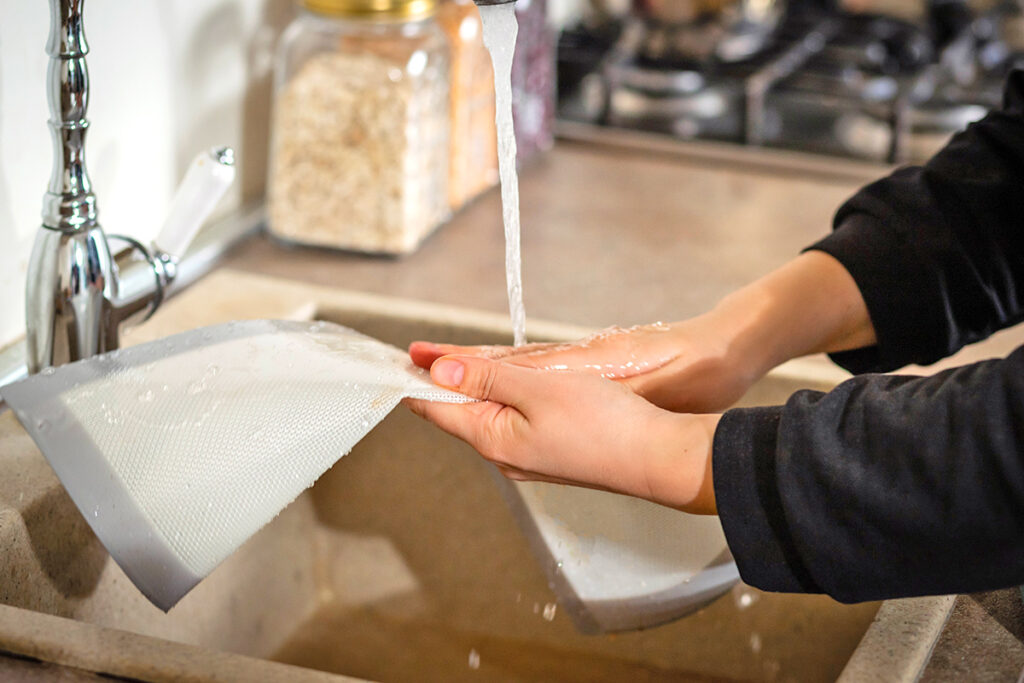
Not everyone owns silicone baking mats, but they’re useful to have on hand. You use them just like parchment paper, except they’re washable and last for years. I own several, ranging from premium Silpat mats (the industry standard) to various off-brands.

Because they’re so floppy, they often end up in odd places. Some people leave them on their sheet pans, but that isn’t ideal — baked-on grease that darkens your pans over time can transfer to the silicone and leave a tacky mess. Others stack them on a shelf where they’re susceptible to damage, or roll them up loosely, which can be awkward.

Credit: Roman/ Adobe Stock
Advertisement

7. Cooking and Baking Utensils

Every kitchen holds a chaotic collection of cooking and baking utensils: whisks, spatulas, serving spoons, tongs, and more. Piling these into a drawer is a recipe for two things: never finding what you want and growling at a drawer that refuses to open.

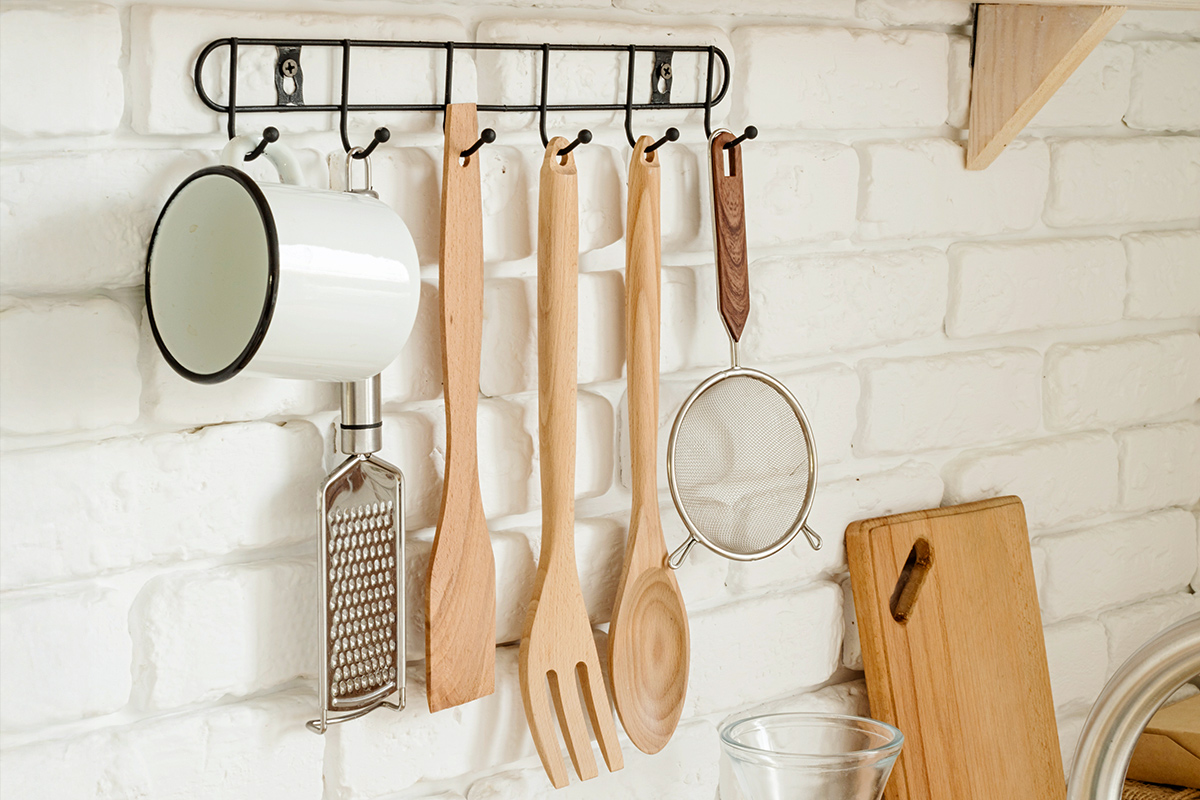
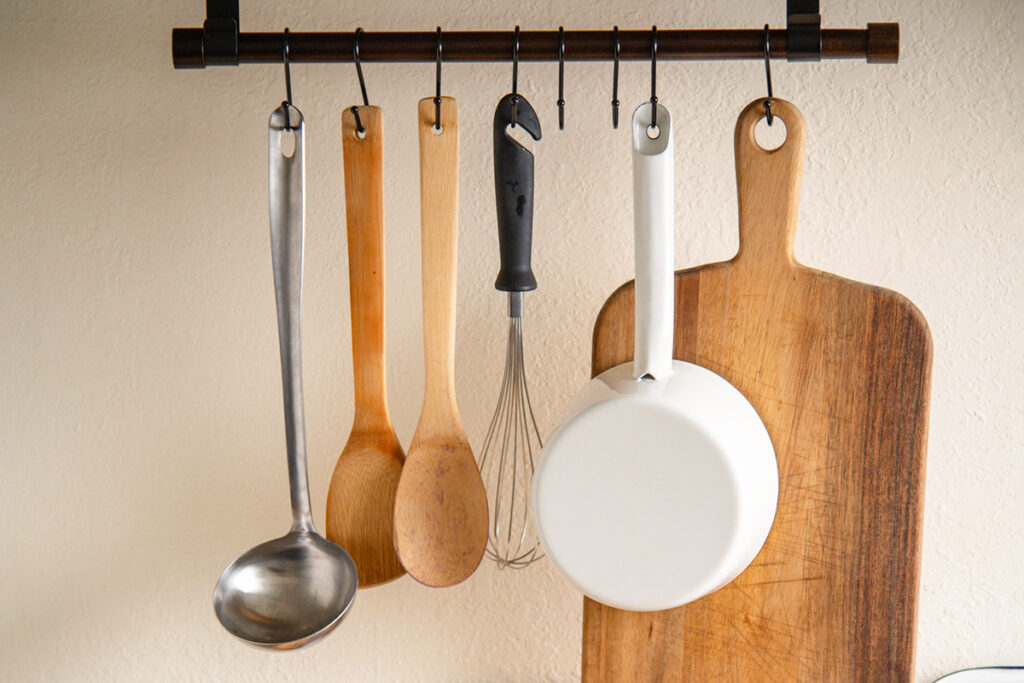
Even with limited square footage, you have better options. I’m a fan of hanging those utensils from rails mounted to walls or the backs of cabinet doors. If that isn’t an option, a countertop utensil holder is a convenient way to keep everything organized and within reach. While matching sets are easy to find, you can also add character to your kitchen by repurposing items such as pitchers, ice buckets, or plant pots for your utensils.

Credit: ahirao_photo/ iStock
Related: How To Keep Your Kitchen Clutter-Free Year-Round

8. Fire Extinguisher

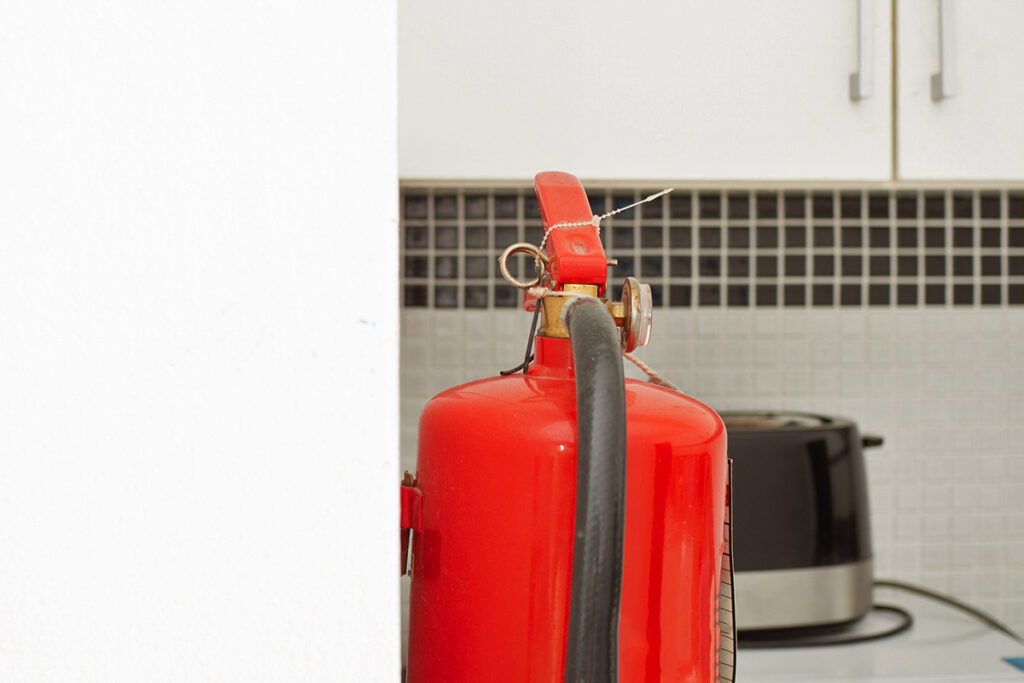
You have a fire extinguisher in your kitchen, right? If not, you really should. According to government statistics, over half of all residential fires start in the kitchen; having an extinguisher nearby means you might be able to nip a flare-up in the bud before it becomes damaging or life-threatening. Extinguishers are inexpensive and even available in compact versions if you don’t have the space for a 2.5-pound or 5-pound one.

But here’s the thing: Many people who do own one store it right by  — or even over — the stove. I’ve seen them tucked beside the vent hood ducting, which is a dangerous mistake. While it seems like common sense to keep your extinguisher close, if it’s too close, the heat and flames might prevent you from reaching it. Instead, pick a spot a few steps away from the stove so it’s accessible even if the cooktop is engulfed in flames. Most models come with a wall mount, allowing you to keep it visible and unobstructed.

Credit: Thawatchai Chawong/ iStock
Advertisement
Featured Image Credit:  Ilona Shorokhova/ iStock | Updated  Jan 27, 2026 |
Fred Decker
Writer
Fred Decker is a trained chef and former restaurateur. Since closing his restaurants over a decade ago he has been a prolific freelance writer, publishing several thousand articles on dozens of high-volume websites including Taste Of Home, Hunker, Tasting Table, Week&, eHow, and GOBankingRates. He lives on a rural acreage shared with a big garden, chickens, rabbits, and grandkids.
This article is for general informational purposes only.
Featured Image Credit:  Ilona Shorokhova/ iStock | Updated  Jan 27, 2026 |
Advertisement
Decorating 2m read
1,208

Why the ‘Couch Tray’ Is Your New Must-Have

If you’re a fan of the “purse bowl” — a catchall spot where everyday essentials (such as lip balm, keys, and sunglasses) land so you can swap easily between a crossbody and a clutch without losing your wallet in the shuffle — it’s time to embrace its living room counterpart, the couch tray. This simple accessory blends practicality with style, solving some of the most frequent frustrations of lounging at home. With a couch tray, everything you need stays within reach, so you never have to crawl out from under your cozy blanket.

All featured products and deals are selected independently and objectively by the author. House Outlook may receive a share of sales via affiliate links in content.

If you’re a fan of the “purse bowl” — a catchall spot where everyday essentials (such as lip balm, keys, and sunglasses) land so you can swap easily between a crossbody and a clutch without losing your wallet in the shuffle — it’s time to embrace its living room counterpart, the couch tray. This simple…
What Is a Couch Tray?

A couch tray is a structured surface, often made of wood or acrylic, designed to sit securely on your sofa. Think of it like a personal landing zone for the items you reach for most — whether you’re working from home or winding down for the night. A couch tray is proof that the smallest additions often make the biggest difference in our homes.

Remotes will no longer disappear between couch cushions, and essentials like lip balm and hand cream stay within arm’s reach. A pen and journal can live there for when inspiration strikes, alongside a knitting project or crossword puzzle for those much-needed screenless breaks. Even charger cords and books feel more intentional when corralled in one stylish spot.

Related: The Right Way To Position a Sectional, According to a Designer

Beyond its practical benefits, a couch tray can elevate the look of your living room. It introduces a bit of structure to plush upholstery, creating contrast with soft pillows and throws. It’s equal parts organization and decor.

Advertisement

How To Style a Couch Tray

A couch tray shouldn’t resemble a junk drawer. To keep it looking polished, limit the items to your five most important essentials and one decorative touch. A small bud vase or mini-framed photo adds personality without crowding valuable space. Rotate items seasonally so the tray feels fresh and functional.

Advertisement
Featured Image Credit:  Tabitazn/ iStock | Updated  Jan 27, 2026 |
Megan McCarty
Writer
Megan McCarty is a Los Angeles-based writer who covers the fun stuff: design, travel, wellness, beauty, and fashion. She has written for publications including Domino, The Spruce, MyDomaine, Bustle, and Rue Magazine. Her life rules include, but are not limited to, zipper when merging, contribute to your IRA, and do the nice thing.
This article is for general informational purposes only.
Featured Image Credit:  Tabitazn/ iStock | Updated  Jan 27, 2026 |
Advertisement
Home Improvement 2m read
1,971

Forget Scraping Ice — Try This Overnight Windshield Hack

Driving with an icy windshield is incredibly dangerous — it’s never worth the risk. But scraping ice is a workout, and idling the car until it melts adds minutes to your commute.

All featured products and deals are selected independently and objectively by the author. House Outlook may receive a share of sales via affiliate links in content.

Driving with an icy windshield is incredibly dangerous — it’s never worth the risk. But scraping ice is a workout, and idling the car until it melts adds minutes to your commute.

Instead of fighting the frost every morning, try taking preemptive measures the night before. Here’s a simple hack to prevent ice from forming on your car’s windshield overnight. Best of all, it requires only a few supplies you probably already have lying around.

Spray, Don’t Scrape

For this hack, you can choose between two homemade solutions. The first combines one part water with two parts 70% isopropyl alcohol and a few drops of dish soap. Alternatively, you can use three parts distilled white vinegar to one part water. In either case, combine the ingredients in a spray bottle and you’ll be good to go.

Related: The Surprising Reason To Spray WD-40 on Car Doors

When temperatures are expected to dip below freezing, head out to your car before bed and spray a thin, even layer of this mixture over your entire windshield. The solution’s chemical makeup prevents ice from forming, leaving you with a clear view the next morning.

Advertisement

Your “Plan B” Options

Let’s say you forgot to prep the windshield and a layer of ice has already formed. Fret not — you can still use these mixtures to weaken the frost and speed up the melting process. Spray the solution onto an icy windshield, wait about a minute, and use an ice scraper. You’ll find the ice comes off with relative ease.

Another effective and reusable — albeit slightly pricier — option is a fabric frost protector. These covers are easy to apply and remove, plus they fold up neatly when not in use. Just secure the cover before a freeze or snowfall, and you won’t have to worry about removing any ice or snow the next morning.

Advertisement
Featured Image Credit:  nicoletaionescu/ iStock | Updated  Jan 27, 2026 |
Bennett Kleinman
Staff Writer
Bennett Kleinman is a New York City-based staff writer for Inbox Studio, covering topics for several brands including House Outlook and Better Report. He previously contributed to television programs such as "Late Show With David Letterman" and "Impractical Jokers," and digital publications like The Onion. Bennett is also a devoted New York Yankees and New Jersey Devils fan, and thinks plain seltzer is the best drink ever invented.
This article is for general informational purposes only.
Featured Image Credit:  nicoletaionescu/ iStock | Updated  Jan 27, 2026 |
Advertisement
Food & Drink 3m read
1,239

Keep Your Guac Green With One Easy Step

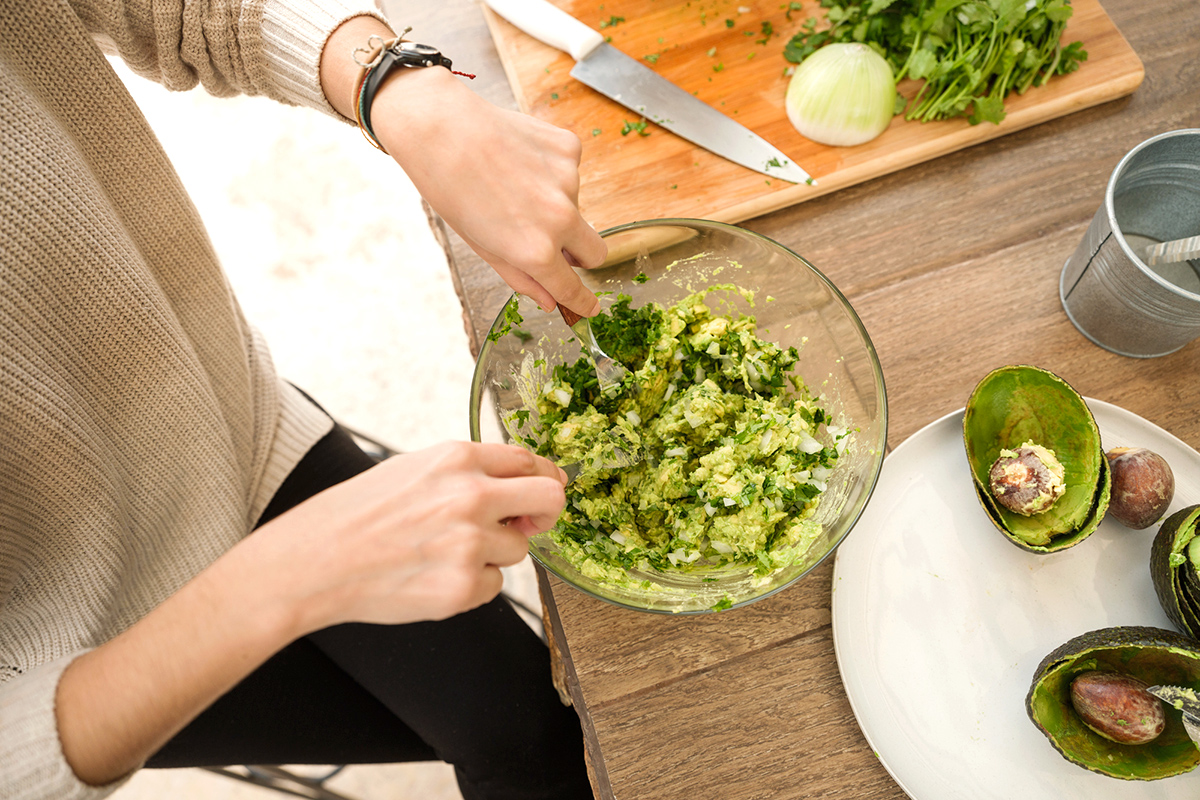
Guacamole is a crowd pleaser in nearly any setting. It can be made in large or small batches, it’s vegan and gluten-free, and it’s packed with healthy fats, fiber, and nutrients. The only real downside is that it’s tricky to make ahead of time. While the dip remains safe to eat for one to three days when properly stored in the refrigerator, it oxidizes within hours, turning an unappetizing brown color. Fortunately, a simple trick preserves guacamole’s bright green hue, even when prepared the day before the big game.

All featured products and deals are selected independently and objectively by the author. House Outlook may receive a share of sales via affiliate links in content.

Guacamole is a crowd pleaser in nearly any setting. It can be made in large or small batches, it’s vegan and gluten-free, and it’s packed with healthy fats, fiber, and nutrients. The only real downside is that it’s tricky to make ahead of time. While the dip remains safe to eat for one to three…

Why Guacamole Turns Brown So Quickly

Avocados (and many other fruits and vegetables) turn brown quickly due to a process called oxidation — essentially, enzymes in the produce chemically react with oxygen in the air. While it’s not harmful to eat oxidized produce, the brown color it produces can be off-putting. Even if you understand the science, it’s hard to get excited about digging into a bowl of guacamole with a sludgy-looking top layer. The problem is the speed of the reaction, as anyone who has left guacamole out for a couple of hours at a party can attest.

Related: Stop Prepping Avocados the Hard Way — Use a Whisk

Keep It Green

Limes offer an easy solution. The citric acid in limes (or lemons, if you prefer) acts as a shield against oxidation, preventing the dip from turning brown. You can achieve this easily — and in an aesthetically pleasing way — by layering thin, round lime slices over your guacamole before covering the bowl with plastic wrap and storing it in the refrigerator.

Advertisement

Since most guacamole recipes already call for lime juice, this won’t interfere with the flavor profile. If you’re a citrus lover, you can squeeze some extra juice over the top first for additional protection.

Bonus Hack: Speed Up Avocado Ripening With a Paper Bag

Need your avocados to soften up quickly? Place them in a paper bag with an apple or a ripe banana. The ethylene gas released by these fruits will be trapped in the bag, speeding up the ripening process. While they won’t achieve instant ripeness, this trick can shave days off the wait. Just check the bag once a day to make sure the avocados don’t overripen.

Advertisement
Advertisement
Decorating 3m read
975

The 3-4-5 Rule Makes Decorating Way Less Stressful

Decorating a living space isn’t as simple as it sounds. From choosing paint colors and furniture you’ll love for years to come to narrowing down upholstery patterns and meaningful accents, the process can quickly become overwhelming — no matter how many design magazines you flip through or Pinterest boards you create. Even when you’re confident in your personal style, pulling a room together can feel like a risky (and expensive) guessing game.

Decorating a living space isn’t as simple as it sounds. From choosing paint colors and furniture you’ll love for years to come to narrowing down upholstery patterns and meaningful accents, the process can quickly become overwhelming — no matter how many design magazines you flip through or Pinterest boards you create. Even when you’re confident…

Interior designer Nancy Cavaliere relies on a clever, easy-to-follow “3-4-5 rule” for decorating. This simple formula — three patterns, four style influences, and five colors or textures — brings clarity to the chaos of design, helping to create a layered, personality-filled space. Think of it less as a rigid rule and more like a recipe that’s hard to mess up.

Without a framework like the 3-4-5 rule, a room can feel unintentionally random or, conversely, overly matchy-matchy. This approach helps you strike the perfect balance, resulting in a space that feels thoughtfully collected over time, rather than forced or overdesigned.

Related: The Interior Design Trends Set To Take Over in 2026

What Is the 3-4-5 Rule?

Cavaliere’s formula is straightforward. To her, a well-designed space should feature three patterns, four style influences, and five colors or textures. Together, these elements serve as the foundation for a creative, confidence-boosting design.

Advertisement

Three patterns: Whether you opt for striped drapery, floral wallpaper, or a zebra-print rug, patterns add movement and energy. The secret is varying the scale and mood of each pattern (so, avoid pairing two small-scale florals), while connecting them through a shared color palette or overall vibe.

Four style influences: This layer grounds a space with character and a sense of history. Instead of committing to a single style, mix pieces that nod to different design eras. For example, pair a contemporary minimalist sofa with a mid-century modern accent chair and a traditional floor lamp. The result feels curated and personal — not like a “room-in-a-box” bought in a single afternoon.

Five colors or texture: A variety of tones and textures ensures a space feels layered, not flat. You can incorporate these through paint, upholstery, and finishes. Don’t underestimate the power of texture, either; bouclé, velvet, wood, stone, and metal all count toward your total. Textures add depth and a tactile quality that makes an ordinary room feel like a place where you can kick up your feet and stay awhile.

Advertisement
Featured Image Credit:  Alex Tyson/ Unsplash | Updated  Jan 27, 2026 |
Megan McCarty
Writer
Megan McCarty is a Los Angeles-based writer who covers the fun stuff: design, travel, wellness, beauty, and fashion. She has written for publications including Domino, The Spruce, MyDomaine, Bustle, and Rue Magazine. Her life rules include, but are not limited to, zipper when merging, contribute to your IRA, and do the nice thing.
This article is for general informational purposes only.
Featured Image Credit:  Alex Tyson/ Unsplash | Updated  Jan 27, 2026 |
Advertisement
Cleaning 2m read
477

Your Blender Can Actually Clean Itself

Few kitchen appliances rival the sheer versatility of a blender. It can help you whip up soups, sauces, smoothies, and frozen cocktails in seconds, yet the cleanup is often so much of a hassle that many opt to keep it tucked away in the cupboard. Fortunately, there’s a simple hack to get the pitcher and blades spotless in under a minute — no scrubbing required.

All featured products and deals are selected independently and objectively by the author. House Outlook may receive a share of sales via affiliate links in content.

Few kitchen appliances rival the sheer versatility of a blender. It can help you whip up soups, sauces, smoothies, and frozen cocktails in seconds, yet the cleanup is often so much of a hassle that many opt to keep it tucked away in the cupboard. Fortunately, there’s a simple hack to get the pitcher and…

Scrub-Free Suds

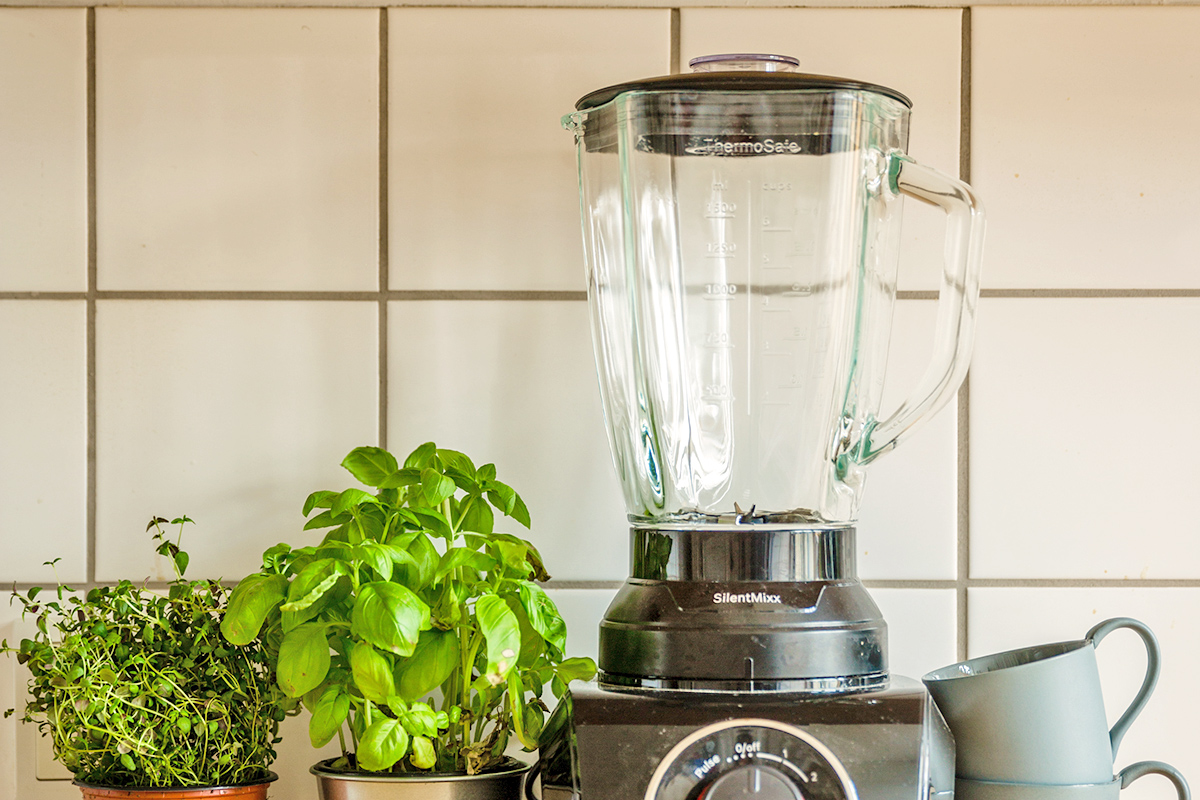
Turning a blender into a self-cleaning machine is as easy as flipping a switch. Instead of scrubbing it by hand and risking a cut from the sharp blades, try this method: Fill your blender halfway with warm water and add a few drops of dish soap. Turn it on high speed for 30 to 60 seconds, allowing the blades to swirl the soapy water around. (Some models have preprogrammed cleaning settings with pulsating rhythms to scrub away stubborn messes.) This vortex will get soap into every corner and under the blades without you having to take the whole thing apart.

Take It to the Next Level

You don’t have to take your blender apart to get a deep clean, but a few simple steps can make this 30-second hack even more effective. First, rinse out as much residue as possible; this will give the water and soap less grime to cut through. Using hot water will also help loosen up any stuck-on food. Most importantly, clean the blender immediately after use to prevent the remnants from drying and hardening.

Advertisement
Related: The Easy Way To Remove Stubborn Cooktop Stains

For particularly stubborn buildup, drop half a lemon (even a squeezed-out one) into the soapy mixture. The citric acid in the juice and the oils in the peel are natural degreasers that help break down fats and neutralize odors. It’s an easy way to boost the cleaning power of this hack while leaving your kitchen with a fresh, citrus scent.

Advertisement
Advertisement
Home Improvement 2m read
487

Stop Storing Loose Batteries in the Junk Drawer

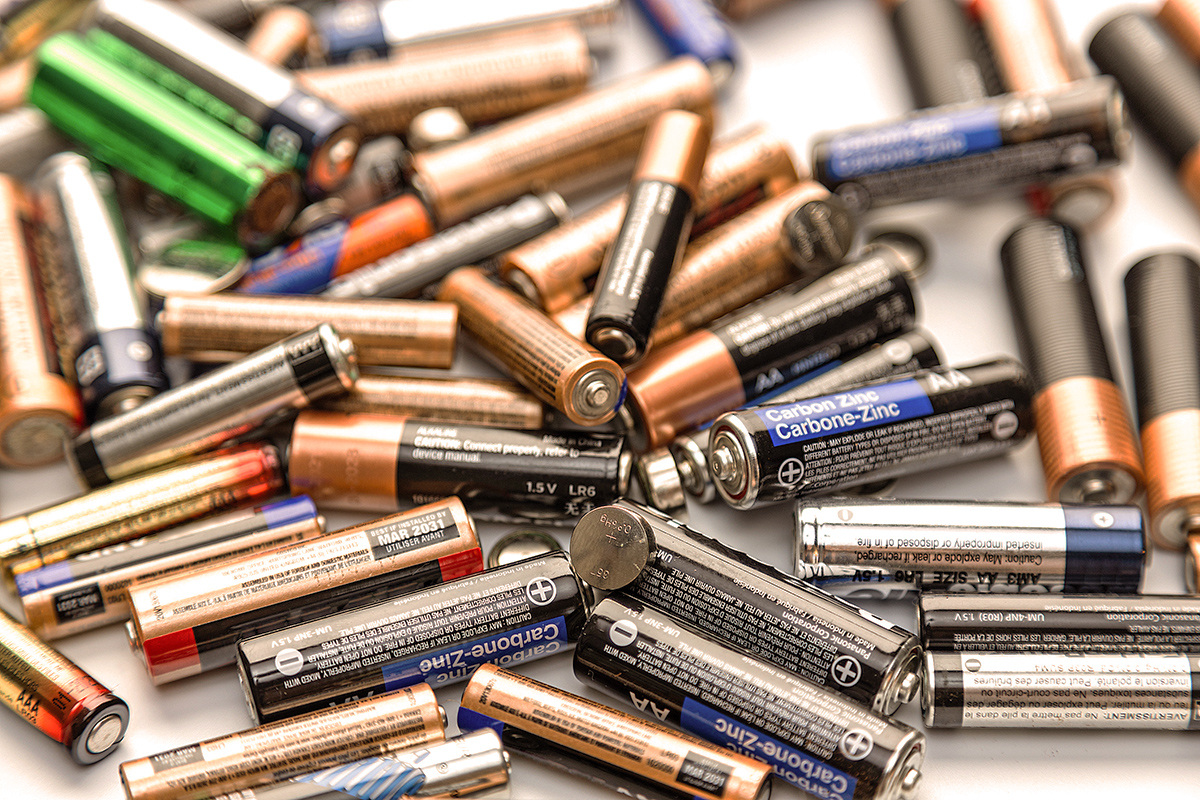
Junk drawers might as well be called battery cabinets, as they’re the most common place to store loose AAs, AAAs, and 9-volts. But despite how convenient it is, this habit is potentially hazardous. While a fire is a rare occurrence, a battery that comes into contact with other metal objects in a junk drawer can short-circuit and ignite. Here’s what to know about the risks of loose battery storage, along with safer alternatives to consider.

All featured products and deals are selected independently and objectively by the author. House Outlook may receive a share of sales via affiliate links in content.

Junk drawers might as well be called battery cabinets, as they’re the most common place to store loose AAs, AAAs, and 9-volts. But despite how convenient it is, this habit is potentially hazardous. While a fire is a rare occurrence, a battery that comes into contact with other metal objects in a junk drawer can…

A Potential Fire Hazard

In addition to batteries, many junk drawers contain conductive metal objects such as keys, coins, and paperclips. If any of those objects touch the positive and negative terminals of a battery at the same time, a short circuit can occur. While the risk is lower for AAs and AAAs — since their terminals are on opposite ends — it’s much higher for 9-volt batteries, where the terminals are located side by side on the same end.

When a battery short-circuits, its stored energy discharges rapidly, which causes internal heating. If this overheated battery comes into contact with a piece of paper (e.g., a notepad, instruction manual, etc.), it may cause the material to ignite. Again, while this is rare, the fire hazard is very real and entirely preventable.

Furthermore, storing loose batteries in a junk drawer may cause them to roll around and bump into each other, which can degrade their outer casings over time. The worse this damage gets, the more likely the battery is to leak chemicals, which can damage or corrode the drawer itself.

Advertisement

Other Storage Methods

Instead of storing loose batteries in a junk drawer, consider using a dedicated battery organizer. These compact, affordable containers keep batteries secure and separated, which helps prevent leaks and extends their shelf life.

Related: Want To Know If a Battery’s Dead? Do This

Another option is to cover the exposed terminals with electrical tape. While this doesn’t protect the outer casings from damage, it does protect the terminals from coming into contact with other metal objects, reducing the risk of a fire hazard.

Advertisement
Featured Image Credit:  Ion Graur/ iStock | Updated  Feb 2, 2026 |
Bennett Kleinman
Staff Writer
Bennett Kleinman is a New York City-based staff writer for Inbox Studio, covering topics for several brands including House Outlook and Better Report. He previously contributed to television programs such as "Late Show With David Letterman" and "Impractical Jokers," and digital publications like The Onion. Bennett is also a devoted New York Yankees and New Jersey Devils fan, and thinks plain seltzer is the best drink ever invented.
This article is for general informational purposes only.
Featured Image Credit:  Ion Graur/ iStock | Updated  Feb 2, 2026 |
Advertisement
Food & Drink 3m read
2,321

Why You Should Freeze Bread Before You Eat It

Low-carb diets have deeper roots than you might imagine. In the late 19th century — nearly 150 years ago — Union Army doctor James Salisbury (yes, the Salisbury steak guy) became convinced that a meat-heavy diet was the healthiest way to live. Other diets, such as Atkins and Paleo, revolve around a similar theory, and while they aren’t as trendy as they used to be, many of us still pay close attention to our carbohydrate intake.

Low-carb diets have deeper roots than you might imagine. In the late 19th century — nearly 150 years ago — Union Army doctor James Salisbury (yes, the Salisbury steak guy) became convinced that a meat-heavy diet was the healthiest way to live. Other diets, such as Atkins and Paleo, revolve around a similar theory, and while…

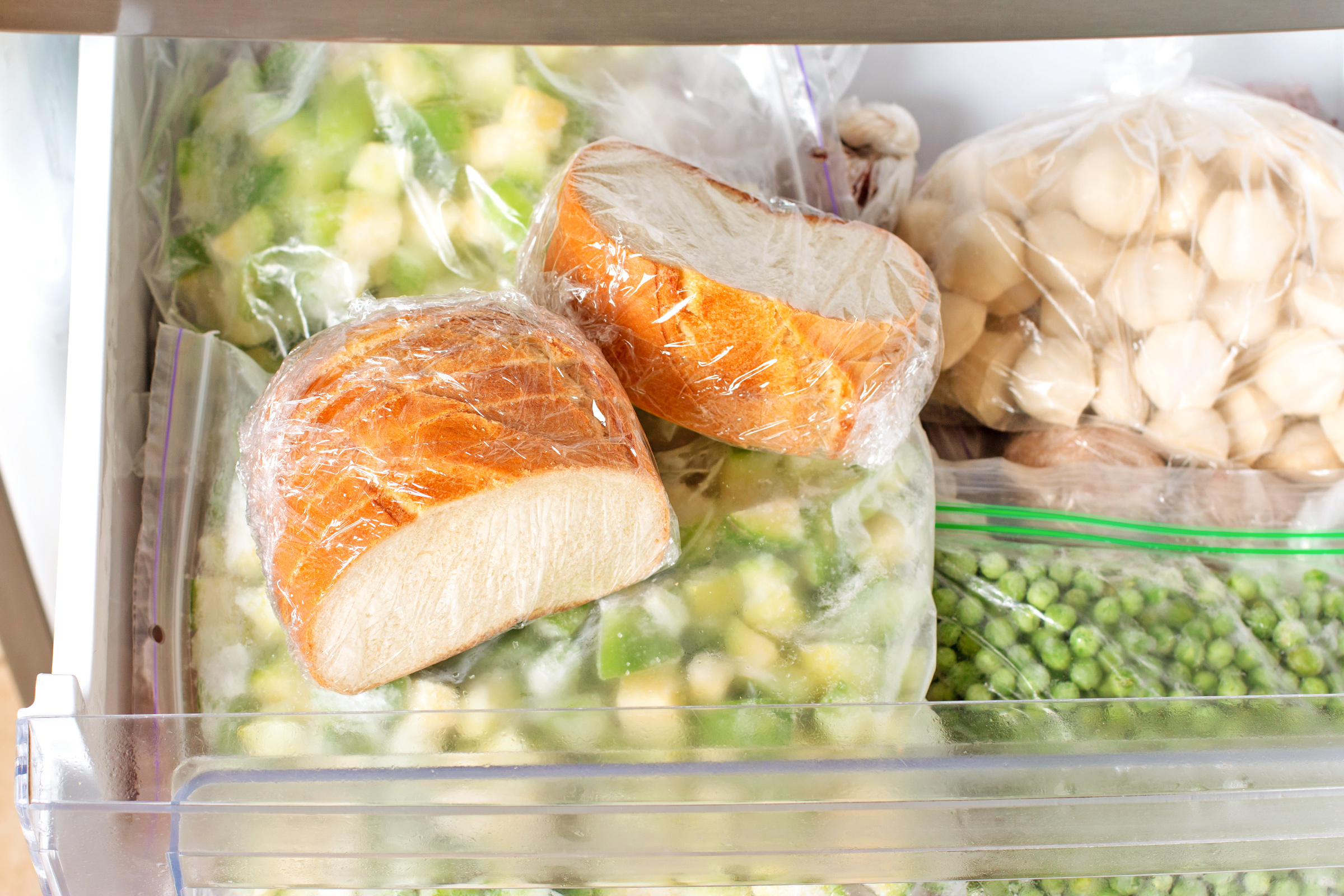
Why? Because quickly digested carbs can cause blood sugar spikes that are dangerous for diabetics and can leave the rest of us feeling sluggish. That’s unfortunate news for bread lovers — especially fans of white bread, which is the classic example of a high-glycemic index (GI) food. But there’s a silver lining: It turns out that freezing bread can actually lower its GI. Here’s the science behind how it works.

Why Freezing Bread Lowers Its GI

The starches in flour are complicated tangles of simple sugars, but our bodies are good at “untying” those knots and turning them back into glucose. This is why your blood sugar spikes after eating bread. So, how does freezing come into the picture? Well, when you bake bread, heating the dough turns those starches soft and gel-like. That’s why a loaf fresh from the oven feels a bit doughy even when it’s perfectly baked. As it cools, the bread loses its doughy texture but stays soft.

Related: The Best Costco Finds To Stock Your Freezer With

But when you freeze that bread, you force the starches to change their structure. They recrystallize into a firmer, more stable form through a process called “retrogradation.” In this new form, the starches resist your body’s attempts to break them down into sugars, which slows their absorption into your bloodstream. These are referred to as “resistant starches.”

Advertisement

How Resistant Starches Change Your Bread

There is a slight catch: Retrogradation makes the bread lose some of its softness and it may feel a bit drier in your mouth. If you’re using it in sandwiches, for example, you’ll want to freshen it up just as you would with stale bread. Toasting it is even better. Not only does it mask the textural change, but a study out of England found that toasting frozen bread actually reduces its GI even further.

Most of us know that fiber is good for gut health. The cool thing about resistant starches is that once they reach your gut, they act much like the heart-healthy soluble fiber found in oats and beans. They’re classified as prebiotics, meaning they’re food for the probiotic microbes in your digestive system. So, while freezing won’t turn bread into a superfood, it does lessen the loaf’s glycemic impact.

Advertisement
Featured Image Credit:  qwartm/ Adobe Stock | Updated  Jan 27, 2026 |
Fred Decker
Writer
Fred Decker is a trained chef and former restaurateur. Since closing his restaurants over a decade ago he has been a prolific freelance writer, publishing several thousand articles on dozens of high-volume websites including Taste Of Home, Hunker, Tasting Table, Week&, eHow, and GOBankingRates. He lives on a rural acreage shared with a big garden, chickens, rabbits, and grandkids.
This article is for general informational purposes only.
Featured Image Credit:  qwartm/ Adobe Stock | Updated  Jan 27, 2026 |