Flush This Viral Trend
The active ingredients in commercial grout cleaners — such as bleach, peroxide, and acids — are often the same as those found in toilet bowl cleaners. That’s why using a thick toilet gel to whiten grout lines went viral in the first place. Although these clinging gels seem ideal for keeping cleaning chemicals in contact with vertical wall tiles, toilet bowl cleaners can actually ruin standard, porous cement grout.
The two most common toilet bowl cleaners used in this hack are Zep Acidic Toilet Bowl Cleaner and Clorox Toilet Bowl Cleaner With Bleach. The first product relies on hydrochloric acid, which lifts stains in minutes but will erode, dissolve, and crumble cement grout. For this reason, it should be used only on chemical-resistant epoxy grout.
Bleach-based options like Clorox Toilet Bowl Cleaner With Bleach contain sodium hydroxide (aka lye) to keep the bleach stable and thick. Its high pH level eats away at cement binders over time, strips away protective sealers, and leaves behind a sticky residue that can attract more dirt.
While bleach-free and acid-free toilet bowl cleaners exist, they lack the whitening power needed to revitalize stained grout.
More from our network
House Outlook is part of Inbox Studio, which publishes content that uplifts, informs, and inspires.



How To Whiten Grout Safely
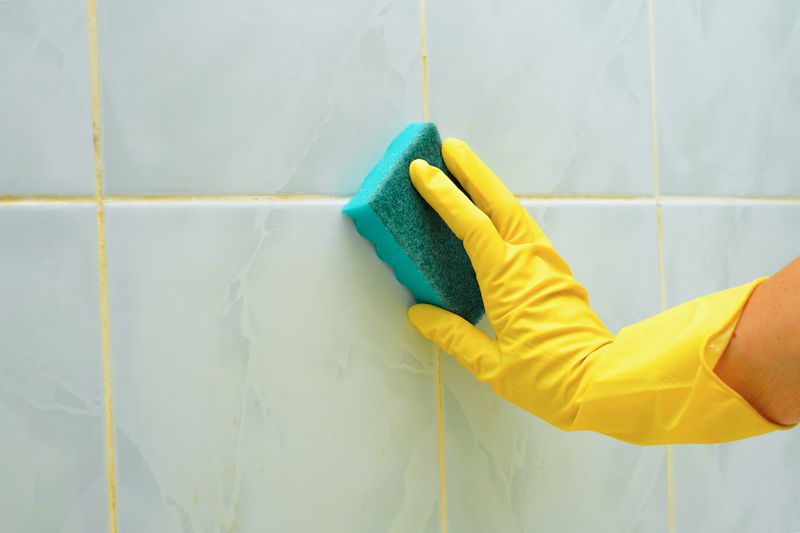
To maintain your grout lines safely, skip the harsh chemicals and scrub them regularly (every two to four weeks) using a thick paste of two parts baking soda to one part 3% hydrogen peroxide. Let it sit on the grout lines for 10 to 15 minutes before scrubbing with an old toothbrush or an electric spin scrubber. Once you’re satisfied with the results, rinse away the paste with warm water. Making this task a part of your monthly deep-cleaning routine will lift everyday discoloration and keep your grout looking fresh.
To prevent the grout stains from forming in the first place, you need to keep the lines dry and free of dirt. One simple, if slightly tedious, habit is to wipe down your tiles whenever they get wet. Take a dry hand towel to the shower walls after a rinse, or run a bath towel over the floor after you mop. Running an oscillating fan or keeping your overhead exhaust fan on after a steamy shower will also speed up the drying process.