Knife Sharpening in a Pinch
Don’t have a knife sharpener in your kitchen? Don’t be so sure. You likely have a small sharpening stone, or several, hiding beneath drinkware you use every day.
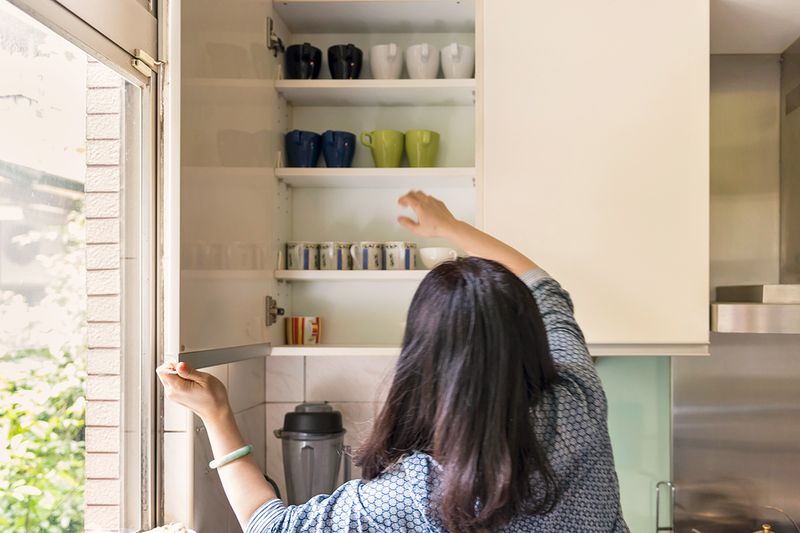
Many ceramic dishes — including coffee mugs — are crafted with a raised, unglazed ring around the bottom to prevent them from sticking to the shelves of the kiln during firing. These “foot rings” also eliminate wobbling and provide thermal insulation, keeping the food or drink warm for longer and creating a buffer between the heat and the countertop.
This often-overlooked detail can function as a makeshift knife sharpener in a pinch because nearly all unglazed ceramics have a higher hardness rating than hardened steel. (We’ll explain how to confirm that your ceramic is indeed harder than steel in the next section.)
To identify a foot ring, flip over a ceramic coffee mug, plate, or bowl and look for the thin, unglazed circle. It’s not glossy, but rather grainy and abrasive. Use your thumb to feel for the grittier texture compared to the shiny surface of the rest of your dish. A coffee mug works best for this hack, although you can also use a dinner plate.
More from our network
House Outlook is part of Inbox Studio, which publishes content that uplifts, informs, and inspires.



How To Get Clean Cuts With a Coffee Mug
To sharpen your knife this way, turn your ceramic coffee mug upside down and rest it on a flat, sturdy surface. You may want to place a damp cloth underneath it for added stability. Holding the knife by the handle, position the cutting edge of the blade at a 15- to 20-degree angle against the unglazed ring. Applying light pressure, smoothly sweep the blade across the ring, working from the heel to the tip while maintaining the angle. If you notice a dark gray or black smudge mark, this proves that the ceramic is harder than your knife and will successfully sharpen it.
Run the knife blade along the foot ring 10 to 15 times on one side, then do the same number of strokes on the other to keep the edge centered. (This method sharpens and hones your blade simultaneously.) Finally, clean and dry your knife to get rid of any metal shavings.
Tips and Cautions
Don’t rely on this trick for all of your knife-sharpening needs. If you’re staying at an Airbnb with dull, cheap IKEA knives, go right ahead, but avoid using it to sharpen your nice, expensive cutlery. It’s best to use a chef’s knife (or something smaller) and stick to standard steel materials, such as carbon steel or stainless steel. Don’t attempt this hack with ceramic, super steel, Damascus steel, or titanium knives.
Whetstones, such as this one from Sharp Premium, are constructed with varying grit sizes to ensure the sharpest blade and the safest process, for both you and your knife. These can be used with premium knives but require some skill and practice. For extra-safe sharpening, tools like the KITCHELLENCE Three-Stage Knife Sharpener come with a cut-resistant glove. Pull-through manual sharpeners such as this one are generally not recommended for high-quality knives, but if you have an inexpensive set, they can promote cleaner cuts and safer usage.