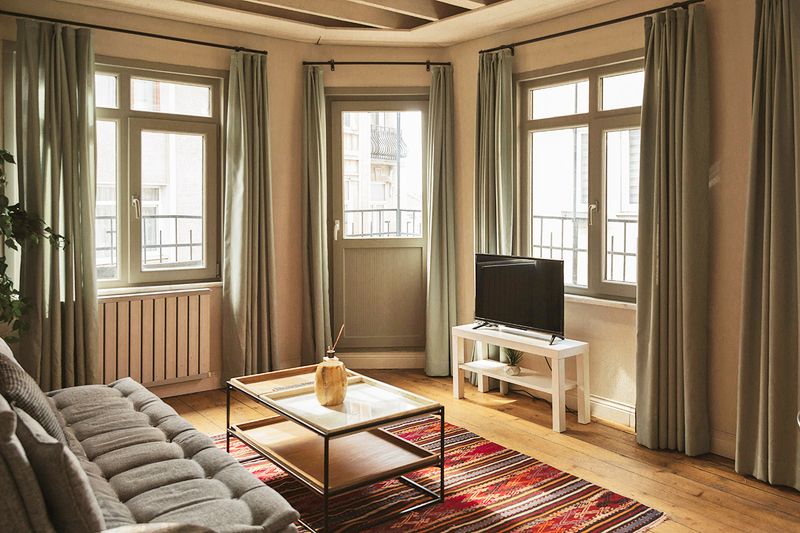
Blackout Curtains Block More Than Light
Blackout curtains are made with a tightly woven, opaque fabric — often with a foam or thermal lining — designed to block sunlight from passing through. Sunlight streaming through a window doesn’t just brighten a room; it also transfers heat indoors. This is called solar heat gain, and on a hot, sunny day it can raise the temperature of a room significantly, upwards of 10 to 15 degrees Fahrenheit. Blackout curtains act as a barrier, reflecting or absorbing that radiant heat before it has a chance to warm your interior. Those with light-colored backings or thermal linings will reflect radiant heat, making them the best option for keeping rooms cool.
How Much of a Difference Do They Make?
According to the U.S. Department of Energy, medium-colored blackout curtains with white plastic backings can reduce solar heat gain through windows by as much as 33%. In rooms with south- or west-facing windows, which catch the most intense afternoon sun, the effect is especially noticeable. Close the curtains before direct sunlight hits the windows — or, more broadly, between 10 a.m. and 4 p.m. — and you’ll benefit from cooler indoor temperatures.
They Support Your Air Conditioner, But Don’t Replace It
Think of blackout curtains as a helper for your cooling system. By limiting the amount of heat entering your home, they reduce the workload on your air conditioner. That means your AC won’t have to run as long or as often to maintain your ideal temperature, which can help lower energy costs throughout the summer.
What To Shop For
Not all blackout curtains are created equal. Shop for options with a white or light-colored backing, which reflects sunlight more effectively than a dark backing. A snug fit matters too. Curtains that hang close to the wall and extend past the edges of the window frame will block more light and heat than those with gaps around the sides. Opting for a French return curtain rod can also help block more light, as they curve backward to touch the wall.
• TWOPAGES Liz Linen Custom Curtain Customizable-Size Blackout Curtain
More from our network
House Outlook is part of Inbox Studio, which publishes content that uplifts, informs, and inspires.