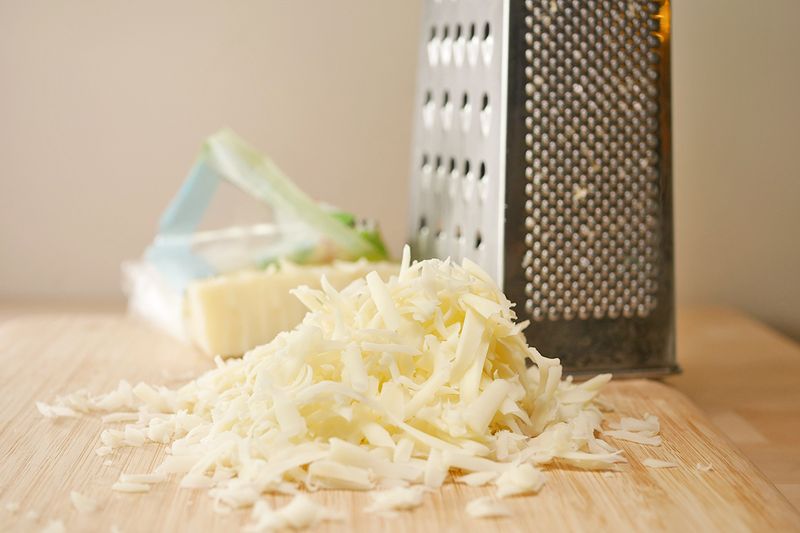
Freezing Cheese Keeps It Fresh for Months
If you went hog-wild at your favorite fromagerie — or just got a really good deal on extra sharp cheddar at the supermarket — freezing is a great way to save some of it for later. This is especially helpful for shredded cheese, because all that exposed surface area makes it especially vulnerable to mold spores.
The preservation process is simple. Unopened, factory-sealed cheese can go straight into the freezer in its original packaging. If you’re dealing with opened cheese, wrap it tightly in plastic wrap or — better yet, especially for shredded varieties — store it inside a vacuum-sealed bag. Label and date your package, then place the plastic-wrapped cheese into a sturdy freezer bag or an airtight, freezer-safe container. Keeping all of your frozen cheeses in a single bag or container will ensure nothing gets lost in the back of the freezer.
It’s Not Forever, and Not All Cheeses Freeze Well
Freezing cheese will technically keep it edible indefinitely, but “edible” and “enjoyable” aren’t the same thing. In practice, it’s best used within two to three months, and six months is about the outside limit — though you’ll get a bit more time with vacuum-sealed cheese. Its texture will change slightly, turning a bit crumblier, but it will taste just fine.
Another key detail is that some cheeses freeze much better than others. Moisture content is your surest guide here. Hard and semihard cheeses have a relatively low moisture content, so freezing doesn’t affect them too badly. Soft and fresh cheeses are wetter and freeze poorly.
More from our network
House Outlook is part of Inbox Studio, which publishes content that uplifts, informs, and inspires.



Good options: Parmesan and other hard grating cheeses, cheddar, low-moisture mozzarella, Monterey Jack, feta, and most blue cheeses.
Bad options: Cream cheese, brie, Camembert, burrata, mascarpone, ricotta, cottage cheese, queso fresco, and fresh goat cheese.
You may find it useful to freeze cheese in single-use portions, so you can pull out just as much as you need at a time. For the best results, thaw your portion overnight in the fridge before using.