Advertisement
Gardening 3m read
364

Place Your Humidifier Here for Healthier Plants

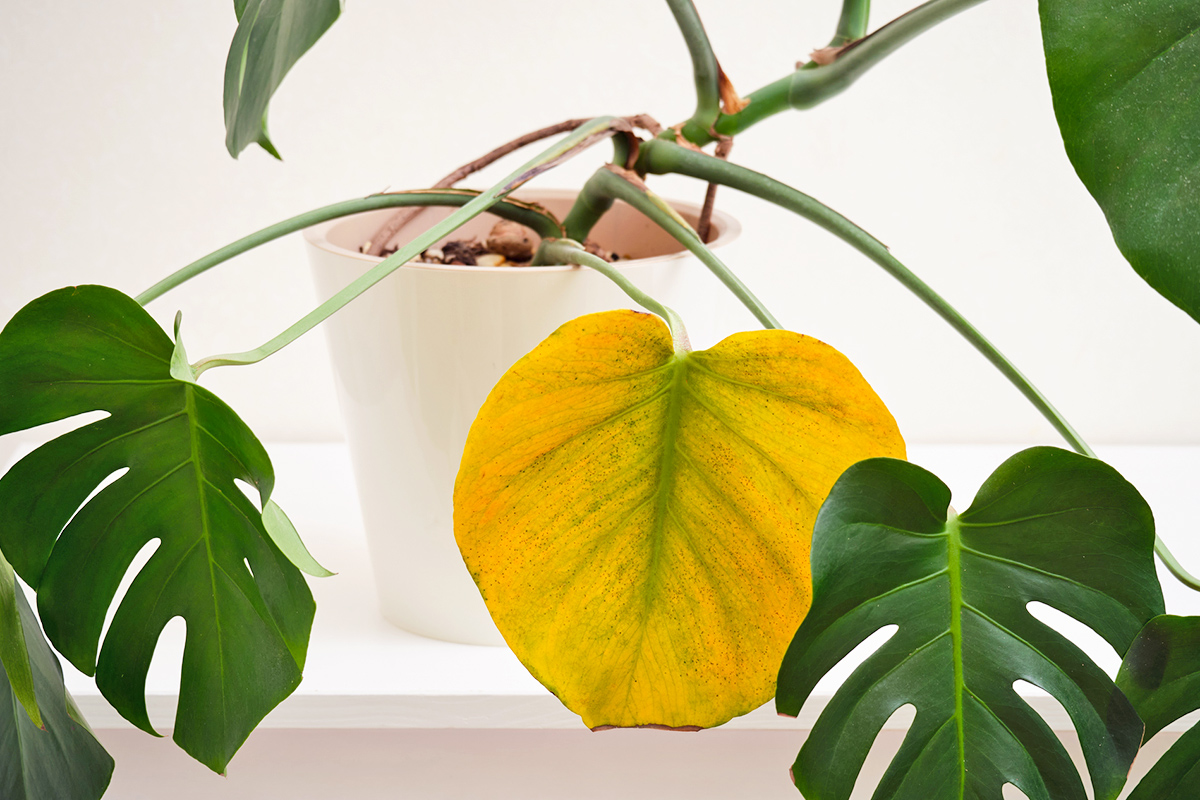
Most houseplants originate from the tropics, where the air is thick with heat and humidity. The air inside our homes, however, is quite the opposite — temperate and dry, especially in the winter. If you want your greenery to flourish, consider bringing a humidifier into the mix. It’s the easiest way to mimic the moisture-rich conditions of a greenhouse (or rainforest). A basic humidifier will keep your plants happy and thriving, but success hinges on finding the perfect position.

All featured products and deals are selected independently and objectively by the author. House Outlook may receive a share of sales via affiliate links in content.

Most houseplants originate from the tropics, where the air is thick with heat and humidity. The air inside our homes, however, is quite the opposite — temperate and dry, especially in the winter. If you want your greenery to flourish, consider bringing a humidifier into the mix. It’s the easiest way to mimic the moisture-rich…

How To Turn Any Room Into a Greenhouse

You wouldn’t want to turn your spare bedroom into a literal greenhouse, but you can easily recreate the humid microclimate of one using a humidifier. To get this right, you need to nail the timing and placement. Humidifiers should be run in the morning for around five hours to create the most humid conditions possible without overwhelming your plants. The sunlight coming through your windows will encourage any excess moisture to evaporate, reducing the risk of fungus growing on the stems and leaves. Setting your device to 50% to 60% humidity is the sweet spot for keeping plants healthy and hydrated.

Related: 20 Essential Hacks Every Plant Parent Needs To Know

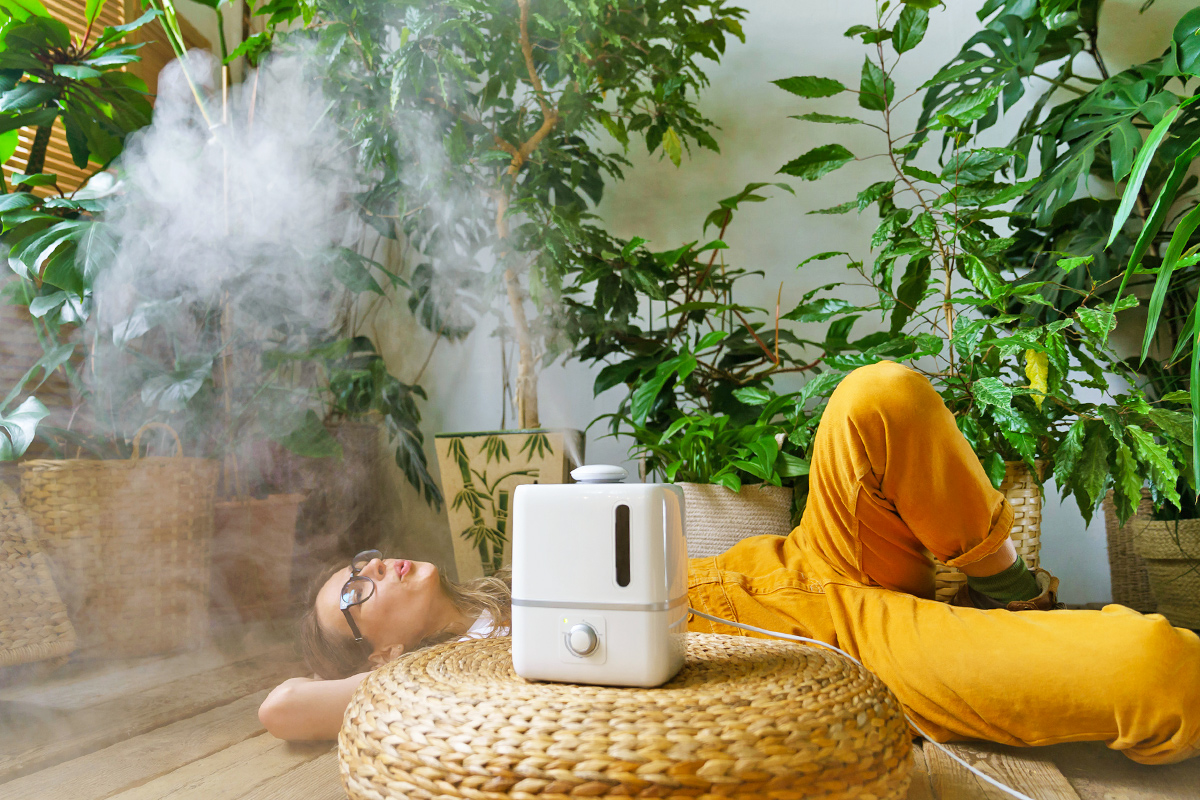
The next thing to consider is where to put your humidifier. The best way to mimic the sticky air of a greenhouse is to place your humidifier in the center of the room, away from walls and windows, and 2 to 4 feet from your plants. Aim the stream of steam toward the air near the plants, never shooting it directly at them. You can raise the humidifier to plant height or keep it just below, as the mist will rise and circulate through the space. Opt for cool-mist over warm-mist humidifiers — the latter could potentially cause fungal disease or stress your plants with excess warmth.

Advertisement

Plants That Thrive in Humidity

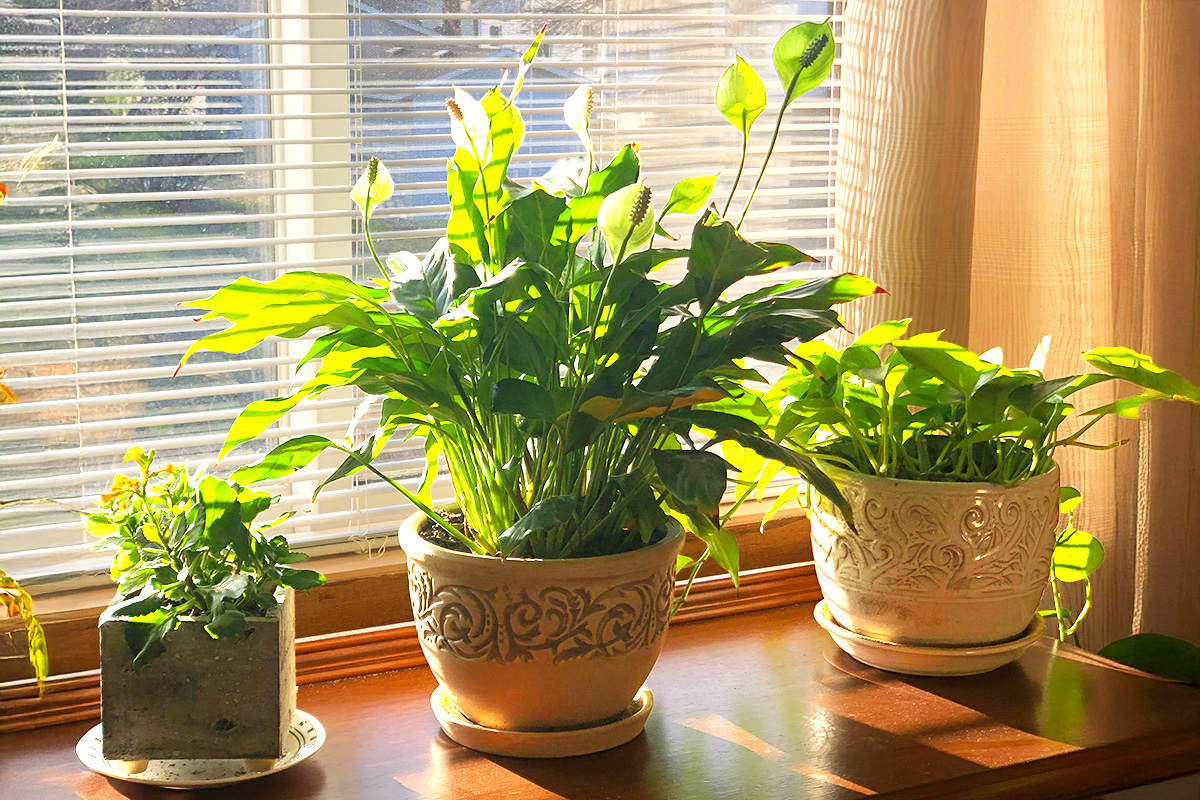
Certain plants will do better in humid conditions than others, and knowing what your plant needs is key to giving it the best quality of life. Generally, plants that love humidity include ferns, spider plants, peace lilies, monsteras, and many palm varieties. If you’re unsure what your plant needs, check online, consult your local plant store, or research the natural conditions it thrives in in the wild. For example, since ferns live near the ground in dense, low-light forests, they’ll appreciate less sun and more humidity indoors.

You won’t need to create hot and sticky conditions for plants that do perfectly fine in dry settings. If you have cacti, succulents, aloe vera, snake plants, and certain pothos varieties, simply keep them on a regular watering schedule and give them plenty of access to sunlight.

Advertisement
Advertisement
Home Improvement 3m read
393

Stabilize Wobbly Furniture With These Easy Fixes

Realizing your chair or table is wobbly is maddening — especially if you’re in the middle of a meal. But this pesky problem doesn’t mean you need to go out and buy a whole new furniture set. There are easy fixes for wobbly furniture legs, and most of them are free or ultra-cheap.

All featured products and deals are selected independently and objectively by the author. House Outlook may receive a share of sales via affiliate links in content.

Realizing your chair or table is wobbly is maddening — especially if you’re in the middle of a meal. But this pesky problem doesn’t mean you need to go out and buy a whole new furniture set. There are easy fixes for wobbly furniture legs, and most of them are free or ultra-cheap.

A quick note before you begin: First, check to make sure your floor isn’t uneven. You can do this by moving the furniture around (if possible) and checking if it still feels unstable after being relocated. If moving the furniture does fix the issue, the culprit is most likely your floor, and you’ll need to contact a flooring professional. If you determine that the issue is the furniture itself and not the floor, here are three easy ways to wrangle the wobble.

1. Tighten the Hardware

Loose hardware is one of the most overlooked furniture issues, and yet it’s one of the most easily fixed. Check the screws on your furniture legs — do any of them feel loose? If the wobble is slight, you can most likely tighten the screws using a screwdriver. If the wobble is more pronounced, however, you may need to bust out the cordless drill and use a drill bit and epoxy to secure the screws.

2. Add Furniture Pads

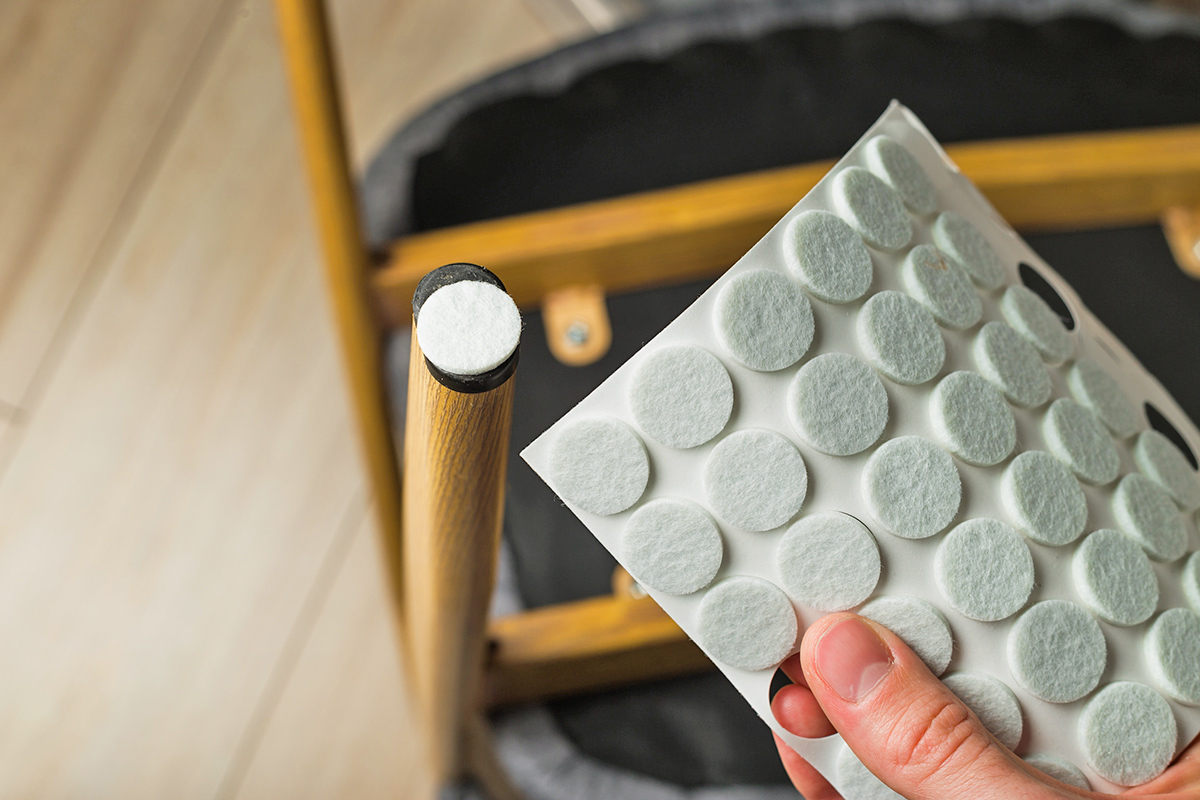
Furniture pads do double duty: They save your floors from scratches and they provide some much-needed stability to wobbly furniture legs. Ideally, you want pads on all of your furniture’s legs to protect your floor. But if scratching isn’t an issue, you can add a furniture pad to only the wobbly leg. You can also try adding pads to all nonwobbly legs, and two to three pads to the wobbly leg. Experiment with different numbers of pads to determine which combination yields the most stable results.

Advertisement
Related: 3 Ways To Make Sticky Drawers Slide Again

3. Use a Slice of Cork

Opt for this easy hack if you have extra wine corks lying around. Gently lift the wobbly leg until the whole piece of furniture is level. Now, measure the distance between the bottom of the wobbly leg and the floor. (If the gap is too small to measure, estimate the thickness with your fingers.) Next, use a utility knife or similar sharp knife to slice off a thin cork disc that is the same thickness as the gap you measured. Use wood glue or hot glue to attach the cork disc to the bottom of the furniture leg. Note: While both natural and synthetic corks work for this fix, a natural cork will degrade faster.

Advertisement
Advertisement
Decorating 4m read
255

Pantone’s Color of the Year for 2026 Is Its Most Divisive Yet

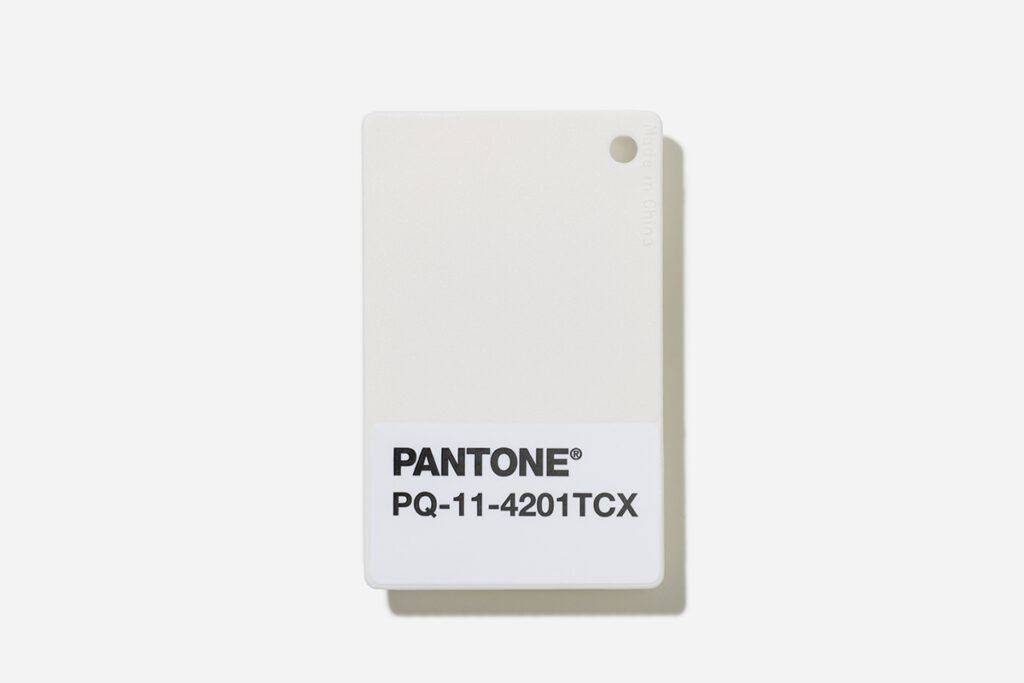
For the first time in its 27-year history of trend forecasting, Pantone has chosen a shade of white as its Color of the Year. The global authority on color announced its 2026 selection on December 4: PANTONE 11-4201 Cloud Dancer, a hue with both warm and cool undertones, described as “a billowy white imbued with a feeling of serenity.”

All featured products and deals are selected independently and objectively by the author. House Outlook may receive a share of sales via affiliate links in content.

For the first time in its 27-year history of trend forecasting, Pantone has chosen a shade of white as its Color of the Year. The global authority on color announced its 2026 selection on December 4: PANTONE 11-4201 Cloud Dancer, a hue with both warm and cool undertones, described as “a billowy white imbued with…

Credit: Image courtesy of Pantone

According to Laurie Pressman, vice president of the Pantone Color Institute, Cloud Dancer is meant to represent a “blank canvas” and “our desire for a fresh start.” To bring this concept to life, the institute is spotlighting several artists throughout the year, challenging each to interpret the Color of the Year through limited-edition works.

The noise of the world around us — from the news and social media to the fast-paced nature of daily life — was central to the institute’s decision. As Pantone Color Institute executive director Leatrice Eiseman shared, Cloud Dancer, in its near-absence of pigments, is a “conscious statement of simplification” that invites us to quiet our minds, hone our creativity, and free ourselves “from the distraction of external influences.” 

Advertisement
Credit: Image courtesy of Pantone

Is this choice deliberate escapism from politics, AI, economic uncertainty, cultural ennui? Pantone doesn’t say. But it has sparked quite a debate on the internet. The Daily Beast declared, “Pantone’s Color of the Year Isn’t Really a Color,” while Fast Company dubbed the pick “visual tofu.” Homes and Gardens took a gentler approach, calling the color “remarkably versatile,” and Veranda maintained that, at the very least, “white will never go out of style.”

As someone who has been on the interior design beat for over a decade, I find Cloud Dancer to be contradictory to our current moment. We were just getting over our cultural obsession with all-white kitchens, white shiplap, white bouclé fabric, and white cloud sofas. I’m not ready to go backward; I was thoroughly enjoying the maximalist, personality-filled, color-drenched interiors of 2025. However, I do think there’s a way to lean into Cloud Dance without sacrificing character and individuality or going fully beige and bland.

Advertisement
Credit: Image courtesy of Pantone

The institute has some ideas for how Cloud Dancer might be expressed in home decor and interior design, noting that the color “[builds] atmospheres of serenity and spaciousness,” whether woven into a space through furniture or painted onto walls. They encourage using Cloud Dancer to introduce “a spa-like feeling into bathrooms and an open and spacious feeling in the kitchen.” Indeed, a splash of light-reflecting white paint can make a space appear larger, and crisp white bedding feels restful and timeless. But to avoid veering into post-Great Recession minimalism territory, we’d suggest using Cloud Dancer for strategic balance and contrast. 

You can still go wild with bold or moody wall colors, but temper them with off-white elements, such as a plush armchair or a Carrara marble countertop. This will help even out the visual weight. You can also heighten a room’s contrast with the Pantone Color of the Year: Pair dark cabinetry with a white tile backsplash, or install bright blue built-ins beneath a white ceiling.
Related: 25 Hacks Only Interior Designers Know

With Cloud Dancer as your neutral, grounded base, you are free to experiment with other colors from the six accompanying palettes released by Pantone. These range from soft pastels to shimmery metallics and punchy neons. The palettes are meant to show how adaptable Cloud Dancer can be, whether you prefer your interiors laid-back, energetic, or somewhere in between.

Previous picks for Color of the Year have really hit the nail on the head — last year’s Mocha Mousse instantly became the “it” color in interior design and fashion. It remains to be seen whether Cloud Dancer inspires the same enthusiasm, but there’s likely no need for you to rush out and buy a new throw blanket or marble tray in this “key structural color,” as Pantone puts it. Chances are, your home is quietly infused with this hue already.

Advertisement
Featured Image Credit:  Image courtesy of Pantone | Updated  Dec 5, 2025 |
Kelsey Morrison
Staff Editor
Kelsey Morrison is the Staff Editor of House Outlook. She has been covering all things home-related for over a decade, including real estate, interior design, commerce, and a slew of other lifestyle topics. Kelsey previously worked as a commerce editor for World of Good Brands (eHow.com and Cuteness.com) and as an associate editor for Livabl.com. She describes her personal design style as 1970s ski chalet-chic and has a thing for latch-hook tapestries.
This article is for general informational purposes only.
Featured Image Credit:  Image courtesy of Pantone | Updated  Dec 5, 2025 |
Advertisement
Cleaning 4m read
0

Regrettable Cleaning Decisions That Damage Your Home

We all want a sparkling, fresh home, but sometimes our best cleaning intentions backfire. A scrub here, a spray there, and suddenly you’re staring at a damaged countertop, warped flooring, or a stained appliance. The problem? Cleaning mistakes aren’t always obvious — until it’s too late. Here’s a guide to the most common regrets people experience, broken down by surface, so you can clean smarter and safer.

All featured products and deals are selected independently and objectively by the author. House Outlook may receive a share of sales via affiliate links in content.

We all want a sparkling, fresh home, but sometimes our best cleaning intentions backfire. A scrub here, a spray there, and suddenly you’re staring at a damaged countertop, warped flooring, or a stained appliance. The problem? Cleaning mistakes aren’t always obvious — until it’s too late. Here’s a guide to the most common regrets people experience,…

1. Countertops: Avoid Harsh Chemicals and Abrasives

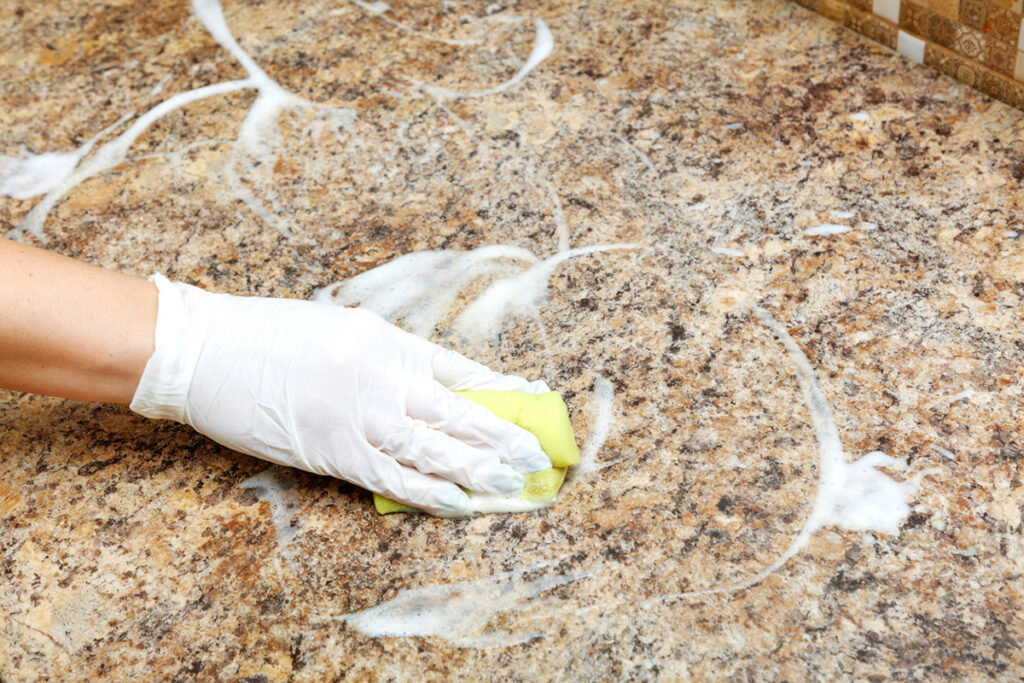
Countertops come in many materials — granite, quartz, laminate, marble — and each reacts differently to cleaning products. A common mistake is using abrasive pads or cleaners intended for tough stains on delicate surfaces. For example, steel wool or scouring powders can scratch stone or dull polished finishes, leaving behind permanent marks. Likewise, acidic cleaners, such as vinegar and lemon juice, can damage natural stone, resulting in a cloudy appearance.

Pro Tip: Stick to mild dish soap and warm water for daily cleaning. For tough stains, choose a product specifically formulated for your countertop material, and always test it in a hidden spot first. A little care now prevents years of regret later.

Credit: schankz/ iStock
Related: 7 Things People Regret Tossing While Decluttering

2. Wood Floors: Skip Excess Water and Harsh Scrubbing

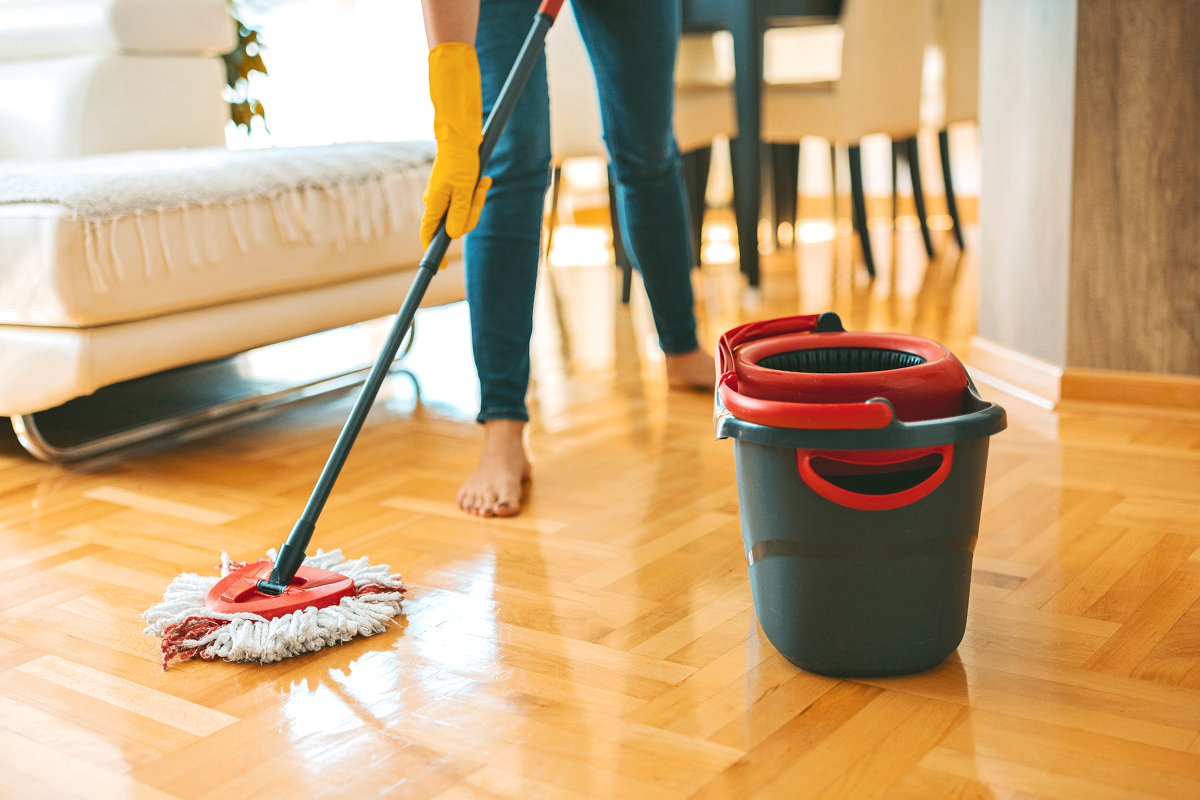
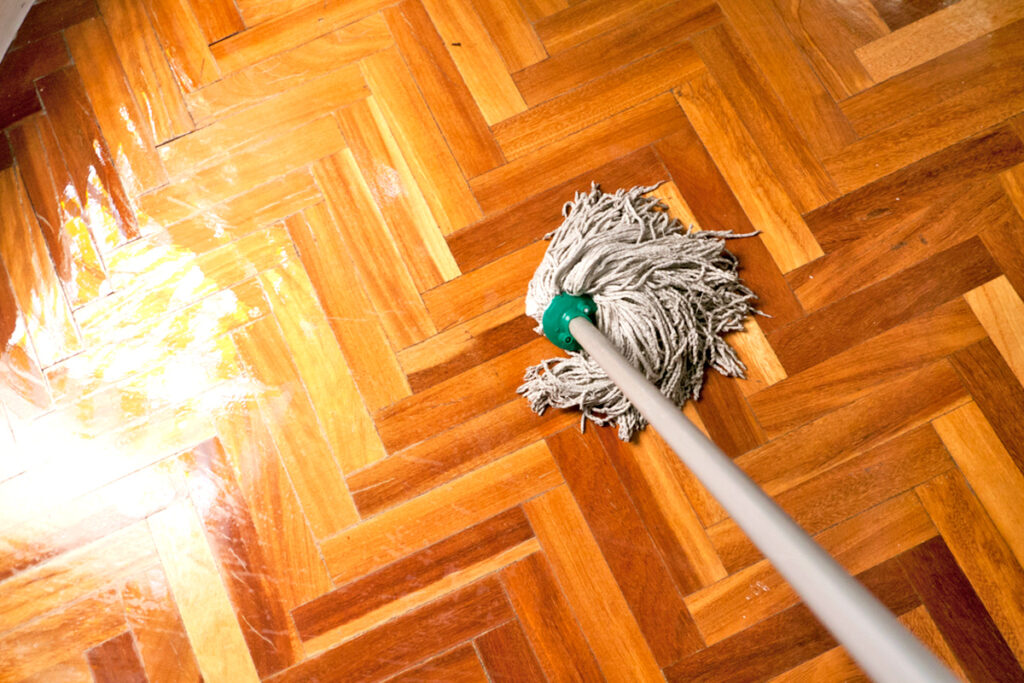
Wood floors are beautiful but fragile. The most common regrets stem from using too much water or scrubbing too hard. Water seeping into the seams can cause the floor to warp or swell, while rough brushes or abrasive pads may strip the protective finish. Even natural cleaners, such as highly concentrated vinegar, can dull or damage a wood finish.

Pro Tip: Use a damp (not soaking) mop with a gentle cleaner formulated for hardwood floors. Dry the area immediately with a microfiber cloth. For minor scratches, apply a wood-specific touch-up solution rather than trying to sand and polish the area yourself. Protecting the finish today avoids costly repairs tomorrow.

Credit: Dario Pena/ iStock
Advertisement

3. Appliances: Don’t Ignore Product Instructions

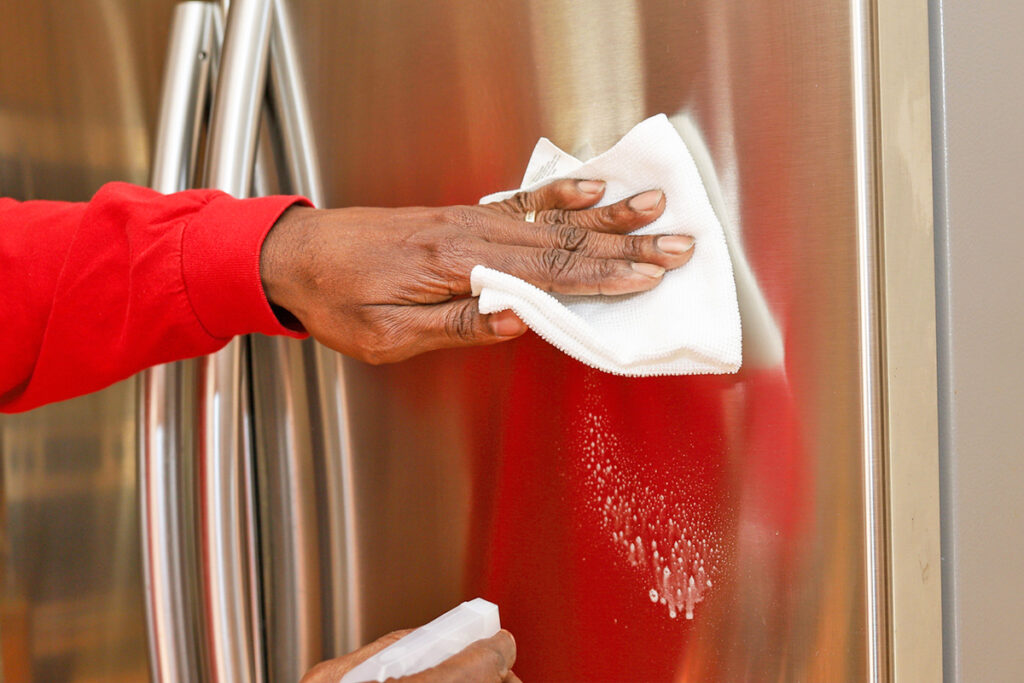
From refrigerators to ovens, appliances are susceptible to damage from improper cleaning. Using bleach on stainless steel can stain the surface and remove protective coatings. Spraying water or cleaners directly into electrical components risks a short circuit. Additionally, oversaturating filters, vents, or seals can lead to mold growth or mechanical problems.

Pro Tip: Always read the manufacturer’s cleaning instructions. Use nonabrasive sponges or microfiber cloths, and apply cleaners to the cloth instead of spraying directly onto the appliance. Regular maintenance with safe, approved products keeps appliances running and looking new.

Credit: Robin Gentry/ iStock
Related: 9 Messes You Should Never Clean With a Vacuum Cleaner

4. Textiles: Avoid Hot Water, Bleach, and Wrong Detergents

Upholstery, curtains, and rugs are easy to damage if you’re not careful. Many people regret using hot water or bleach on delicate fabrics, which causes shrinkage, color fading, or weakened fibers. Even aggressive vacuuming can fray textiles, while using the wrong detergent can leave residue that attracts dirt.

Pro Tip: Check care labels before washing or spot-cleaning. Use cold water and mild detergents on delicate fabrics, and blot stains rather than rubbing. For upholstery, test any cleaner on a hidden area first. Gentle handling now keeps your fabrics soft, vibrant, and long-lasting.

Credit: towfiqu ahamed/ iStock
Advertisement

5. Painted Surfaces: Avoid Scratches and Chemical Reactions

Painted walls, trim, and cabinets are easily damaged if the wrong approach is used. Heavy scrubbing or abrasive pads can remove or scratch the paint, while harsh chemical cleaners may discolor or react with the finish. The result is uneven patches, streaks, or peeling paint that’s expensive to repair.

Pro Tip: Use a soft sponge or microfiber cloth with warm water and a mild detergent for routine cleaning. For stubborn stains, consider a melamine sponge specifically formulated for painted surfaces, and use it gently. Protecting paint now prevents costly repainting later — and spares you the regret of accidentally ruining a fresh wall.

Credit: South_agency/ iStock

To Sum Things Up

Cleaning smarter isn’t just about efficiency; it’s about preserving the beauty, safety, and longevity of your space. With careful attention to what each surface needs, your cleaning victories will come without the bitter taste of regret.

Advertisement
Featured Image Credit:  Publishing Group/ iStock | Updated  Dec 3, 2025 |
Jill Layton
Writer
Jill Layton started writing professionally when she realized her emails and texts were kinda funny. She’s an affiliate shopping writer and lifestyle contributor for Scary Mommy, Bustle, Mic, and Best Products. She’s the mom of two alarmingly witty kids and the world’s most perfect dog.
This article is for general informational purposes only.
Featured Image Credit:  Publishing Group/ iStock | Updated  Dec 3, 2025 |
Advertisement
Cleaning 3m read
0

The One Habit That Saves Your Washer From Mold

Given that washing machines exist to make other objects clean, it makes sense that you’d want to keep them clean as well. That’s easier said than done, however, since there’s no such thing as a “washing machine washer.” Though these time-saving appliances are fairly low-maintenance when it comes to cleanliness, they do carry some risks, namely mold and unpleasant odors. The good news is that the fix is surprisingly easy.

All featured products and deals are selected independently and objectively by the author. House Outlook may receive a share of sales via affiliate links in content.

Given that washing machines exist to make other objects clean, it makes sense that you’d want to keep them clean as well. That’s easier said than done, however, since there’s no such thing as a “washing machine washer.” Though these time-saving appliances are fairly low-maintenance when it comes to cleanliness, they do carry some risks,…

When Is a Door Not a Door?

Washing machines spend the vast majority of their existence closed, which prevents airflow. As moisture develops inside, this enclosed space turns into a humid, dank environment perfect for growing mold. The problem is only compounded when you forget to take your clothes out as soon as you hear that instantly recognizable beep and they develop a musty scent after sitting for too long. To prevent all that unpleasantness, simply leave the door ajar between uses. If the open door gets in the way, aim to keep it unlatched for at least for a few hours after finishing each load.

Deep Clean

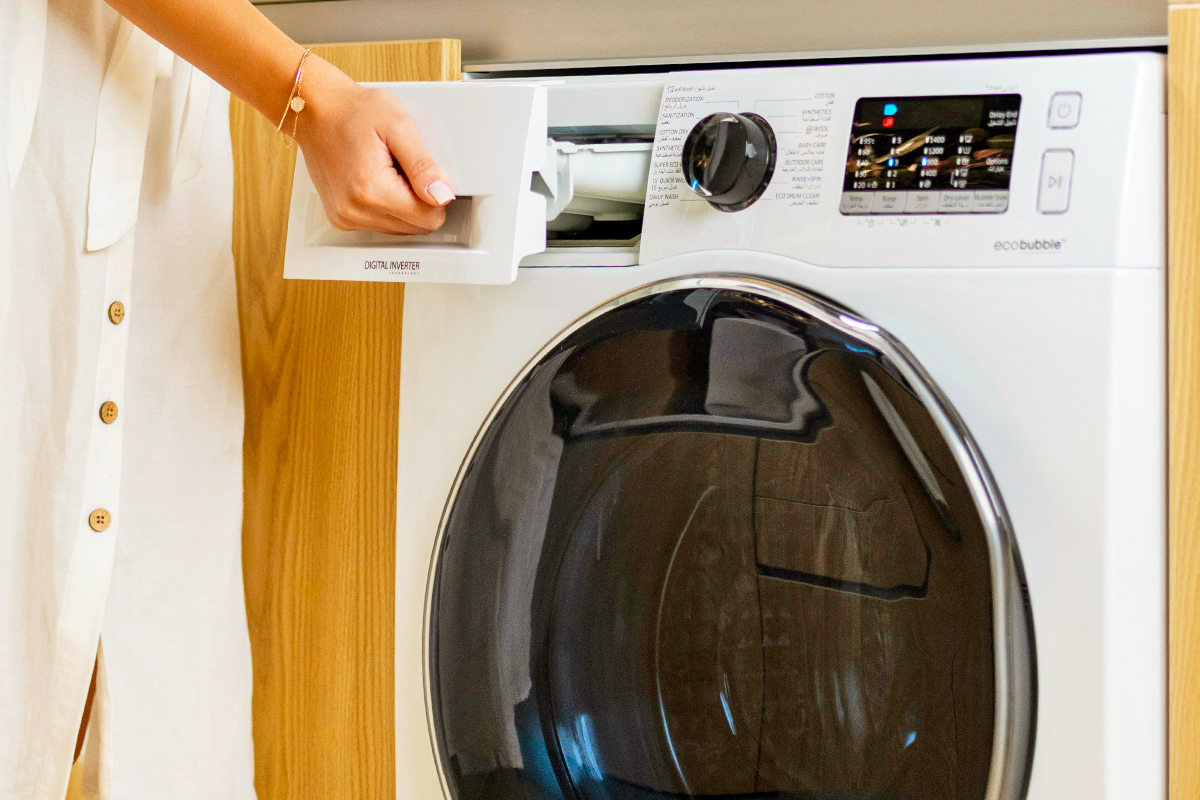
That’s not all you can do, of course. If you have a front-load washing machine, which is particularly susceptible to mold, you should pull out the detergent drawer and dry the rubber gasket with a microfiber towel after each use. For a deeper clean, mix 1 cup distilled white vinegar, 1 cup water, and 1 teaspoon liquid dish soap. Pour the solution into a spray bottle and coat the entire gasket, allowing it to sit for a few minutes. Then, use an old toothbrush to scrub any stubborn or tight spots, wiping away the grime as you go. Remember to rinse the gasket with clean water afterward to prevent potential damage to the rubber.

Advertisement
Related: The Only Laundry Setting You Need

Cleaning a top-load washing machine requires less elbow grease. Select the hottest water setting and the longest cycle (or largest load size). If available, use your machine’s “Clean Tub” cycle. As the water runs, add 4 cups of distilled white vinegar to the drum. Allow the machine to agitate briefly to mix in the vinegar, then stop the cycle. Let the vinegar soak for five minutes. Then, add 1/2 cup of baking soda and allow the agitator to resume. Stop the cycle again, and let the entire mixture soak for 30 minutes to an hour. Resume and complete the wash cycle.

Advertisement
Advertisement
Food & Drink 2m read
0

Is Your Baking Powder Still Good? Here’s How To Tell

If your cakes are mysteriously flat or your muffins refuse to rise, the culprit might not be your technique — it could be your leavener. Even if your baking powder box isn’t past its expiration date, it can still lose its rising power. As it turns out, baking powder begins to degrade once it’s opened, due to humidity, heat, and poor sealing.

If your cakes are mysteriously flat or your muffins refuse to rise, the culprit might not be your technique — it could be your leavener. Even if your baking powder box isn’t past its expiration date, it can still lose its rising power. As it turns out, baking powder begins to degrade once it’s opened, due…

A Simple, Foolproof Test You Can Do in Seconds

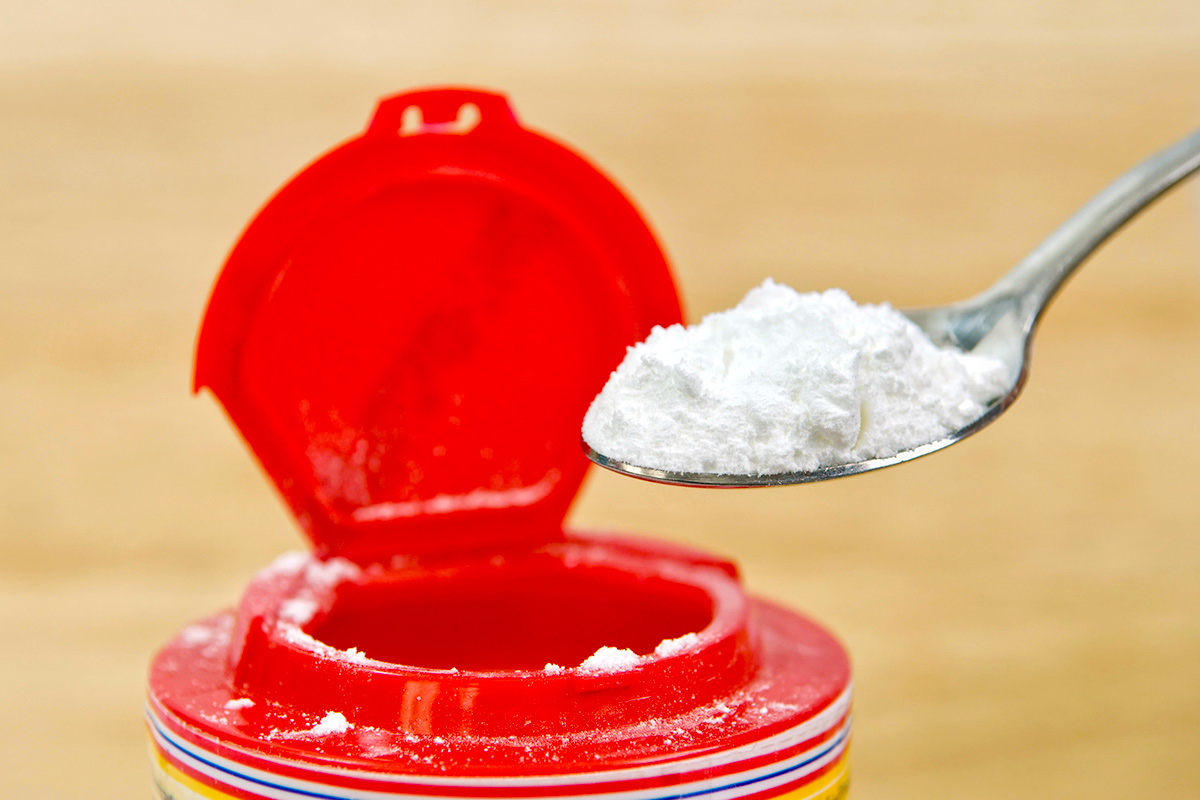
1. Scoop 1/2 teaspoon of baking powder into a small, heat-safe bowl.

2. Pour in 1/4 cup of boiling water.

3. Watch for the reaction: If it fizzles and bubbles energetically, the powder is still active and safe to use. If the reaction is muted or nonexistent, the powder is “dead” and should be discarded.

Related: Get Room-Temperature Eggs in Minutes With This Baking Hack

Why This Matters

Baking powder is what helps your cakes, quick breads, pancakes, and muffins rise, resulting in a light and fluffy texture. When it’s inactive, the result is heavy, dense, or flat baked goods. You might find yourself wondering why your recipe failed, even after you followed it precisely. Many home bakers overlook this step and assume they made a mistake rather than checking an ingredient that’s lost its punch.

Advertisement

Storage and Longevity Tips

• Once opened, keep your baking powder in a cool, dry place. Heat and moisture are its enemies.

• Close the lid tightly after each use to minimize moisture entry. You can also place the container in an airtight food storage bag to ensure freshness.

• If you don’t bake often, test the powder before you start mixing up that special batch.

• If the “use by” date hasn’t passed, but you still see minimal fizz in the test, toss the container and buy a fresh one.

By making the fizz test part of your prep routine, you’ll add one more layer of quality control to your baking. A little effort now means no surprises later. No flat cakes, no disappointment — just beautiful rising and light textures every time.

Advertisement
Featured Image Credit:  Rachel Husband/ Alamy Stock Photo | Updated  Dec 2, 2025 |
Jill Layton
Writer
Jill Layton started writing professionally when she realized her emails and texts were kinda funny. She’s an affiliate shopping writer and lifestyle contributor for Scary Mommy, Bustle, Mic, and Best Products. She’s the mom of two alarmingly witty kids and the world’s most perfect dog.
This article is for general informational purposes only.
Featured Image Credit:  Rachel Husband/ Alamy Stock Photo | Updated  Dec 2, 2025 |
Advertisement
Gardening 3m read
0

3 Signs Your Plant Needs a Bigger Pot

When people become parents, they often start looking for a bigger living space. A similar phenomenon occurs among “plant parents”: A time will come when our cherished plants become rootbound, requiring us to repot them into larger living spaces.

When people become parents, they often start looking for a bigger living space. A similar phenomenon occurs among “plant parents”: A time will come when our cherished plants become rootbound, requiring us to repot them into larger living spaces.

Periodic repotting is standard practice when you have indoor plants, so learning how to do it (and, more importantly, when) is crucial to long-term plant health and success. Here are three unmistakable signs that your plant needs a larger pot.

1. Your Plant Stops Growing

While some plants grow slowly, and others quickly, you should consistently see new growth as time passes. If a once-vigorous plant slows down dramatically, or if its new growth looks small or sickly compared to what you’ve seen in the past, it’s probably time to repot.

Related: 20 Essential Hacks Every Plant Parent Needs To Know

2. Your Plant’s Water Needs Increase

Watering is essential for every plant, even desert succulents, though overwatering is always a risk when you’re a houseplant novice. (Don’t worry, you can often save them.) Getting to know your plants’ specific watering needs and watering only when necessary is an important step on your growing journey. Yet, even after you’ve mastered their quirks, you may find that some plants suddenly need more frequent waterings. That shift is a telltale sign that their root growth has taken up most of the pot’s available space.

Advertisement

3. The Soil in Your Pot Is Crusty and White on Top

Over time, you’ll start to see crusty deposits building up at the top of the soil. These deposits are salts, introduced through your tap water or your choice of fertilizer. They’re a sign that the soil needs renewing, often because your plant’s roots are taking up so much of the pot. In this case, when you’re potting up your plant, be sure to scoop out as much of the old soil as possible (without damaging the roots) and replace it with fresh soil.

When Not To Pot Up Your Plants

There are a few times when it’s not appropriate to repot your plant. Some plants, for example, do best when they are slightly rootbound. Also, some species can become too large for your space if continually repotted. For those plants, your better option is to periodically prune the roots, replenish the container with new soil, and place the plant back into the same pot. If your plant is already top-heavy, instead of potting up, consider switching to a heavier or wider pot (for more stability) that holds the same quantity of soil.

Advertisement
Featured Image Credit:  Ella Murphy/ Unsplash | Updated  Dec 2, 2025 |
Fred Decker
Writer
Fred Decker is a trained chef and former restaurateur. Since closing his restaurants over a decade ago he has been a prolific freelance writer, publishing several thousand articles on dozens of high-volume websites including Taste Of Home, Hunker, Tasting Table, Week&, eHow, and GOBankingRates. He lives on a rural acreage shared with a big garden, chickens, rabbits, and grandkids.
This article is for general informational purposes only.
Featured Image Credit:  Ella Murphy/ Unsplash | Updated  Dec 2, 2025 |
Advertisement
Food & Drink 3m read
0

You Don’t Need To Cook Chicken as Long as You Think

There are some foods that people tend to approach with an extra degree of caution, and chicken — despite being so popular — is one of them. There’s a good reason for that: Most of the chicken in our food supply comes from large factory farms, where conditions are prime for the spread of common pathogens, such as salmonella or listeria. In fact, in October 2025, shortly before this article was written, nearly 5 million pounds of chicken products were recalled for potential listeria contamination.

All featured products and deals are selected independently and objectively by the author. House Outlook may receive a share of sales via affiliate links in content.

There are some foods that people tend to approach with an extra degree of caution, and chicken — despite being so popular — is one of them. There’s a good reason for that: Most of the chicken in our food supply comes from large factory farms, where conditions are prime for the spread of common…

While you might choose to ignore official temperature recommendations if you prefer a medium-rare steak or a soft egg, most of us are happy to accept the guidance on chicken. The USDA specifies that chicken should reach an internal temperature of 165 degrees Fahrenheit, but you may not need to cook your poultry as long as you think to guarantee food safety. Here’s why.

Cooking Chicken to a Safe Temperature

Here’s the thing about the USDA’s official temperature recommendations: They’re conservative by design, focusing on a temperature that will kill bacteria instantly. However, according to the USDA’s own guidance for commercial food producers, a lower temperature held for a longer time works just as well. For example, maintaining a temperature of 150 degrees Fahrenheit for exactly 52 seconds gives the same result. The problem is that food manufacturers have the resources to be that precise, and home cooks like us don’t. The good news is that we don’t have to.

Related: Want Tender, Juicy Chicken? Try This Easy Trick

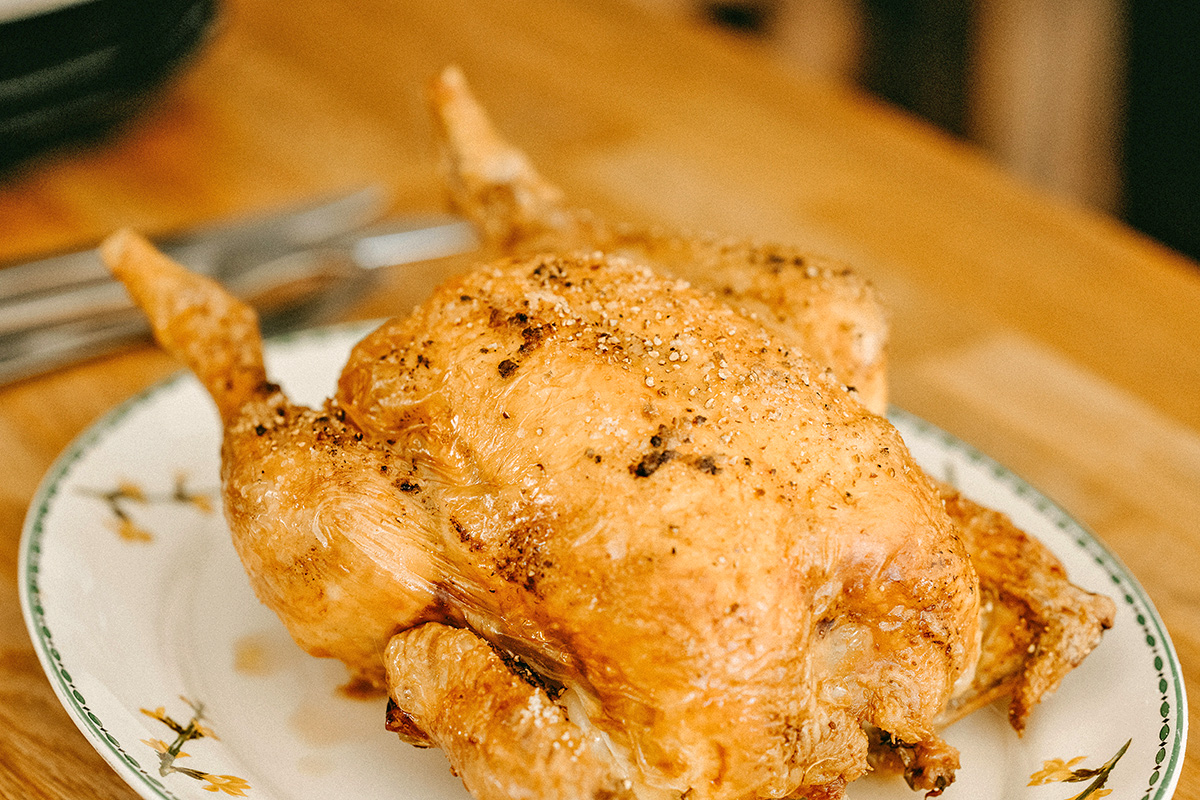
That’s thanks to something called “carryover cooking.” When you remove a whole chicken (or a piece of chicken) from your stove, oven, or grill, a lot of heat is already trapped inside. This heat means the cooking process will continue, and the interior temperature will continue to rise. The bigger the cut, the more carryover cooking you’ll see. A whole chicken retains more heat than a leg quarter, which retains more heat than a boneless breast.

Advertisement

A Meat Thermometer Is Essential for Food Safety

So relax a little, and allow time for carryover cooking when preparing chicken. For a whole bird, you can safely pull it from the oven when the temperature hits 150 to 155 degrees Fahrenheit. For smaller cuts, 155 to 160 degrees Fahrenheit is a safe range. The only way to know for sure, however, is with an accurate meat thermometer. Check the temperature in a couple of places before you take the chicken off the heat, and then leave the thermometer in place while the meat rests for five to 10 minutes before serving. As long as the internal temperature stays at 155 degrees Fahrenheit or above (in the lowest-temperature part) for at least a minute or two, you’re golden.

Advertisement
Featured Image Credit:  Annie Spratt/ Unsplash+ | Updated  Dec 2, 2025 |
Fred Decker
Writer
Fred Decker is a trained chef and former restaurateur. Since closing his restaurants over a decade ago he has been a prolific freelance writer, publishing several thousand articles on dozens of high-volume websites including Taste Of Home, Hunker, Tasting Table, Week&, eHow, and GOBankingRates. He lives on a rural acreage shared with a big garden, chickens, rabbits, and grandkids.
This article is for general informational purposes only.
Featured Image Credit:  Annie Spratt/ Unsplash+ | Updated  Dec 2, 2025 |
Advertisement
Cleaning 3m read
0

The Easiest Way To Stop Trash Can Odors

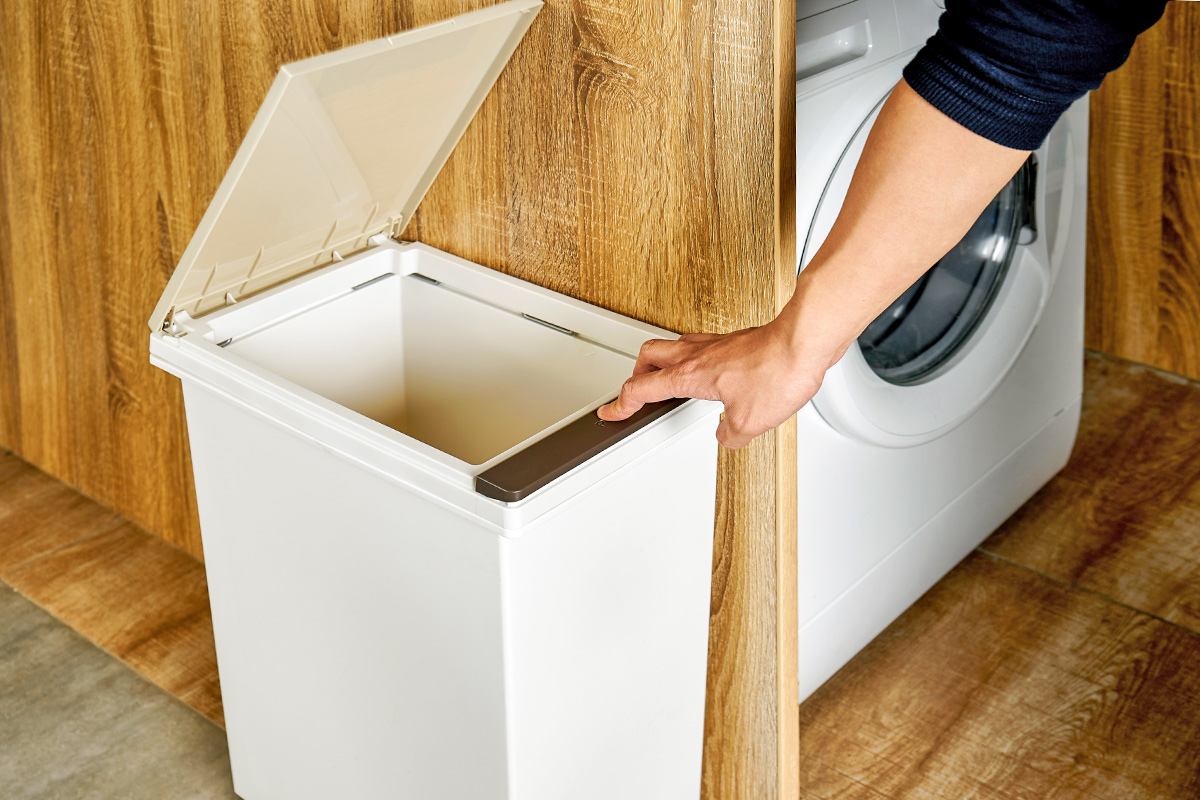
Persistent garbage odors can linger in the bin even after you’ve taken the bag to the curb. If you’re battling bad scents coming from your trash can, try this simple hack that gets rid of them in just a few hours.

All featured products and deals are selected independently and objectively by the author. House Outlook may receive a share of sales via affiliate links in content.

Persistent garbage odors can linger in the bin even after you’ve taken the bag to the curb. If you’re battling bad scents coming from your trash can, try this simple hack that gets rid of them in just a few hours.

DIY Trash Can Deodorizer

Looking for an easy way to keep trash can odors at bay? You can make your own odor-absorbing sachets using a few simple items you likely have in your kitchen. The key ingredient in this hack is baking soda, which naturally eliminates odors by reacting with odor-causing acids and trapping smelly molecules on the spot. Just pour 2 to 3 tablespoons of baking soda into a disposable coffee filter (the basket-shaped ones work best), then seal it shut with a rubber band or clip to secure the contents.

Related: A Quick Fix for Lingering Cooking Smells

We like to make a few of these at a time and drop one or two into the bottom of the can, right under the trash liner or bag. If you notice your baking soda sachet isn’t as effective after a few weeks or months, just toss it and drop in a fresh one to keep your trash can — and your entire kitchen — smelling fresh.

More Ways To Reduce Trash Smells

Baking soda isn’t the only household ingredient that can quickly zap odors. Coffee grounds are another inexpensive way to reduce bad smells quickly. You can easily make the same deodorizing pouches using coffee grounds instead of baking soda and place them anywhere odors linger. We even like to drop these in our sneakers during the humid summer months to prevent stinky soles.

Advertisement

What else works? Try making an odor neutralizer with crushed, activated charcoal, or whip up a deodorizing spray using equal parts distilled white vinegar and water to spritz the inside of your trash can before adding a new bag.

A final tip: Keeping food waste separate from everyday trash will significantly reduce trash can odors. Compost bins and biodegradable bags are a great way to turn food scraps into fertilizer, but if you don’t have room, just toss your waste in a plastic bag and keep it in the freezer until you can move it to an outside garbage bin.

Advertisement
Advertisement
Food & Drink 10m read
0

8 Things a Food Safety Expert Would Never Eat

People often ask me about food. That’s understandable, given that I’m a trained chef and a former restaurateur; it’s like hitting up a doctor for health advice if you meet one socially. At times, there’s even a degree of overlap, because what people often ask me about is food poisoning and food safety. I’m fine with that, because I was also a certified food safety trainer, and — to be blunt — when it comes to food safety, what you don’t know really can hurt you.

All featured products and deals are selected independently and objectively by the author. House Outlook may receive a share of sales via affiliate links in content.

People often ask me about food. That’s understandable, given that I’m a trained chef and a former restaurateur; it’s like hitting up a doctor for health advice if you meet one socially. At times, there’s even a degree of overlap, because what people often ask me about is food poisoning and food safety. I’m fine…

One of the most common questions I get is this: Are there things I simply won’t eat due to safety considerations? My answer is usually some variation of “Oh, you betcha!” because there are plenty of things I avoid. Here are eight of them, along with a brief explanation of why I consider them problematic.

1. Left-Out Leftovers

Bacterial growth is why food safety guides harp on time and temperature. Nasty bugs flourish at temperatures between 40 and 140 degrees Fahrenheit, and in that “danger zone,” their numbers can double in as little as 20 minutes. This is important, because the more bacteria that are present, the higher the risk you’ll get sick. The number needed to make you sick is called the “infective dose,” and it can be alarmingly small for some bacteria: under 500 individual bacteria for Campylobacter, for example, and as few as 10 for E. coli.

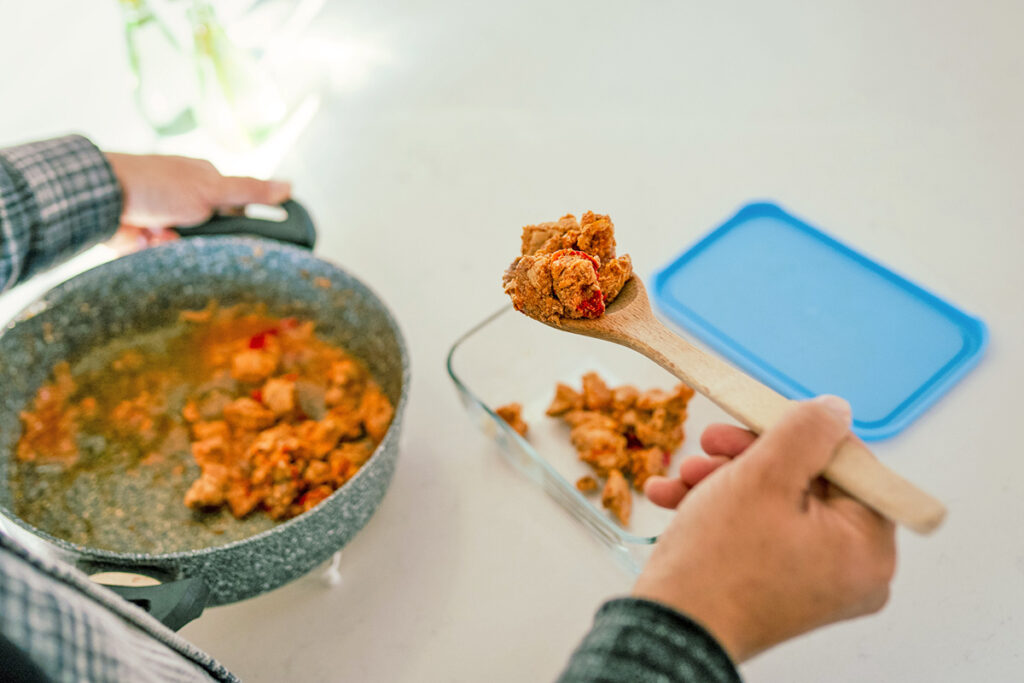
This is why the USDA warns against eating leftovers that have been sitting out for more than two hours, or even one hour if it’s a hot day with a temperature up into the 90s. I know some of you do this regularly and say, “It hasn’t killed me yet.” But I want to share a couple of details that you might not realize:

1. With most foodborne pathogens, it’s three to four days before you feel the effects, and with some, it can be up to eight days. This is why many people blame it on what they had for lunch that day, which is often inaccurate.

2. How frequently does someone in your household get a “stomach bug” or the “stomach flu”? That’s gastroenteritis, and foodborne pathogens are one of the main causes. They’re not the only possible cause, but you may be doing it to yourself more often than you think.

Credit: Kemal Yildirim/ iStock
Food Poisoning vs. Foodborne Illness

You may have noticed that food safety professionals, as well as USDA and FDA fact sheets, tend to use the term “foodborne illness” rather than “food poisoning.” They’re actually two distinct things. Food poisoning (properly speaking) is like any other kind of poisoning: It comes from eating a poison or toxin. This may be a foreign substance that gets into your food (such as a cleaning product) or a toxin that’s produced by a bacteria within your food. Foodborne illness is a broader term, referring to the effect of any pathogen or toxin that occurs in food and makes you sick.

So, food poisoning is a form of foodborne illness, but technically not all foodborne illness is food poisoning. Admittedly, it’s a distinction you may not care about on your umpteenth trip to the bathroom. But if you’d like to know more about foodborne illness and the bacteria that cause it, I’d suggest downloading the FDA’s free Bad Bug Book, which contains a lot of useful information.

Advertisement

2. Cookie Dough and Cake Batter

I know I’m breaking some hearts with this one, because the raw dough is arguably just as tasty as the baked cookies. Heck, I licked many a beater or wooden spoon myself when I was a kid and my mom was baking. It was a big treat, but I don’t do it anymore.

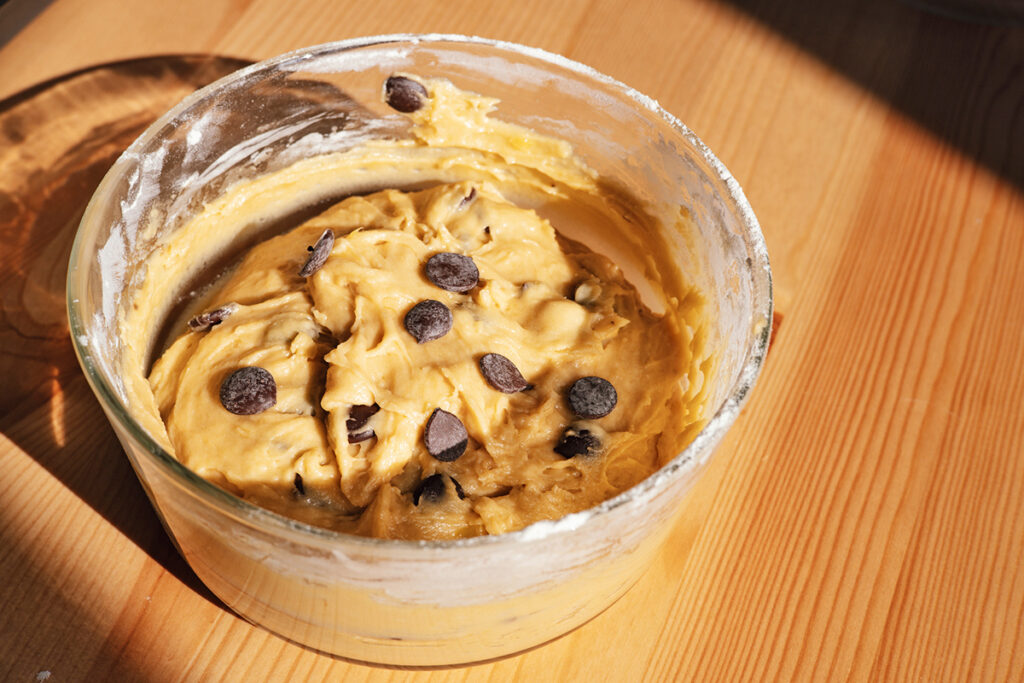
Why not? The obvious answer is eggs. They’re prone to salmonella contamination, and contrary to popular belief, it’s not confined solely to the eggshells. A less obvious answer is that flour itself can make you sick: It can be infected with salmonella or E. coli and has caused multiple outbreaks over the past couple of decades (including 20 hospitalizations, according to the FDA).

Does this mean no raw cookie dough? Not at all. You can buy eat-or-bake cookie dough at most supermarkets, such as Pillsbury Ready to Bake products. You can also buy pasteurized eggs in the frozen section and use those for your baking. Flour is a thornier problem, because heat-treating (pasteurizing) it at home isn’t reliable. For a truly safe, eat-raw cookie dough, your best bet is an “instant” flour, such as Wondra, since it’s already fully cooked.

Credit: Seenari/ iStock

3. Other Peoples’ Home-Canned Goods

Home canning is a great food preservation method. I do it myself, and I have both a water-bath canner and a big pressure canner. Living in the country, where winter power outages are common, I appreciate being able to “put up” food that doesn’t need a working freezer to stay safe.

However, unless I know someone personally and have watched them or helped them when they’re canning, I have no way of knowing whether they’ve properly sterilized the jars, prepared the food safely, adjusted the time appropriately for their altitude, or processed the food for the correct amount of time. The penalty for getting it wrong can be botulism, and that’s life-threatening, so I’m appropriately cautious.

If you want to be sure your own canning is done the right way, I’d suggest downloading the USDA’s Complete Guide to Home Canning (it’s free, from the National Center for Home Food Preservation website). Ball’s Complete Book of Home Preserving is another reliable resource; but be sure to buy the latest edition, as each version makes changes to reflect current research and best practices.

Credit: adamkaz/ iStock
Advertisement

4. Food From Damaged Cans

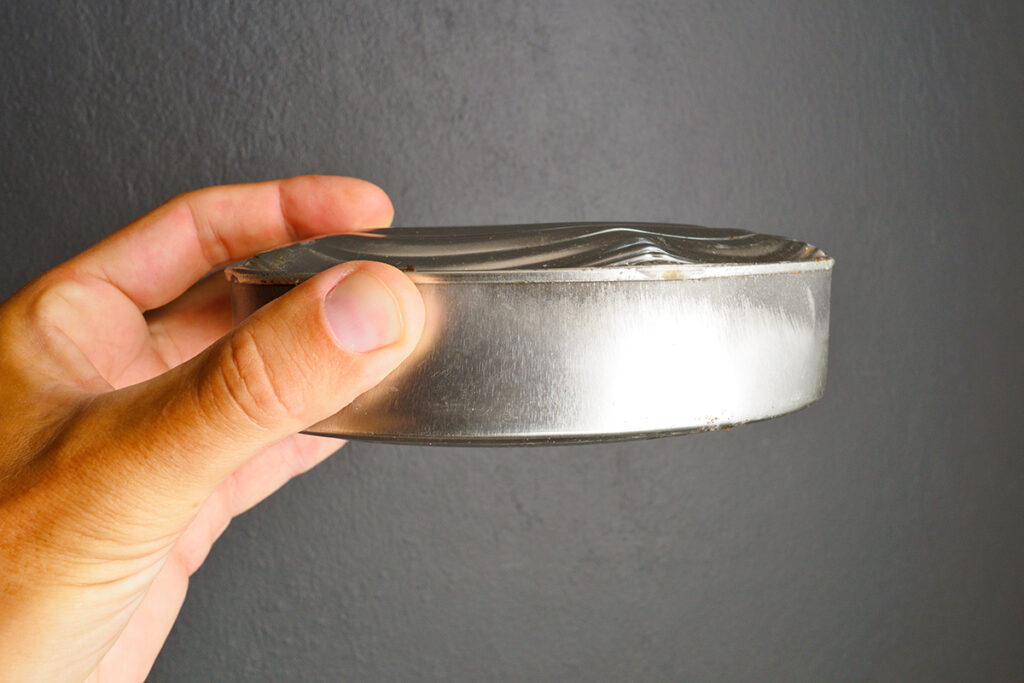
Some people turn up their noses at commercially canned food (though tinned fish has gotten trendy over the past few years), but it’s a great pantry staple because it lasts for years. It’s comforting to have at least a few things on hand for emergencies, right? But while canned food has a long shelf life, it’s not infinite, and damage to the can is a major red flag.

Discard swollen cans immediately, because this indicates the food inside is fermenting or otherwise biologically active. Visible rust on the can is another danger sign because it can compromise the seal. Freezing can do the same, as the contents expand and put pressure on the seams. Any dent deep enough to create a sharp corner, or any dent on the can’s seams, can also break the seal.

I’m a frugal shopper, so I do occasionally buy dented cans for the discount. But I only buy them if the dents are shallow and away from the seams.

Credit: Andrei/ iStock

5. Unwashed Salad Greens

When you think about foods most likely to make you sick, you probably picture things like raw eggs or undercooked chicken. But one of the most common culprits is leafy greens, which probably weren’t on your radar. There are a surprising number of recalls for salad greens, ranging from head lettuce to cut and prebagged salads.

Although there are lots of products available that claim to clean your produce effectively, they aren’t well tested (and may add residues of their own). Your best bet is to rinse them well under cold running water, removing any visible soil. This won’t remove all bacteria, but it sharply reduces their numbers and also washes away pesticide residue.

Credit: Thai Liang Lim/ iStock
Advertisement

6. Uncooked Sprouts

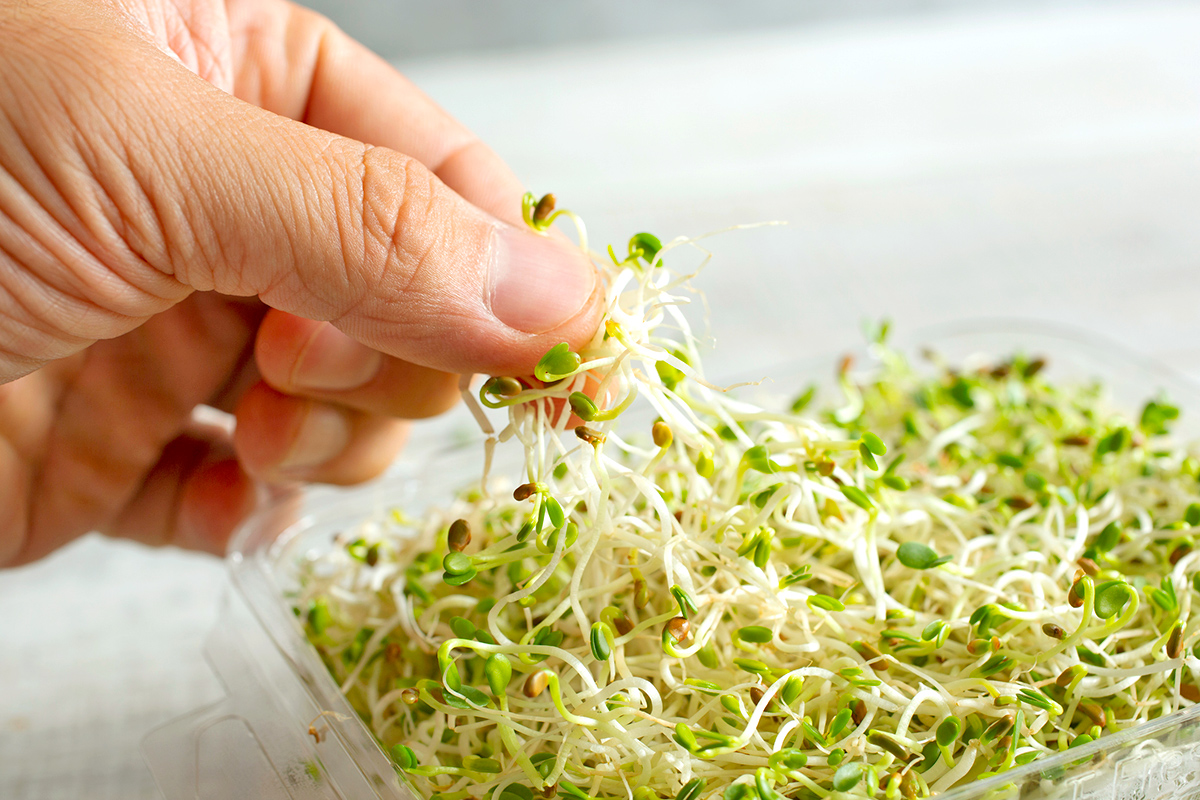
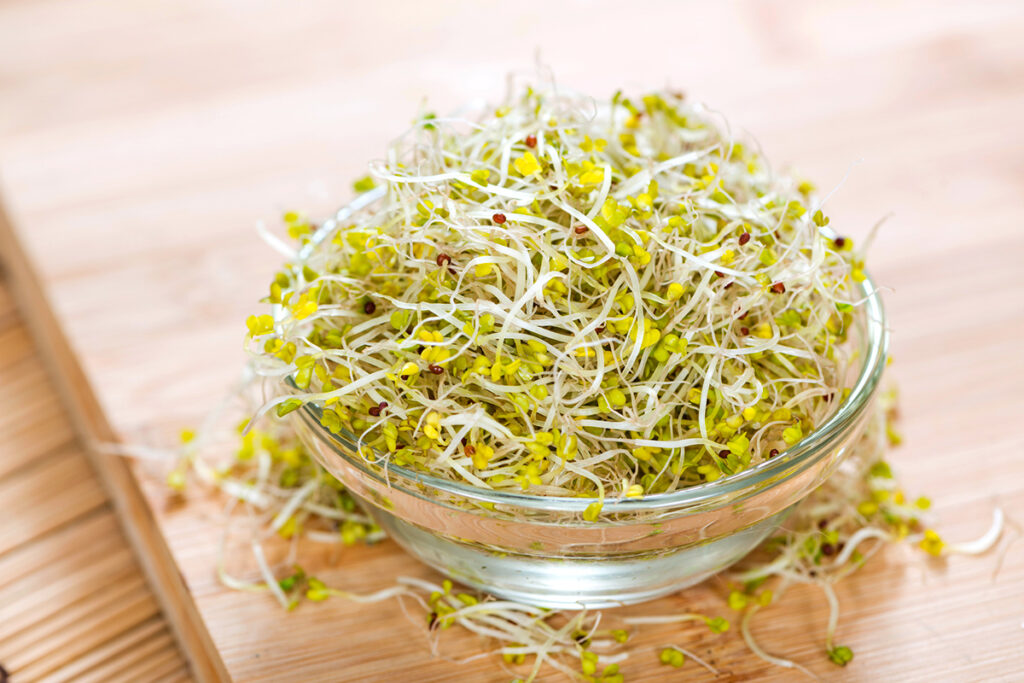
Uncooked sprouts are also a really problematic fresh veggie option. I subscribe to a food safety recall email list from the federal government here in Canada (you can sign up for emails from the FDA in the U.S.), and sprouts have frequently been the source of some significant outbreaks.

Why? Unfortunately, the same warm, damp conditions that help sprouts grow also encourage the growth of pathogens. You can wash them thoroughly in cold running water, as you would with salad greens, or cook them to kill any bacteria that might be present. Obviously, cooking works better with bean sprouts in a stir-fry than it does for alfalfa sprouts on a sandwich. Alas, sprouting your own doesn’t necessarily help: The FDA has found that contaminated seed is often the root of the problem (no agricultural pun intended).

Credit: HandmadePictures/ iStock

7. Stuffing Cooked in the Bird

This is another polarizing example. But here’s the thing: If I took an uncooked chicken or turkey and dribbled its raw juices over your food, you wouldn’t touch it. Yet when you cook stuffing inside the bird, those same juices soak right in, and they may or may not reach a fully food-safe temperature before you pull the bird from the oven. That’s the recipe for a few really bad days after the holiday meal, and unlike a lot of other Thanksgiving dinner problems, there isn’t an easy fix for this one.

That said, you can technically do it if you’re absolutely wedded to the idea. The USDA has a guide just for cooking stuffing safely, and if you follow its guidance, you should be OK. But cooking the bird until the stuffing inside reaches a food-safe temperature of 165 degrees Fahrenheit means the actual turkey (or chicken) itself will be overcooked. Also, if I’m a guest in someone’s home and haven’t watched how they prepped the stuffing, I have no way to know if it was done safely. So, I’ll politely pass to avoid any risk.

Credit: eyecrave productions/ iStock
Advertisement

8. Dubious Shellfish

I grew up on the East Coast and live there again now. One of the cool things about coastal living is that (depending on local laws, water quality, etc.) you can just go down to the shore and harvest a few clams or mussels if you feel like it. I’m a big fan of fresh shellfish and eat them whenever the opportunity arises.

That said, I’m always leery of eating those same shellfish if their provenance is shaky or if I don’t know the cook. If I’m buying them for myself, I can assess the seller’s attention to safety and the quality of the shellfish. If I’m eating them at an established seafood restaurant, I’m confident that the chef and staff know what they’re doing.

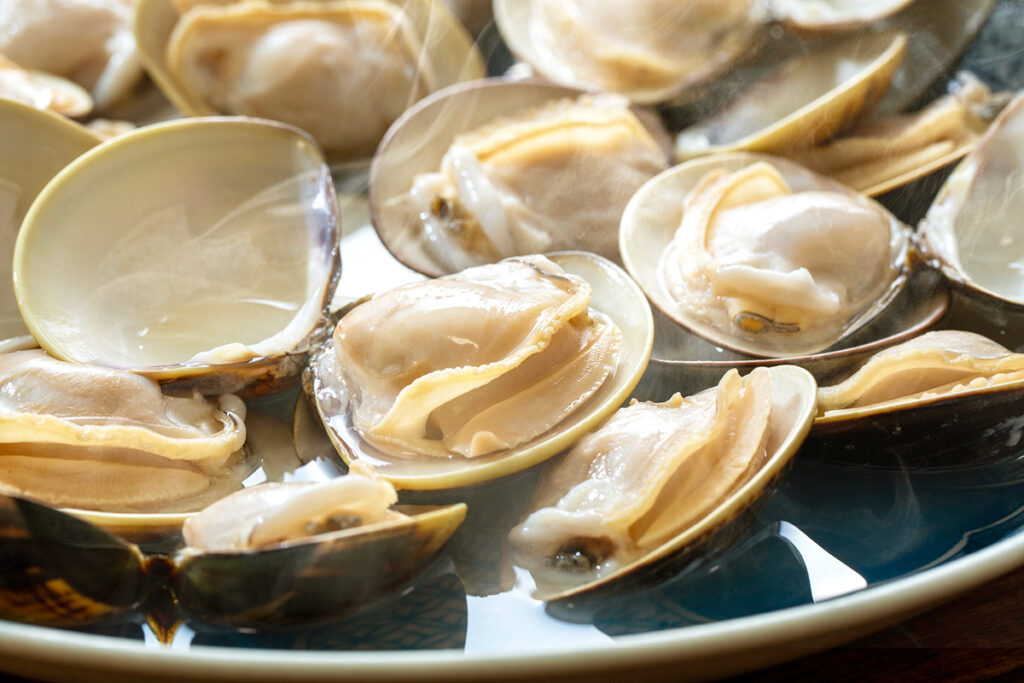
But shellfish from pop-ups, food trucks, and inexperienced cooks make me nervous. (I know food truck proprietors and market vendors are sometimes trained pros as well — I used to be a market vendor myself — but that’s not always the case.) It takes only one bad mussel or clam to ruin your whole day and usually several days after that. Tip: The rule for shellfish is that they should close when they’re alive (tap them and see what happens) and open when they’re cooked. Discard the ones that fail either test. 

Credit: kazoka30/ iStock
Advertisement
Featured Image Credit:  Photography By Tonelson/ iStock | Updated  Dec 2, 2025 |
Fred Decker
Writer
Fred Decker is a trained chef and former restaurateur. Since closing his restaurants over a decade ago he has been a prolific freelance writer, publishing several thousand articles on dozens of high-volume websites including Taste Of Home, Hunker, Tasting Table, Week&, eHow, and GOBankingRates. He lives on a rural acreage shared with a big garden, chickens, rabbits, and grandkids.
This article is for general informational purposes only.
Featured Image Credit:  Photography By Tonelson/ iStock | Updated  Dec 2, 2025 |