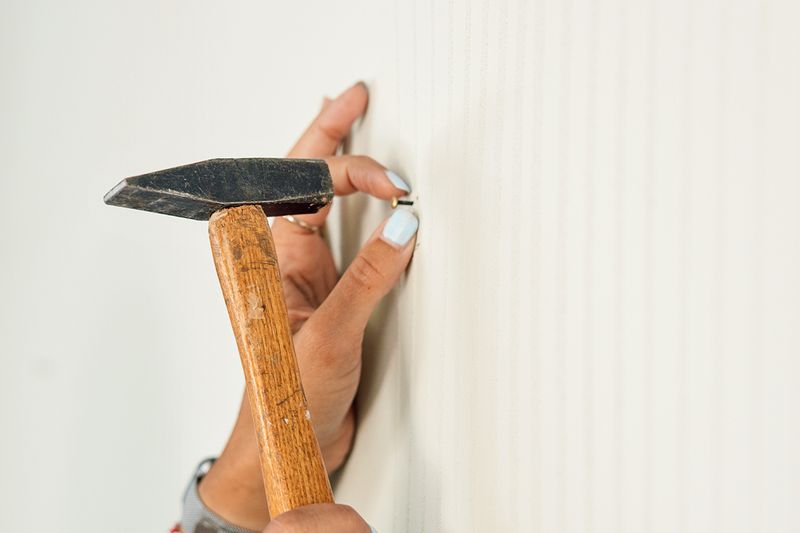
Before we dive into the hacks, there’s one thing to note up front: While these hole-patching methods are meant to be neutral in color, they might not blend seamlessly with the rest of the wall. You should be prepared to paint over them if you want a perfect match (and your security deposit back in full). You should also avoid these fixes in high-humidity spaces like bathrooms, where moisture can dissolve the plugs over time — opt for spackling paste instead. Now, on to the alternative methods.
1. Toothpaste and Aspirin
One clever concoction you can use to fill nail holes is a combination of toothpaste and crushed aspirin. Be sure to use plain white toothpaste and uncoated white aspirin tablets, or else you’ll end up with discoloration. To patch a few pinhole- to nail-sized punctures, use a pea-sized amount of toothpaste and one aspirin tablet crushed into a fine powder. Mix them into a thick paste, then use a cotton swab, toothpick, or the flat edge of a butter knife to apply the compound to the hole. Wipe any excess from around the edges with a damp cloth, let the paste dry completely, and then buff it with a dry paper towel or fine-grit sandpaper to blend as needed.
2. Bar Soap
Another tool you can use is undyed soap, such as a standard bar of Ivory or Safeguard. Use a completely dry, hard, white bar of soap, avoiding moisturizing “beauty bars,” which are typically too soft and infused with oils. Simply rub the bar of soap back-and-forth over the nail hole until it’s filled with shavings, then take a clean, dry rag and wipe away any residue. If you plan to paint over the patch later, apply a dab of primer first so the paint adheres properly.
3. White Glue
A final trick is to use liquid white glue (aka school glue or PVA glue), which can be applied in one of two ways. This first method works only for tiny pinholes, as white glue can shrink up to 50% when it dries. Apply a dab of white glue to a cotton swab or toothpick and press it into the hole as carefully as possible. Immediately wipe away any residue with a dry paper towel before it sets. If the glue shrinks and leaves a dimple, add a second layer once the first coat is dry. To prep for paint, lightly buff the area with fine-grit sandpaper.
More from our network
House Outlook is part of Inbox Studio, which publishes content that uplifts, informs, and inspires.



A better solution is to mix white glue with baking soda, creating a thicker, nonshrinking putty that dries in under an hour. Combine one part white glue with two parts baking soda to create a thick putty. (The consistency should resemble toothpaste; if it’s too thin, add another pinch of baking soda.) Apply the mixture to the hole, then smooth the surface using a flat tool or utensil. Allow it to dry until it’s hard to the touch. Before painting, lightly sand the patch and add a little primer.