How a Clay Pot Can Keep Your Garden Watered
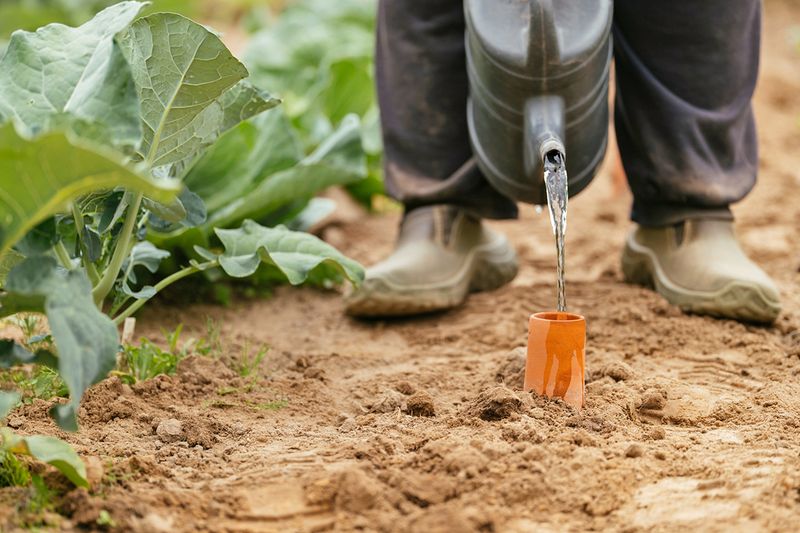
Arid-land cultures around the world have used variations of this technique for thousands of years, but in the American Southwest, it’s best known by its Indigenous name: the olla. An olla is a brilliantly simple piece of technology — an unglazed clay pot buried in the soil. Water seeps slowly through the porous, terra-cotta walls into dry soil, keeping nearby plants hydrated with minimal effort.
While a traditional olla features a bulbous base and a narrow neck, you can easily craft a DIY version using inexpensive, 8- to 12-inch terra-cotta pots. To build one, plug the bottom drainage hole in the terra-cotta pot with a cork. Bury the pot in your garden bed early in the season before you plant, surrounding it with soil while leaving the top rim visible above ground. Fill the pot with water nearly to the rim, then cover the opening with an inverted saucer or lid to reduce evaporation and keep mosquitoes out.
How Does This Work?
Because unglazed clay is porous, water slowly wicks through the pot’s walls to moisten the surrounding soil. Nearby plants will quickly figure out that this is the direction their roots should grow. The best part is that this happens only when the surrounding soil is dry; moist dirt won’t trigger the wicking effect, as moisture passes only from wet areas to drier ones.
Place one improvised olla every 2 to 3 feet throughout your garden beds. If you have a larger layout, you could cluster a smaller number of pots around your thirstiest plants while letting hardier crops or flowers fend for themselves. Either way, you’ll likely find yourself watering your garden just once a week, especially if you use mulch to lock in that hydration. Just remember to dig up the pots in the fall if you live in a region where the ground freezes, as trapped water will expand and crack the fragile terra-cotta.
More from our network
House Outlook is part of Inbox Studio, which publishes content that uplifts, informs, and inspires.