Making Fat and Water Play Nice
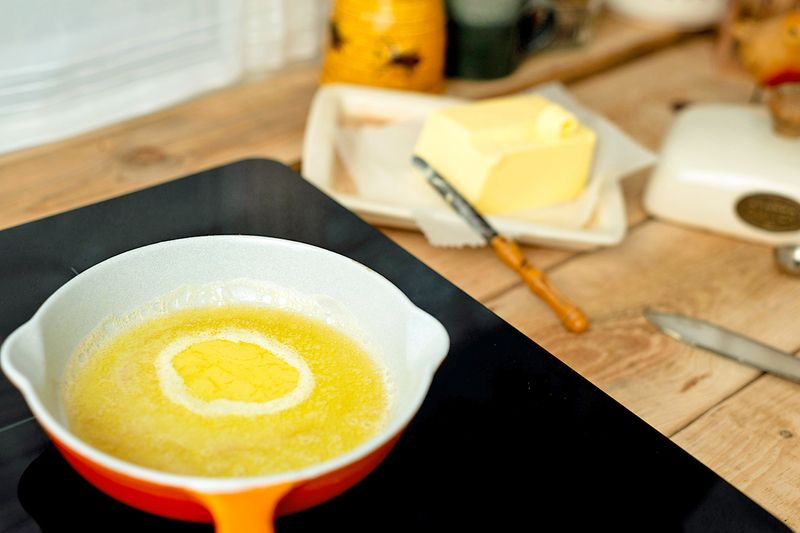
Oil and water proverbially don’t mix, but cooks often get them to play nicely together — at least temporarily. In this case, the “oil” is butterfat, but the scientific principle is the same. Because butter already contains roughly 15% water, creating a sauce with it is just a matter of persuading those fat molecules to welcome a bit more liquid.
To make the sauce, start by warming water (3 tablespoons per stick of butter) to a gentle simmer, either in a small saucepan over direct heat or in a heatproof bowl set over a skillet of simmering water (more on that below). Next, keeping the sauce over that same gentle heat, add 1 tablespoon of cold butter straight from the refrigerator and whisk it thoroughly into the water. It should take about 15 to 20 seconds to incorporate, and the mixture should look creamy, not oily.
If the sauce begins to separate, whisk in a few drops of cold water until it comes together. Then you can start adding the remaining butter 1 tablespoon at a time. Keep going until you have a smooth, pale, creamy mixture thick enough to coat the back of a spoon.
Use this velvety sauce to elevate sautéed or roasted vegetables, pan-seared chicken or steak, pasta, or delicate fish.
A Few More Things To Know
Small batches are easiest to handle in a bowl over hot water, since you’re working with so little liquid. But as long as you maintain the ratio of 3 tablespoons of water per stick of butter, you can scale up to whatever batch size you like. (Larger batches are actually easier in a saucepan.) Once it’s made, you can keep the sauce in a warm spot (between 135 and 180 degrees Fahrenheit) for a couple of hours before serving. Storing it in a prewarmed, insulated thermos is a good way to maintain the proper temperature.
More from our network
House Outlook is part of Inbox Studio, which publishes content that uplifts, informs, and inspires.



Once you have the hang of the technique, you can take the sauce in several directions. Try adding herbs or spices, or swapping the water for broth, fruit juice, or wine. (Beurre blanc, another classically simple sauce, relies on a white wine reduction.) Or you can deglaze your pan and whisk butter into that hot water to create an elegant pan sauce.