How To Sanitize a Dishwasher With a Single Ingredient
Most of us don’t clean our dishwashers nearly as often as we should — if we clean them at all. But detergent, minerals from hard water, and bits of food debris can build up in the machine, making it less effective and wasting both water and time. Whirlpool, for one, recommends doing a deep clean monthly. That may sound like a lot, but deep cleaning in this case doesn’t necessarily involve a lot of scrubbing or elbow grease. In fact, you can clean and deodorize your dishwasher with one minute’s worth of effort. Here’s what to do.
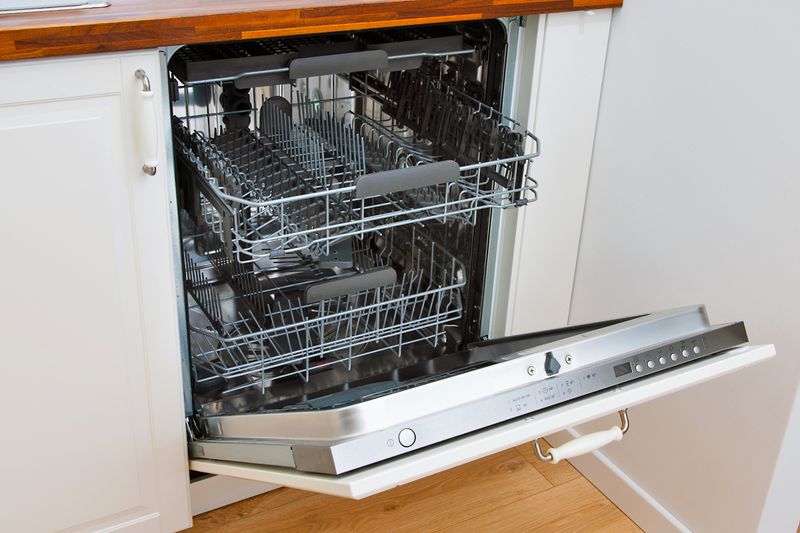
Start with an empty dishwasher. Then fill a dishwasher-safe bowl with a cup or two of white vinegar, and set the upright bowl securely on the top rack (or bottom rack if you’re using a larger bowl). Set the dishwasher on its sanitizing cycle — or whatever other cycle is the hottest and longest — and walk away.
This works because vinegar’s acidity cuts through grime and neutralizes odor. It can even kill some pathogens, like E. coli, salmonella, and listeria. Be careful not to use this hack too often, though, because an excess of that same acidity can damage your machine. Once a month is the max.
For a deeper clean, clean your dishwasher filter first. Remove the filter and let it soak in a bowl of — you guessed it! — white vinegar. Dishwashers do a solid job of cleaning themselves thanks to all the hot water and soap, but over time mineral deposit buildup can gunk up or even block the filter, nozzles, or tubes. The acid in vinegar chips away at that crud.
More from our network
House Outlook is part of Inbox Studio, which publishes content that uplifts, informs, and inspires.



Run a Rinse for Sparkling Glass
Not only can vinegar freshen your machine, but it can also get your glassware looking spotless. The acetic acid found within vinegar naturally breaks down cloudy or white deposits left behind by minerals like calcium and magnesium — a game changer if you have hard water. For crystal-clear results, set a half-full cup of vinegar on the top rack near the back of your dishwasher, then run your glassware through a regular cycle without detergent.