Gardening 3m read
5,030

Destroy Houseplant Gnat Larvae Without Sticky Traps or Sprays

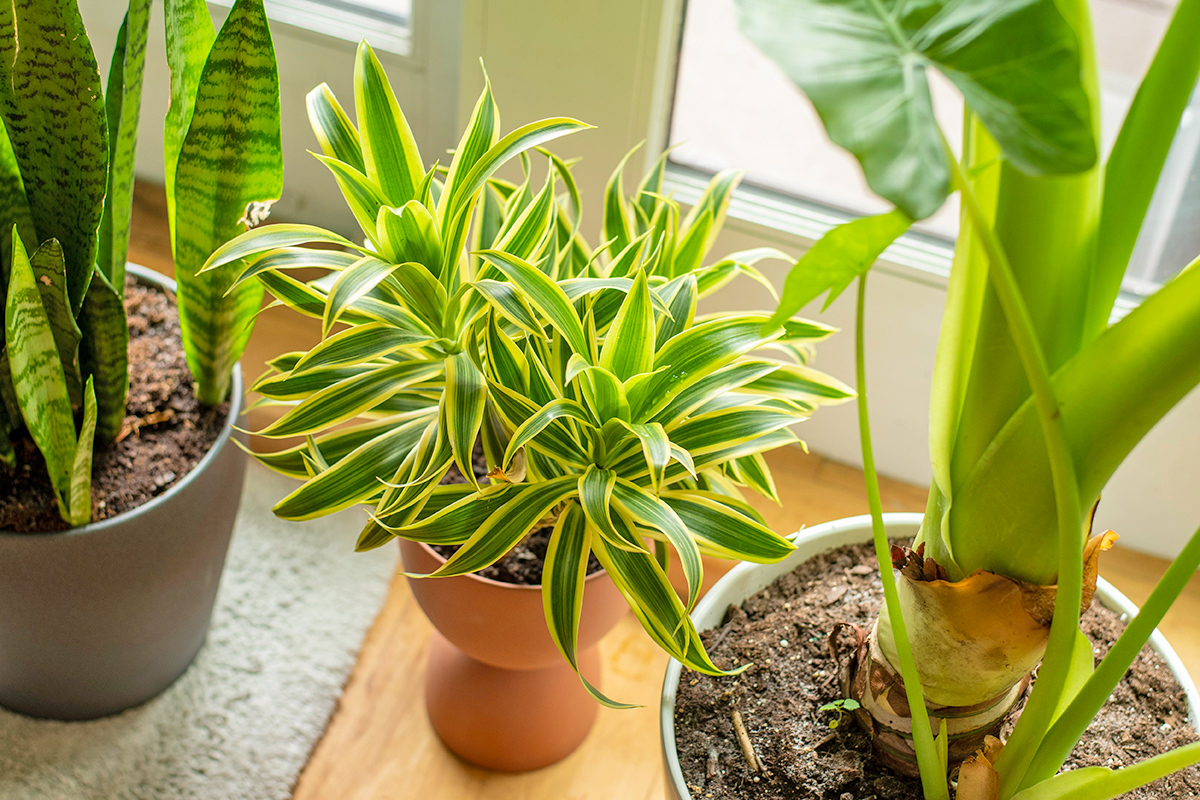
People have kept plants inside their homes for over 5,000 years. They offer cleaner air, fresh aesthetics, and a soothing sense of calm to most people’s weekly watering routines. But they also plague plant parents with one pesky problem: fungus gnats. These tiny flying insects thrive in overwatered soil, but one quick, natural trick can keep them at bay.

All featured products and deals are selected independently and objectively by the author. House Outlook may receive a share of sales via affiliate links in content.

People have kept plants inside their homes for over 5,000 years. They offer cleaner air, fresh aesthetics, and a soothing sense of calm to most people’s weekly watering routines. But they also plague plant parents with one pesky problem: fungus gnats. These tiny flying insects thrive in overwatered soil, but one quick, natural trick can…

The DIY Trick for Getting Rid of Gnats 

The simple solution to your fungus gnat problem is almost as old as Earth itself: sand. Spreading a thin layer of sand on top of your potted plant is called top layering, and it’s a great way to kill gnats naturally. 

Related: Decorative Pots Could Be Killing Your Houseplants

The best part? It’s as easy as it sounds. All you have to do is sprinkle enough sand to fully cover the soil, then wait. Mosser Lee Desert Sand is a great soil cover for most plants, and coarse silica sand suits bonsai and cactus. Those plants rarely attract gnats because of their less-frequent watering needs, but the sand still makes a good ground cover.

Why Does It Work? 

The only way to truly eliminate fungus gnats is to destroy their larvae. Top-layering with sand prevents adult gnats from burrowing into the soil to lay eggs. It also suffocates any larvae that mature underground, preventing them from procreating and repeating the cycle. 

Adult gnats are not harmful to anything or anyone, including the plants they pester. But they do lay eggs, and when those little ones hatch, they feast on the roots, the  essential system that helps foliage function. Roots help plants absorb both water and essential minerals. They also hold plants in place and store reserves of sugar that slowly release to keep plants fed. Once a plant’s roots are compromised, it’s only a matter of time before it dies. 

Other Tips To Try

If top-layering isn’t for you, or if you spot only a few gnats, you may be able to get in front of an infestation by incorporating good plant practices. Start with bottom watering. Simply fill a pan with water, then place your plant in the pan, allowing it to soak up water through the drainage hole at the bottom. You can also purchase traps, like Fungus Gnat Sticky Traps by Kikalife. Adult gnats stick to the traps and die, preventing the spread of more gnat eggs. 
Food & Drink 2m read
3,598

You’ve Been Microwaving Your Food Wrong

Convenience-wise, few appliances rival the microwave. It’s been a staple in residential kitchens in the United States since the 1970s. Prior to that, microwave ovens were enormous machines whose weight was rivaled only by their extremely high price. For both of those reasons, early versions were used primarily in industrial kitchens until their size and cost dropped.

Convenience-wise, few appliances rival the microwave. It’s been a staple in residential kitchens in the United States since the 1970s. Prior to that, microwave ovens were enormous machines whose weight was rivaled only by their extremely high price. For both of those reasons, early versions were used primarily in industrial kitchens until their size and cost…

Today, it’s estimated that 90% of American households own a microwave. These machines are miracles of the modern era, but they’re certainly not perfect: Microwaves often produce meals that are hot around the edges but still cold in the center. Luckily, there’s a way to fix this problem.

Living on the Edge

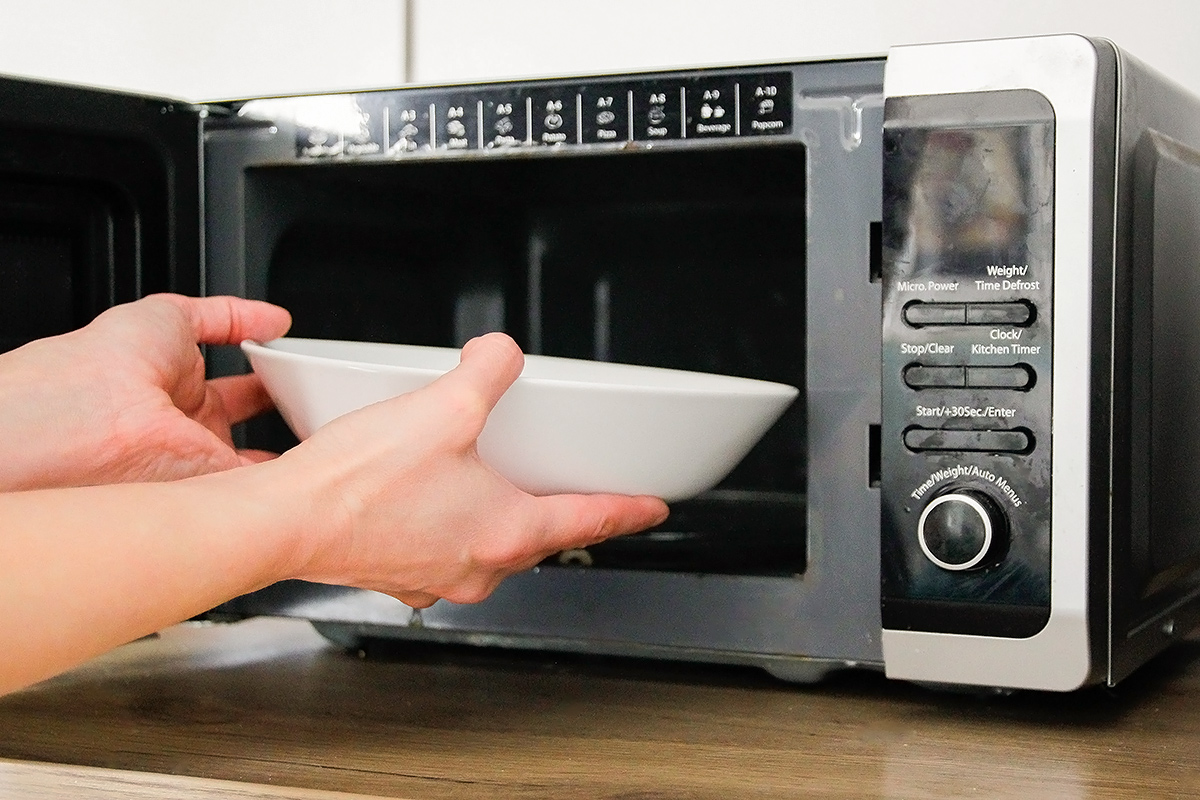
When reheating food in the microwave, arrange it around the edge of the plate, not in the center. The method may be simple, but why it works is a bit more complicated. 

Related: 10 Foods You Should Never Microwave

Microwaves heat food by exposing it to electromagnetic radiation in very short radio waves, called microwaves. At this frequency, the components of food (sugars, fats, and water) easily absorb power, so they heat quickly. However, the short length of the waves has a limitation: They can penetrate food to a depth of only 1 to 1.5 inches at most. That’s why, when you microwave thick foods, like a big slice of meatloaf, the middle often stays cold. The waves can’t reach it.

The Hole Truth

If you’re microwaving a plate of homogenous food, like a bowl of pasta or mashed potatoes, you can achieve the same result by making a “hole” in the center. Push the food out toward the edges of the plate, leaving a space in the middle so that it forms a wreath. You can also microwave food in short bursts, pulling it out to stir, then putting it back in for more cooking time.

Featured Image Credit:  © Kinga Krzeminska—Moment/Getty Images | Updated  Oct 7, 2026 |
Allegra Ringo
Writer
Allegra Ringo is a California-based writer who has written for publications including Reductress, The Hard Times, VICE, and The Atlantic. She loves sparkling water and old Chihuahuas with hardly any teeth, like her dog Pistachio.
This article is for general informational purposes only.
Featured Image Credit:  © Kinga Krzeminska—Moment/Getty Images | Updated  Oct 7, 2026 |
Home Improvement 3m read
1,760

Why You Should Put Aluminum Foil in Your Freezer

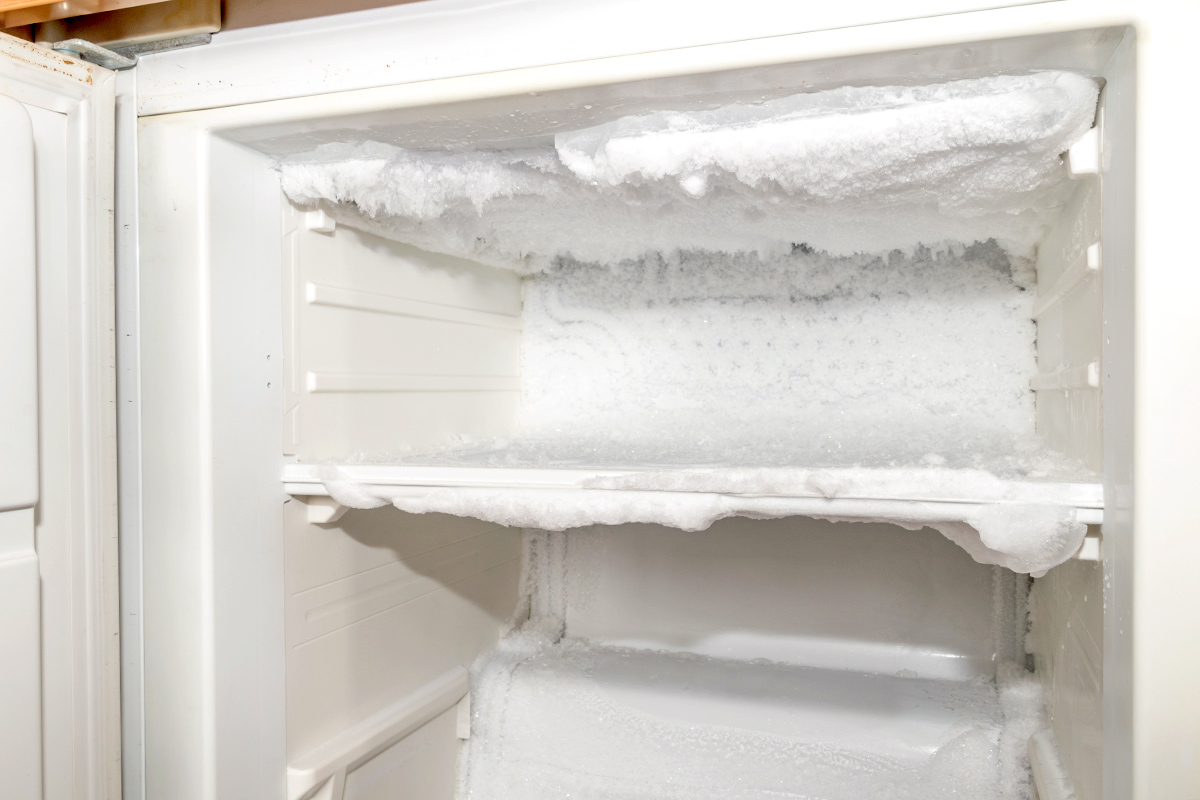
Ever open the freezer and find the walls buried under frost? It creeps up on you. One day it’s fine, and the next you’re chipping away at a layer of frozen buildup like you’re preparing for an ice sculpture contest.

Ever open the freezer and find the walls buried under frost? It creeps up on you. One day it’s fine, and the next you’re chipping away at a layer of frozen buildup like you’re preparing for an ice sculpture contest.

There’s a surprisingly simple hack to spare you from chiseling, though. All you need is an everyday staple you probably already have in your kitchen drawer: aluminum foil. It won’t stop frost from forming, but it might save you some scraping next time you clean out the freezer.

How It Works

Line the inside of your freezer with foil, focusing on spots where  frost tends to accumulate. Once ice forms on top, peel away the foil and the frost goes with it — no ice pick required.

Related: Putting a Flashlight in Your Fridge Could Save You Money

Why Frost Forms in the First Place

Frost develops when moisture gets in and freezes on cold surfaces, so foil won’t address the root cause. Leave the door open too long, neglect a seal that doesn’t always securely shut, or shove warm leftovers inside, and moisture will turn into ice, no matter what you line the shelves with.

Check your manual before trying this trick. Some manufacturers warn against lining shelves or vents because it can interfere with airflow, and trading a frost problem for an airflow problem isn’t much of a win.

If your freezer’s instructions allow it, this hack is worth a shot. It’s affordable, and it might make cleanup less of a pain down the road.

Things To Check First

If you’re suddenly dealing with significantly more frost than normal, skip the foil and inspect the door seal. Try pressing a dollar bill in the door and closing it. If you can pull the bill out with almost no resistance, the seal may not be making a tight enough connection. It’s worth checking the temperature, too, since a freezer that isn’t staying cold enough will frost up faster.

Foil won’t repair a bad seal, and it won’t fix a freezer that never gets a break from being opened. But if you’re tired of scraping ice every few months, it costs very little to try the foil method and see what happens. Keep in mind, though, that results can vary depending on the freezer, how humid your kitchen is, and how often the door opens. 

Featured Image Credit:  © RobsonPL—iStock/Getty Images | Updated  Oct 7, 2026 |
Jill Layton
Writer
Jill Layton started writing professionally when she realized her emails and texts were kinda funny. She’s an affiliate shopping writer and lifestyle contributor for Scary Mommy, Bustle, Mic, and Best Products. She’s the mom of two alarmingly witty kids and the world’s most perfect dog.
This article is for general informational purposes only.
Featured Image Credit:  © RobsonPL—iStock/Getty Images | Updated  Oct 7, 2026 |