We love uncovering the best hacks to make your home a happier, more efficient, and more beautiful place to live. But sometimes we come across viral tips that are more urban legend than clever hack. You may have heard, for example, that adding rocks to the bottom of your plant’s pot can help with drainage.…
Rocks Invite Root Rot
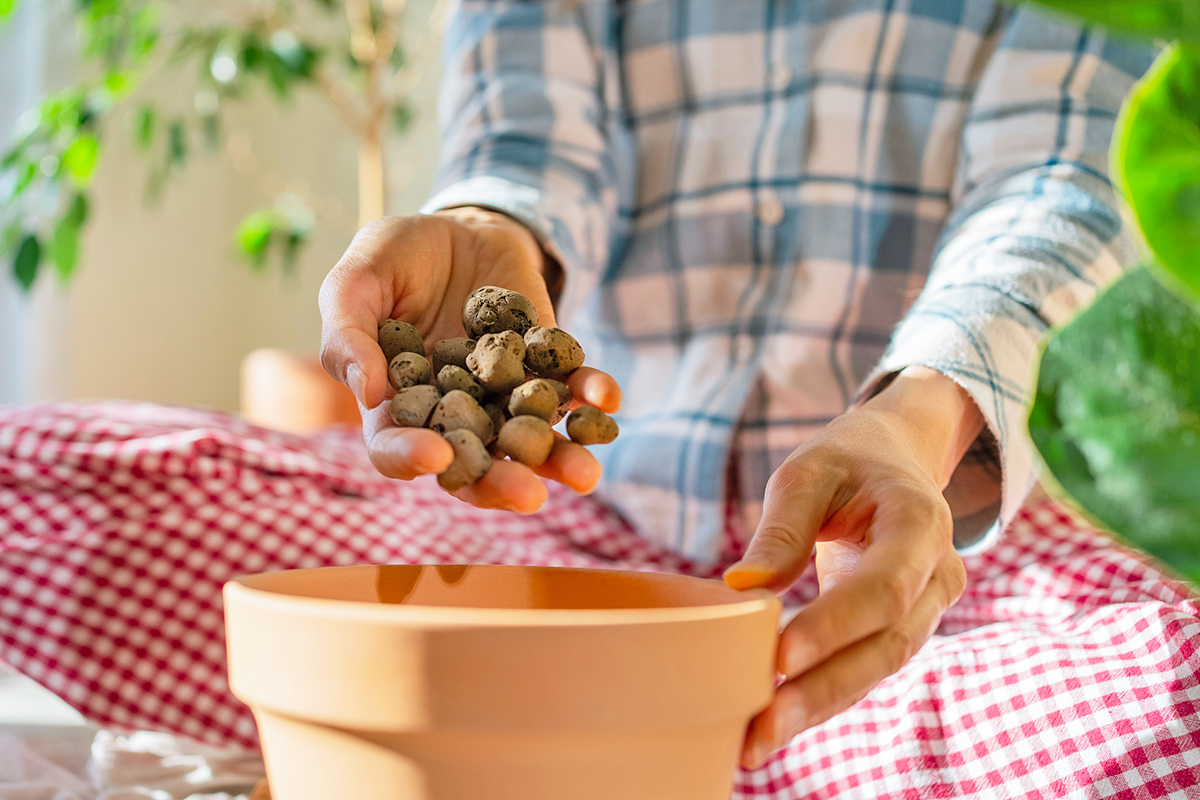
It’s a commonly believed houseplant myth that placing small rocks at the bottom of your plant’s pot promises better drainage. Honestly, we aren’t surprised it’s so well known — we can envision the trickle-down stream as we type this. But the truth is, the rocks create what’s known as a perched water table. This phenomenon causes water to accumulate and fully saturate the soil layer just above the rocks, preventing drainage and often leading to root rot.
Instead of placing a layer of rocks at the bottom of your plant pots, try adding a layer to the surface. Surface rocks can help with drainage and are a great solution for thirsty plants, since they act as a barrier to prevent evaporation and retain moisture. Placing rocks on top of your soil can also keep weeds at bay and provides a nice, clean look.
More from our network
House Outlook is part of Inbox Studio, which publishes content that uplifts, informs, and inspires.



A Rock-Solid Idea
You can use rocks to create humidity for your plants, too. If you have a tropical houseplant — which most popular ones are — and don’t live in a tropical climate, your plant likely isn’t getting enough year-round humidity. To remedy this, you can get a larger plant saucer (around 3 inches wider than your pot’s base) and fill it with small rocks. Add a shallow layer of water to the tray, then place your pot on top. If your pot has drainage holes (which it definitely should), make sure any exposed roots are sitting above the water level. As the water in the tray evaporates, the plant will absorb the humidity.