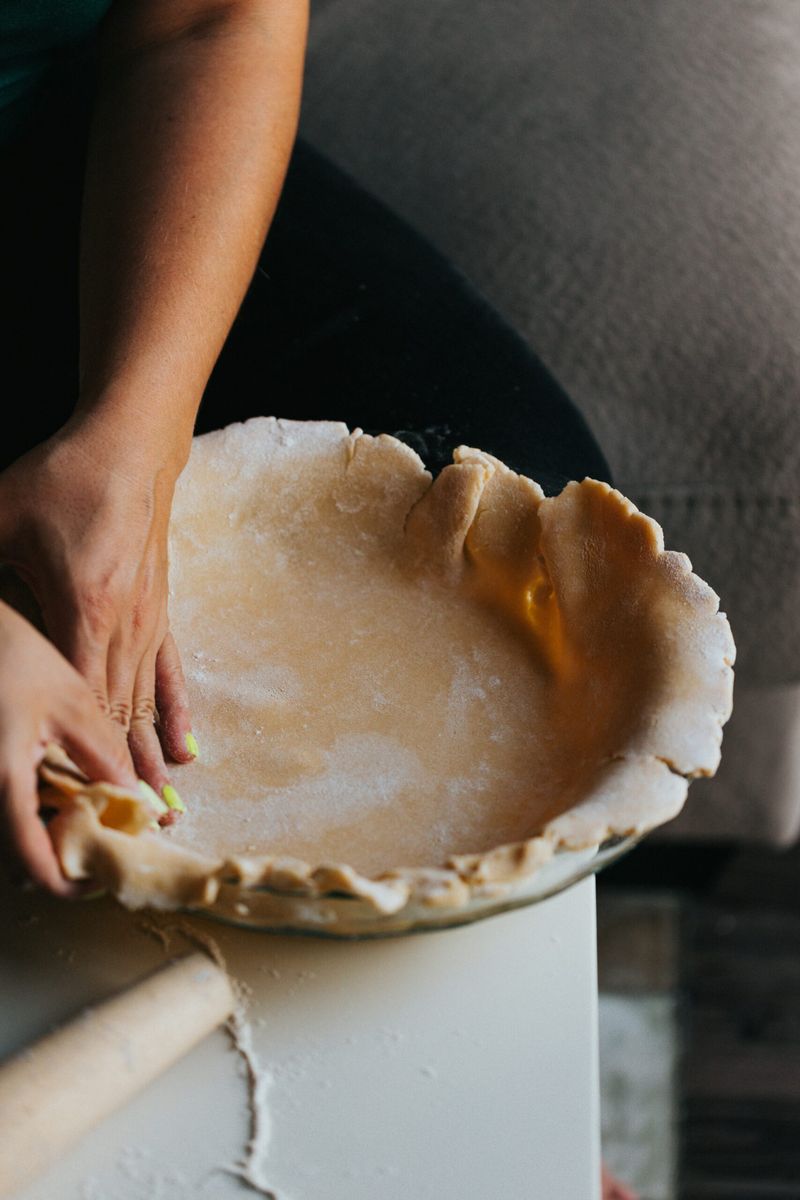
Gluten forms when you add water to flour and physically manipulate the dough. Too much gluten makes a pie crust tough, which is why most recipes stress adding minimal water to the dough and not overworking it. Other recipes feature a surprising ingredient that’s meant to make the process more forgiving for novices. According to some recipe writers, orange juice is the key to a perfectly light crust. So should you use it? Let’s dig in.
What Orange Juice Does to Pie Crust
Here’s the logic: Acidity can reduce the strength of gluten bonds in your flour. Orange juice is acidic, so you’d assume it would help keep your pie crust tender. (Other recipes call for vinegar or cider vinegar, on the same principle). But it’s complicated, because acidity can also promote gluten formation.
So is orange juice good or bad for pie crust? It comes down to quantity. A little acidity toughens gluten; a lot helps break it down. According to Serious Eats, the amount of acid needed to reap the tenderizing benefits is more than your dough can handle — so this is one hack you can skip.
In practice, using part orange juice and part water in your crust probably won’t make a big difference if you do everything else right. So why do so many bakers swear by this technique? It turns out that many recipes that call for OJ in pie crust use vodka as well. (One even calls it a “screwdriver” crust.) Vodka is 40% alcohol by volume, and gluten won’t develop in a base of alcohol. So it moistens the crust, making it easier to work with, but still limits gluten development. That’s why these recipes work: It’s the vodka doing the heavy lifting, not the orange juice. (And in case you were worried about serving a boozy dessert at Thanksgiving, the alcohol bakes out.)
More from our network
House Outlook is part of Inbox Studio, which publishes content that uplifts, informs, and inspires.



The Other Single-Ingredient Route to Better Pie Crust
While vodka will absolutely help give you a better pie crust, it’s not the only unexpected ingredient you should be using. You can also stack the deck in your favor by changing your flour.
All-purpose flour is relatively high in gluten, because it’s used to make breads and rolls as well as airier desserts. Pastry flour is substantially lower in gluten-forming proteins than all-purpose flour, so it’s a lot more forgiving for beginners or people who only bake pies occasionally. (You can also substitute it for AP flour one-to-one.) For the best crust of all, combine these ideas and use both vodka and pastry flour. You can thank us later.