Passing the Sniff Test
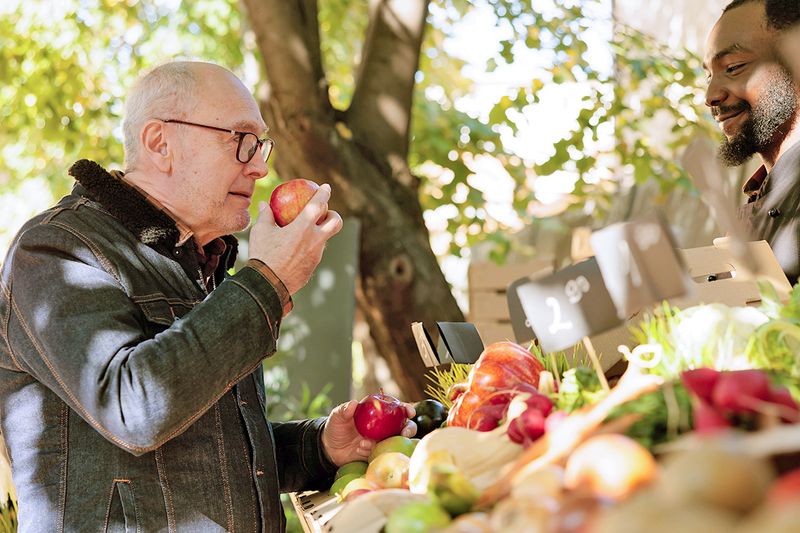
When someone says something doesn’t “pass the sniff test,” it’s usually a figure of speech. But the phrase is literal when it comes to certain food items. With fish, the less smell you detect, the better. With fruit, the opposite is true.
If you want to know whether your apple is fresh and ripe, hold the stem end to your nose and take a gentle sniff. A well-ripened apple — whether it’s fresh from the tree, or fresh from storage — will be subtly fragrant, with a pleasant apple aroma. A whiff of alcohol or vinegar means it’s overripe and past its prime; put it back and try another. This same test works for lots of other fruit as well. Try it with cantaloupe, honeydew, pineapple, mango, or stone fruits like peaches and apricots. If they don’t smell like much, they won’t taste like much either.
Other Tests To Try
There are other tests you can use to tell whether an apple is fresh (harvested recently) or ripe (at peak flavor and texture for eating). One viral hack has you press on the stem: If it’s green and flexible, the fruit is fresh; not so much if it’s brown and brittle. The caveat here is that a green or flexible stem tells you only that it’s freshly picked, not whether it’s ripe. The apples you find in the supermarket during the offseason are months old, but they can still be perfectly good to eat.
If you’re uncertain, a few other tests are useful. Ripe apples should be heavy for their size, have a smooth and shiny skin, and have no visible bruising or damaged spots. In apples with striped red-and-green coloring, the green will usually take on a soft yellowish tinge as it ripens. Taken together, those signs will help you pick the best apples every time.
More from our network
House Outlook is part of Inbox Studio, which publishes content that uplifts, informs, and inspires.