You can use this chef-style technique for your breakfast bacon, too. Even if you’re skeptical, one try will prove that it’s the secret to the best bacon ever. Here’s a breakdown of how and why it works.
Low Temperature Is the Key to Better Bacon
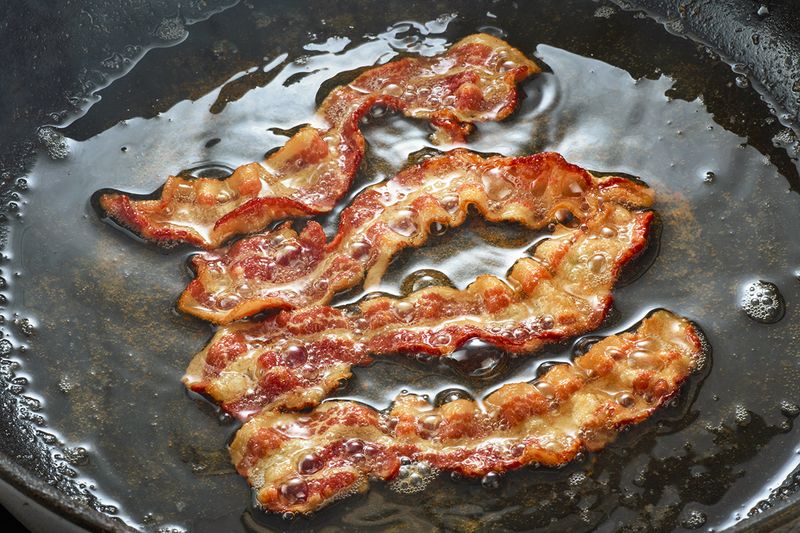
If your usual approach is to warm up a pan and slap your bacon right in, you’ll still get decent results. (Let’s face it — even mediocre bacon is still pretty good.) The problem is that the pan conducts heat only to the parts of the bacon in direct contact with it. As the meat contracts in the high heat, it wrinkles and curls. This leaves you with corrugated bacon where relatively little of the strip touches the pan.
More from our network
House Outlook is part of Inbox Studio, which publishes content that uplifts, informs, and inspires.





It’s better to lay out your bacon in a cold pan, then pour about 1/4 cup of cold tap water over the strips before turning up the heat. The water does two things: It keeps the pan’s temperature low, since water can’t exceed 212 degrees Fahrenheit, and it distributes heat evenly to every inch of the bacon. That helps the fat render out more effectively. Once the water evaporates, that rendered fat browns and crisps the bacon perfectly. It takes a few extra minutes, but the results are worth the wait.