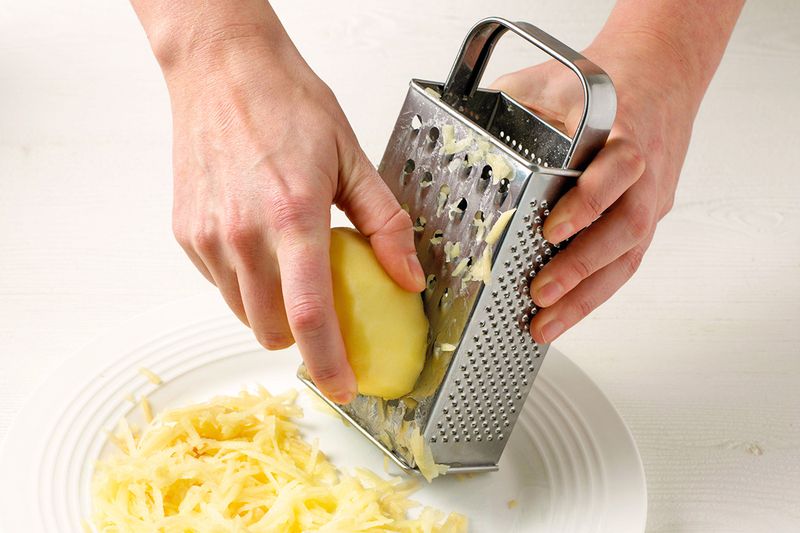
A Starchy Solution
Here’s what to do: Immediately after you’ve grated cheese, use the same grater to shred a raw potato. Do not rinse the grater in between. You don’t need to use the whole spud — just enough to push any cheese remnants out of the grater. Then rinse and wash the grater as usual.
Save the potato gratings to make hash browns the next morning, or add them to a quiche or breakfast casserole. They may commingle with a little cheese, but that’s a bonus in breakfast foods.
Why It Works
Cheese is soft and sticky, so it clings to any kitchen tool it touches. Rinsing a cheesy grater in cold water helps, but when you put it in warm water, the residue melts slightly, making it bind to the metal even tighter. This is why using a sponge or a dish brush feels so frustrating.
A potato is starchy and not sticky, so it pushes the cheese through the holes of the grater, and the leftover residue sticks to the starch instead of the metal. Doing this process before the grater touches water means far less cheese can melt onto it.
More from our network
House Outlook is part of Inbox Studio, which publishes content that uplifts, informs, and inspires.



No Potato? Try a Lemon
If you don’t have a potato handy, a lemon works too. A lemon isn’t starchy, but it is acidic. That acidity, plus the firm yet pliable texture of the skin and pith, pushes the cheese through and gives the grater holes a mild cleaning.
If you’re grating a soft cheese, like mozzarella or Monterey Jack, get ahead of the sticky grater issue with a little prep work. Place your cheese in a freezer-safe bag and put it in the freezer for 30 minutes before shredding. By removing a small amount of moisture, this trick firms up the cheese just enough to make it easier to grate — and less likely to leave behind a catastrophic grater.