Too much water or not enough? It’s the question that haunts every plant parent. Getting the answer wrong can lead to withered leaves or root rot for our potted friends. But what if you could end the guessing game? There’s a foolproof way to look beneath the soil’s surface and determine exactly what your plant…
Save Your Soil With a Moisture Meter
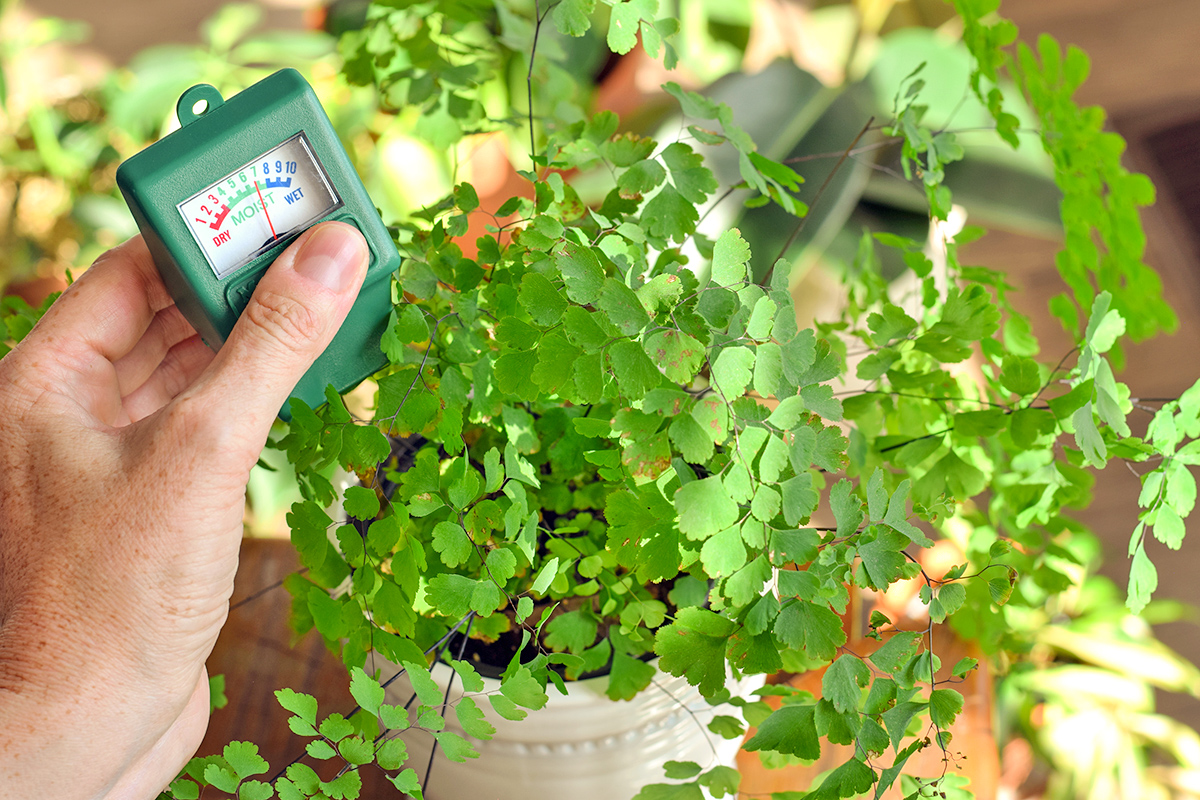
Whether you’re a plant pro or a total newbie, keeping a moisture meter on hand can take the guesswork out of your watering routine. These tools work by measuring the electrical conductivity of the potting soil. Damp, mineral-rich soil conducts electricity easily, while dry soil blocks the current. The reading you get is a direct reflection of the soil’s electrical conductivity, indicating whether your plant is dry, moist, or wet.
After you insert the probe into the soil — about halfway to two-thirds deep is best — wait 30 to 60 seconds for the meter to stabilize. For the most accurate results, take a few readings in different spots around the pot. While designs vary, most meters feature a numbered, multicolor display. The red, green, and blue sections are labeled to indicate dry, moist, or wet conditions. Most houseplants should be watered when the meter hits 3 or 4. For drought-tolerant plants, wait until the reading is 1 or 2; for moisture-loving plants, plan to water when the needle is at 4 or 5. After you take a reading, clean the probe to prevent mineral buildup and store the device in a cool, dry place. Never leave it in a plant long-term.
More from our network
House Outlook is part of Inbox Studio, which publishes content that uplifts, informs, and inspires.




Moisture meters are incredibly easy to use, and you can find a reliable one for under $10. Warning: Do not submerge the probe in water to check its accuracy — this can overwhelm the sensor and lead to unreliable readings going forward.
Making a DIY Moisture Meter
Need help gauging your plant’s moisture levels but not ready to commit to a new tool? You can create a DIY moisture meter using nothing more than a wooden chopstick, a popsicle stick, or an untreated dowel. To check your plant’s hydration level, insert the stick a few inches into the soil and let it sit for about a minute. When you pull it out, look for dampness or soil particles clinging to the wood — these are clear signs of wet soil, meaning your plant doesn’t need to be watered yet. Conversely, if the stick comes out clean and dry, it’s time to give your plant a drink. Repeat this every few days to learn your plant’s watering schedule, and be sure to retest during seasonal shifts when changes in sunlight or indoor heating alter how quickly the soil dries out.