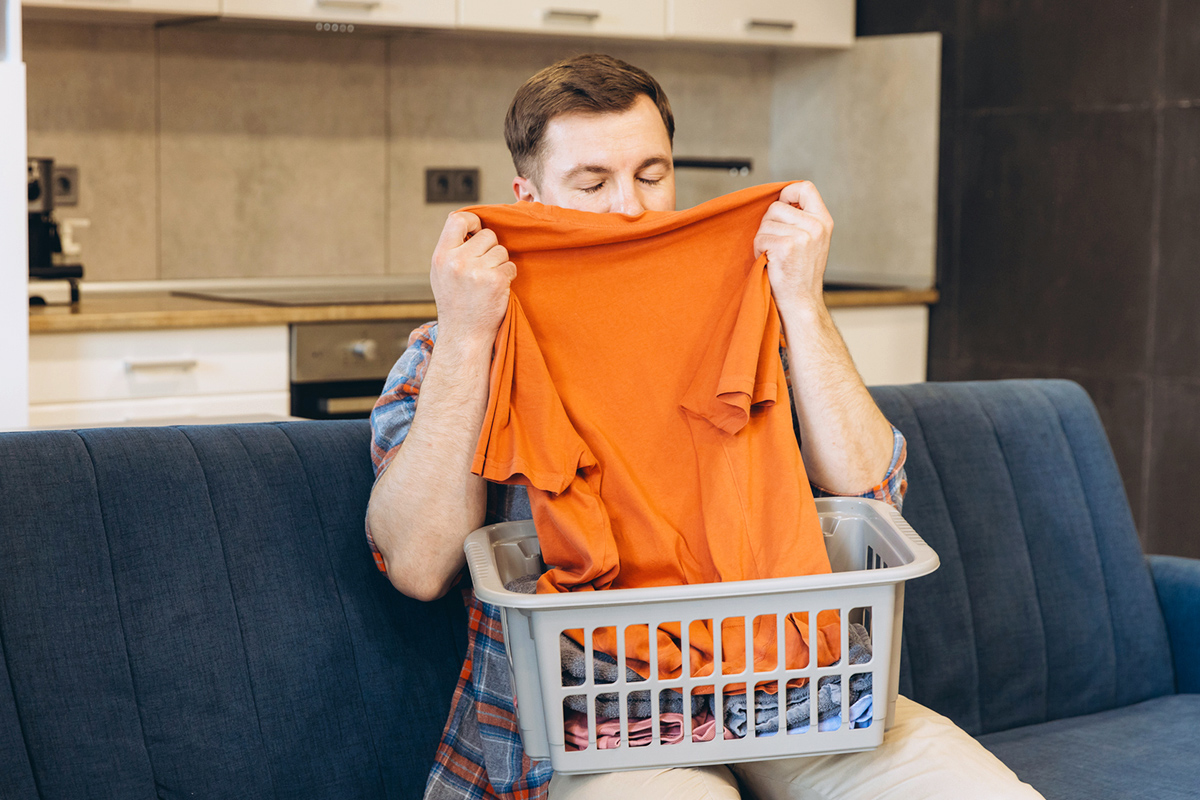
Whether it’s your favorite white T-shirt or your go-to moisture-wicking workout top, you might notice that some shirts retain an odor even after washing. The underarms are typically the culprit, and while it may seem strange at first — after all, you just did laundry — there is, in fact, a logical explanation.
The aluminum found in common antiperspirant formulas can transfer to the fabric, building up over time to create a barrier, especially on synthetic materials. With regular wear, that barrier gets stronger and stronger, preventing water and detergent from penetrating the fibers to get rid of the buildup and the lingering odor.
How To Strip Away Odors
When dealing with tough-to-remove stains — even those we cannot see — liquid dish soap is your secret weapon for cutting through the buildup. While laundry detergent is specifically formulated to remove dirt, dish soap targets grease and grime, making it a heavy-duty solution for many household woes.
To remove stubborn underarm odors, apply about 1 teaspoon of liquid dish soap (blue Dawn is best) to each of the affected areas and gently scrub with your fingers until the fabric is fully saturated. You want to start with a dry article of clothing to prevent diluting the dish soap. Let the soap sit for 30 minutes to an hour, then rinse with hot water. Finally, run the item through a full wash cycle to lift the residue and rinse away the soap.
More from our network
House Outlook is part of Inbox Studio, which publishes content that uplifts, informs, and inspires.




Pit Stains Don’t Have To Be Permanent
Dealing with unsightly yellow stains on your shirt’s underarms? These are the result of a chemical reaction between aluminum in antiperspirant and proteins in human sweat. While these stains might seem irreversible, they can often be faded or even removed entirely. Create a paste using one part dish soap and two parts 3% hydrogen peroxide. Apply it to the affected area, then sprinkle baking soda on top. Scrub the fabric gently with an old toothbrush or a laundry stain brush, let it sit for up to an hour, then launder as usual. This process helps remove both the yellowing and the underlying odor.