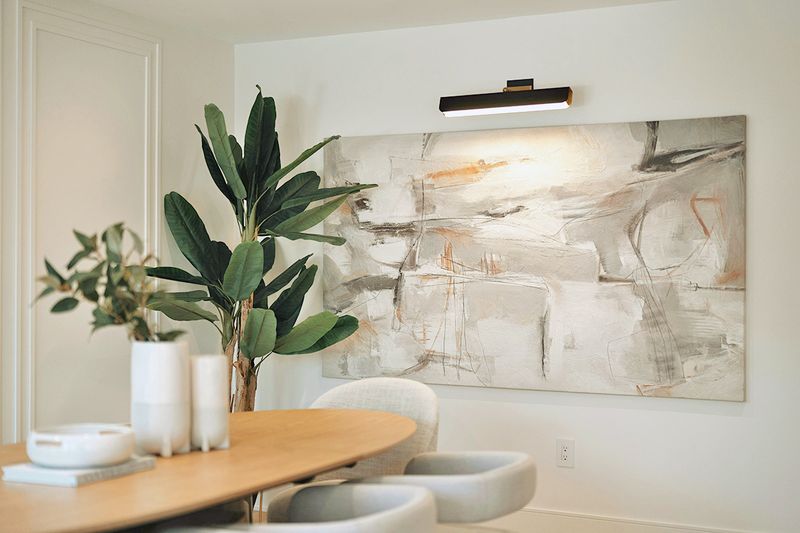
Museums and galleries have used this trick since the late 19th century, when light bulbs were first introduced. Today, their walls are rigged with carefully aimed track lighting, transforming even a seemingly unremarkable piece into a captivating focal point. You can replicate this effect at home simply by being deliberate about where you hang things.
How To Light Cheap Art So It Looks Expensive
Most people choose art placement based on empty wall space, but designers tend to work the other way around, considering how a piece will be seen throughout the day and after sundown. When art hangs in a poorly lit corner, colors look duller, details disappear, and the piece recedes into the background.
Move it into the path of an existing light source — a table lamp, sconce, or floor lamp — and the opposite happens. The frame catches the light, colors appear richer, and even a $20 print can feel like it was hung by a gallery curator.
How To Find Your Best Hanging Spots
Start by turning on every lamp and overhead light in the room, then switch them off one at a time while watching the walls. Notice which lights cast a warm pool of light and where. Those are your prime hanging spots. A lamp on a console or side table makes the wall directly above it a natural place for art. A sconce creates a ready-made frame. A floor lamp angled toward a corner can turn that space into a focal point.
More from our network
House Outlook is part of Inbox Studio, which publishes content that uplifts, informs, and inspires.



One more thing worth testing is how the room looks after dark. A picture that appears perfectly positioned at noon may feel camouflaged after dark, so if you spend most of your time in a room during the evening, conduct your placement test at night. Once you’ve found your spot, hang the artwork so its center sits at eye level — generally 57 to 60 inches from the floor — within the light’s range.