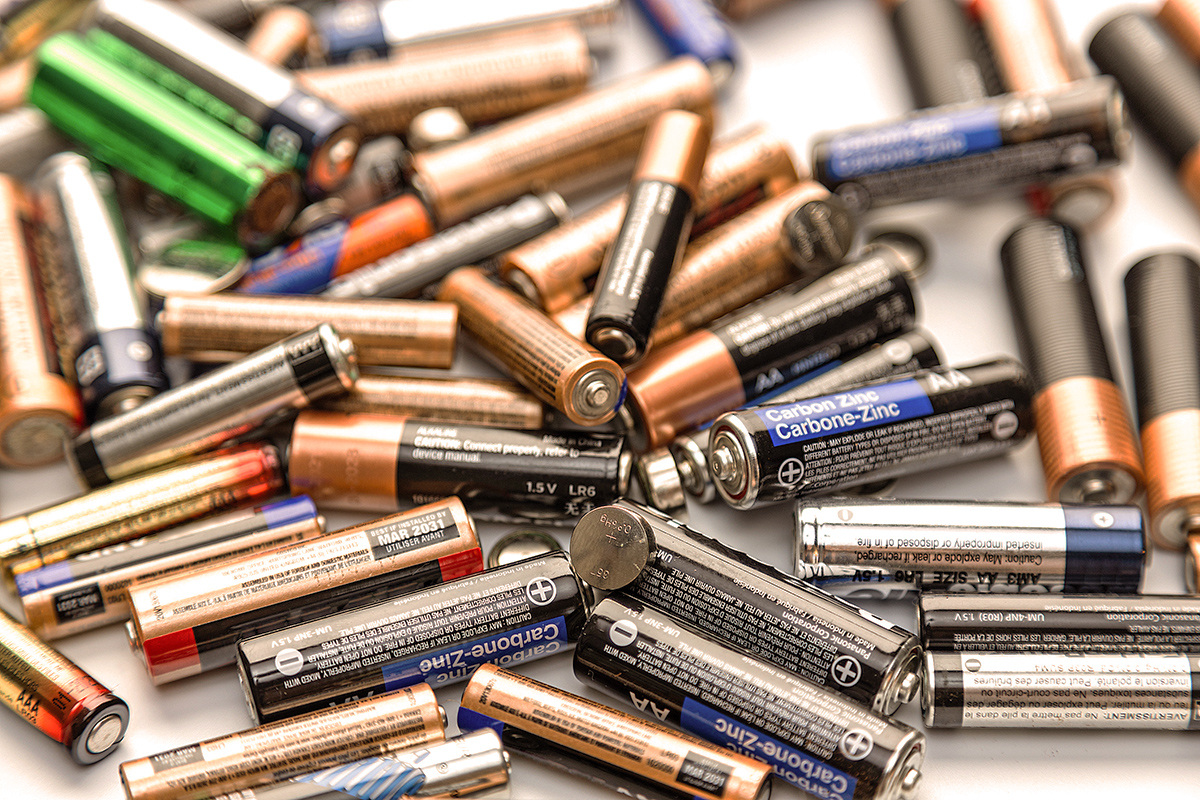
Junk drawers might as well be called battery cabinets, as they’re the most common place to store loose AAs, AAAs, and 9-volts. But despite how convenient it is, this habit is potentially hazardous. While a fire is a rare occurrence, a battery that comes into contact with other metal objects in a junk drawer can…
A Potential Fire Hazard
In addition to batteries, many junk drawers contain conductive metal objects such as keys, coins, and paperclips. If any of those objects touch the positive and negative terminals of a battery at the same time, a short circuit can occur. While the risk is lower for AAs and AAAs — since their terminals are on opposite ends — it’s much higher for 9-volt batteries, where the terminals are located side by side on the same end.
When a battery short-circuits, its stored energy discharges rapidly, which causes internal heating. If this overheated battery comes into contact with a piece of paper (e.g., a notepad, instruction manual, etc.), it may cause the material to ignite. Again, while this is rare, the fire hazard is very real and entirely preventable.
Furthermore, storing loose batteries in a junk drawer may cause them to roll around and bump into each other, which can degrade their outer casings over time. The worse this damage gets, the more likely the battery is to leak chemicals, which can damage or corrode the drawer itself.
More from our network
House Outlook is part of Inbox Studio, which publishes content that uplifts, informs, and inspires.




Other Storage Methods
Instead of storing loose batteries in a junk drawer, consider using a dedicated battery organizer. These compact, affordable containers keep batteries secure and separated, which helps prevent leaks and extends their shelf life.
Another option is to cover the exposed terminals with electrical tape. While this doesn’t protect the outer casings from damage, it does protect the terminals from coming into contact with other metal objects, reducing the risk of a fire hazard.