One of the things that makes commercial kitchens work — or not — is their level of organization. Ideally, every tool the cooks rely on should be easily accessible when needed, but out of the way when it’s not.
The same holds true for home cooks, though your meal prep is (hopefully) a lot less stressful than a restaurant’s. Since most of us are contending with limited cabinet space, we’re always on the lookout for storage ideas to make our lives easier. But not every organizing “hack” is worth implementing in your own kitchen — in fact, some storage methods can actually do more harm than good for the longevity of your gear. Here are eight kitchen items you’re probably storing wrong, along with the right way to handle them.
1. Countertop Appliances
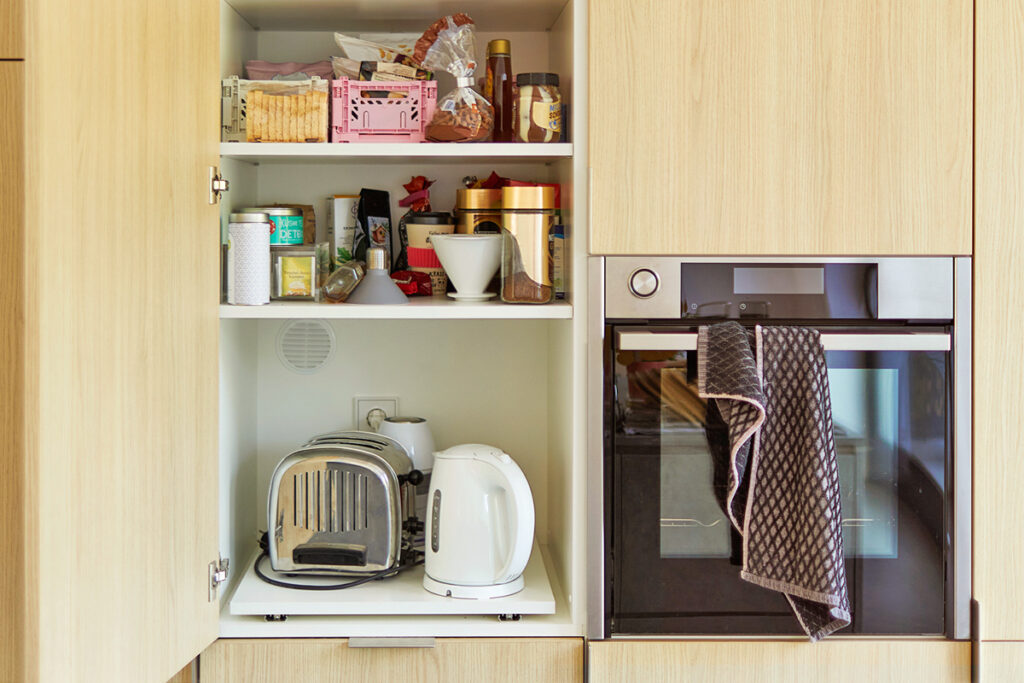
Look, we get it. You love your air fryer and use it constantly, but if you keep every “countertop appliance” out in the open, you’ll soon have no space left to work on. Finding a home for the appliances you don’t use daily is a thorny problem, mostly because they tend to be bulky and awkwardly shaped.
I personally use a section of my pantry as an improvised “appliance garage” for my stand mixer, blender, food processor, and waffle irons (yes, plural). Whether you use your existing cabinetry, add a space-efficient storage rack, or go for purpose-built storage during a renovation, heed this warning: Never put heavy items in a high cupboard. It’s an injury waiting to happen. You can get spring-loaded platforms that lift or lower them for you — something that’s on my own “must add” list for my next kitchen project.
2. Cast-Iron and Nonstick Pans
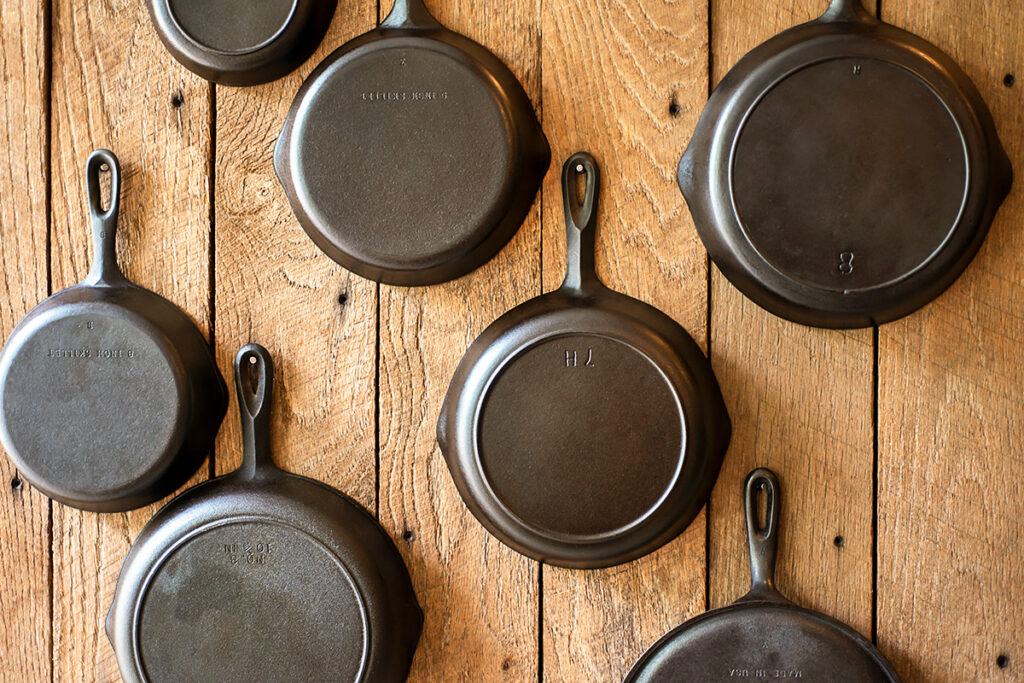
In most of the home kitchens I’ve seen, there’s an unruly stack of pots and skillets tucked away in a cabinet — or perhaps a pull-out drawer in newer builds. Admittedly, it’s a space-efficient solution since saucepans are typically made to nest and skillets stack quite neatly.
The issue with this approach, however, is that you can easily damage the finish or even dent the pans if they’re lightweight. With cast iron, it’s all too easy to chip the seasoning; with nonstick, the coating itself is at risk. The simplest fix is to put something between each pan. You can buy durable felt liners made for this exact purpose, but a sheet of paper towel or even a disposable paper plate will get the job done, too. In fact, those paper products will absorb moisture, helping protect your cast iron against rust.
More from our network
House Outlook is part of Inbox Studio, which publishes content that uplifts, informs, and inspires.




3. Kitchen Knives
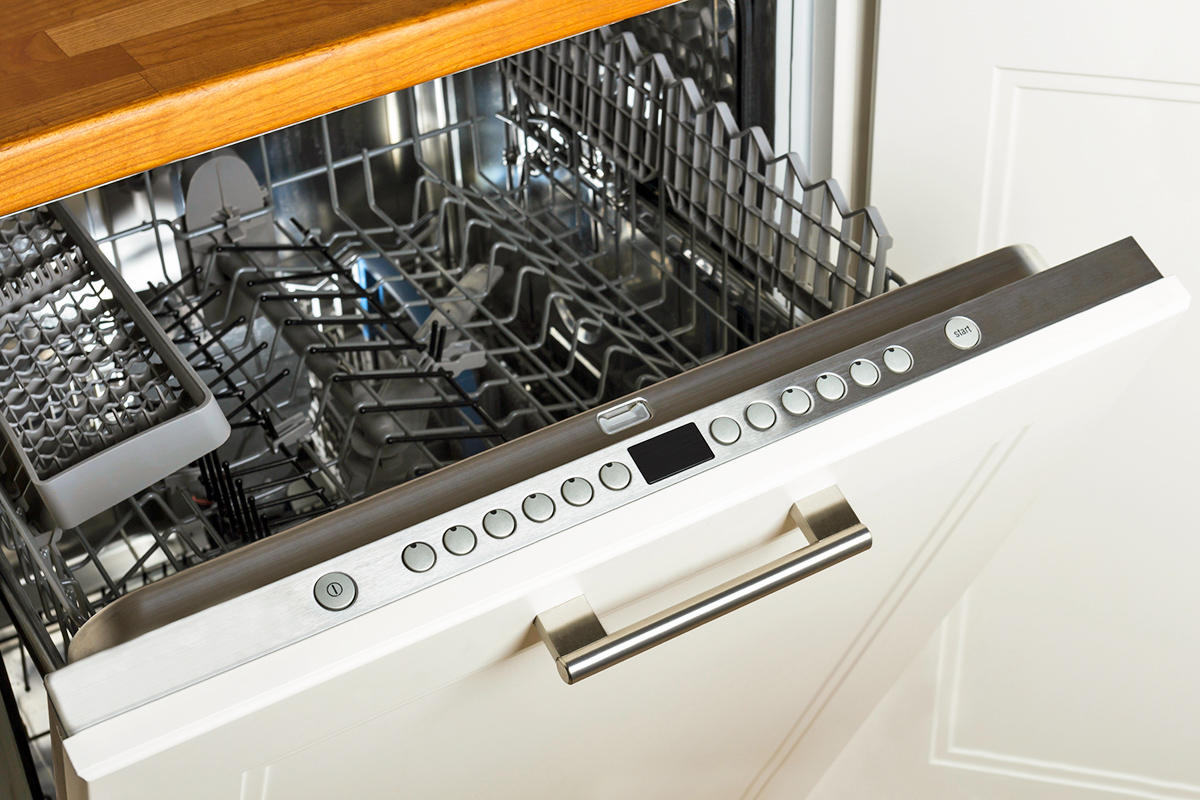
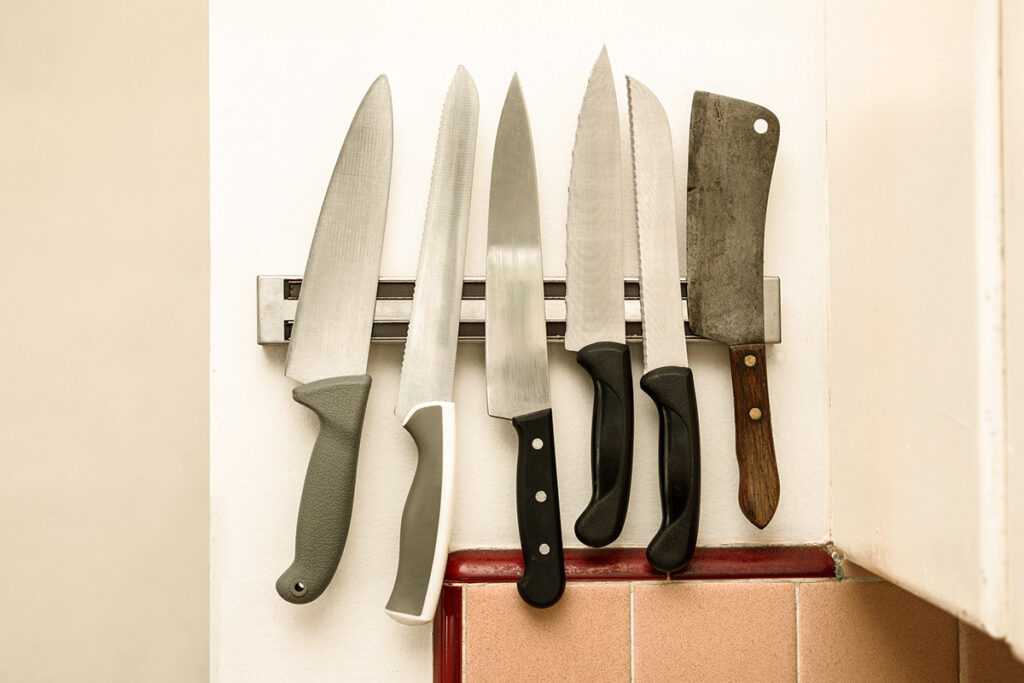
If there’s one thing we chefs are notoriously protective of, it’s our knives. You’ll rarely see our personal knives go through a dishwasher — even at work — because those harsh detergents can pit the blades and compromise the handles. Storage is another sore spot. I cringe whenever I’m in someone’s kitchen and find a random assortment of knives rattling loose in a drawer. Not only is that an emergency room visit waiting to happen, but it’s also hard on the knives themselves.
A knife block is a much safer bet, protecting both your knives and your fingers while keeping the tools accessible. My only gripe is that most blocks can’t be cleaned, meaning dirt, dust, and grease build up inside them. I always recommend a washable knife block to prevent cross-contamination. Another option is a wall-mounted magnetic strip. If you must use a drawer, invest in an in-drawer knife organizer to keep your edges sharp and your fingers intact.
4. Wine Glasses and Other Stemware
Most of the things we drink from aren’t especially high-maintenance. Coffee cups, water tumblers, and insulated travel mugs are pretty forgiving and can be stored just about anywhere.
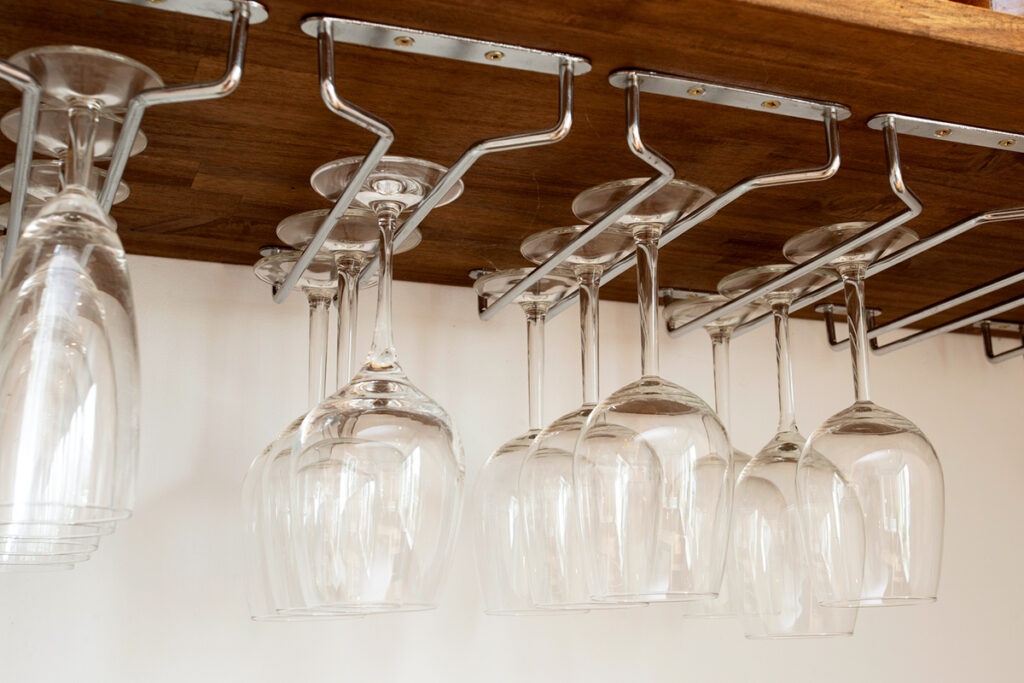
Stemware is a different story. Glasses with stems — standard wine glasses, champagne flutes, and some cocktail glasses — are often quite fragile, especially high-end pieces from makers like Riedel or Spiegelau. Because they see only occasional use, a lot of people store them upside-down to keep the dust out. If you have a hanging rack, go for it. But if they’re on a cupboard shelf, keep them upright. Stemware is thickest where the stem meets the bowl and thinnest at the lip, so when you store them upside-down, you’re putting the glass’s entire weight on its most breakable part.
Ideally, you should store them in a dedicated cabinet where they won’t be banging around with your novelty mugs. As for dust, cabinet doors keep most of it away, and giving your glasses a quick wipe before using them is a small price to pay to avoid a chipped rim.

5. Cleaning Supplies
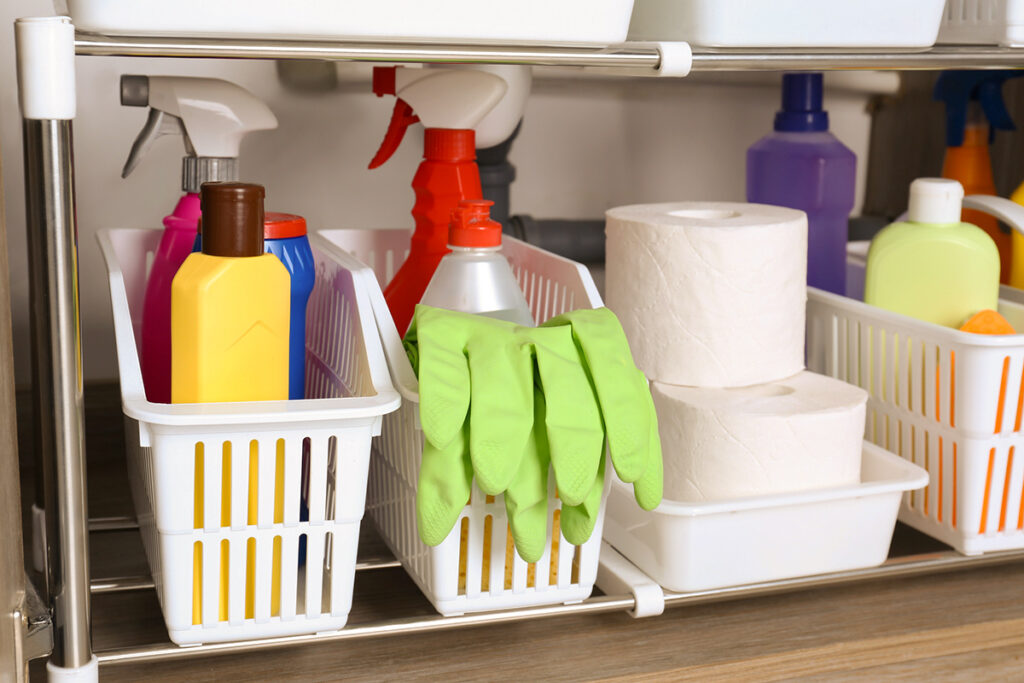
You might find this surprising, but the common practice of storing cleaning supplies under the sink is a no-go in commercial kitchens. Why? Because most cleaning and sanitizing products are toxic if they happen to get into your food. Many can also off-gas dangerous vapors if they’re not closed properly or if that cramped, airless cabinet gets too hot.
As a home cook, you don’t have to worry about a health inspector threatening your license to operate, but it’s still worth playing it safe. Especially in hot climates, consider moving volatile cleaning products to a space where they’re less likely to come into contact with your food. A hall closet near the kitchen is ideal — even better if it has louvered doors to allow for air circulation.
6. Silicone Baking Mats
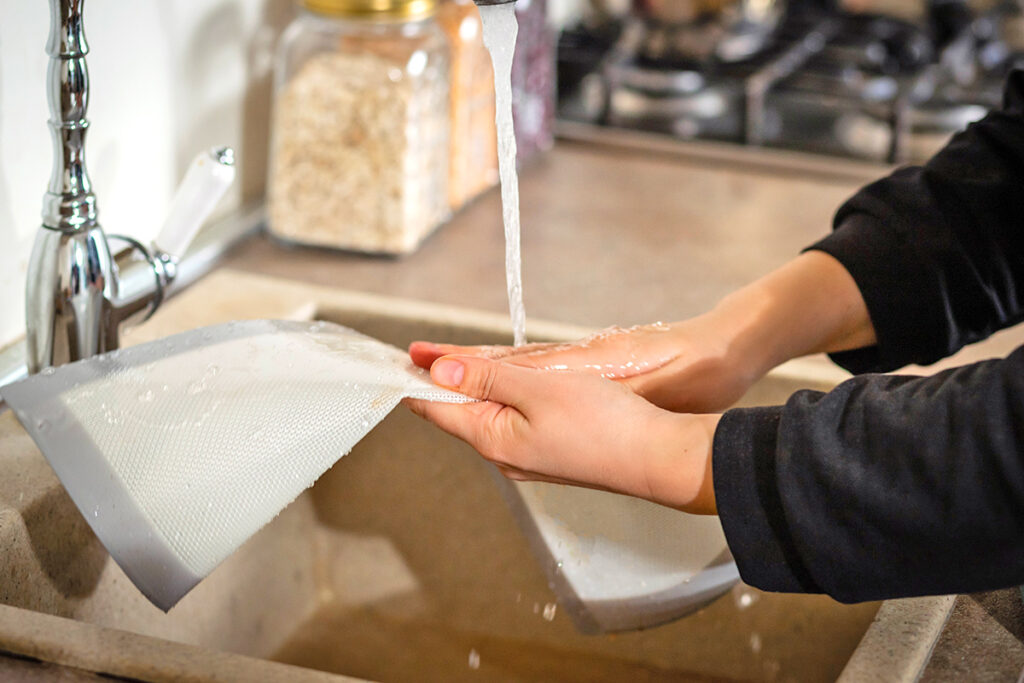
Not everyone owns silicone baking mats, but they’re useful to have on hand. You use them just like parchment paper, except they’re washable and last for years. I own several, ranging from premium Silpat mats (the industry standard) to various off-brands.
Because they’re so floppy, they often end up in odd places. Some people leave them on their sheet pans, but that isn’t ideal — baked-on grease that darkens your pans over time can transfer to the silicone and leave a tacky mess. Others stack them on a shelf where they’re susceptible to damage, or roll them up loosely, which can be awkward.
7. Cooking and Baking Utensils
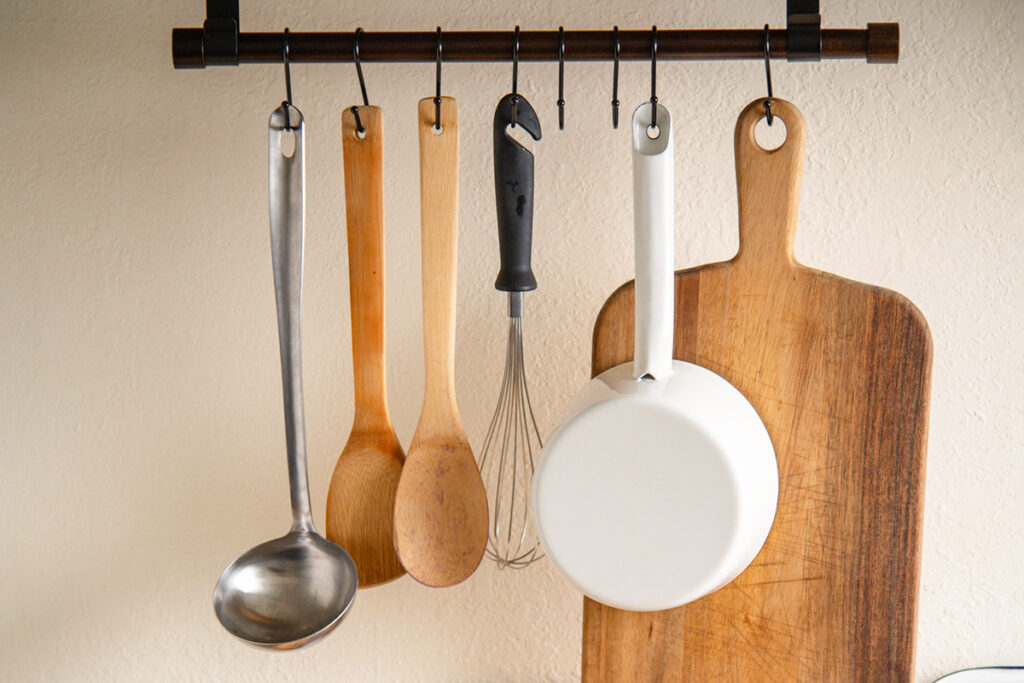
Every kitchen holds a chaotic collection of cooking and baking utensils: whisks, spatulas, serving spoons, tongs, and more. Piling these into a drawer is a recipe for two things: never finding what you want and growling at a drawer that refuses to open.
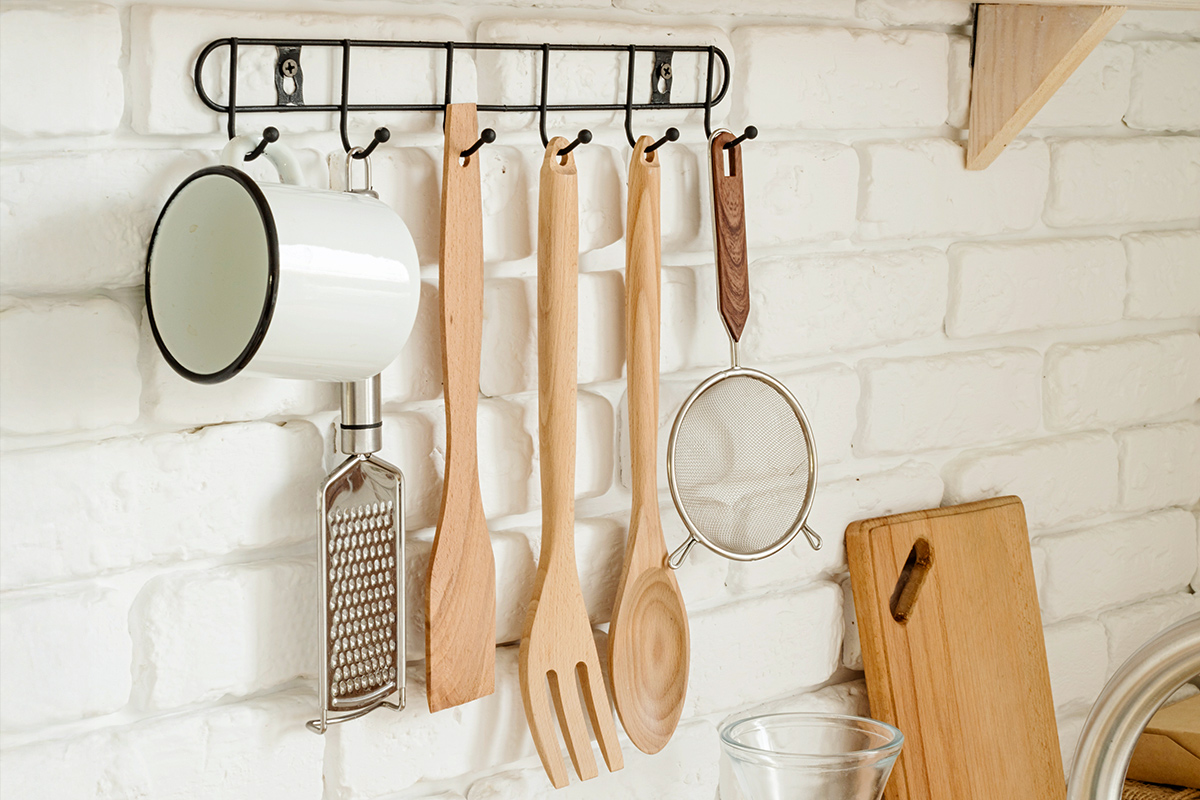
Even with limited square footage, you have better options. I’m a fan of hanging those utensils from rails mounted to walls or the backs of cabinet doors. If that isn’t an option, a countertop utensil holder is a convenient way to keep everything organized and within reach. While matching sets are easy to find, you can also add character to your kitchen by repurposing items such as pitchers, ice buckets, or plant pots for your utensils.
8. Fire Extinguisher
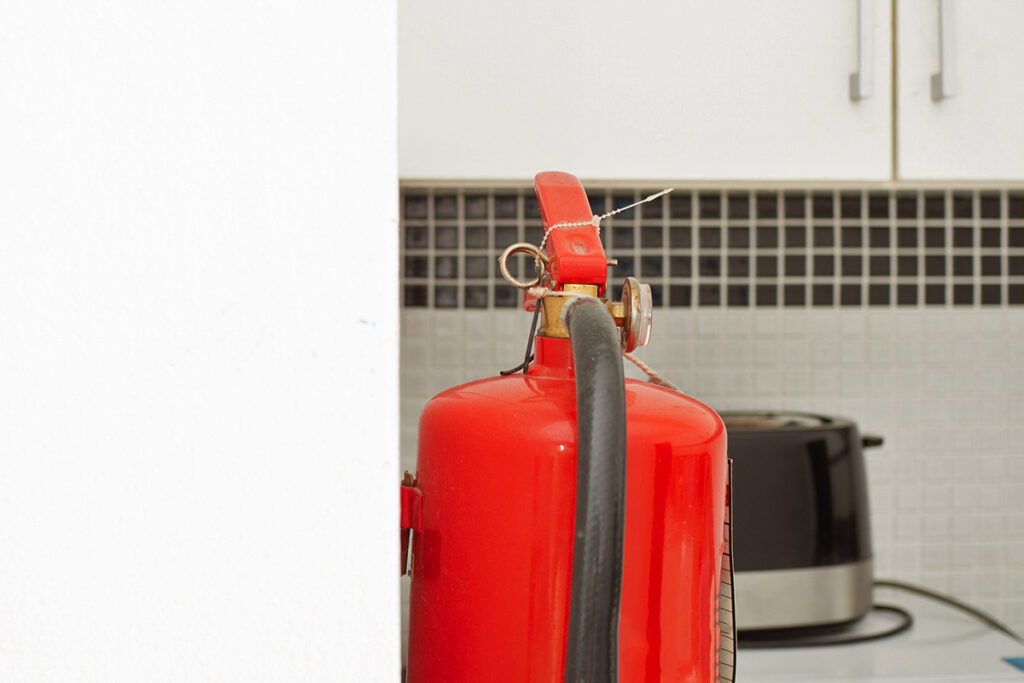
You have a fire extinguisher in your kitchen, right? If not, you really should. According to government statistics, over half of all residential fires start in the kitchen; having an extinguisher nearby means you might be able to nip a flare-up in the bud before it becomes damaging or life-threatening. Extinguishers are inexpensive and even available in compact versions if you don’t have the space for a 2.5-pound or 5-pound one.
But here’s the thing: Many people who do own one store it right by — or even over — the stove. I’ve seen them tucked beside the vent hood ducting, which is a dangerous mistake. While it seems like common sense to keep your extinguisher close, if it’s too close, the heat and flames might prevent you from reaching it. Instead, pick a spot a few steps away from the stove so it’s accessible even if the cooktop is engulfed in flames. Most models come with a wall mount, allowing you to keep it visible and unobstructed.