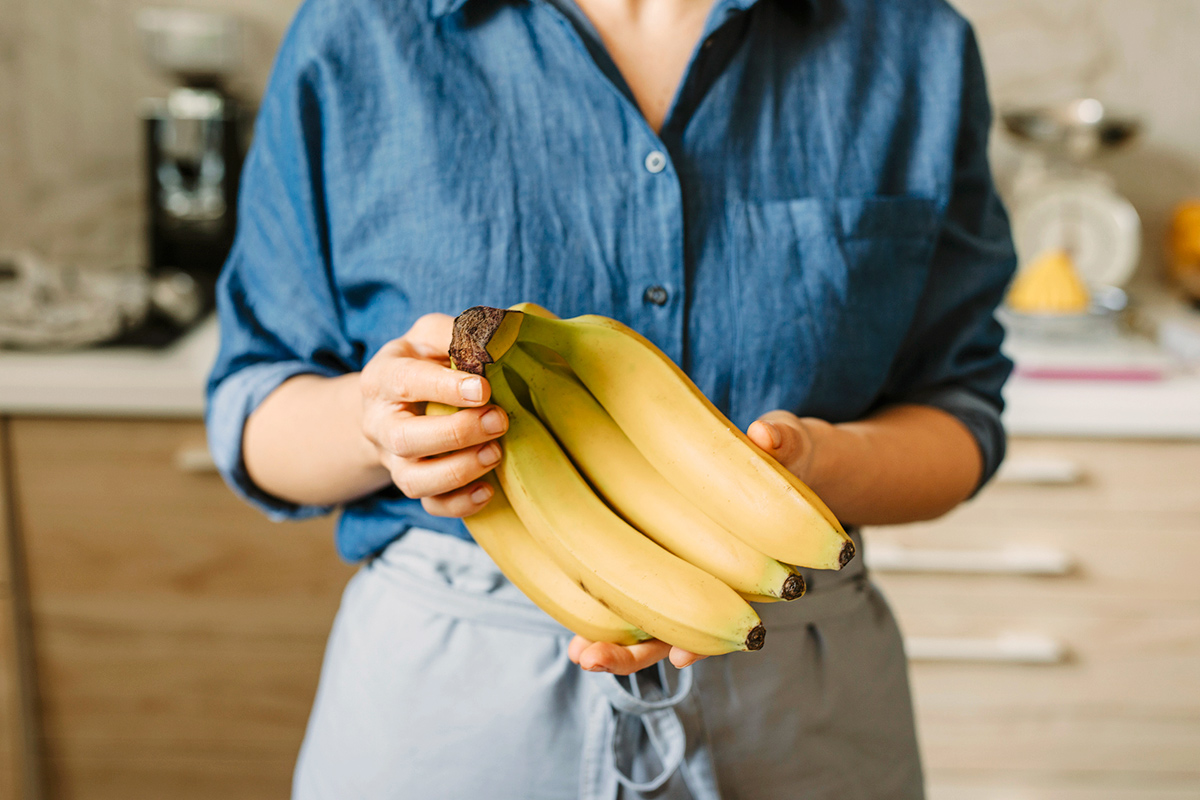
Have you ever reached for a banana to snack on, only to find it turned an unappetizing brown color when you weren’t looking? While bananas get a bad rap for having an incredibly short shelf life, that reputation isn’t exactly accurate. Brown bananas are still completely safe to eat and are actually ideal for baking,…
Why Do Bananas Brown So Quickly?
The peel and the fruit of the banana change color for different reasons. For the peel, the culprit is ethylene gas — a natural ripening agent found in bananas, along with many other fruits and vegetables. This gas breaks down the green chlorophyll and acids into sugars, transforming the color of the peel from green to yellow, and later to brown. The fruit itself browns through a separate process called oxidation, which begins the moment the inside of the fruit is exposed to the air.
How To Slow Down Browning
Try this simple trick to slow down the browning process: Wrap your banana stems in aluminum foil, plastic wrap, or a sustainable alternative such as compostable cling wrap. The stems are a major release point for ethylene gas; by covering them, you contain some of that gas and prevent it from triggering the ripening process in the rest of the fruit. With the ethylene flow restricted, you can extend the shelf life of your bunch. While wrapping the stems won’t completely stop the bananas from browning, it will give you an extra three to five days to use them up.
More from our network
House Outlook is part of Inbox Studio, which publishes content that uplifts, informs, and inspires.




Keep in mind that bananas aren’t the only type of produce affected by ethylene gas. Apples, peaches, pears, mangoes, melons, tomatoes, avocados, and potatoes are all ethylene producers. That’s why you should never store them together; their proximity can speed up the ripening process and cause them to brown even faster. Providing ample space between them ensures everything stays fresh for as long as possible.