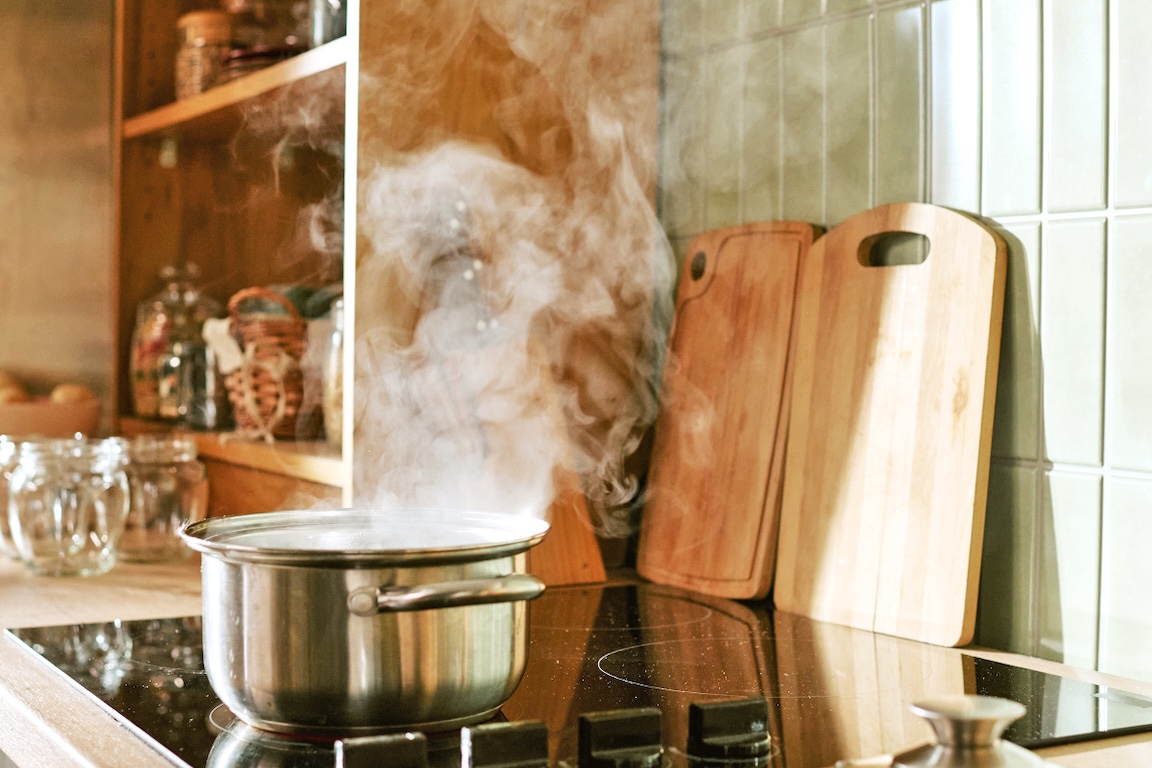
There are many hacks for stopping the water from boiling over when you’re cooking pasta, and buttering the rim of your pot is one example. But is preventing this common kitchen disaster really that simple? Let’s dive in.
How Bubbles Form — and Why Butter Helps
What’s actually going on when your pot boils over? Normally, the bubbles from boiling water just rise and pop. But pasta releases starches that thicken the water and turn it into a light gel, which stabilizes the bubbles and keeps them from bursting. As a result, they froth up like a volcano and spill over.
Running a pat of butter around the edge of your pot can keep the mess in check, but only temporarily. There are different theories for why this helps: Either it makes the rim too slippery for the bubbles to climb, or the fat interferes with bubbles forming (though it doesn’t stop them from forming altogether unless it’s stirred into the water).
Many cooks swear by other hacks for keeping pasta water from boiling over, including adding a splash of olive oil to the water, or simply placing a wooden spoon across the top of the pot. These hacks mostly buy you time, which is definitely helpful, but not a real fix. If the bubbles keep forming, you’ll eventually be left with more than dirty dishes to clean at the end of the night. So how do you stop them before they start?
More from our network
House Outlook is part of Inbox Studio, which publishes content that uplifts, informs, and inspires.


What Really Keeps a Pot From Boiling Over
So if the hacks above are merely quick fixes, what’s the best way to prevent the irritating boilover? Directly addressing the root of the issue — too many bubbles heading for the exit at the same time — is your best bet.
Use a bigger pot: Opting for a taller pot with a wider opening gives the bubbles more room to build and burst before spilling over the edge.
Turn down the heat: Pasta, potatoes, rice, oatmeal, and other high-starch foods don’t need to be cooked at a rolling boil. Turning down the heat also means less-intense bubble production.
Don’t drown your pasta: Less water means fewer bubbles. If you’re worried about your pasta crowding and sticking together, make sure to stir it frequently (which also helps interrupt bubble formation). A pot with less water will come up to temperature faster, and the concentrated pasta water makes better sauces, too.