Spritz and wipe — that’s all it takes to leave your kitchen countertops germ-free, right? Not necessarily. If you don’t give your favorite household disinfectant time to work, you’re merely cleaning the surface, not killing viruses and bacteria. The secret to eliminating pathogens is contact time — here’s how to use disinfectants correctly to ensure…
Cleaning vs. Disinfecting
To get the most out of your cleaning products, you’ll want to learn the difference between two key terms: cleaning and disinfecting.
Cleaning is simply the act of removing dirt and debris from surfaces. This includes everything from kitchen counters to bathroom sinks and dining tables. According to professional house cleaner and TikTok creator Kellsie Zapata, cleaning should be done daily, while disinfecting should be reserved for “sick days, high-touch areas, bathroom cleanups, or when the [product] label specifically calls for it.”
Disinfecting goes a step further by destroying the germs that cause illness, including cold viruses and the bacteria responsible for food poisoning. Zapata stresses that you don’t need to disinfect every day; in fact, doing so can trigger respiratory issues, skin irritation, and even lead to antimicrobial resistance or health risks for pets.
More from our network
House Outlook is part of Inbox Studio, which publishes content that uplifts, informs, and inspires.




How To Properly Disinfect
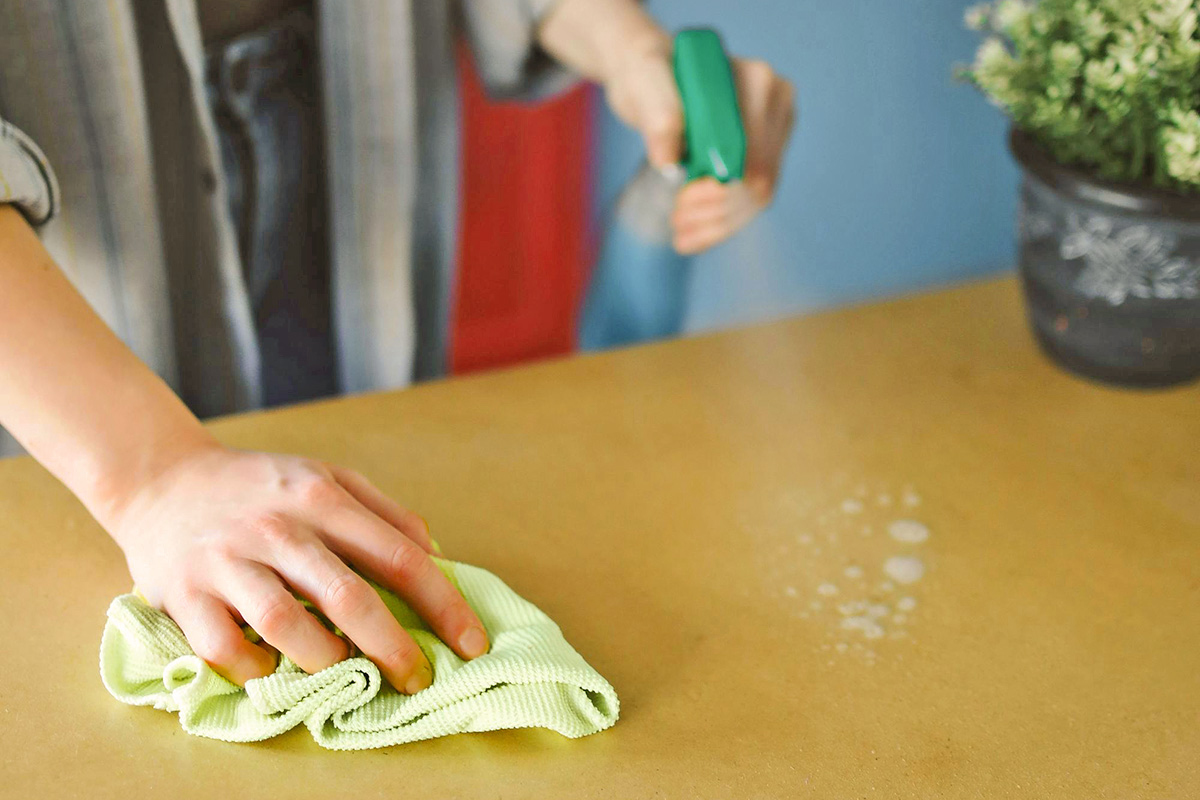
Disinfecting requires more than just a quick wipe; it needs contact time to actually work. Zapata recommends spraying the surface until it’s visibly wet. The surface must remain visibly wet for the entire recommended contact time, which can range from 2 to 10 minutes depending on the brand. (Remember to check the product label to confirm.) If the disinfectant dries before your timer goes off, you need to spray more to keep the surface wet.
Some disinfectants require rinsing with water, especially on food-prep surfaces such as cutting boards, sinks, and countertops. To do this, wet a clean microfiber cloth and wipe down the area a few times — rinsing the cloth with clean water in between — until all the product is gone. Now your surfaces aren’t just clean; they’re thoroughly disinfected and safe to use.