Many people take vacations to relax and reenergize. But as you’re recharging by the pool, think of all the appliances back home that are using up electricity while you’re gone. Take the fridge, for example, which is full of perishables that would quickly spoil if you unplugged it. Thankfully, most modern refrigerators have a hidden…
A Setting That Keeps You From Fretting
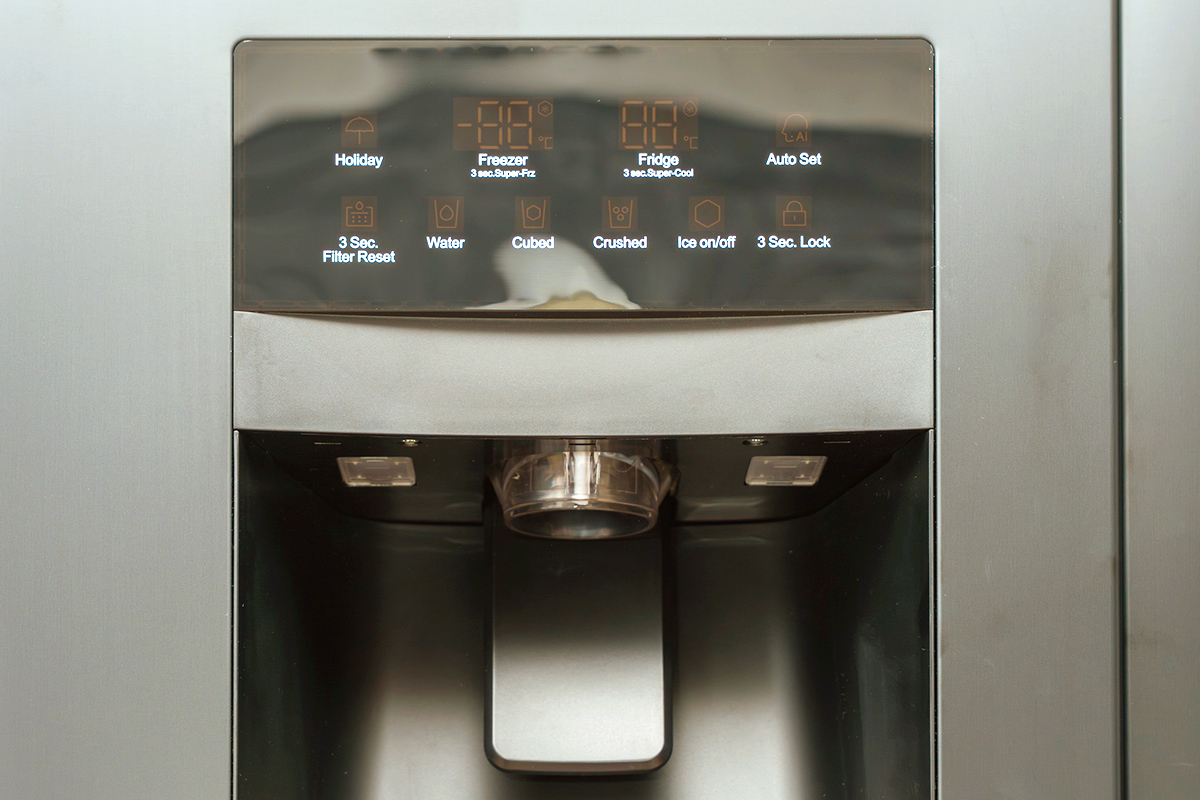
While Lindsey Buckingham once sang about “Holiday Road,” we’re singing the praises of “holiday mode.” Many modern refrigerators — from the early 2000s onward — are programmed with either a holiday mode or a vacation mode. On most models, switching to this setting raises the temperature inside the fridge compartment by about 10 to 15 degrees Fahrenheit. A normal, food-safe refrigerator temperature is 40 degrees Fahrenheit or below, but in holiday mode, the fridge typically maintains a warmer temperature of around 45 to 50 degrees Fahrenheit to conserve power.
Because of this, you should try to consume any perishables before taking off, leaving behind only low-risk items that are less likely to spoil with the slight increase in temperature. Think acidic or salty condiments, butter, pickles, olives, hard cheeses, jellies and jams, and unopened beverages.
What makes holiday mode so useful is that it doesn’t kill power to the whole unit. On most modern, dual-compartment appliances, the fridge takes a break while the freezer keeps running as normal — meaning your frozen perishables stay safe while saving you money on electricity.
More from our network
House Outlook is part of Inbox Studio, which publishes content that uplifts, informs, and inspires.




Many refrigerators are programmed to automatically revert to their standard settings once the door is opened. That said, you should consult the manual to confirm whether that will happen with your fridge, as some models require you to switch the setting off before the fridge starts cooling at full power again.
If you’re unsure whether your fridge has a holiday mode, the quickest way to find out is by consulting the manual, as every model is different. You can also check the display panel for any vacation-themed icons, such as a plane or a beach umbrella. These are a sure sign that your fridge is equipped with this feature.
What if Your Fridge Doesn’t Have Holiday Mode?
Older refrigerators often lack a holiday mode, so you’ll have to take matters into your own hands. As a rule of thumb, if you’ll be away for more than three to four weeks, it may be worthwhile to unplug the refrigerator and defrost the freezer. Of course, you’ll need to use up or throw away everything inside of it, but the energy savings can outweigh those losses. Don’t forget to clean the appliance, dry it thoroughly, and leave the doors cracked to prevent mold. For shorter trips of less than two weeks, it’s best to leave the refrigerator plugged in and remove any perishables before jetting off.