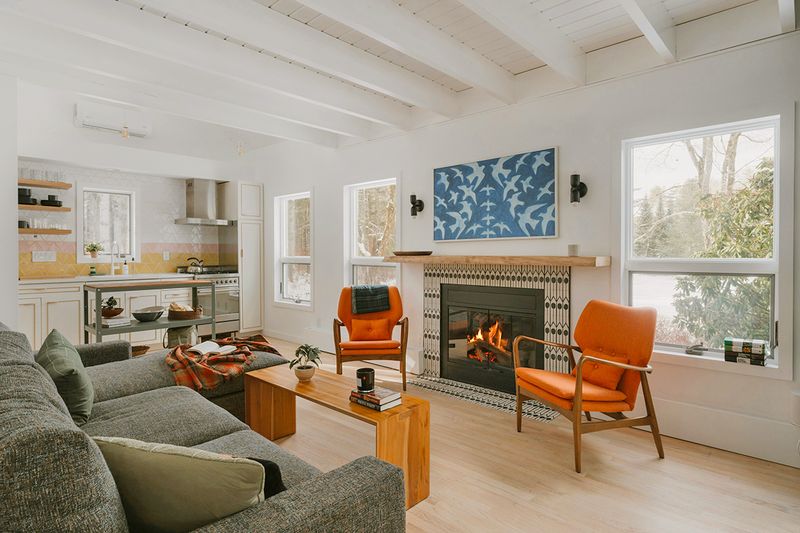
What Is the 70/30 Split?
The concept is straightforward: Divide a room into a ratio of 70/30, decorating 70% of the space with your anchor scheme and the other 30% with a contrasting style (or styles). This uneven ratio guarantees a room that’s visually interesting. “The 70/30 rule works because it naturally creates a sense of balance without feeling forced,” says Carol Alda, interior design coordinator at Z Gallerie.
Think of the 70% as your foundation — the main color palette, significant furniture pieces, and flooring. The 30% is where personality gets to play, whether through a bold accent chair, contrasting textures, or a few eye-catching accessories and pieces of artwork.
Why It Works
The 70/30 split is more than just a visual trick; it offers a clear distinction between dominant and accent elements, gently guiding the eye through a space.
“When most of the space — 70% — is grounded in a cohesive palette and consistent materials, everything feels calm and pulled together. Layering in a smaller portion of contrast — 30% — through texture, shape, or a few standout pieces adds just enough interest to keep the space from feeling flat,” Alda says. “It’s that mix of restraint and variation that makes a room feel polished, but still personal and lived-in.”
More from our network
House Outlook is part of Inbox Studio, which publishes content that uplifts, informs, and inspires.



Start With Color
Not sure where to begin? The easiest entry point is color. Use a consistent palette on walls, ceilings, and large furniture pieces. Then, bring in a bolder secondary color through accent rugs, throw pillows, and decor. Trust your eye and let the ratio guide you.